
 English
 русский
 Português
 Français

 Read More

Product Category
NEW Category
Contact us
Contact Us
We specialise in the research, development and manufacture of electrical wires and cables.
 +86-21-57560276
Bioprocess Skids for Monoclonal Antibody Manufacturing: A Practical Selection Guide
Content
- 1 Where Bioprocess Skids Fit in Monoclonal Antibody Manufacturing
- 2 Why Precision Temperature Control Is Non-Negotiable
- 3 Heat Exchange Equipment Inside the Skid
- 4 How the Skid Role Changes by Process Stage
- 5 Practical Procurement Criteria
- 6 Skidded versus Field-Built: The Efficiency Comparison
- 7 Shiloc's Bioprocess Skid Offering
- 8 The Practical Takeaway
Commissioning a 2,000 L bioreactor line for a monoclonal antibody (mAb) program brings a defining question to the surface: how will the process keep every vessel and intermediate stream inside its required temperature window? The bioreactor jacket must hold cultures at 37 °C for weeks. The viral inactivation tank must reach its low-pH hold setpoint and stay there. The harvest pool and UF/DF retentate have their own limits. Field-assembled piping and individually sourced heat exchangers look flexible on paper, but they shift engineering risk to the site, extend commissioning, and complicate validation.
The conclusion is straightforward: a factory-built bioprocess skid is the more predictable, faster-to-start, and ultimately more cost-effective way to deliver temperature-controlled utilities to mAb unit operations. It arrives pre-engineered and pre-tested, with documentation intact, ready to be connected to process and utility lines. For an industry where temperature deviations have direct product-quality consequences, the skid is not a luxury — it is a practical default.
Where Bioprocess Skids Fit in Monoclonal Antibody Manufacturing
A bioprocess skid is a modular assembly of heat exchangers, pumps, valves, sensors, piping, and control logic mounted on a single structural frame. In mAb production, the most relevant types are heat transfer skids and temperature control units (TCUs). These systems deliver thermal fluid at a defined temperature and flow rate to bioreactors, hold tanks, and process streams, adding or removing heat as the process demands.
Upstream, cell culture is performed in stirred-tank bioreactors where the skid must maintain the setpoint, respond to heat generated by the growing culture, and manage transitions such as cool-down before harvest. Downstream, the same skid family serves viral inactivation, intermediate hold steps, and formulation. In a well-designed facility, one skid can cover several unit operations without reconfiguration.
Why Precision Temperature Control Is Non-Negotiable
Temperature is a process parameter with proven impact on mAb quality. CHO cell cultures lose viability quickly when temperature exceeds 37 °C for an extended period. At the low-pH viral inactivation step, the combination of acid and temperature is the mechanism that inactivates viruses; an uncontrolled cold spot in the vessel could slow inactivation enough to violate the regulatory safety margin.
Bioprocess skids address this with closed-loop control. A typical performance specification is ±0.5 °C steady-state accuracy on the delivered thermal fluid, with a ramp rate that brings the hold tank from process temperature to the inactivation setpoint within the window defined in the batch record. These are not marketing figures. They are written into the process validation protocol and verified at the factory acceptance test.
Heat Exchange Equipment Inside the Skid
The heat exchanger is the heart of any heat transfer skid. In hygienic biopharmaceutical service, common choices include plate heat exchangers, shell-and-tube units, and specialized designs such as double tube sheet (DTS) or capillary heat exchangers.
Double Tube Sheet Heat Exchangers
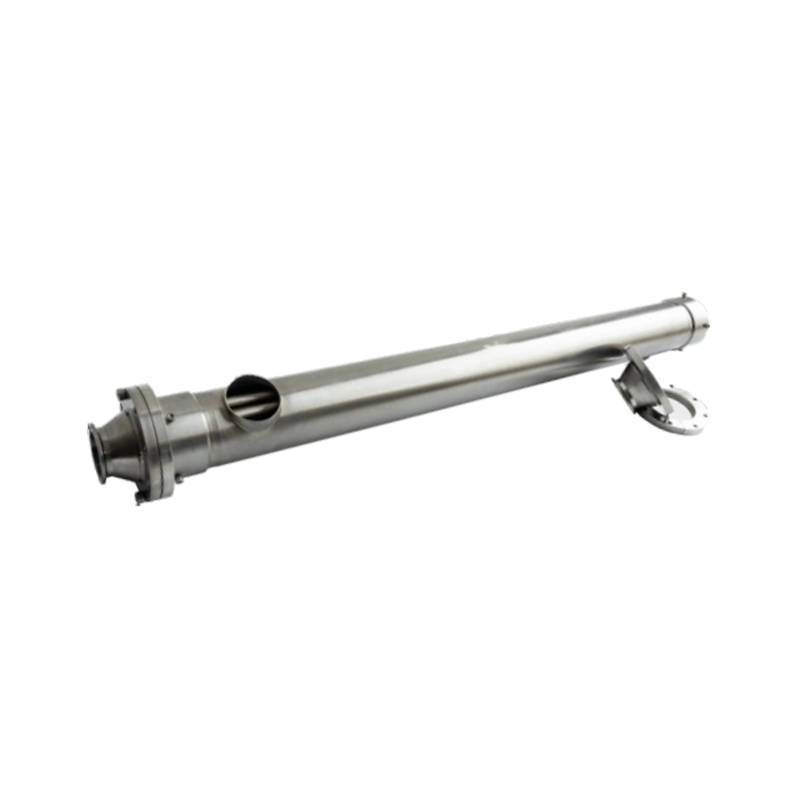
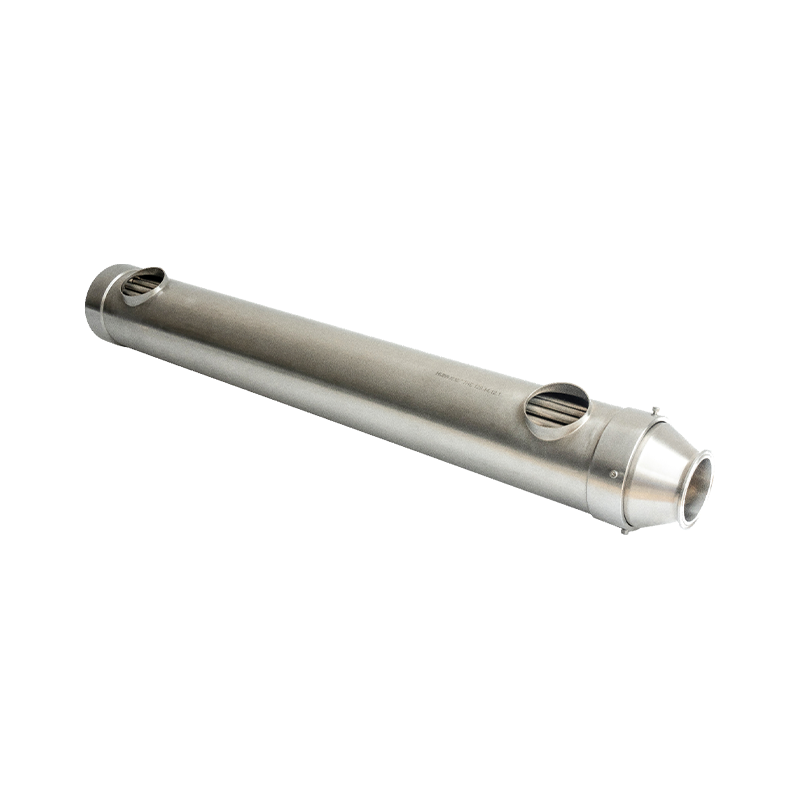
DTS designs deserve particular attention when utility fluid — glycol, plant water, or steam — coexists with product-side flow. A DTS heat exchanger has a second tube sheet and an intermediate chamber open to atmosphere. Should a weld or tube fail, both fluids drain into the vented space instead of mixing with each other. That single design detail often decides the choice for heat transfer between utility loops and process fluids. Shiloc's sanitary DTS double tube sheet heat exchanger is built for exactly this service, with hygienic design and full material traceability.
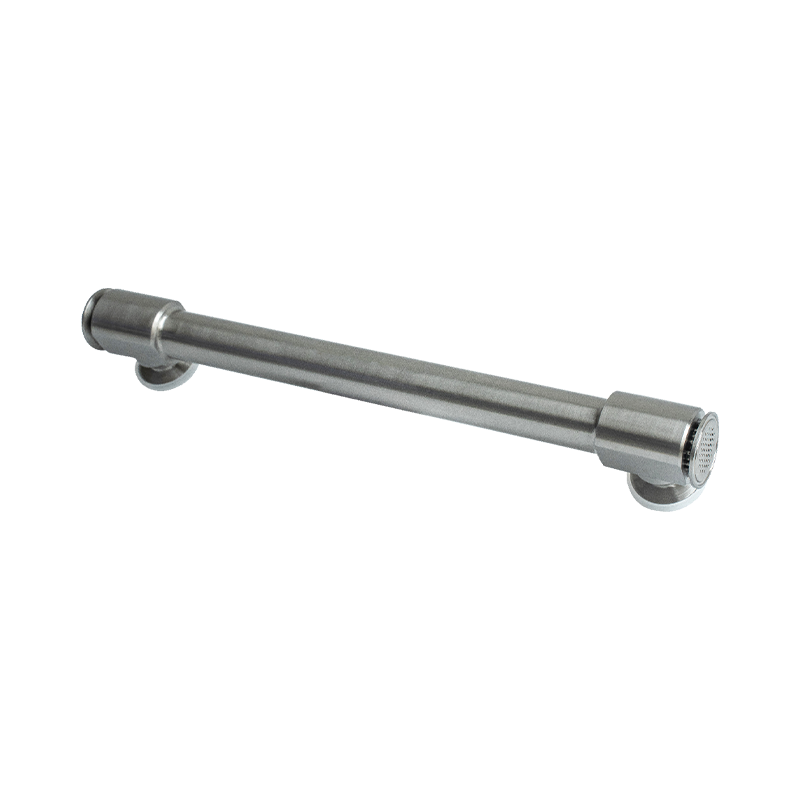 Custom Sanitary DTS (Double Tube Sheet) Heat Exchanger Manufacturers, FactoryShiloc (Shanghai) Industrial Trading Co., Ltd. Is China Custom Sanitary DTS (Double Tube Sheet) Heat Exchanger Manufacturers, Factory, 1....View Product →
Capillary Tube Heat Exchangers
Capillary heat exchangers are useful where process volume is small and product retention inside the exchanger must be minimal. Their high surface-area-to-volume ratio makes them effective in polish loops and small-volume process lines.
How the Skid Role Changes by Process Stage
To make the selection process more concrete, the table below summarizes where temperature control appears in a typical mAb sequence and what the skid actually does.
| Process Stage | Temperature or Range | Skid Function |
|---|---|---|
| Seed train / bioreactor culture | 37 °C | Maintain culture temperature; respond to metabolic heat load |
| Harvest pool hold | 2–8 °C or 15–25 °C | Cool and hold intermediate product |
| Low-pH viral inactivation | 15–25 °C or 37 °C per protocol | Heat to setpoint, control during hold, cool after hold |
| Chromatography feed | 15–30 °C | Preheat or cool process feed |
| UF/DF retentate | 4–30 °C per product | Control retentate temperature during concentration |
| Final formulation | 20–25 °C | Condition product to target temperature |
Practical Procurement Criteria
Four issues cause most of the problems seen after a skid project is installed: materials and finish, cleanability, utility integration, and documentation.
Materials and Surface Finish
Wetted parts should be 316L stainless steel, preferably electropolished, with process-contact surface roughness at or below Ra 0.4 µm. Insist on material certificates and traceability for all wetted components. Discrepancies that are overlooked at procurement will surface during validation and are expensive to repair at that point.
Cleanability and Hygienic Design
A skid used in mAb production will be cleaned and sterilized in place. The design must follow ASME BPE principles: sloped and drainable lines, no dead legs, low-hold-up valves, and hygienic clamp or weld connections. Ask the vendor how they verify drainability — a drain test performed as part of the factory acceptance test is a good answer.
Utility Integration
Every skid needs defined supply conditions: steam pressure, chilled water or glycol temperature, cooling water flow, and instrument air. Before ordering, confirm that plant utilities meet the skid's required operating range. A skid designed for 6 bar steam will not perform at 3 bar.
Control System and Documentation
GMP operation requires a PLC with data logging, audit-trail support, and alarm management that can be validated under 21 CFR Part 11 and Annex 11. The documentation package should include:
- P&IDs and electrical schematics
- Material certificates for all wetted components
- Weld logs and surface finish certificates
- Hydrostatic and functional test reports
- Factory acceptance test results
Agree on the complete documentation package before placing the order.
Skidded versus Field-Built: The Efficiency Comparison
A skidded approach moves engineering risk from the construction site to the factory floor, where it is easier to control. The skid is assembled with its controls, tested with simulated loads, and shipped as a documented unit. Site work is reduced to lifting the skid into place, connecting utilities and process lines, and commissioning.
Field-built systems bring more contractors on site, create a longer critical path, and produce documentation that must be assembled after the fact. The practical result is that skidded systems typically commission faster, occupy less floor space, and can be replicated in parallel trains with fewer engineering hours per additional line.
Shiloc's Bioprocess Skid Offering
This is the context in which Shiloc's bioprocess equipment is designed. Drawing on European fluid process engineering experience, the company offers integrated skids that match the temperature control and hygienic heat transfer requirements of mAb production.
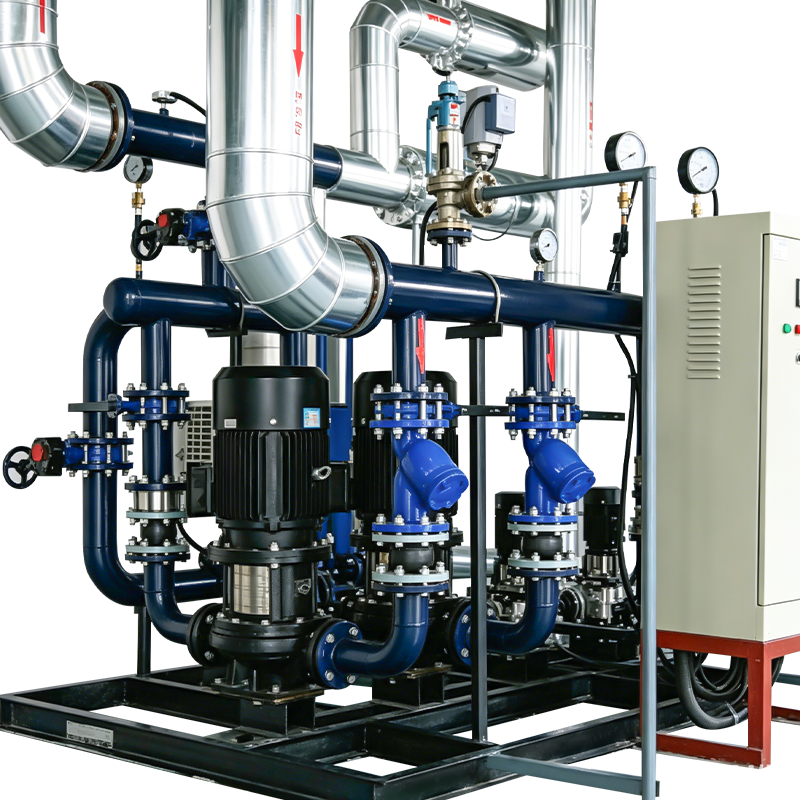
The intelligent bioprocess heat transfer skid units combine the primary heat exchanger, thermal fluid circulation, control valves, and instrumentation in one factory-tested package. They can serve a single bioreactor, or a group of vessels when the duty is properly sized. The precision temperature control unit for biopharma is the companion product when independent control loops are needed in different process areas at the same time.
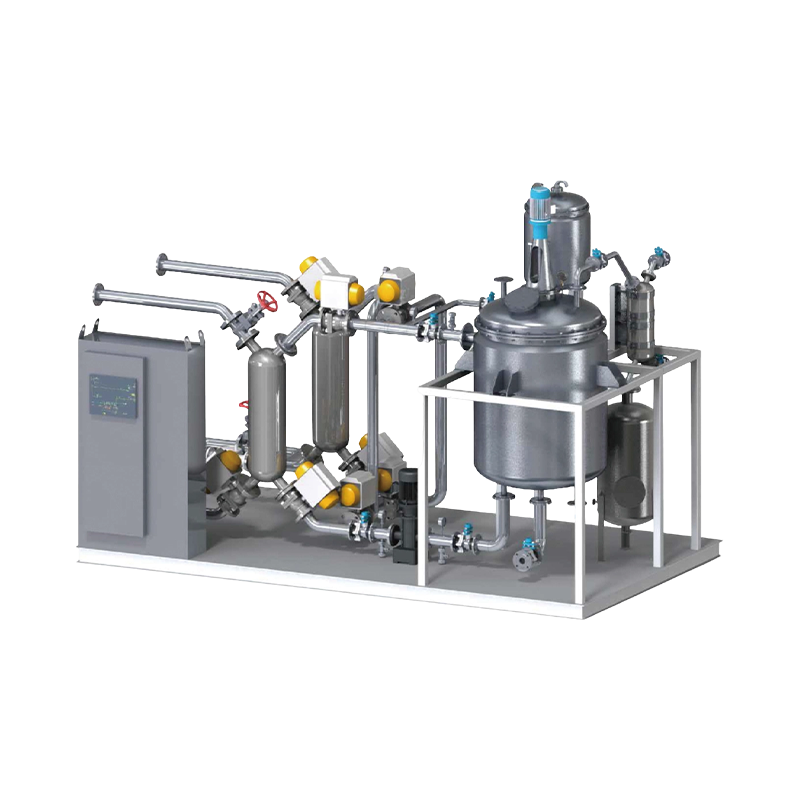 Custom Precision Temperature Control Unit (TCU) For Biopharma Manufacturers, FacShiloc (Shanghai) Industrial Trading Co., Ltd. Is China Custom Precision Temperature Control Unit (TCU) For Biopharma Manufacturers, Fact...View Product →
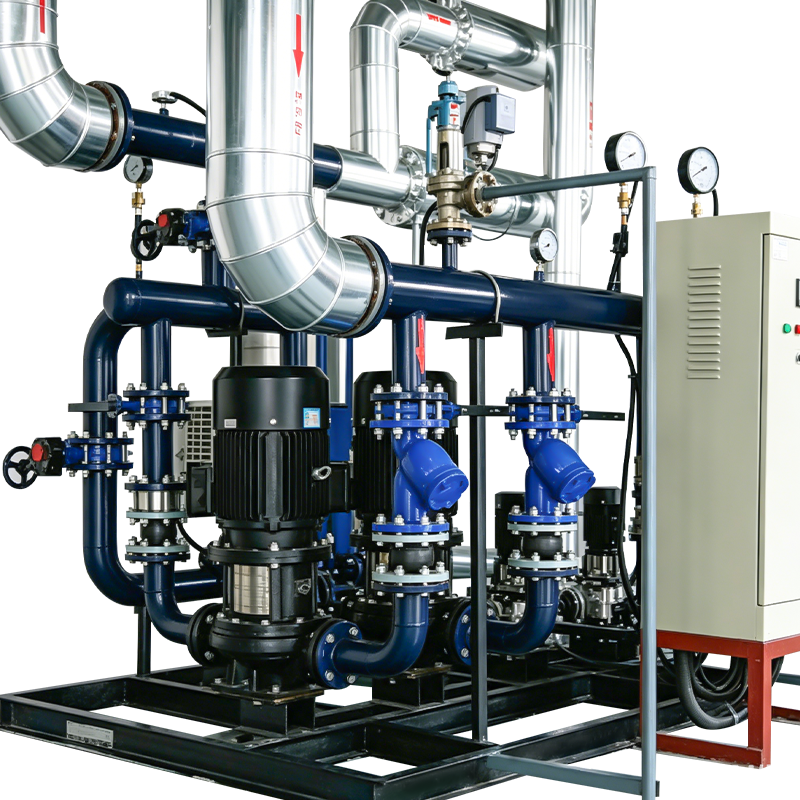 Custom Intelligent Bioprocess Heat Transfer Skid/Units Manufacturers, FactoryShiloc (Shanghai) Industrial Trading Co., Ltd. Is China Custom Intelligent Bioprocess Heat Transfer Skid/Units Manufacturers, Factory, Th...View Product →
Alongside the skids, Shiloc supplies sanitary heat exchangers — DTS, capillary, tube-in-tube, and shell-and-tube — so the engineering team can select the right heat transfer surface for each process. The bioprocess integrated skids product range gives a full overview of this equipment, and a detailed look at how these skids support modern bioprocess manufacturing is available in our industry news section.
The Practical Takeaway
When a mAb facility expansion stalls, the cause is rarely the reactor itself. It is usually the peripheral systems that could not deliver the required temperature, cleanability, or documentation. Bioprocess skids address all three, and they reduce installation time and validation effort at the same time. Before deciding between a field-built loop and a factory skid, compare materials, control accuracy, utility conditions, and the documentation the vendor will deliver. On those four points, a purpose-built skid is the difference between a predictable project and one that creates surprises at the worst possible moment.
If your team is in the middle of a mAb project and needs help specifying temperature control or heat transfer skids, contact our engineering team with your process requirements.
PREV:How Material Selection Affects Bioprocess Skid Quality: A Buyer's Engineering Guide
NEXT:Single Use Bioprocess Skids vs Stainless Steel Skids: Complete Buyer's Guide
NEXT:Single Use Bioprocess Skids vs Stainless Steel Skids: Complete Buyer's Guide
Interested in cooperation or have questions?
Recommended LINS
✦
hygienic process skid for food industry
CIP Skid System for Food Industry
CIP process skid system for food industry
automated process skid system for food processing
Sanitary Process Skid
Food and Beverage Process System
food and beverage process skid system
sanitary process skid system
modular food processing skid system
beverage processing skid system
Let'S Work Together Welcome Aboard!
-

haikexin@haikexin.com
+8613391278930
-
 +86-21-57560276
 -
 No. 2819, Sihu Road,Fengxian District, Shanghai, China
Join Our Mailing List
Copyright © Shiloc (Shanghai) Industrial Trading Co., Ltd. All Rights Reserved.
Process Systems & Equipment For Food & Biopharma Manufacturers
