
 English
 русский
 Português
 Français


 Read More

Product Category
NEW Category
Contact us
Contact Us
We specialise in the research, development and manufacture of electrical wires and cables.
 +86-21-57560276
Shiloc | How to Reduce Bioprocess Manufacturing Costs with Skid Systems
Content
Every week of field installation that runs late pushes a new bioprocess line further from revenue, and qualification typically adds months before the first batch. Shiloc (Shanghai) Industrial Trading Co., Ltd. supplies bioprocess integrated skids that attack cost at the source: instead of assembling piping, welding, wiring, and heat-transfer units in the field, the process arrives as a factory-tested module. The practical result is lower installation labor, shorter commissioning, a smaller footprint, and energy savings that compound over every operating year.
Where Bioprocess Manufacturing Costs Really Come From
More than half of bioprocess capital project overruns come from field assembly and commissioning, not from the quoted price of the equipment. That matters because the equipment spec is decided early, while the cost leaks happen later, on site, under schedule pressure.
Before optimizing anything, split the project into fixed and controllable cost areas. Equipment and components are fixed by specification. Field installation is controllable and usually the largest surprise, because piping erection, welding, insulation, and wiring happen under site conditions. Commissioning and validation are controllable in schedule terms, because every loop check and documentation gap extends the critical path. Utility operation is controllable across the whole life of the plant, since heating, cooling, and cleaning cycles repeat with every batch.
Bioprocess integrated skid: a pre-assembled, factory-tested module that combines piping, valves, instrumentation, heat-transfer units, and controls for a defined process function into one engineered package delivered to site as a single unit.
- Equipment and instrumentation: defined by process specification, limited negotiation room after award
- Site installation: piping, welding, wiring, insulation executed under uncontrolled field conditions
- Commissioning: pressure tests, leak tests, loop checks, automation verification
- Validation: IQ/OQ/PQ documentation, training, deviation handling
- Operating utilities: heating, cooling, CIP, compressed air consumed on every batch
For a project team deciding where to modularize, a clear first question is what bioprocess integrated skids are and why they matter before committing to a delivery strategy.
How Skid Systems Change the Cost Equation
Pre-engineered skid systems cut cost by moving installation and testing hours from the field to the factory, where labor is more predictable and quality problems surface during factory acceptance testing instead of during site commissioning.
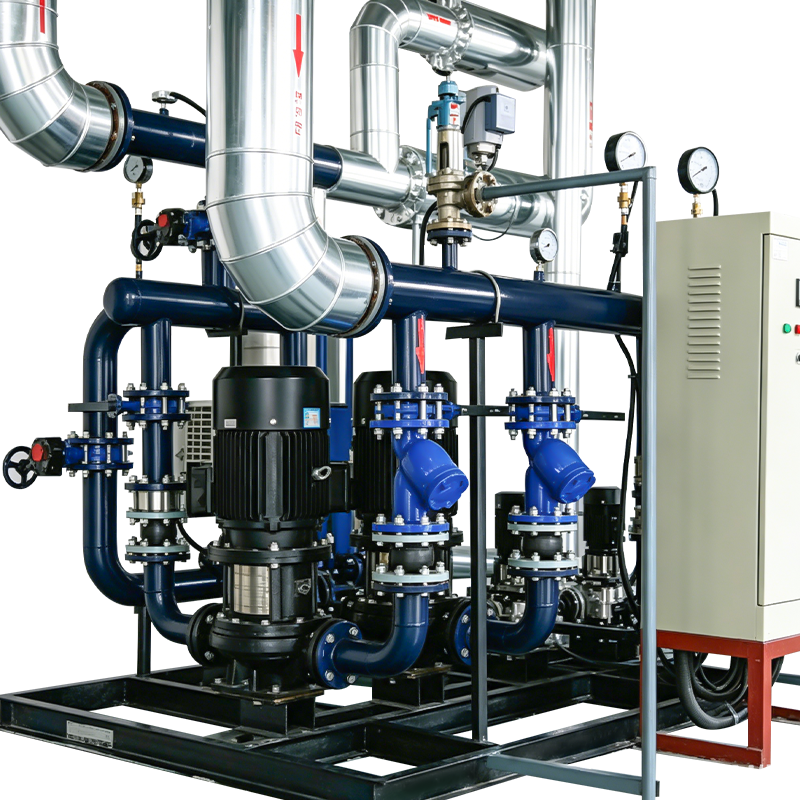
For heating and cooling loops, the effect is direct. intelligent bioprocess heat transfer skid units integrate the heat exchanger, pump, valves, and temperature instruments on a single frame, so the complete temperature-control loop arrives tested and ready to connect. Layout planning and utility sizing become simpler, and the engineering effort behind the skid-based bioprocess manufacturing design is reused instead of repeated.
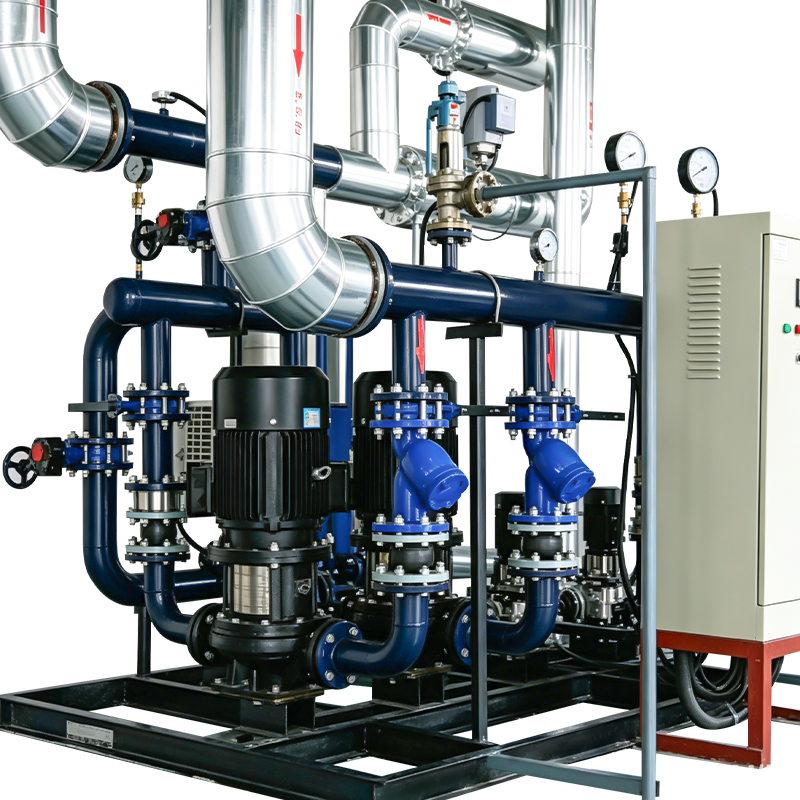 Custom Intelligent Bioprocess Heat Transfer Skid/Units Manufacturers, FactoryShiloc (Shanghai) Industrial Trading Co., Ltd. Is China Custom Intelligent Bioprocess Heat Transfer Skid/Units Manufacturers, Factory, Th...View Product →
Stick-built baseline
- Piping and welding executed on site under tight schedule pressure
- Interfaces between heat exchanger, pump, and controls tested only after full assembly
- Commissioning starts after every discipline finishes field work
- Layout driven by available floor area, often forcing oversized utility runs
- Documentation assembled from site records months after fabrication
Skid-based delivery
- Piping prefabricated and welded in the shop under controlled conditions
- Complete loop function verified by factory acceptance test before shipment
- Site work reduced to utility connection and final loop checks
- Compact frame reduces footprint and shortens utility distances
- Documentation generated during fabrication and shipped with the module
A precision temperature control unit for biopharma adds a second layer of savings: it holds process temperature within tight tolerances, which reduces batch-to-batch variability and the energy wasted by overshooting setpoints.
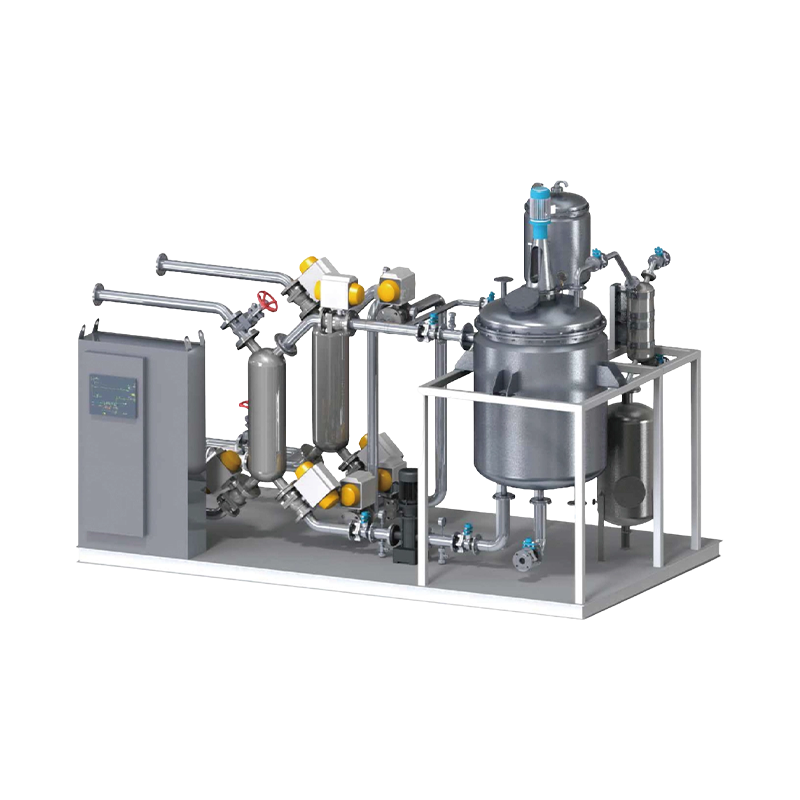 Custom Precision Temperature Control Unit (TCU) For Biopharma Manufacturers, FacShiloc (Shanghai) Industrial Trading Co., Ltd. Is China Custom Precision Temperature Control Unit (TCU) For Biopharma Manufacturers, Fact...View Product →
Quantifying the Savings: Typical Results
Representative bioprocess projects with skid-based delivery report field installation labor 30 to 50 percent lower, project schedules 20 to 35 percent shorter, facility footprint 25 to 40 percent smaller, and utility energy 15 to 25 percent lower when precision temperature control replaces oversized loops.
30-50%Lower field installation labor
20-35%Shorter project schedule
25-40%Smaller facility footprint
15-25%Lower utility energy
Relative cost and schedule index, stick-built = 100
Stick-builtSkid-based
Install labor
Project schedule
Facility footprint
Energy per batch
Representative ranges based on typical skid-based bioprocess project benchmarks.
| Cost area | Stick-built baseline | Skid-based approach | Typical impact |
| Field installation | On-site piping, welding, wiring | Factory prefabrication and FAT | 30-50% lower labor |
| Commissioning | Loop checks after full assembly | Connection-only checks at site | 2-4 weeks shorter |
| Qualification | Documentation rebuilt on site | Documentation shipped with skid | Earlier IQ/OQ start |
| Utility operation | Oversized heating and cooling loops | Precision TCU matched to duty | 15-25% lower energy |
| Contingency | Late defect discovery on site | Defects found during FAT | Lower contingency spend |
Design Choices That Protect the Savings
The fastest way to waste skid savings is to select modules on price alone and ignore heat-transfer efficiency, temperature-control precision, and hygienic design, because those three factors decide operating cost for the life of the plant.
Heat-transfer geometry sets the operating ceiling
For hygienic utility loops such as pharmaceutical water systems, sanitary DTS double tube sheet heat exchangers eliminate contact between utility fluid and process fluid, removing a whole class of contamination risk and the revalidation cost that follows. For small volumes and high-purity streams, capillary heat exchangers achieve similar duty with less hold-up volume and tighter temperature control. Surface area, pressure drop, and cleanability must be balanced against the duty profile, not against the lowest purchase price.
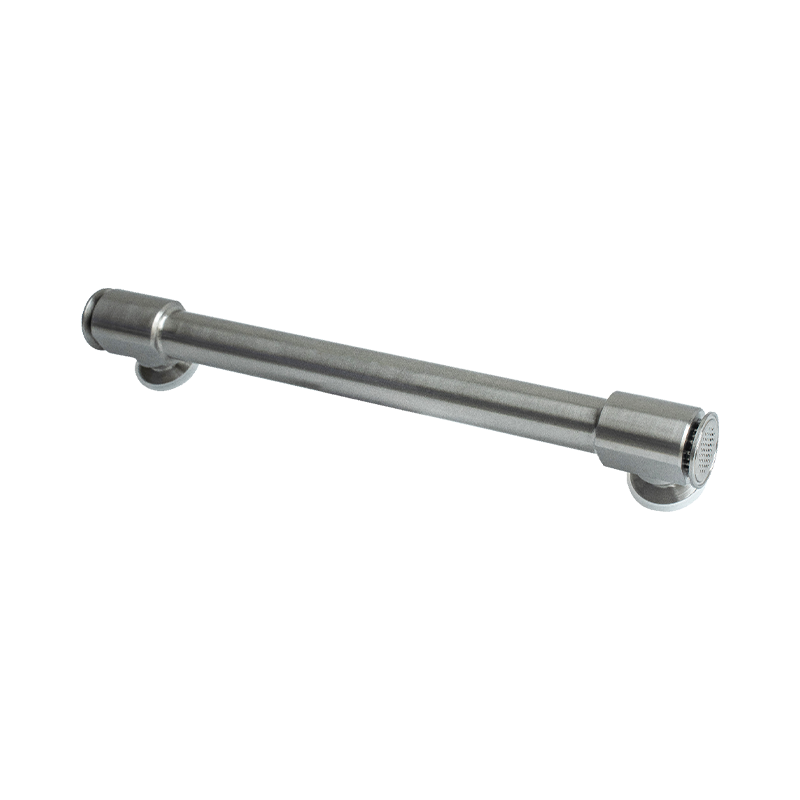 Custom Sanitary DTS (Double Tube Sheet) Heat Exchanger Manufacturers, FactoryShiloc (Shanghai) Industrial Trading Co., Ltd. Is China Custom Sanitary DTS (Double Tube Sheet) Heat Exchanger Manufacturers, Factory, 1....View Product →
Temperature control determines energy cost
Batch heating and cooling rarely run at a steady state. A precision temperature control unit modulates heating and cooling capacity against actual process demand instead of dumping excess utility capacity through a bypass, which is where the 15 to 25 percent energy reduction comes from. Ramp rate, dead time, and setpoint tolerance should be written into the specification before the skid is designed.
Hygienic design controls validation and contamination cost
Every dead leg, crevice, or incompatible surface finish adds cleaning time and revalidation risk. Skids built with 316L stainless steel, hygienic connections, and drainable piping shorten CIP duration and make the documented material traceability that auditors expect a deliverable of the procurement package instead of an afterthought. When reviewing a vendor proposal, ask for the weld map and material certificates before you ask for the price.
- Define maximum heating and cooling duty, ramp rate, and process volume before requesting quotes
- Verify materials, surface finish, and connection standards against the GMP specification
- Confirm the automation protocol and signal list match the facility control system
- Review the documentation package: material certificates, weld maps, and FAT reports must exist before shipment
- Check service access for maintenance, because an over-packed frame can make routine work harder
For a deeper look at how modules are sized and specified, the bioprocessing systems engineering principles article covers the trade-offs between heat-transfer surface, pressure drop, and cleanability.
Every dollar saved in field installation is worth less than a dollar lost to an undersized heat exchanger. Match the skid to the process, not the process to the skid.
How to Implement Skid Systems Without Losing the Benefit
The repeatable sequence that protects skid savings is to fix the process basis first, use factory testing to lock quality, and then treat site work as connection work rather than construction work.
- Define the process basis: duty, ramp rates, utilities, automation protocol
- Select the module class: heat transfer, temperature control, or combined skid on one frame
- Agree the FAT plan and documentation format before fabrication starts
- Perform the factory acceptance test with process and automation engineers present
- Transport and connect on site: utilities, process ports, and signal wiring only
- Execute qualification using the documentation shipped with the module
Frequently Asked Questions
How much can skid systems reduce bioprocess manufacturing costs?
On representative projects, skid-based delivery lowers field installation labor by 30 to 50 percent, shortens the overall project schedule by 20 to 35 percent, reduces facility footprint by 25 to 40 percent, and cuts utility energy by 15 to 25 percent when precision temperature control is used. Exact numbers depend on process complexity and site conditions.
Are skid systems suitable for GMP biopharmaceutical production?
Yes. Skids built for biopharma use electropolished 316L stainless steel, hygienic connections, drainable piping, and documented material traceability. Factory acceptance testing verifies function before shipment, so the module arrives with the documentation needed to start installation qualification sooner than a stick-built line.
What is the difference between a process skid and standalone process equipment?
Standalone equipment, such as a single heat exchanger, requires the project team to design and install the surrounding piping, valves, instruments, and controls in the field. A process skid integrates those elements on a common frame and delivers a complete function, such as temperature control or heat transfer, as one tested module.
Which bioprocess functions benefit most from skid delivery?
Heating and cooling loops benefit the most, because they repeat across bioreactors, hold tanks, and buffer vessels. Temperature control units, heat-transfer skids, and CIP modules deliver the largest savings when the same function is needed in multiple locations, since one proven skid design can be replicated without re-engineering.
If your project team is evaluating skid delivery, start with a heat and mass balance for each duty point before comparing equipment pricing. The savings belong to the process definition, not to the metal.
PREV:How Material Selection Affects Bioprocess Skid Quality: A Buyer's Engineering Guide
NEXT:Bioprocess Skids for Monoclonal Antibody Manufacturing: A Practical Selection Guide
NEXT:Bioprocess Skids for Monoclonal Antibody Manufacturing: A Practical Selection Guide
Interested in cooperation or have questions?
Recommended LINS
✦
Skid Mounted Process System
Process Skid System
Food Processing Skid System
automated process skid system for food processing
Automatic UHT Sterilizer for Milk
Sanitary Process Skid
CIP Skid System for Food Industry
food and beverage process skid system
food ingredient mixing skid system
skid mounted food processing system
Let'S Work Together Welcome Aboard!
-

haikexin@haikexin.com
+8613391278930
-
 +86-21-57560276
-
 No. 2819, Sihu Road,Fengxian District, Shanghai, China
Join Our Mailing List
Copyright © Shiloc (Shanghai) Industrial Trading Co., Ltd. All Rights Reserved.
Process Systems & Equipment For Food & Biopharma Manufacturers
