
 English
 русский
 Português
 Français


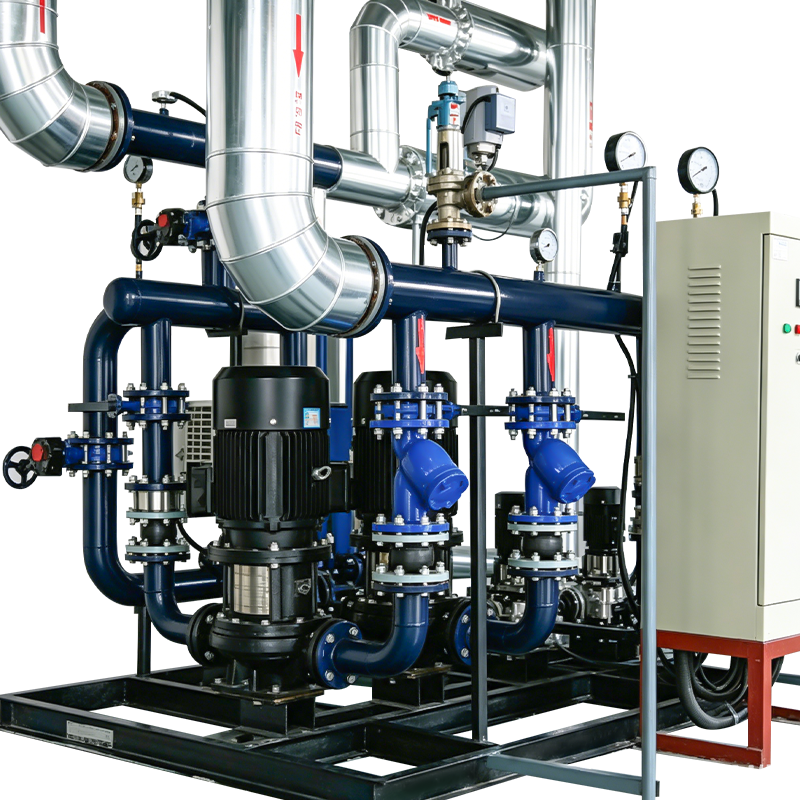
 Read More

Product Category
NEW Category
Contact us
Contact Us
We specialise in the research, development and manufacture of electrical wires and cables.
 +86-21-57560276
Bioprocess Skids for Downstream Processing: Design, Heat Transfer & Selection Guide
Content
- 1 What Are Bioprocess Skids for Downstream Processing?
- 2 Critical Design Requirements for Downstream Skids
- 3 Heat Transfer in Downstream Processing: Where Skid Design Matters
- 4 How to Evaluate and Select a Downstream Processing Skid
- 5 Integration, Documentation and Procurement Support
- 6 Frequently Asked Questions
Biopharmaceutical process engineering
After a 2000 L perfusion harvest is clarified, the product stream must drop from 30 °C to 4 °C within 30 minutes before the capture column can be loaded. The utility loop delivers glycol at only 6 °C, the skid pressure drop exceeds the feed pump rating, and the batch is held at 18 °C for two extra hours. That is a routine call for process and facility engineers in biologics manufacturing, and it is exactly why downstream processing skids are now specified with the same care as the chromatography and filtration systems they support.
What Are Bioprocess Skids for Downstream Processing?
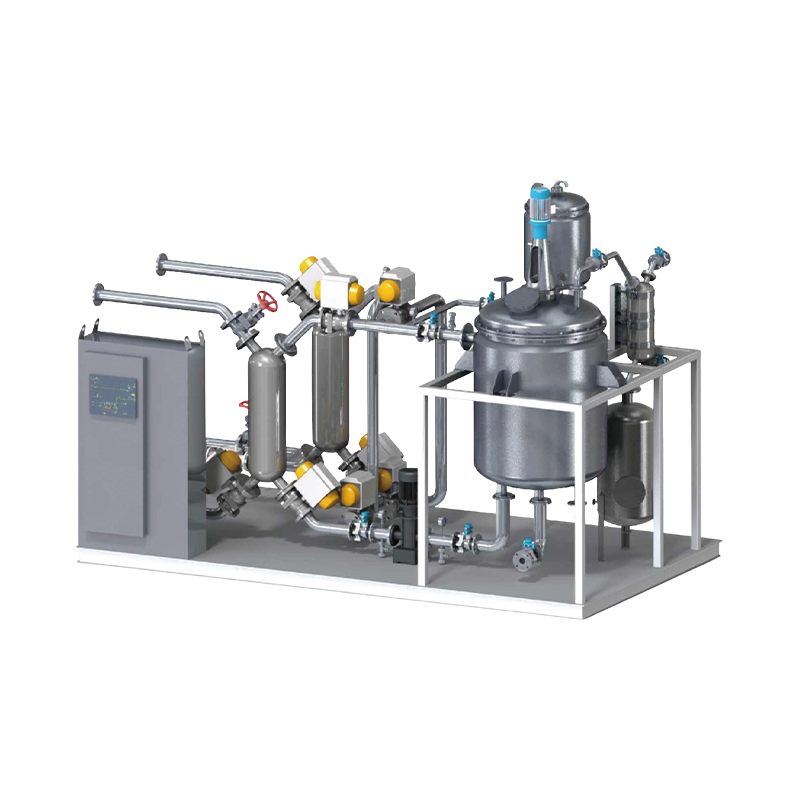
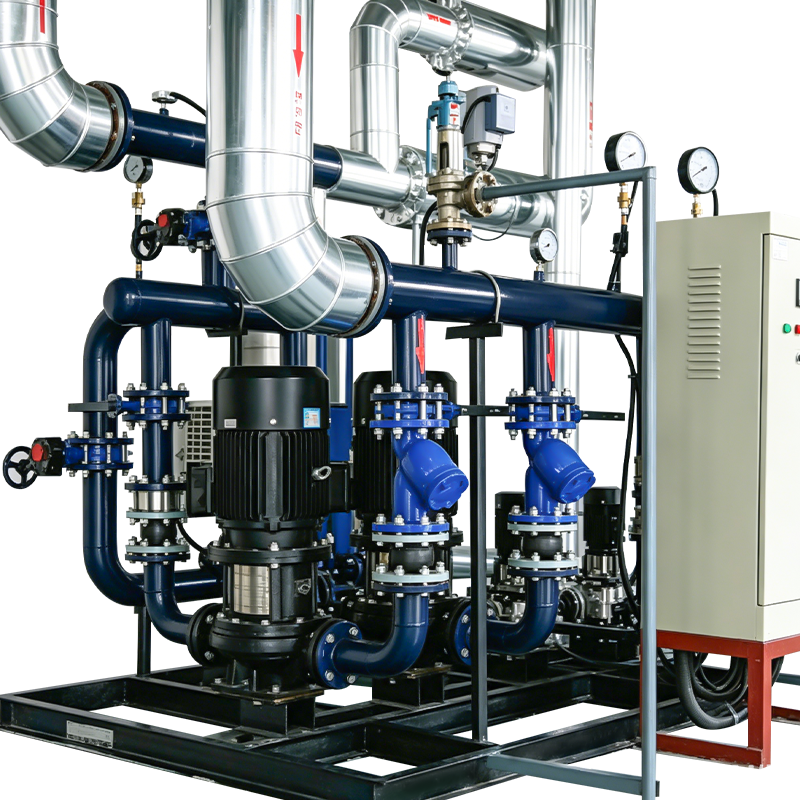
A bioprocess skid for downstream processing is a pre-assembled, skid-mounted module that supplies the heating, cooling, temperature control, buffer conditioning, and cleaning functions required by downstream unit operations such as clarification, capture chromatography, and ultrafiltration/diafiltration.
Core definition: downstream processing skids package heat exchangers, pumps, valves, sensors, and automation into one hygienic module. They eliminate separate utility pipe runs, reduce dead volume, and give operators a single validated system for the most sensitive part of the biologics process.
In practice, manufacturers such as Shiloc ship pre-engineered intelligent bioprocess heat transfer skid units that match the flow, temperature ramp, and cleanability profile of the surrounding process line. The module is built around its utility function rather than retrofitted after the process design is frozen.
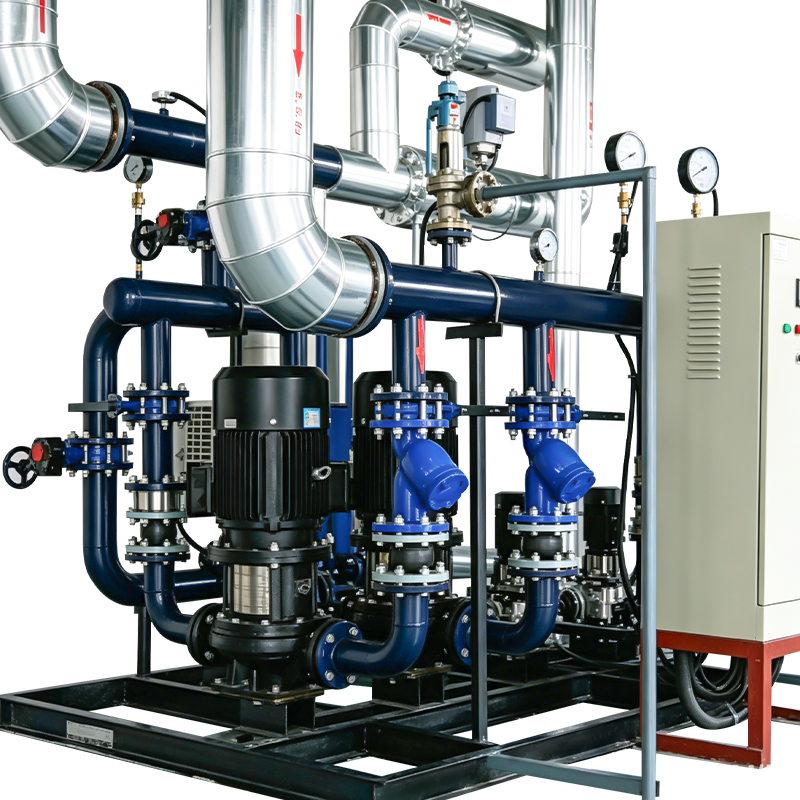 Custom Intelligent Bioprocess Heat Transfer Skid/Units Manufacturers, FactoryShiloc (Shanghai) Industrial Trading Co., Ltd. Is China Custom Intelligent Bioprocess Heat Transfer Skid/Units Manufacturers, Factory, Th...View Product →
A typical downstream skid contains:
- Sanitary heat exchangers sized for cooldown or heating duty
- Pneumatic diaphragm valves and proportional control valves
- Centrifugal pumps with variable speed drives
- Temperature, pressure, and flow instrumentation with local displays
- PLC automation with batch recipes, alarms, and data logging
- Sloped, drainable manifolds with automated CIP/SIP connections
Critical Design Requirements for Downstream Skids
Downstream skid design is governed by GMP cleanability, material traceability, and temperature-control precision, and each requirement becomes a specific engineering detail that must be written into the specification.
Materials and surface finish
Product-contact surfaces are typically 316L stainless steel, electro-polished to Ra 0.4 µm or better, with orbital welds documented by weld maps and material certificates. Utility-side surfaces usually stay at Ra 0.6 µm. Every gasket, diaphragm, and seal must tolerate both the product and the cleaning agents used between batches.
0.4 µmtypical Ra limit on product-wetted surfaces
+/-0.5 °Ctypical return-temperature control tolerance
121 °Csaturated-steam SIP condition the skid must survive
3.1EN 10204 material certificate level for GMP traceability
Automation and process control
Temperature control on a downstream skid is not an on/off valve. A robust design uses a return-temperature control valve that modulates within 2 to 5 seconds, a flow meter for mass balance, and a recipe that commands a ramp rate rather than a step change. The automation layer also logs trends so deviations can be reviewed during batch release.
Practical consequence: a 1 °C overshoot during a 2-8 °C hold can shift aggregation kinetics in a product pool. Control tolerance and sensor response time belong in the user requirement specification before any equipment is quoted.
Heat Transfer in Downstream Processing: Where Skid Design Matters
Heat transfer is the most common reason a downstream skid is specified, because cooling, heating, and hold steps appear at clarification, capture, polishing, viral inactivation, and final formulation. Downstream processing consistently accounts for 60 to 80% of total biologics manufacturing cost, and temperature-control deviations are among the most frequently cited batch review findings.
Sanitary heat exchanger options for downstream skids
The table below compares the sanitary exchanger types most often found on bioprocess skids, using the classification published by Shiloc:
| Exchanger type | Primary duty | Strengths for downstream use | Main limitation |
| Sanitary capillary | Rapid cool-down of small product volumes | Low hold-up volume, fast response, low product loss | Higher pressure drop at high flow rates |
| DTS double tube sheet | Aseptic heating and cooling with double containment | Zero cross-contamination risk, hygienic design | Larger footprint for high duties |
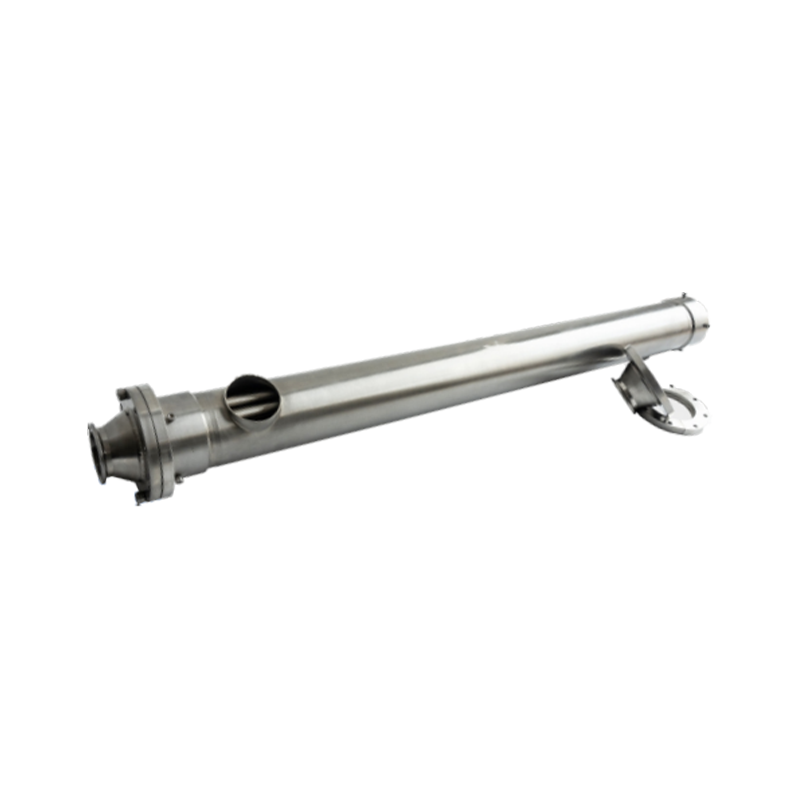
| Tube-in-tube | High-flow temperature adjustment | Simple construction, easy inspection, robust | Less compact than capillary or DTS units |
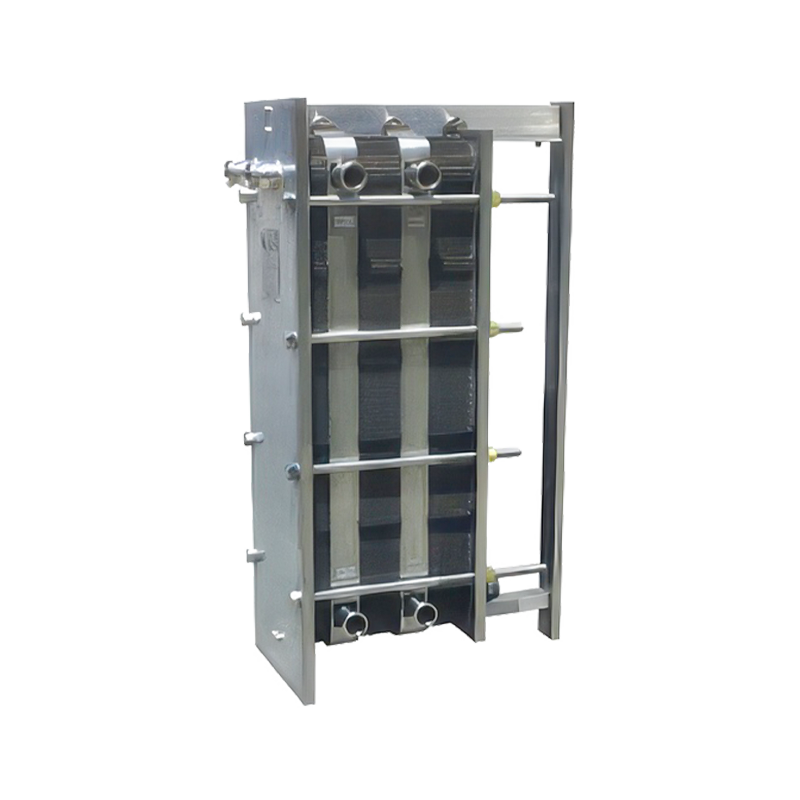
| Plate-and-frame | Utility-side duty only | High heat transfer coefficients, low cost | Gaskets and drainability issues for product-side use |
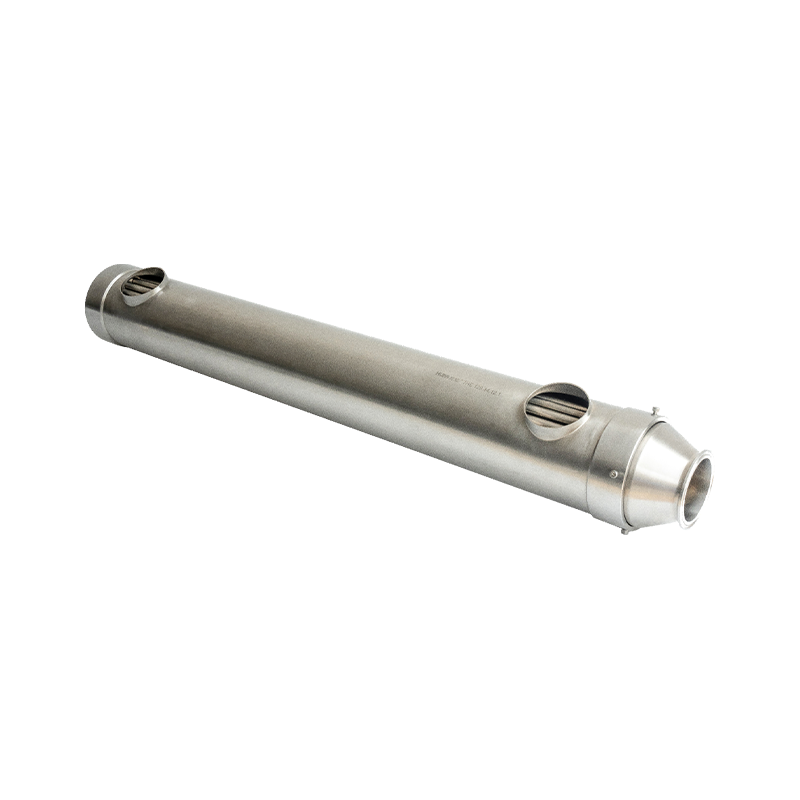
For small-volume intermediate steps, the sanitary capillary heat exchanger is often the first choice because hold-up volume stays low enough that a 10 L product pool does not lose 2 L to dead volume.
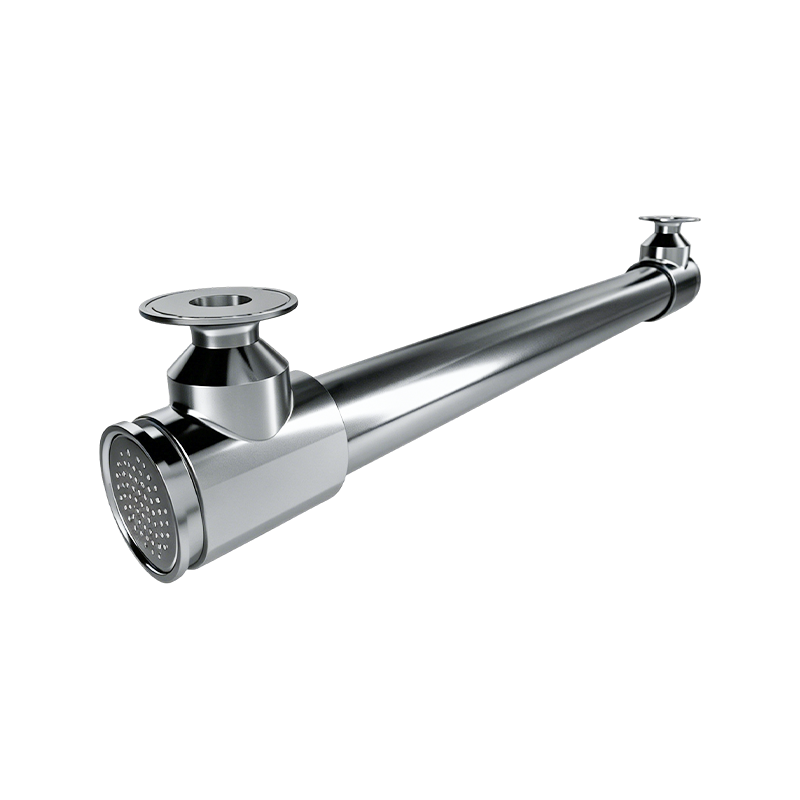 Custom Sanitary Capillary Heat Exchanger Manufacturers, FactoryShiloc (Shanghai) Industrial Trading Co., Ltd. Is China Custom Sanitary Capillary Heat Exchanger Manufacturers, Factory, The Sanitary Cap...View Product →
Comparing heat-transfer performance
The overall heat transfer coefficient (U value) is the first screening parameter before detailed sizing. The chart below shows typical ranges for clean sanitary service.
Typical overall heat transfer coefficients
U value range in W/m2K, clean sanitary service
Ranges are indicative: 1000 to 3000 for plate, 600 to 1200 for capillary, 400 to 800 for DTS, 350 to 700 for tube-in-tube.
Why the number matters: a capillary exchanger at 800 W/m2K needs roughly half the area of a DTS unit at 400 W/m2K for the same cooldown duty. Smaller area means less hold-up, less product loss, and faster batch changeover.
How to Evaluate and Select a Downstream Processing Skid
Evaluate a downstream skid supplier on process control capability, hygienic design, documentation quality, and integration support, in that order. Price matters, but a skid that fails a cleanability review costs more than the difference between quotes.
- Define the operating envelope before inviting quotes: flow rate, inlet and outlet temperatures, acceptable dwell time, and utility pressures such as 3 bar glycol or 6 bar steam.
- Verify cleanability: line slope of at least 1%, zero dead-legs in the product path, and compatibility with the CIP and SIP media used on site.
- Require traceable documentation: material certificates to EN 10204 3.1, weld maps, as-built P&ID, and calibration sheets for loop instruments.
- Check the automation level: ramp-rate control, deviation alarms, and a data historian capable of supporting batch release.
- Request a FAT and SAT plan with acceptance criteria and alarm response tests.
- Confirm spare parts, commissioning support, and warranty terms in writing before ordering.
Practical sizing rule: rate the cold utility connection for at least 120% of the worst-case cooldown load, and require a return-temperature valve response time of 2 to 5 seconds. These two numbers prevent most slow-cooling and overshoot problems found during commissioning.
Application-specific process data translates into a skid specification faster when both sides use the same reference points; this application overview shows where downstream skids and heat transfer units sit in biopharma process lines.
Integration, Documentation and Procurement Support
Integration decides whether a skid works on paper or works in the facility, and a supplier with engineering, manufacturing, and international trade capability lowers the risk of mismatched connections, missing certificates, and delayed deliveries.
Shiloc (Shanghai) Industrial Trading Co., Ltd. is a Shanghai-based fluid equipment and engineering services company whose biopharma product line is divided into integrated bioprocess skids and sanitary heat transfer units. The company's engineering and import-export background, described on the about page, matters when a skid has to cross a border with the correct customs and technical documentation.
When precise temperature control is the critical requirement, a precision temperature control unit (TCU) for biopharma is a lower-risk choice than adapting a general-purpose exchanger, because the control loops, sensors, and utility connections arrive pre-integrated and factory-tested.
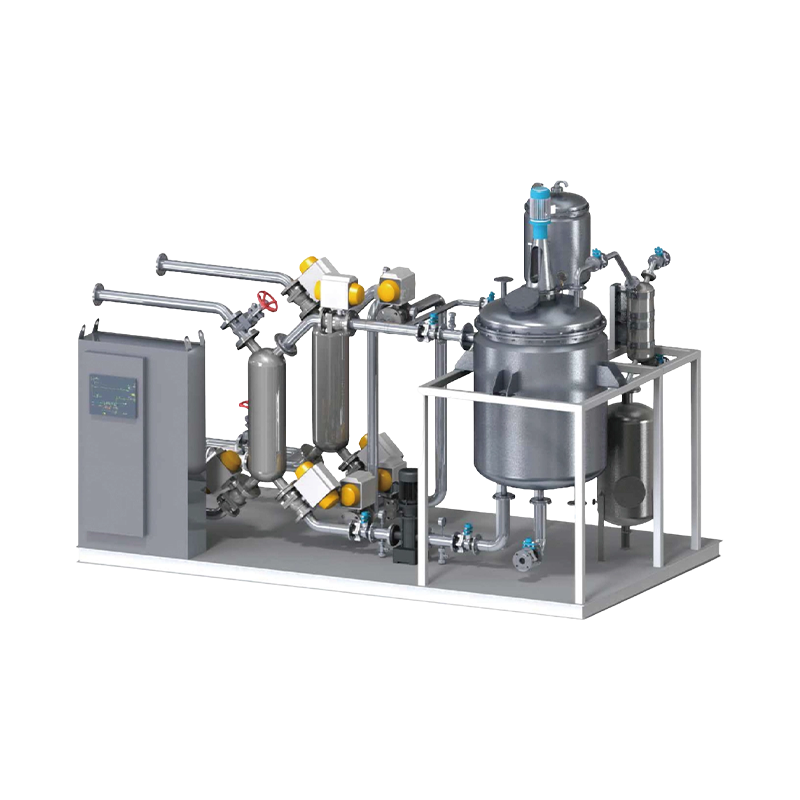 Custom Precision Temperature Control Unit (TCU) For Biopharma Manufacturers, FacShiloc (Shanghai) Industrial Trading Co., Ltd. Is China Custom Precision Temperature Control Unit (TCU) For Biopharma Manufacturers, Fact...View Product →
Procurement checklistCustoms classification, INCO terms, payment schedule, spare parts list, delivery lead time, and on-site commissioning scope.
Validation checklistIQ/OQ support, FAT/SAT reports, calibration certificates, cleaning validation data, and the as-built documentation package.
A skid specification that covers flow, temperature, utility data, and control requirements earns a faster and more accurate quote; the contact page is the practical starting point for a project inquiry.
Frequently Asked Questions
What is a bioprocess skid used for in downstream processing?
A bioprocess skid packages the heating, cooling, temperature control, cleaning, and utility functions that downstream unit operations need into a single hygienic, automated module. It reduces field piping, shortens commissioning, and provides one validated system for critical process steps.
Why is heat transfer so important in downstream bioprocessing?
Cooling, heating, and hold steps appear in clarification, capture, polishing, viral inactivation, and formulation. Poor temperature control can cause protein aggregation, enzymatic degradation, and failed viral inactivation holds, which is why heat exchangers and temperature control units are the most safety-critical components of a downstream skid.
How do sanitary capillary heat exchangers compare with DTS double tube sheet units?
Capillary units offer lower hold-up volume and faster response, which suits small product pools and rapid cooldown duties. DTS double tube sheet units provide double containment for aseptic, high-flow applications. The choice depends on product volume, required U value, and cross-contamination risk tolerance.
What documentation should a buyer request for a GMP skid?
A GMP-compliant skid should come with material certificates to EN 10204 3.1, weld maps, as-built P&IDs, instrument calibration sheets, FAT and SAT reports, cleaning validation support, and a spare parts list. These documents support commissioning and the batch-release audit trail.
PREV:How to Improve Bioprocess Skid System Efficiency: Key Engineering Levers
NEXT:Sanitary Heat Exchanger: Key Material, Surface Finish and Hygienic Requirements
NEXT:Sanitary Heat Exchanger: Key Material, Surface Finish and Hygienic Requirements
Interested in cooperation or have questions?
Recommended LINS
✦
UHT Processing Equipment for Plant Based Milk
UHT Processing System for Dairy Products
automated process skid system for food processing
UHT Sterilizer for Fruit Juice
Automatic UHT Sterilizer for Milk
CIP Skid System for Food Industry
Food Processing Skid System
CIP process skid system for food industry
hygienic process skid for food industry
food processing equipment skid system
Let'S Work Together Welcome Aboard!
-

haikexin@haikexin.com
+8613391278930
-
 +86-21-57560276
-
 No. 2819, Sihu Road,Fengxian District, Shanghai, China
Join Our Mailing List
Copyright © Shiloc (Shanghai) Industrial Trading Co., Ltd. All Rights Reserved.
Process Systems & Equipment For Food & Biopharma Manufacturers
