
 English
 русский
 Português
 Français

 Read More

Product Category
NEW Category
Contact us
Contact Us
We specialise in the research, development and manufacture of electrical wires and cables.
 +86-21-57560276
Quality Standards for Bioprocess Integrated Skid Manufacturing: A Practical Guide
Content
- 1 Why Quality Standards Matter in Bioprocess Skid Manufacturing
- 2 Core Standards for Bioprocess Integrated Skid Manufacturing
- 3 Material Selection, Surface Finish, and Hygienic Design
- 4 Welding and Fabrication Quality Control
- 5 Factory Acceptance Testing and Site Acceptance Testing
- 6 Documentation: The Backbone of Skid Quality
- 7 How to Evaluate a Skid Manufacturer's Quality Capability
- 8 Selecting a Manufacturing Partner with the Right Quality System
Why Quality Standards Matter in Bioprocess Skid Manufacturing
A bioprocess skid that passes visual inspection may still fail in operation if its manufacturing quality is undocumented or uncontrolled. In practice, quality standards for bioprocess integrated skid manufacturing are not a single inspection; they are a set of requirements that govern design, material selection, welding, testing, and the evidence behind every work step. When these standards are enforced consistently, the skid arrives with a traceable record that supports installation, commissioning, and process validation.
Bioprocess skids today integrate heat transfer, temperature control, cleaning, and fluid distribution into one frame. That integration increases the consequences of poor workmanship because a single weld defect can contaminate a batch or cause a costly delay. Manufacturers that build to recognized standards such as ASME BPE and GMP guidance reduce these risks at every stage of production. As explained in our company profile, this quality orientation is part of a broader engineering and manufacturing capability.
Core Standards for Bioprocess Integrated Skid Manufacturing
Several standards shape a skid's quality profile. ASME BPE provides the most complete framework for hygienic design and fabrication of bioprocessing equipment. GMP regulations add requirements for documentation, risk management, and validation. European pressure-equipment rules can apply to skid piping and vessels, while data integrity rules govern automated control systems.
| Standard | Quality Focus | Manufacturing Impact |
|---|---|---|
| ASME BPE | Hygienic design, materials, surface finish, welding, inspection | Sets dimensional, weld, and surface roughness requirements that govern fabrication. |
| EU GMP / ICH Q10 | Quality system, risk management, documentation, validation | Defines the expectation for traceability, change control, and evidence. |
| PED 2014/68/EU | Pressure equipment safety | Classifies skid assemblies and components into safety categories that require specified testing. |
| FDA 21 CFR Part 11 | Electronic records and signatures | Applies when control systems record data or execute automated sequences. |
These standards often overlap. A skid built with ASME BPE-compliant welds and surface finish satisfies the physical requirements, while the GMP data and documentation structure ensures the quality can be demonstrated to inspectors. For an overview of the technology behind these systems, read our article on what bioprocess integrated skids are and why they are essential.
Material Selection, Surface Finish, and Hygienic Design
The wetted contact surfaces of a bioprocess skid must not leach, corrode, or trap product. This is why material selection and surface finish are quality gates, not incidental choices.
Stainless Steel Requirements
Most bioprocess skids use 316L stainless steel for wetted parts. The low carbon content reduces sensitization during welding, preserving corrosion resistance. Each production batch must have a material certificate, and the certificate should be traceable to the heat number and to the component installed in the skid. Some processes at higher temperatures or with chloride-containing media may require more corrosion-resistant alloys such as 904L or duplex stainless steels, but 316L remains the baseline for biopharmaceutical use.
Surface Finish and Cleanability
Surface roughness directly affects cleanability. For wetted surfaces, a typical requirement is Ra not exceeding 0.4 μm for mechanically polished and Ra not exceeding 0.4 μm after electropolishing. Suppliers should provide surface finish measurements from a calibrated profilometer. In practice, values are verified on production pieces rather than on coupons, and the report should indicate the measurement location. For critical piping, borescope inspection supplements surface finish data by revealing internal weld discoloration or contamination.
Hygienic Design Details
Dead legs are the most common source of contamination risk in a skid. Standards such as ASME BPE define acceptable L/D ratios for branches, and a quality-oriented fabricator will design the system to minimize or eliminate stagnant zones. Slopes of at least 1–2% toward drain points, fully encapsulated valves, and hygienic clamp connections are normal expectations. When the process demands absolute separation between utility and product, a sanitary double-tube-sheet heat exchanger is commonly selected for high-integrity applications.
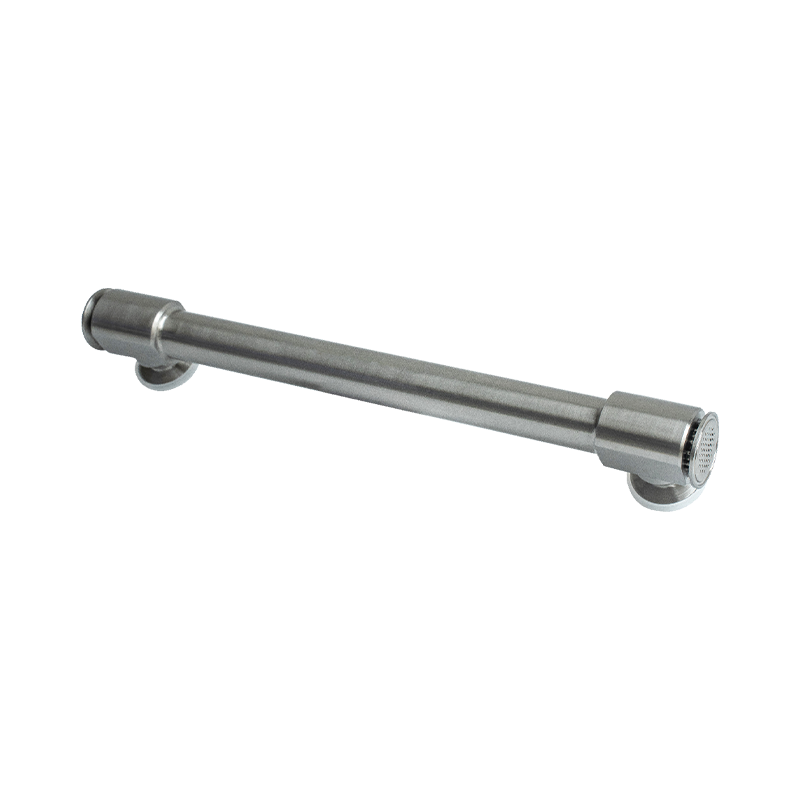 Custom Sanitary DTS (Double Tube Sheet) Heat Exchanger Manufacturers, FactoryShiloc (Shanghai) Industrial Trading Co., Ltd. Is China Custom Sanitary DTS (Double Tube Sheet) Heat Exchanger Manufacturers, Factory, 1....View Product →
Welding and Fabrication Quality Control
Welding is where skid quality is won or lost. A polished surface finish cannot hide an incomplete internal weld or a heat-affected zone that traps bacteria. This is why qualified procedures and documented welds are essential.
Qualification and Procedure Control
All welders should be qualified to accepted codes, such as ASME Section IX or ISO 9606. Before production starts, the manufacturer must establish Welding Procedure Specifications (WPS) and Procedure Qualification Records (PQR). Orbital welding is preferred for small-bore tubing and repetitive pipe joints, because it provides repeatable arc control and full penetration with minimal manual variation. Each weld should be identified in a weld map so that fabrication records, inspection results, and the welder's identification can be linked to the exact location.
Inspection and Assembly Testing
Visual inspection is not enough for hygienic welds. Borescope examination of the internal surface, ferrite measurement, and dye penetrant testing where required are part of a robust quality plan. After welding, the complete skid assembly, including piping, heat exchangers, and valves, should be pressure-tested. The pressure test verifies mechanical integrity and highlights leak points at fittings and gaskets. For complete assembly of heat transfer and temperature control components, testing as a whole system is more reliable than testing components separately. Many vendors now build intelligent bioprocess heat transfer skid units, where the complete system can be tested before shipment.
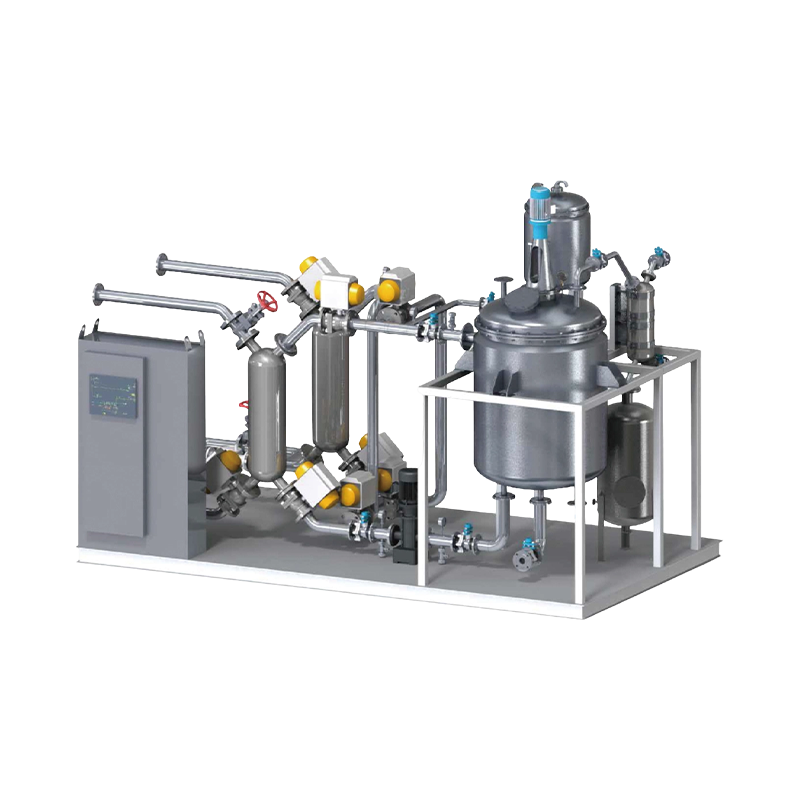
 Custom Intelligent Bioprocess Heat Transfer Skid/Units Manufacturers, FactoryShiloc (Shanghai) Industrial Trading Co., Ltd. Is China Custom Intelligent Bioprocess Heat Transfer Skid/Units Manufacturers, Factory, Th...View Product →
Factory Acceptance Testing and Site Acceptance Testing
The factory acceptance test (FAT) is the first point where the skid must prove it matches the agreed specification. It is also the buyer's best opportunity to catch issues while the manufacturer can still correct them quickly.
A well-structured FAT includes visual and dimensional checks, material certificate review, calibration verification, control logic simulation, I/O testing, alarm and safety function checks, and review of weld and surface finish records. If the skid includes automation, the control sequence should be run against simulated process values to confirm that pumps, valves, and heater controls respond correctly.
| Test Stage | Common Checks | Why It Matters |
|---|---|---|
| FAT | Dimensional verification, material traceability, weld docs, control logic simulation, pressure test results | Resolves problems before shipment, reducing installation risk. |
| SAT | Connection verification, leak tests, sensor re-calibration, communication with plant control system | Confirms the skid performs in the final environment with real utilities. |
| Performance run | Process simulation or media fill, setpoint stability, alarm handling | Generates evidence that supports formal validation. |
The FAT report becomes part of the quality record. During SAT, the manufacturer should re-check critical parameters after transport and installation, because vibration and rigging can shift items from their factory calibration.
Documentation: The Backbone of Skid Quality
For a GMP-regulated user, a skid without complete documentation is effectively non-compliant, regardless of how well it performs. The physical hardware and the paper trail must match exactly.
At a minimum, the documentation set should include process and instrumentation diagrams (P&IDs), electrical schematics, control architecture diagrams, I/O lists, bill of materials with material certificates, weld maps and weld logs, pressure test reports, non-destructive testing reports, surface finish records, calibration certificates, and as-built drawings. For automated skids, control system documentation should describe the software logic, alarm setpoints, and data logging functions.
This documentation helps the user complete installation qualification (IQ) and operational qualification (OQ) more efficiently. It also supports later modifications, because the as-built drawing and revision history show exactly what was changed and why. If a manufacturer cannot provide traceable evidence, the quality system is not effective.
How to Evaluate a Skid Manufacturer's Quality Capability
Rather than relying on marketing materials, evaluate the specific quality controls in place. The following questions are a practical starting point for procurement teams, engineers, and quality assurance personnel.
- Ask to see the quality manual and any certifications relevant to skid manufacturing, such as ISO 9001 or ASME BPE compliance.
- Verify that welding procedures and welders are qualified to ASME Section IX or equivalent, and ask for sample weld maps and PQRs.
- Audit the material certificate traceability system, especially for wetted components and pressure parts.
- Review the FAT protocol before production begins; it should describe the tests, acceptance criteria, and who will witness them.
- Check the manufacturer's automation documentation and data integrity capabilities, because a precision temperature control unit for biopharma
 Custom Precision Temperature Control Unit (TCU) For Biopharma Manufacturers, FacShiloc (Shanghai) Industrial Trading Co., Ltd. Is China Custom Precision Temperature Control Unit (TCU) For Biopharma Manufacturers, Fact...View Product → must record setpoints and deviations reliably.
 - Confirm the change control process for design revisions and post-delivery modifications.
These criteria are not theoretical. A manufacturer that can share actual examples of weld maps, FAT reports, and surface finish measurements is more likely to satisfy the quality standards your project requires.
Selecting a Manufacturing Partner with the Right Quality System
Quality standards for bioprocess integrated skid manufacturing are concrete: they live in the surface roughness report, the orbital welding records, the FAT protocol, and the as-built documentation. A skid built to these standards gives an owner confidence that installation, commissioning, and validation will proceed without unexpected delays or contamination risks.
When evaluating a supplier, pay as much attention to manufacturing quality processes as to the attractive process diagram. Ask for documentation, witness tests, and proof of control. At Shiloc, we follow the same discipline across our bioprocess skid and heat transfer equipment ranges because the final product is only as good as the evidence behind it. If you are planning a bioprocess skid project, contact our engineering team to discuss your quality requirements in detail.
PREV:Single Use Bioprocess Skids vs Stainless Steel Skids: Complete Buyer's Guide
NEXT:How to Successfully Validate Bioprocess Integrated Skids for GMP Biomanufacturing
NEXT:How to Successfully Validate Bioprocess Integrated Skids for GMP Biomanufacturing
Interested in cooperation or have questions?
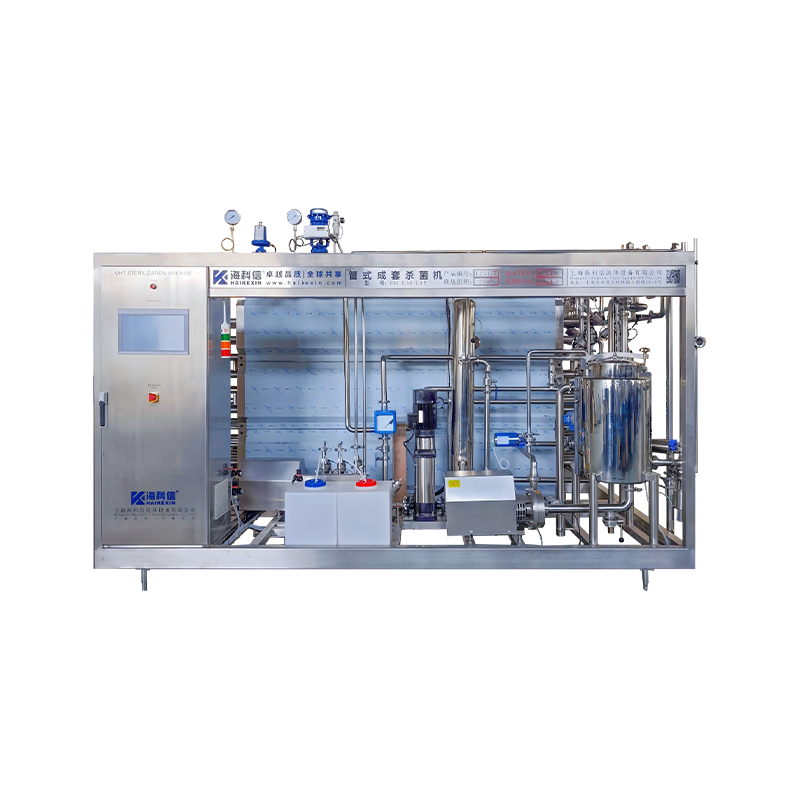

Recommended LINS
✦
Skid Mounted Process System
CIP Skid System for Food Industry
Process Skid System
CIP process skid system for food industry
Sanitary Process Skid
hygienic process skid for food industry
Food Processing Skid System
automated process skid system for food processing
food ingredient mixing skid system
beverage blending skid system
Let'S Work Together Welcome Aboard!
-

haikexin@haikexin.com
-
 +86-21-57560276
 -
 No. 2819, Sihu Road,Fengxian District, Shanghai, China
Join Our Mailing List
Copyright © Shiloc (Shanghai) Industrial Trading Co., Ltd. All Rights Reserved.
Process Systems & Equipment For Food & Biopharma Manufacturers
