
 English
 русский
 Português
 Français

 Read More

Product Category
NEW Category
Contact us
Contact Us
We specialise in the research, development and manufacture of electrical wires and cables.
 +86-21-57560276
Single Use Bioprocess Skids vs Stainless Steel Skids: Complete Buyer's Guide
Content
A cell-therapy contract development and manufacturing organization (CDMO) planning a 2,000 L perfusion line must commit to single-use or stainless steel bioprocess skids before the cleanroom layout, utility connections, and automation architecture are locked. The decision changes capital cost by up to 40 percent, shifts the cleaning validation burden, and sets the batch changeover time for the life of the suite. The right answer depends on process stage, product pipeline, and annual batch volume, not on engineering fashion.
What Distinguishes Single-Use and Stainless Steel Bioprocess Skids
Single-use bioprocess skids route process fluid through pre-sterilized, disposable flow paths, while stainless steel skids rely on fixed 316L piping that is cleaned and sterilized in place through clean-in-place (CIP) and steam-in-place (SIP) cycles. That difference determines validation strategy, changeover speed, and the long-term cost curve of the process suite.
Shiloc (Shanghai) Industrial Trading Co., Ltd., a Shanghai-based fluid equipment supplier with European process technology roots, builds intelligent bioprocess heat transfer skid units that support both material strategies. A bioprocess skid, in both architectures, is the automated module that concentrates pumps, valves, sensors, heat exchangers, and control instrumentation for one unit operation such as media preparation, perfusion, or buffer dilution.
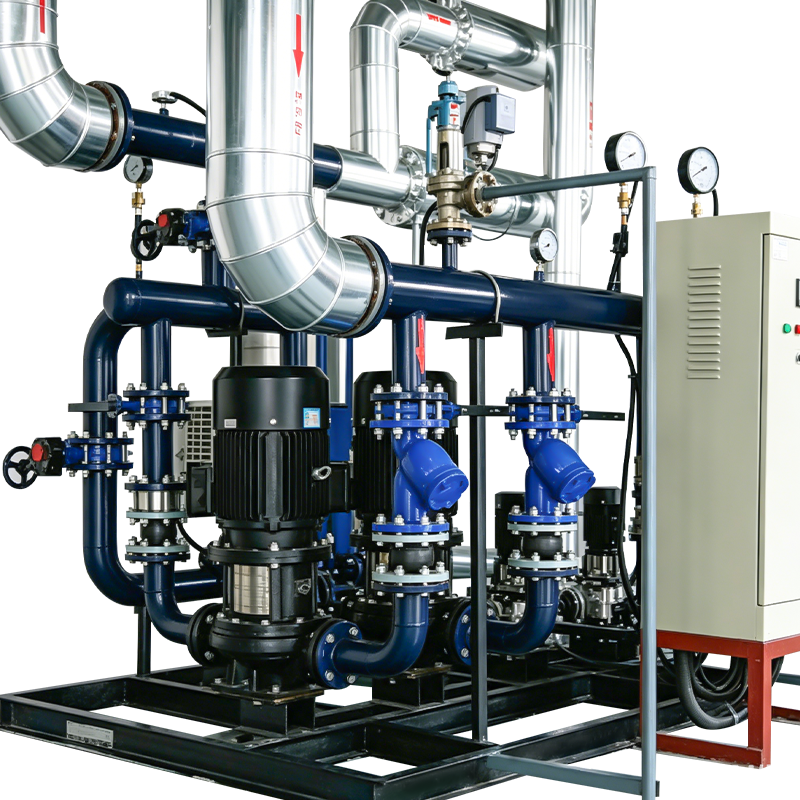 Custom Intelligent Bioprocess Heat Transfer Skid/Units Manufacturers, FactoryShiloc (Shanghai) Industrial Trading Co., Ltd. Is China Custom Intelligent Bioprocess Heat Transfer Skid/Units Manufacturers, Factory, Th...View Product →
A bioprocess skid is a pre-assembled, factory-tested process module that consolidates pumps, valves, sensors, heat transfer equipment, and control instrumentation onto a compact frame to minimize on-site installation and qualification work.
Core Components of Each Architecture
Single-use skids typically mount pre-sterilized tubing assemblies, disposable pressure sensors, single-use bags, and sterile connectors on a lightweight mobile frame. Stainless steel skids integrate electropolished 316L piping, hygienic diaphragm valves, fixed heat exchangers, and cleanable instruments on a rigid base frame with complete weld documentation.
The heat transfer layer is functionally identical but physically different. Single-use skids use jacketed bags or disposable exchanger cassettes, while stainless steel systems run on shell-and-tube, capillary, or double-tube-sheet designs that deliver a double physical barrier between utility and process media.
| Attribute | Single-Use Skid | Stainless Steel Skid |
| Fluid-contact material | Pre-sterilized polymers | Electropolished 316L |
| Cleaning method | Discard after batch | CIP and SIP cycles |
| Changeover time | 2-4 hours | 18-36 hours |
| Validation burden | Integrity test only | Cleaning validation |
| Typical skid price | $80,000-$250,000 | $150,000-$500,000 |
Capital Cost and Total Cost of Ownership
Single-use skids reduce upfront capital spending by 30-50 percent, but stainless steel systems narrow the gap over time because they consume no per-batch disposables. The purchase order alone does not decide which architecture is cheaper.
For equivalent perfusion or media-preparation duty, a single-use skid typically lands at $80,000-$250,000 while a stainless steel skid ranges from $150,000-$500,000. Stainless steel installation adds welding qualification, CIP integration, and facility utility work, increasing the installed project amount by roughly 20-30 percent. Single-use skids drop into a classified room with a mobile frame and simple utility connections, shortening mechanical completion by three to six weeks.
30-50%
Lower upfront CAPEX for single-use
$800-$5,000
Consumable cost per single-use batch
$2,000-$12,000
CIP chemical, WFI, and steam cost per cycle
The operating ledger completes the picture. Every single-use batch consumes bags, tubing sets, connectors, filters, and integrity test fixtures, while stainless steel skids pay for cleaning chemicals, water for injection (WFI), clean steam, and labor. A practical rule: a site running more than 20 stable batches per year on the same product usually reaches total-cost parity with single-use within two to three years. A multi-product facility running short campaigns will never close that gap.
Cost tipping point: below 20 stable batches per year, single-use wins on complete cost of ownership; above that level, stainless steel becomes increasingly competitive.
Contamination Risk, Cleaning Validation, and Turnaround
Single-use flow paths eliminate cross-contamination between campaigns and remove cleaning validation from the batch-release critical path, while stainless steel skids require reproducible CIP and SIP cycles with continued verification after any modification. Quality risk, not purchase cost, is the deciding factor for many CDMOs.
Single-use skids must pass bag and filter integrity tests, connector inspection, and leachables and extractables qualification, but they never carry residue from a previous product. Stainless steel systems depend on cleanability studies, hold-time validations, and swab or rinse analysis that must be re-validated whenever pipe routing or valve type changes.
Where single-use wins
- Zero product-to-product cross contamination
- Cleaning validation removed from the release path
- 2-4 hour changeover enables rapid campaign switching
- No WFI or caustic consumption for skid cleaning
Where stainless steel wins
- Lower per-batch consumable expenditure at scale
- Larger historical dataset for leachables assessment
- Better mechanical durability for 5,000 L and larger tanks
- Simpler scale-up of an identical fixed design across sites
Hygienic heat exchange remains the highest-risk boundary between utility and process fluid. A sanitary DTS double tube sheet heat exchanger creates a secondary leak-containment chamber that conventional shell-and-tube units cannot provide, giving quality assurance the same double-barrier confidence that single-use suppliers claim for their assemblies.
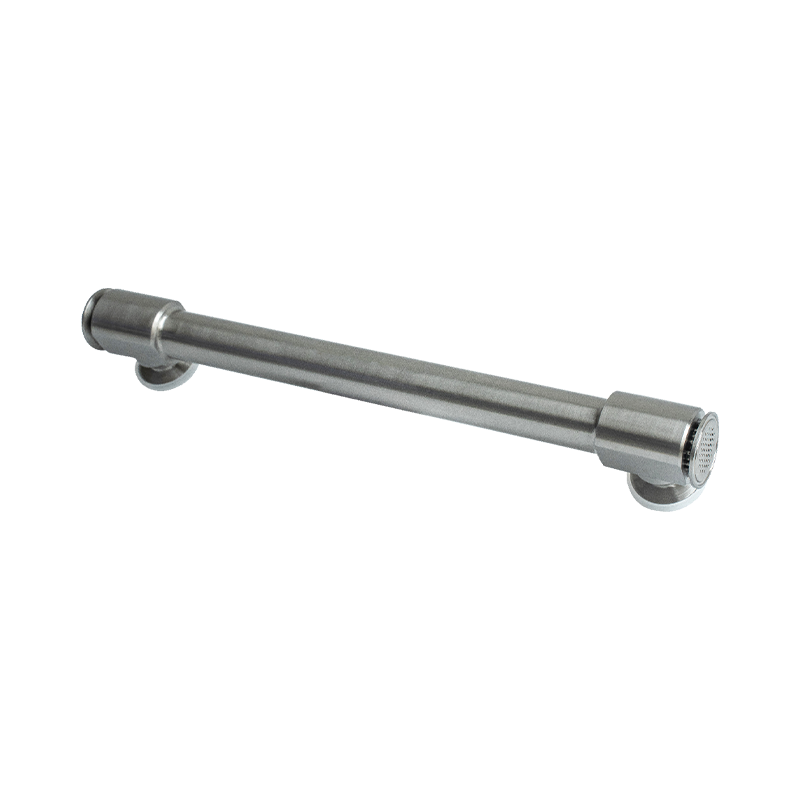 Custom Sanitary DTS (Double Tube Sheet) Heat Exchanger Manufacturers, FactoryShiloc (Shanghai) Industrial Trading Co., Ltd. Is China Custom Sanitary DTS (Double Tube Sheet) Heat Exchanger Manufacturers, Factory, 1....View Product →
In practice, single-use facilities complete campaign changeover in one shift, while stainless steel suites need two to three days for CIP, SIP, and line re-validation.
Operational Flexibility and Environmental Footprint
Single-use skids compress campaign changeover from days to hours and adapt quickly to new product introductions, while stainless steel skids show a lower environmental burden for stable, high-volume production. Flexibility and sustainability pull in opposite directions, so the decision belongs to the production schedule.
A single-use skid that serves three different molecules per month only needs a new disposable flow-path kit to switch products. Stainless steel lines are tuned to one process envelope; changing a flow rate, operating temperature, or batch size can demand mechanical modification and re-validation.
Typical campaign changeover time
Both architectures need precise thermal control. A precision temperature control unit for biopharma maintains the heating and cooling duty of the skid whether the boundary is a single-use bag jacket or a stainless steel heat exchanger, handling exothermic cell-culture conditions and rapid cool-down cycles within a narrow temperature band.
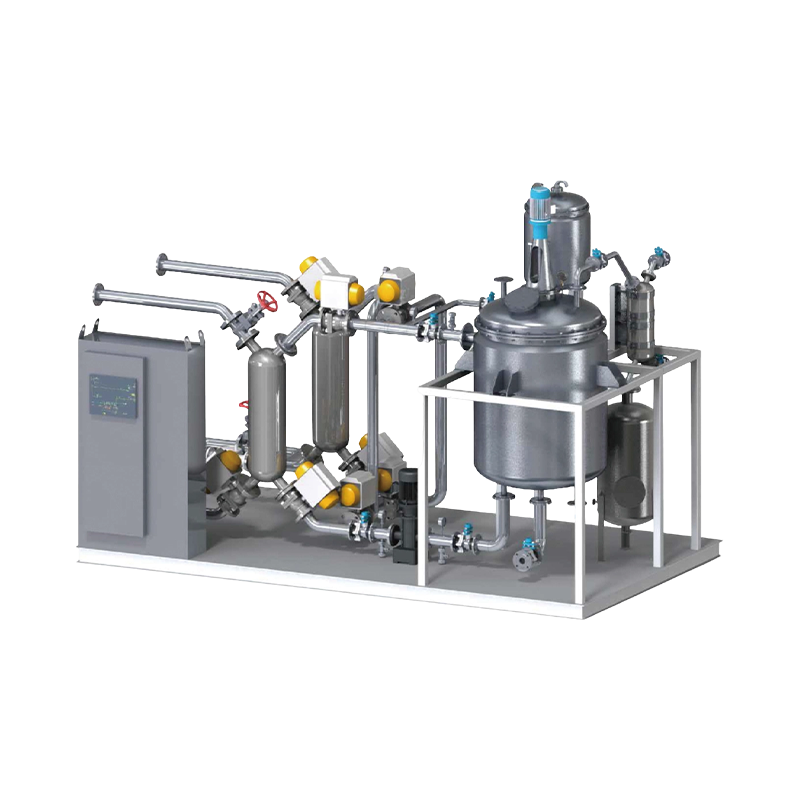 Custom Precision Temperature Control Unit (TCU) For Biopharma Manufacturers, FacShiloc (Shanghai) Industrial Trading Co., Ltd. Is China Custom Precision Temperature Control Unit (TCU) For Biopharma Manufacturers, Fact...View Product →
Environmental accounting complicates the comparison. Single-use skids generate measurable plastic incineration or landfill loads per campaign, while stainless steel skids consume large volumes of WFI, caustic, acid, and clean steam. Life-cycle assessments of comparable perfusion trains indicate that stainless steel tends to show a lower environmental burden once annual batch count exceeds about 30 batches, but that advantage shrinks when oversized stainless assets serve a small multi-product pipeline.
Species-agnostic design rule: if the drug pipeline changes every 12-24 months, single-use skids win on flexibility; if the same molecule will run for a decade, stainless steel wins on steady-state efficiency.
Decision Framework: Which Skid Should You Specify
Specify single-use bioprocess skids for multi-product facilities, clinical-stage supply, and fast capacity expansion; specify stainless steel skids for single-product commercial manufacturing with high run rates and stable campaign lengths. The final call requires a structured walk-through.
- List the product pipeline, including molecules, projected batch counts, and campaign lengths for the next five years.
- Calculate changeover cost by multiplying lost capacity during CIP and SIP, re-validation labor, and campaign scheduling penalties by the number of product switches per year.
- Price cleaning validation work, including validation runs, swab tests, and consumables, and assign that cost to every campaign change.
- Evaluate facility constraints such as floor space, available steam and WFI utilities, classified room depth, and wastewater treatment capacity.
- Run an eight-year total-cost-of-ownership model that includes CAPEX, consumables, utilities, validation, maintenance, and changeover losses.
For most early-stage biotechs and CDMOs, the single-use route dominates because it postpones capital, shortens qualification, and keeps the facility flexible. For fully validated commercial assets running a stable product, stainless steel delivers lower operating cost and a better sustainability profile. Hybrid designs, using a single-use flow path with a stainless steel utility frame, increasingly serve as the middle option. Shiloc's bioprocess application expertise covers both routes, and its engineering team supports skid specification from concept through factory acceptance. To track how integrated skid platforms are evolving, read about modern bioprocess skid manufacturing trends.
Start with campaign length, not skid price. A batch plan below 20 runs per year is normally cheaper on single-use total cost; above 20 stable runs, stainless steel deserves a serious bid.
Frequently Asked Questions
Can single-use skids handle high-density perfusion culture?
Yes. Single-use skids are widely used for perfusion, fed-batch, and concentrated fed-batch operations. Vendors certify single-use bag assemblies for high-cell-density perfusion with vigorous mixing and aeration, and the skid temperature control unit manages the resulting heat load.
Is stainless steel always cheaper for large-scale commercial production?
Not automatically. At 5,000 L and above with a stable product, stainless steel usually wins on per-batch cost. But if the facility produces several products on the same asset, single-use can still deliver a lower total cost because changeover savings outweigh the consumable price.
Do single-use and stainless steel skids require different automation systems?
No. Both architectures use the same PLC or DCS platforms, sensors, and supervisory control. The only automation difference is process-specific: stainless steel skids add CIP and SIP recipes and cycle interlocks that single-use skids do not need.
Can a skid combine single-use and stainless steel elements?
Yes. Hybrid skids use a stainless steel frame and utility loops with disposable process-contact components, or place a stainless steel heat exchanger outside the single-use flow path. Hybrid designs offer the validation speed of single-use and the thermal control strength of stainless equipment.
PREV:No previous article
NEXT:Quality Standards for Bioprocess Integrated Skid Manufacturing: A Practical Guide
NEXT:Quality Standards for Bioprocess Integrated Skid Manufacturing: A Practical Guide
Interested in cooperation or have questions?
Recommended LINS
✦
sanitary stainless steel process skid
sanitary process skid system
stainless steel process skid system
food processing equipment skid system
food ingredient mixing skid system
beverage blending skid system
dairy process skid system
milk processing skid system
automated process skid system for food processing
CIP process skid system for food industry
Let'S Work Together Welcome Aboard!
-

haikexin@haikexin.com
-
 +86-21-57560276
 -
 No. 2819, Sihu Road,Fengxian District, Shanghai, China
Join Our Mailing List
Copyright © Shiloc (Shanghai) Industrial Trading Co., Ltd. All Rights Reserved.
Process Systems & Equipment For Food & Biopharma Manufacturers
