

 English
 русский
 Português
 Français


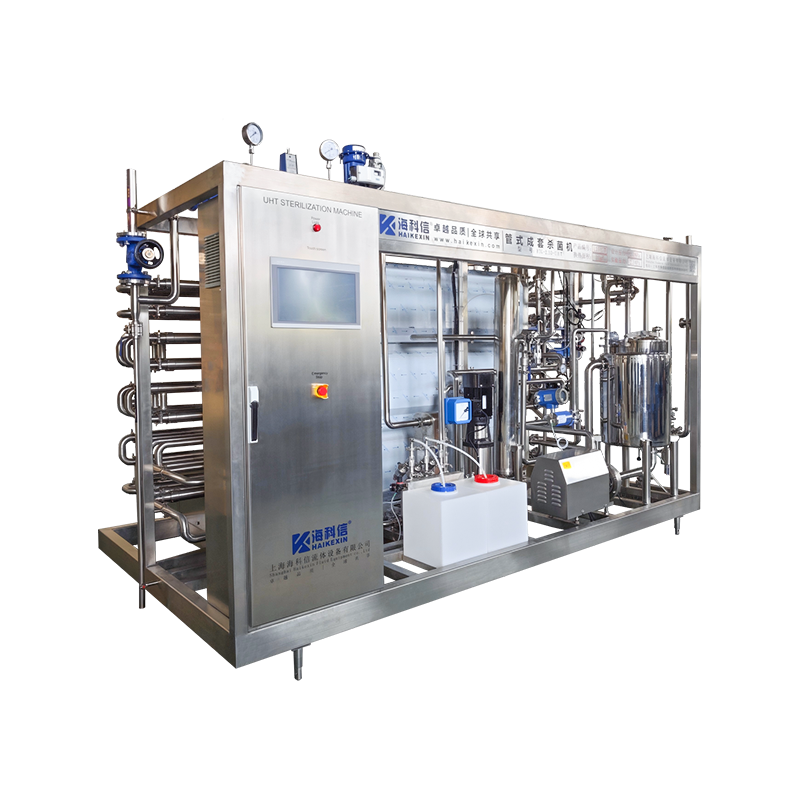
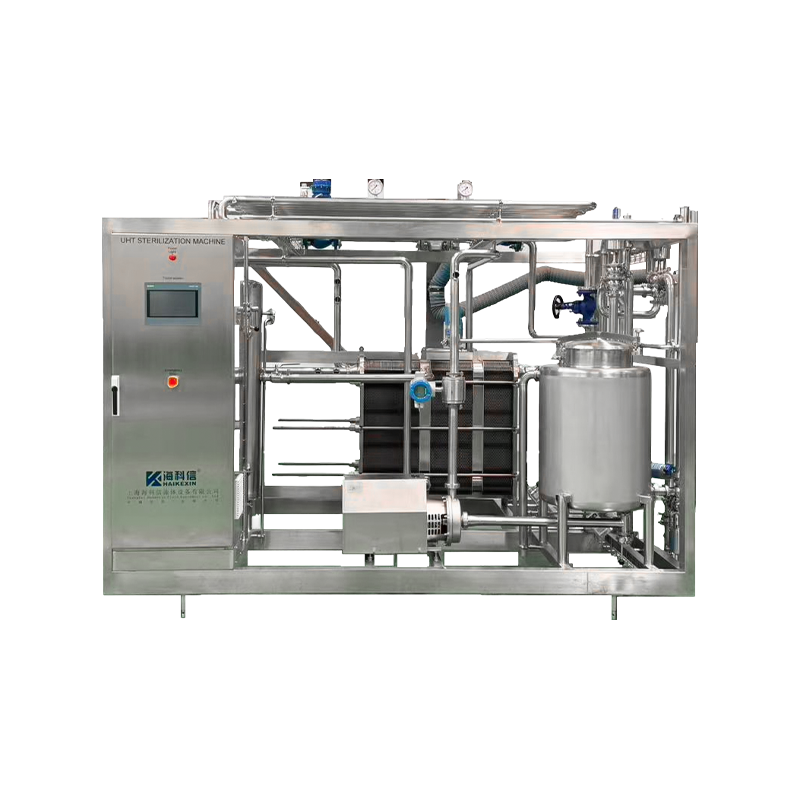
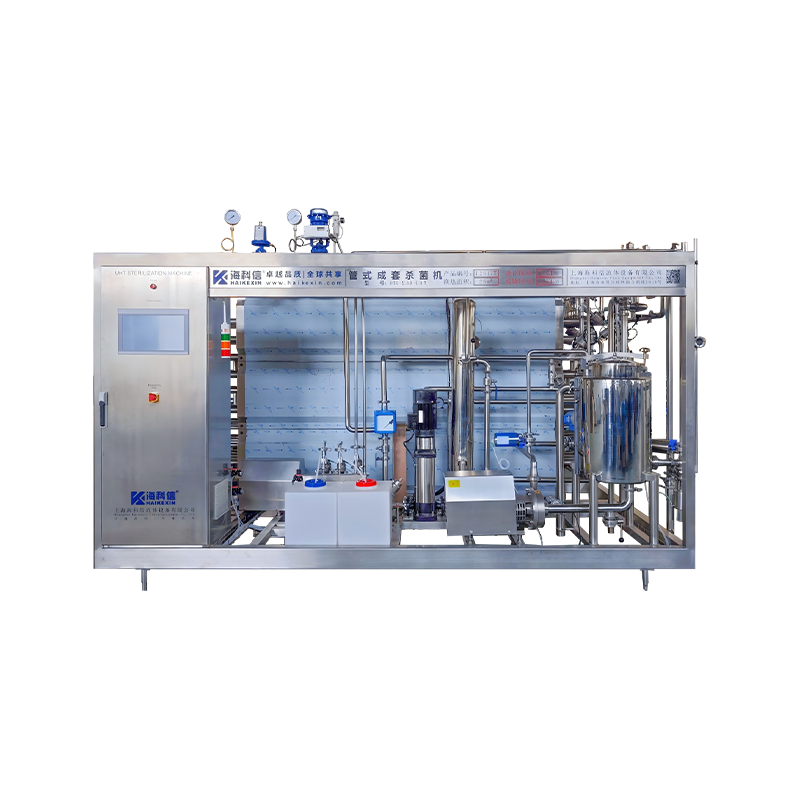
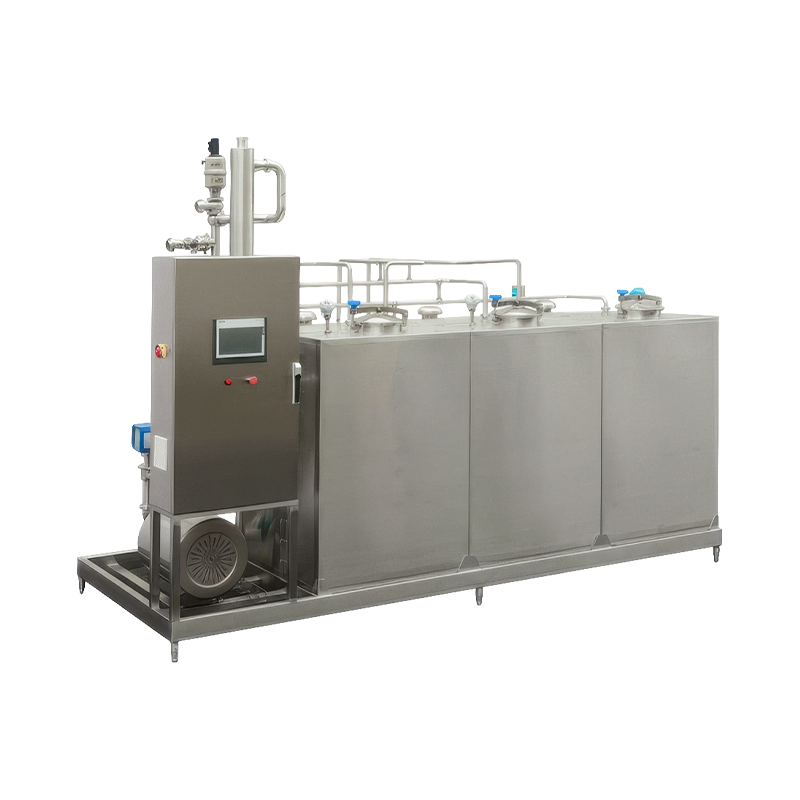
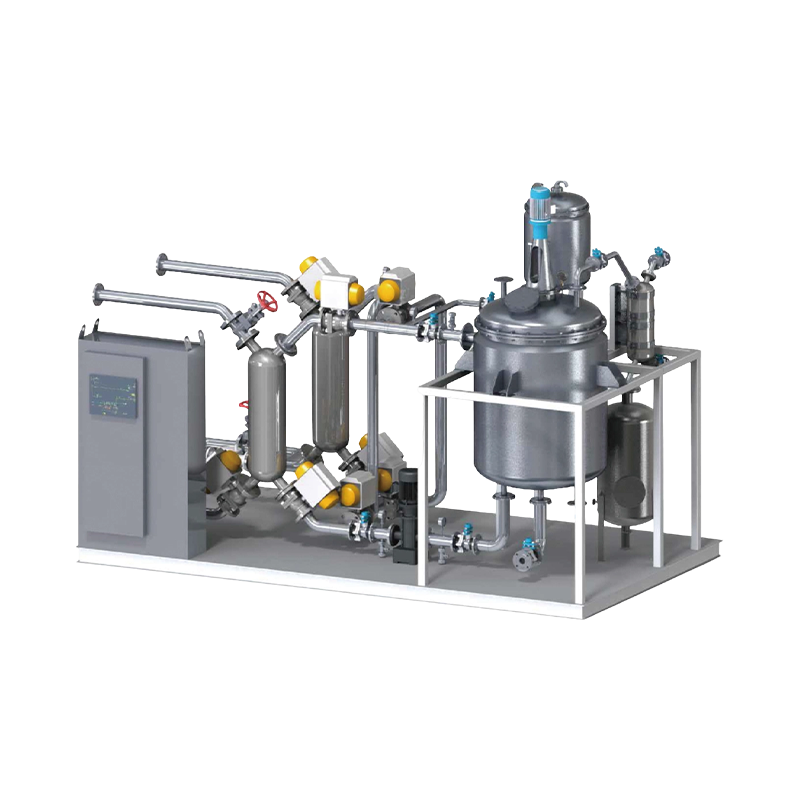
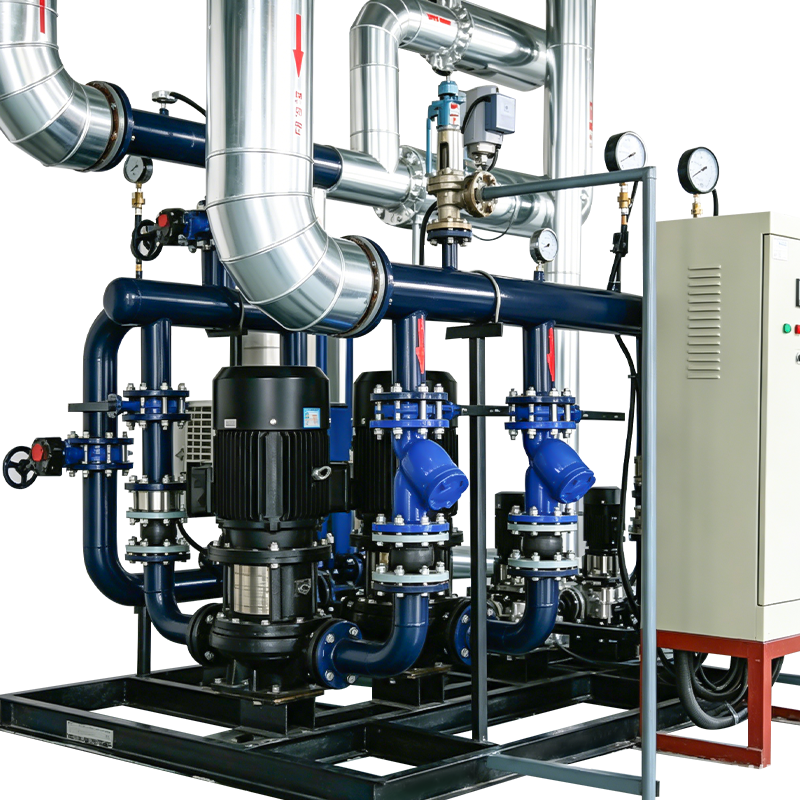
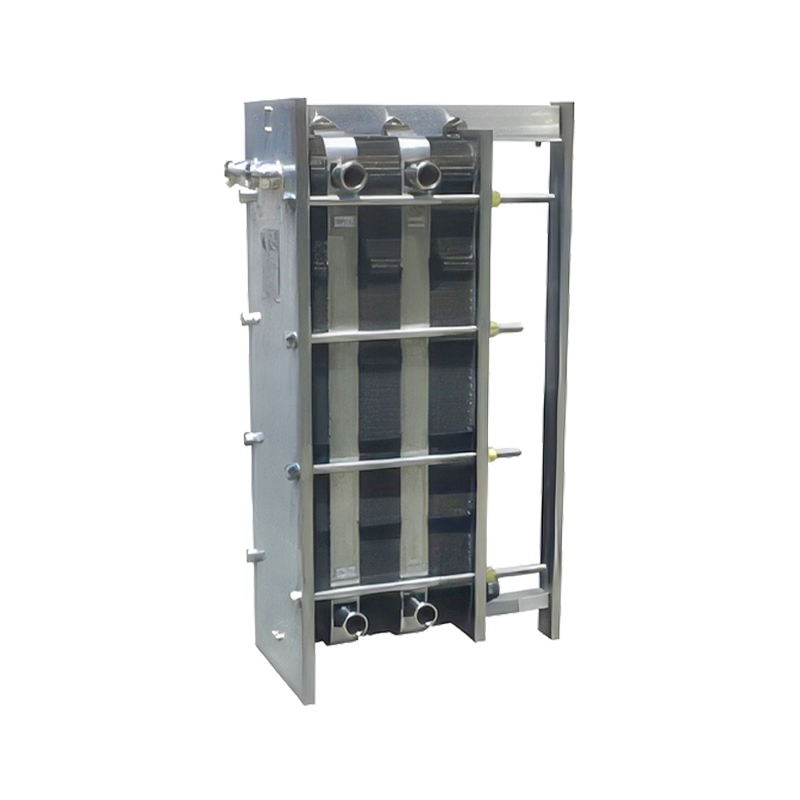
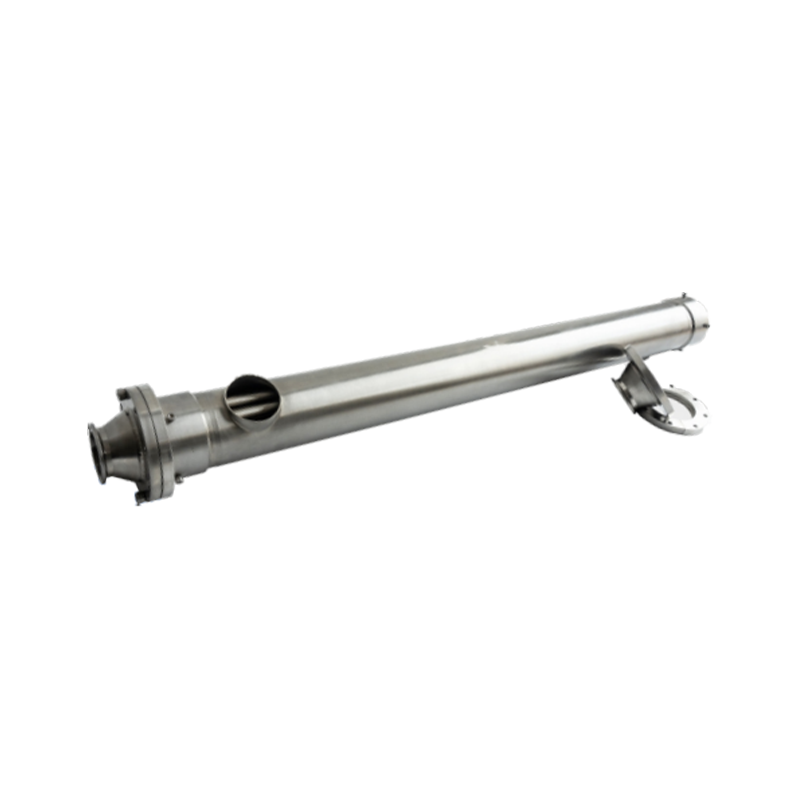
Plate Heat Exchanger Pasteurization System
A Plate Heat Exchanger Pasteurization System uses a series of thin metal plates to transfer thermal energy between product and heating or cooling media. It is designed for liquid food processing lines that require controlled heating, defined holding conditions, and subsequent cooling within an integrated production process.
The system typically combines a plate heat exchanger, product pump, holding tube, temperature sensors, control valves, and an operating control unit. Depending on the process design, it may also include product balance tanks, flow regulation, hot-water circulation, and cooling-water connections. Its configuration is determined by product properties, processing capacity, thermal requirements, and downstream equipment.
Heat Transfer
Product Processing
Temperature Control
Illustrative plate arrangement. Actual port positions and plate configuration depend on the selected exchanger design.
One Processing Line, Multiple Thermal Functions
The plate heat exchanger performs the main heat-transfer task, while the connected equipment manages product movement, holding time, temperature adjustment, and process monitoring.
Receives and supplies liquid product to the processing section under the specified operating arrangement.
Moves the product through the exchanger and associated pipelines at the required flow conditions.
Transfers heat between the product and thermal media through a series of separated plate channels.
Provides the designed residence time for product maintained at the specified treatment conditions.
Monitors selected process variables and coordinates the operation of pumps, valves, and other equipment.
From Product Inlet to Controlled Discharge
The exact number of heating, regeneration, and cooling sections depends on the thermal process and production layout.
Product Supply
Liquid product enters the system through a feed tank or an appropriate upstream supply line.
Preheating
Where regenerative heating is included, incoming product can receive heat from treated product through separate plate channels.
Final Heating
The product reaches the specified treatment temperature through the selected heating section.
Holding
The holding section provides the residence time required by the defined process conditions.
Cooling
Thermal energy is removed to reach the required product outlet temperature.
Product Transfer
Processed product moves to a designated storage, blending, filling, or subsequent treatment stage.
Regenerative heat recovery is a possible system configuration, not an automatic feature of every plate heat exchanger pasteurization system. Its use depends on the product, thermal balance, and required process arrangement.
Plate Configuration and Material Considerations
Plate geometry, gasket selection, and material specification influence heat transfer, pressure drop, maintenance, and compatibility with the processed liquid.
Corrugated Heat-Transfer Plates
Corrugated plate patterns create flow channels and influence turbulence, heat-transfer performance, and pressure drop. Plate pattern and channel arrangement are selected according to the product and utility conditions.
Gaskets and Product Separation
Gaskets help define the flow paths and separate product from heating or cooling media in gasketed plate exchangers. Material compatibility must be checked against product composition, temperature, cleaning chemicals, and operating conditions.
Mechanical Assembly
Frame construction, tightening arrangement, port size, and connection type should be matched to the required plate count, design pressure, service conditions, and maintenance access.
Factors That Influence System Performance
Plate heat exchanger selection is not based on heat-transfer area alone. The operating point must balance thermal duty, pressure drop, flow behavior, cleaning intervals, and product quality requirements.
| Engineering factor | What needs evaluation | Impact on system design |
|---|---|---|
| Product flow rate | Hourly capacity and expected operating range | Influences plate count, channel arrangement, pump sizing, and holding section design. |
| Inlet and outlet temperature | Initial product temperature and target discharge conditions | Determines the required heating and cooling duties. |
| Product viscosity | Viscosity at relevant processing temperatures | Affects flow resistance, channel selection, and pump requirements. |
| Suspended particles | Particle size, concentration, and distribution | May affect channel clearance, fouling tendency, and exchanger suitability. |
| Utility conditions | Steam, hot water, cooling water, or chilled water availability | Influences the heating and cooling section arrangement. |
| Cleaning requirements | Product residue, cleaning chemicals, and cleaning frequency | Affects gasket selection, system layout, and CIP configuration. |
Actual heat-transfer capacity, operating pressure, temperature range, and throughput should be established from the project data and confirmed by equipment design calculations.
Processing Applications
Plate heat exchanger pasteurization is commonly evaluated for liquid products with flow and particle characteristics compatible with the selected plate-channel design.
Dairy Processing
Milk, cream, flavored milk, and selected dairy-based liquid formulations.
Juice and Beverage Production
Fruit juice, vegetable juice, beverage bases, and formulated drinks with suitable flow characteristics.
Plant-Based Drinks
Soy, oat, nut, and other plant-derived beverages, subject to formulation and fouling evaluation.
Liquid Food Ingredients
Selected liquid egg products, syrups, sauces, and other process liquids compatible with the exchanger.
Products with high viscosity, large particles, or strong fouling tendencies may require a different heat exchanger configuration. A product assessment is recommended before confirming a plate-based solution.
Connections to Upstream and Downstream Equipment
The pasteurization system can be planned as part of a larger liquid food processing line. Its connection points should be coordinated with the equipment before and after the thermal treatment section.
Pipeline routing, product transfer, buffer capacity, cleaning connections, and control signals all affect how the system operates within the complete plant.
What to Confirm Before Ordering
A complete technical inquiry helps reduce specification gaps between the production team, equipment supplier, and plant engineering department.
Product Data
Product type, formulation, viscosity, solids content, acidity, and product temperature.
Capacity Requirement
Required throughput per hour, production shifts, and expected operating frequency.
Thermal Parameters
Heating temperature, holding time, cooling target, and process validation requirements.
Utility Availability
Heating source, cooling medium, utility temperature, pressure, and supply capacity.
Hygienic Requirements
Product-contact materials, cleaning method, drainability, and documentation requirements.
Plant Integration
Installation space, pipeline connections, control interfaces, and downstream equipment.
Technical Questions About Plate Heat Exchanger Pasteurization
Additional details to consider when evaluating a plate-based thermal processing system.
How does a plate heat exchanger pasteurization system work?
Product flows through dedicated channels between heat-transfer plates. Heating or cooling media circulate through separate channels, allowing thermal energy to pass through the plate surfaces without direct mixing. The complete system also includes the necessary holding and control arrangements to meet the specified process conditions.
Can the system recover heat from treated product?
Yes, a regenerative section can be incorporated into the plate heat exchanger arrangement. Incoming product may be preheated by outgoing treated product through separate channels. The achievable heat recovery depends on product properties, temperature profiles, flow conditions, and the overall thermal design.
Is a plate heat exchanger suitable for high-viscosity products?
Suitability depends on the actual viscosity, flow behavior, product composition, and plate-channel geometry. Some high-viscosity liquids may create excessive pressure drop or flow distribution challenges. A tubular or other exchanger configuration may be considered when the product is not suitable for narrow plate channels.
What is the function of the holding tube?
The holding tube provides the designed residence time after the product reaches the required treatment temperature. Its dimensions and configuration are determined by flow rate, process conditions, and the required validation approach.
Can the plate heat exchanger be cleaned without disassembly?
Depending on the exchanger design and process configuration, clean-in-place procedures may be used to clean product-contact channels without dismantling the plate pack. Cleaning effectiveness depends on chemical compatibility, cleaning temperature, flow conditions, and the nature of product residues.
Which plate and gasket materials should be selected?
Plate material and gasket compounds should be selected according to product composition, operating temperature, pressure, cleaning chemicals, and applicable food-contact requirements. The final grades should be confirmed in the technical specification rather than assumed from a general equipment description.
Does pasteurization make the product commercially sterile?
Not necessarily. Pasteurization is a defined thermal treatment intended to achieve a specified reduction of relevant microorganisms. Commercial sterility requires a different process objective and appropriate system design, validation, packaging, and handling controls. A pasteurization system should not be treated as an aseptic or sterilization line unless specifically designed and validated for that purpose.
What information is needed for a system quotation?
Useful information includes product type and properties, required hourly capacity, inlet and outlet temperatures, target treatment conditions, available heating and cooling utilities, cleaning requirements, installation layout, and downstream equipment connections. These details help determine the exchanger configuration and supporting equipment.