
 English
 русский
 Português
 Français


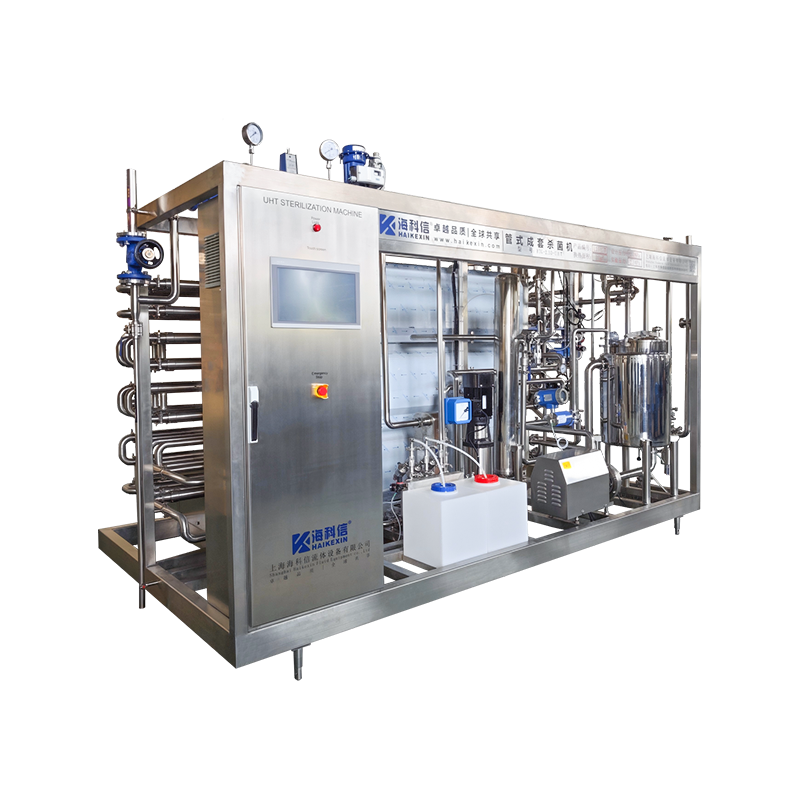
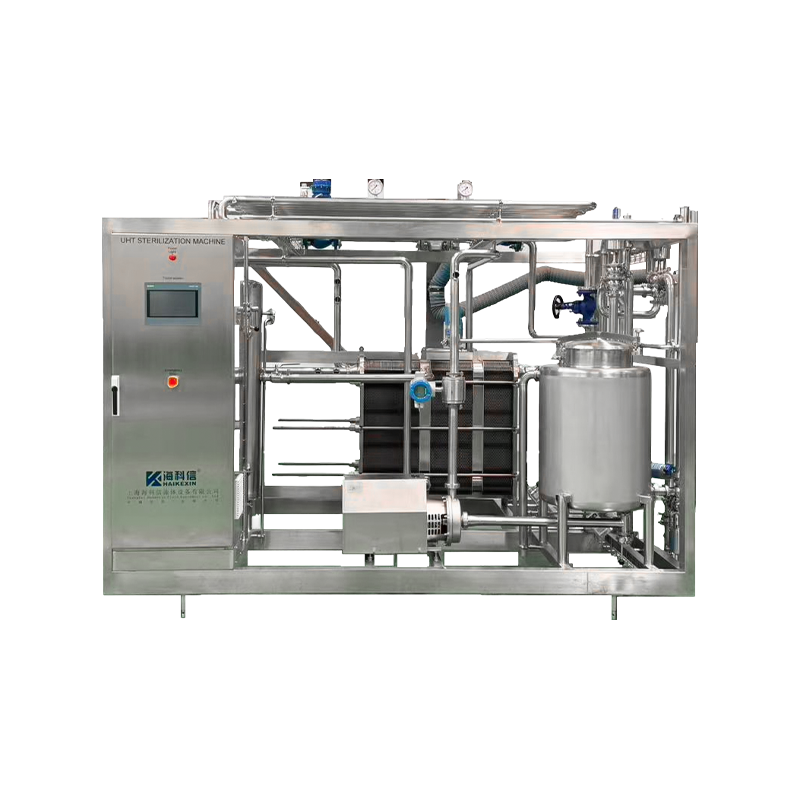
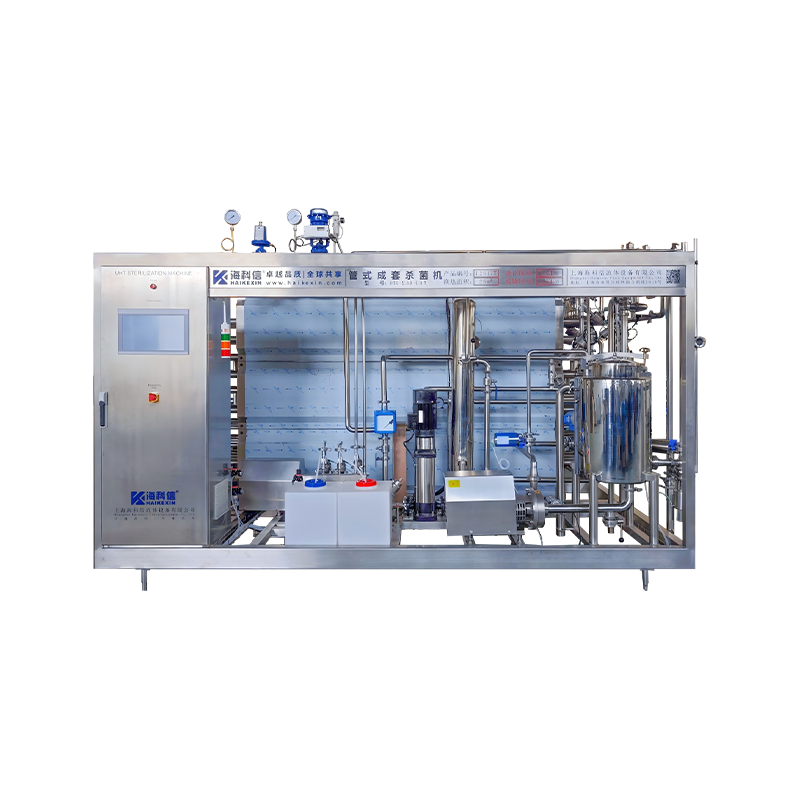
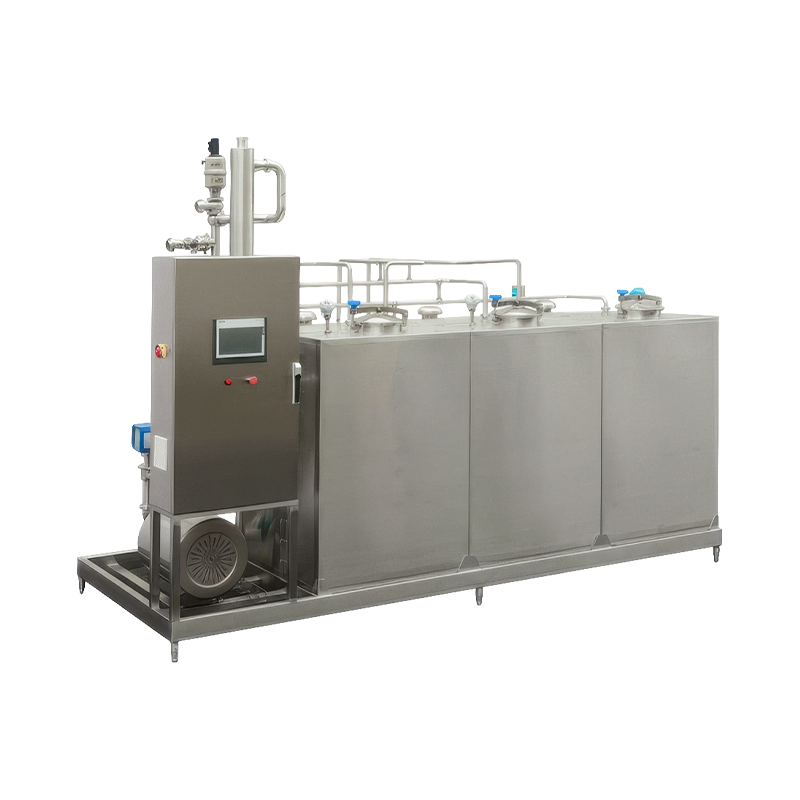
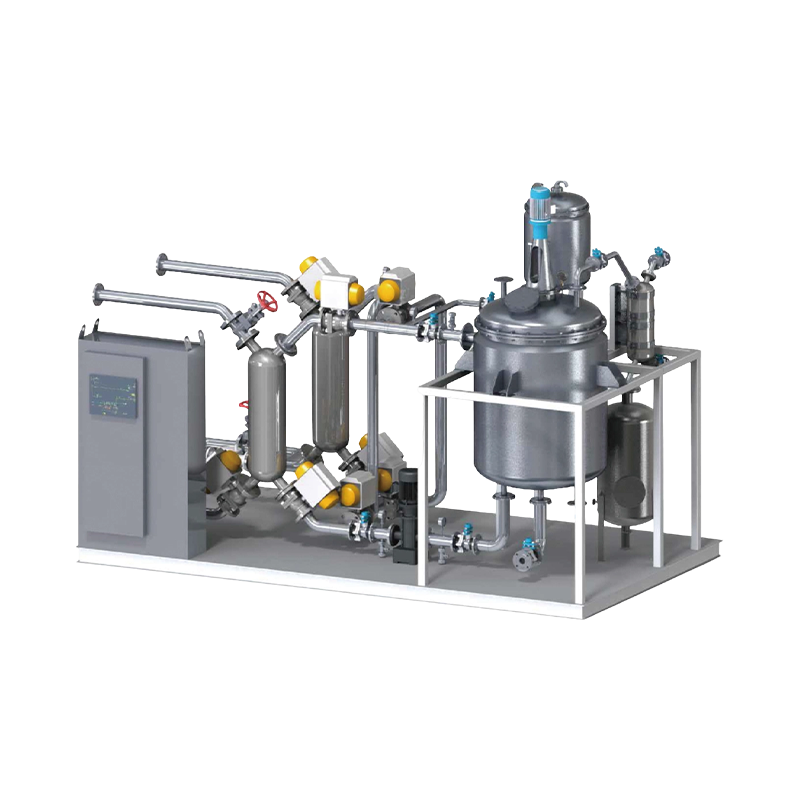
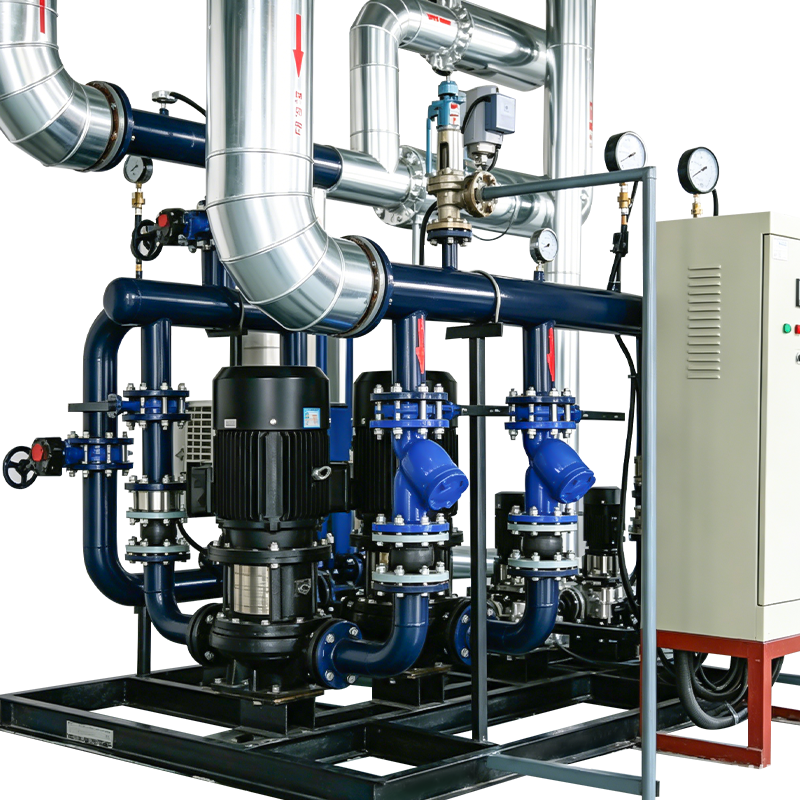
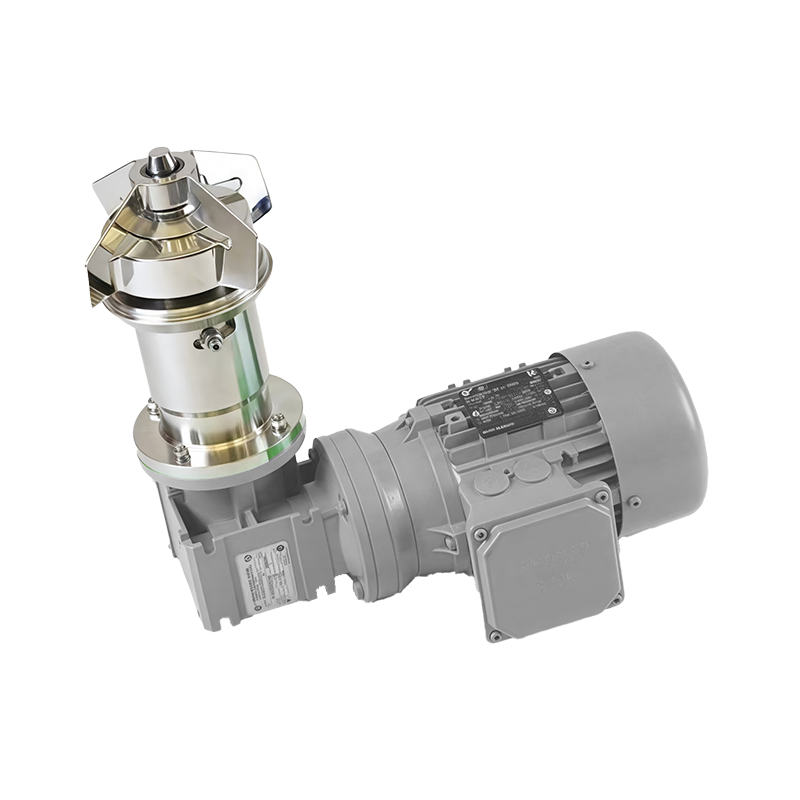
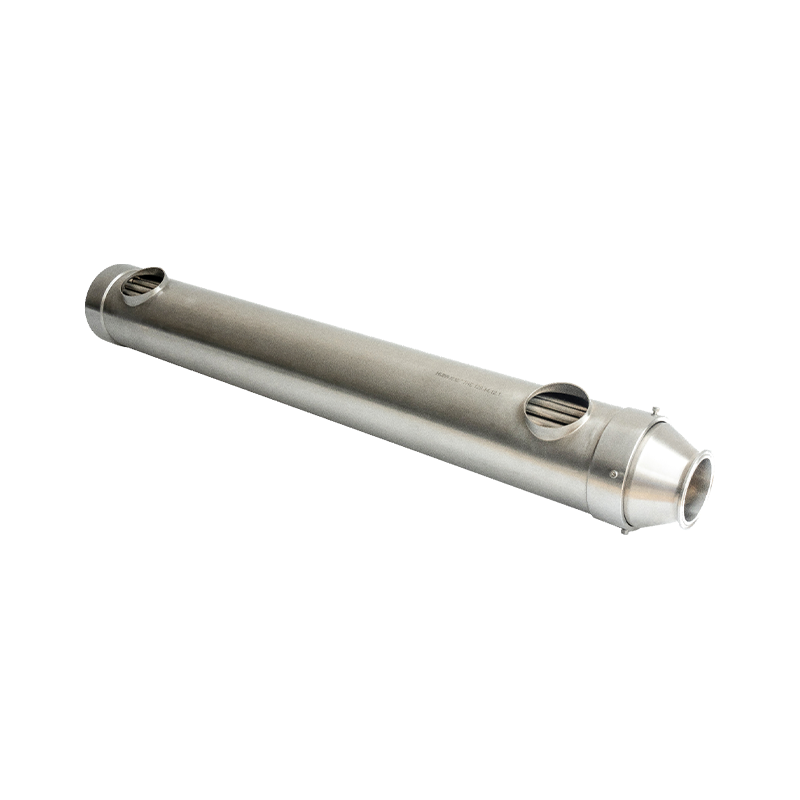
Indirect Heating UHT Sterilizer
An Indirect Heating UHT Sterilizer is an industrial thermal processing system that uses a heat exchanger to transfer thermal energy from a heating medium to liquid food products without direct contact between the two fluids. The system raises product temperature to a specified ultra-high-temperature processing level, maintains the required holding time, and subsequently cools the treated product. Depending on product characteristics and production requirements, tubular or plate heat exchangers can be incorporated into the processing configuration. This technology is used in continuous dairy, beverage, and liquid food manufacturing lines where controlled heat transfer, hygienic separation, and compatibility with downstream aseptic equipment are essential.
How Indirect Heating UHT Sterilization Works
Indirect UHT sterilization relies on heat transfer through a separating metal surface. The product flows through one side of the heat exchanger, while hot water, steam, or another suitable heating medium circulates through the other side. Thermal energy passes through the exchanger wall and increases the product temperature without allowing the heating medium to mix directly with the food.
After reaching the specified processing temperature, the product passes through a holding section designed to provide the required residence time. It is then cooled through an appropriate heat exchange arrangement before being transferred to the next processing stage. In aseptic production applications, the downstream system must maintain suitable sterile conditions during product transfer and filling.
The heating medium and product remain physically separated by the heat exchanger surface during normal operation.
Product Preparation
Product feeding and optional preheating according to the processing formulation.
Indirect Heating
Heat transfer through the exchanger wall raises the product to the target temperature.
Temperature Holding
The holding section maintains the defined thermal conditions for the specified residence time.
Product Cooling
Heat exchange reduces product temperature before downstream processing.
Aseptic Transfer and Filling
Compatible sterile transfer and packaging equipment completes the production process.
Core Advantages of Indirect Heating UHT Equipment
Physical Separation of Fluids
The product and heating medium flow through separate passages divided by a heat transfer surface. This prevents direct mixing during normal operation and avoids the condensate dilution associated with direct steam injection.
Defined Thermal Conditions
Heating temperature, product flow, holding time, and cooling conditions can be coordinated through the process design and control arrangement to meet the specified production requirements.
No Direct Steam Dilution
Since the heating medium does not enter the product stream, the formulation does not require condensate removal to compensate for water introduced by direct steam injection.
Multiple Heat Exchanger Configurations
Tubular and plate heat exchangers can be considered according to product viscosity, suspended particles, flow characteristics, operating conditions, and cleaning requirements.
Continuous Line Compatibility
The sterilizer can be incorporated into continuous processing arrangements with product preparation, homogenization, cooling, aseptic storage, and filling equipment where required.
Accessible Process Components
Heat exchangers, pipelines, valves, and instrumentation can be specified with maintenance and cleaning requirements in mind. The actual maintenance arrangement depends on the selected equipment structure.
Heat Exchanger Types and Product Features
Heat exchanger selection is an important part of indirect UHT system engineering. The exchanger must provide suitable heat transfer performance while accommodating the physical characteristics of the product and the required hygienic processing conditions.
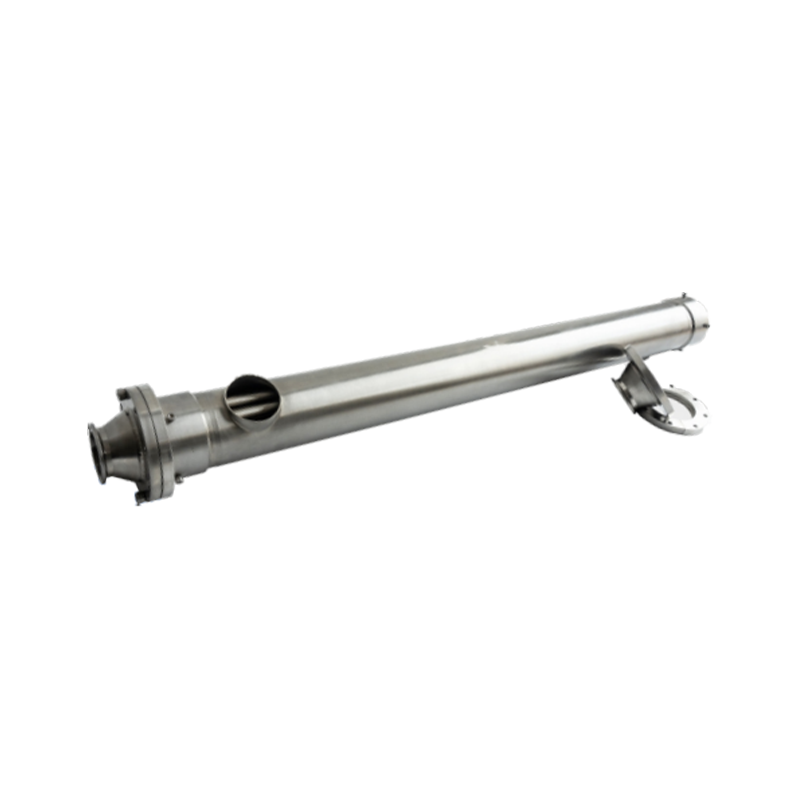
Tubular Heat Exchanger
Tubular exchangers use product and heating-medium passages separated by tube walls. Their configuration can be evaluated for liquid products with different viscosities and selected suspended solids, depending on tube diameter, flow velocity, and passage design.
- Tube-based product flow passages
- Indirect thermal energy transfer
- Configurable tube and passage arrangements
- Selection based on product flow characteristics
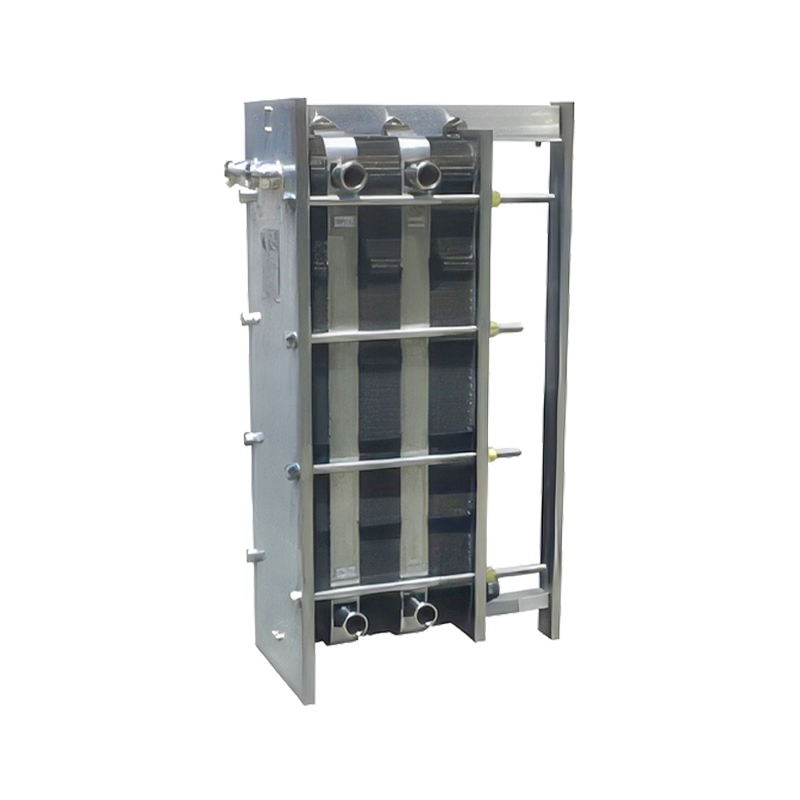
Plate Heat Exchanger
Plate exchangers transfer heat through a series of thin plates that create separate flow channels. Their compact heat transfer structure can be considered for suitable liquid products where viscosity, particle size, pressure, and temperature conditions are within the applicable design limits.
- Multiple plate-based flow channels
- Separated product and heating circuits
- Compact heat transfer arrangement
- Configuration based on process conditions
Key Technical Characteristics
Configuration-dependent specificationsThermal energy passes through a separating metal surface.
Selection depends on product properties and process design.
Target temperature is established according to the validated thermal process.
Holding arrangement is sized according to flow rate and required treatment time.
Material grades require confirmation against product and hygienic requirements.
Cleaning compatibility and cleaning sequences are determined by system design.
Where Indirect Heating UHT Sterilizers Are Used
Milk and Dairy Beverage Production
Dairy processing plants use indirect UHT systems for suitable milk-based products requiring continuous high-temperature treatment. Heat exchanger selection and process conditions are evaluated according to product composition, viscosity, fouling tendency, and downstream homogenization or aseptic filling requirements.
Liquid Beverage Manufacturing
Beverage manufacturers can use indirect thermal processing for suitable liquid formulations. Product acidity, solids content, heat sensitivity, and flow behavior should be assessed when determining the exchanger and sterilization process.
Plant-Based Milk and Liquid Formulations
Suitable soy, oat, and other plant-derived beverages may be processed using indirect UHT technology. Protein stability, suspended particles, viscosity, and heat-induced formulation changes are important factors in equipment selection.
Industrial Liquid Food Production
Selected liquid food products can be treated using indirect heating when their rheological and thermal characteristics are compatible with the chosen heat exchanger. The process must be established according to product-specific requirements.
Integrated Aseptic Manufacturing
The sterilizer can be designed as a processing unit within a complete aseptic production line. Its capacity, sterile product transfer arrangement, buffer equipment, and filling interfaces must be coordinated with the overall production system.
Manufacturing and Supply Capabilities
An indirect heating UHT sterilizer requires coordinated engineering of the heat exchanger, product circulation path, thermal holding section, cooling arrangement, instrumentation, and control components. Manufacturing specifications should be developed from the customer's product and production requirements.
Heat Exchanger Configuration
Tubular or plate heat exchanger arrangements can be assessed according to product viscosity, particle characteristics, heat transfer requirements, operating pressure, and cleaning conditions.
Pipeline and Component Fabrication
Product-contact pipelines, fittings, valves, and connecting components should be selected according to process temperature, pressure, product compatibility, and hygienic design requirements.
System Assembly and Instrumentation
The assembly involves coordinating the exchanger, pumps, holding section, control instrumentation, and other specified components into a functional processing arrangement.
Control and Process Configuration
Control requirements can be defined around product temperature, flow rate, holding conditions, heating-medium parameters, and cooling operations according to the process design.
Inspection and Functional Verification
Inspection requirements may cover component specifications, fabrication, assembly, connection integrity, instrument functions, and applicable equipment testing procedures.
Project Delivery Coordination
Equipment configuration, manufacturing schedule, export packaging, documentation, and delivery arrangements should be confirmed according to the approved technical specification and purchase agreement.
Important Considerations for UHT Equipment Buyers
Product Properties and Heat Transfer Requirements
Buyers should provide viscosity, solids content, particle size, formulation, and thermal sensitivity information. These characteristics affect exchanger selection, heat transfer efficiency, product flow, and fouling behavior.
Production Throughput and Thermal Parameters
Required hourly capacity, inlet temperature, target processing temperature, and holding time are necessary for calculating the processing configuration and equipment sizing.
Utility and Installation Conditions
Steam or hot water supply, cooling water, electricity, compressed air where required, drainage, and installation space should be reviewed before equipment manufacturing and site preparation.
Hygienic Design and Maintenance
Buyers should confirm product-contact materials, cleaning procedures, CIP compatibility, drainage, inspection access, and maintenance requirements to support their plant hygiene management practices.
Integration and Documentation
The scope of connection with upstream preparation, homogenization, aseptic transfer, and filling equipment should be defined. Buyers may also specify process flow diagrams, equipment layouts, technical specifications, and inspection documentation.
Frequently Asked Questions
1. What is the difference between an indirect heating UHT sterilizer and a direct heating UHT system?
An indirect heating UHT sterilizer transfers heat through a separating surface, such as a plate or tube wall. The product and heating medium remain in separate flow passages. A direct heating system introduces steam directly into the product. Indirect heating avoids direct steam condensate entering the product, while direct heating provides rapid thermal energy transfer through direct contact. Equipment selection depends on formulation, viscosity, processing targets, steam availability, and overall production requirements.
2. Should a tubular or plate heat exchanger be selected for UHT sterilization?
A tubular heat exchanger may be considered for products with higher viscosity or certain suspended particles, depending on tube diameter and flow passage design. A plate heat exchanger may be suitable for relatively fluid products with compatible particle characteristics and operating conditions. The final selection should consider viscosity, particle size, heat transfer requirements, pressure drop, fouling tendency, cleaning requirements, and operating temperature.
3. What products can be processed using an indirect heating UHT sterilizer?
Potential applications include suitable milk products, dairy beverages, plant-based beverages, and other pumpable liquid food formulations. However, compatibility must be evaluated individually. Factors such as product viscosity, suspended solids, thermal sensitivity, composition, and fouling characteristics determine whether a plate or tubular heat exchanger is appropriate.
4. How is the required UHT processing temperature and holding time determined?
Processing temperature and holding time are established according to the product formulation, target microbial reduction, applicable food safety requirements, and validated thermal processing schedule. The equipment must be designed to provide the required temperature and residence time under defined operating conditions. These values should be determined by qualified process specialists rather than selected solely from general equipment specifications.
5. Does indirect heating UHT equipment support CIP cleaning?
CIP compatibility can be incorporated into the system design when specified. The cleaning arrangement depends on the exchanger type, product-contact pipeline structure, valve configuration, cleaning solution circulation, temperature, and cleaning sequence. Buyers should confirm the required cleaning procedure and product residue characteristics before finalizing the equipment configuration.
6. Can an indirect heating UHT sterilizer be customized for different production capacities?
The equipment can be configured according to the required processing flow rate and operating conditions. Important factors include heat exchanger surface area, flow passage design, heating-medium capacity, holding tube dimensions, product pump selection, and cooling requirements. Buyers should provide their target hourly output and product information for engineering evaluation.
7. How does heat exchanger fouling affect UHT processing?
Fouling occurs when product components accumulate on heat transfer surfaces during operation. It can reduce heat transfer performance, increase pressure drop, and affect operating stability. The risk depends on product composition, temperature, flow velocity, surface conditions, and operating duration. Appropriate exchanger selection, process control, and a defined CIP cleaning procedure are important for managing fouling.
8. Can an indirect heating UHT sterilizer be integrated with an existing aseptic filling line?
Integration is possible when the processing equipment and existing production line are technically compatible. The evaluation should include processing capacity, product transfer conditions, aseptic barriers, pipeline connections, control signals, filling requirements, and hygienic design. The complete process must maintain validated thermal treatment and aseptic conditions to achieve the intended commercial sterility of the packaged product.