
 English
 русский
 Português
 Français

 Read More

Product Category
NEW Category
Contact us
Contact Us
We specialise in the research, development and manufacture of electrical wires and cables.
 +86-21-57560276
How Material Selection Affects Bioprocess Skid Quality: A Buyer's Engineering Guide
Content
- 1 Material Selection Determines Skid Performance Before the First Run
- 2 Which Material Properties Matter Most in a Bioprocess Skid
- 3 How Material Choices Affect Fabrication and Process Results
- 4 Standards and Tests That Separate a Good Skid from a Cheap One
- 5 Make Material Verification Part of Your Purchase Agreement
- 6 Treat Material Selection as a Risk-Management Step
Material Selection Determines Skid Performance Before the First Run
A bioprocess skid can pass factory acceptance testing and still develop fouling, corrosion, or extractable contamination once it enters production if the wetted materials are not specified correctly. In our experience with commissioning and troubleshooting fluid systems, most skid failures are not caused by control logic or pumps; they are caused by material choices that looked acceptable on paper but were never verified for the actual chemical, thermal, and clean-in-place conditions.
The wetted path, sealing materials, and heat-transfer surfaces all decide how a skid behaves through steam sterilization, cleaning cycles, and long culture runs. When those elements are engineered correctly, the skid remains reproducible, cleanable, and resistant to process drift. When they are not, even the best automation cannot compensate for product-contact risks. To understand the full range of use cases, see our bioprocess application overview.
Which Material Properties Matter Most in a Bioprocess Skid
Skid quality depends on a small set of material decisions. The most critical are alloy composition, surface finish, sealing material compatibility, and thermal conductivity. Each one affects either the product or the total cost of ownership.
Wetted Path Alloys and Surface Finish
Stainless steel 316L remains the default for bioprocess contact surfaces because of its corrosion resistance, weldability, and availability. However, the precise grade and finish matter. A skid built with 316L that is not electropolished, or that has a surface roughness above Ra 0.4 micron, gives bacteria and residue a place to hide in microscopic valleys. In upstream processing, this can create a contamination niche that persists after cleaning. In downstream purification, rougher surfaces can shed particles or complicate cleaning validation.
For aggressive chemistry, such as higher chloride concentrations or low-pH buffers, 316L may not be sufficient. In those cases, the skid needs a higher-alloy stainless steel such as 6-moly grades or, for extreme conditions, a nickel-based alloy. The cost difference is significant, but the cost of replacing a corroded skid is much higher. Your material certificate should confirm the exact UNS number, not just the common name.
Seals and Non-Metallic Components
The gaskets, diaphragms, and polymer-lined tubing that touch the product are common failure points. EPDM works well in many pharmaceutical applications and withstands repeated steam sterilization. FKM offers good chemical resistance in specific environments but can degrade quickly in strong caustic conditions at high temperatures. PTFE-based seals provide broad chemical compatibility but are softer and may creep or leak if compressed incorrectly.
Material selection for these components cannot be based only on the process fluid. You must also consider the cleaning agents, the number of SIP cycles per year, and the temperature reached in the worst-case cycle. A gasket that is compatible with the product but not with the cleaning solution will swell, shed particles, and eventually break down.
Heat-Transfer Surfaces and Thermal Performance
In a skid, the heat exchanger is where material selection has the most visible effect on process capability. The wall thickness and alloy of the heat-transfer surface determine how quickly and uniformly the process fluid reaches its target temperature. A thinner wall improves heat transfer but lowers mechanical strength and corrosion allowance, so you must balance thermal efficiency against service life.
For process streams where containment and leak prevention are critical, a double-tube-sheet design offers a second barrier between the process fluid and the utility media. This reduces the risk of cross-contamination in a way that a standard single-tube-sheet arrangement cannot. For those applications, a sanitary double-tube-sheet heat exchanger gives you an independently drainable inter-space that makes internal leaks visible without mixing fluids.
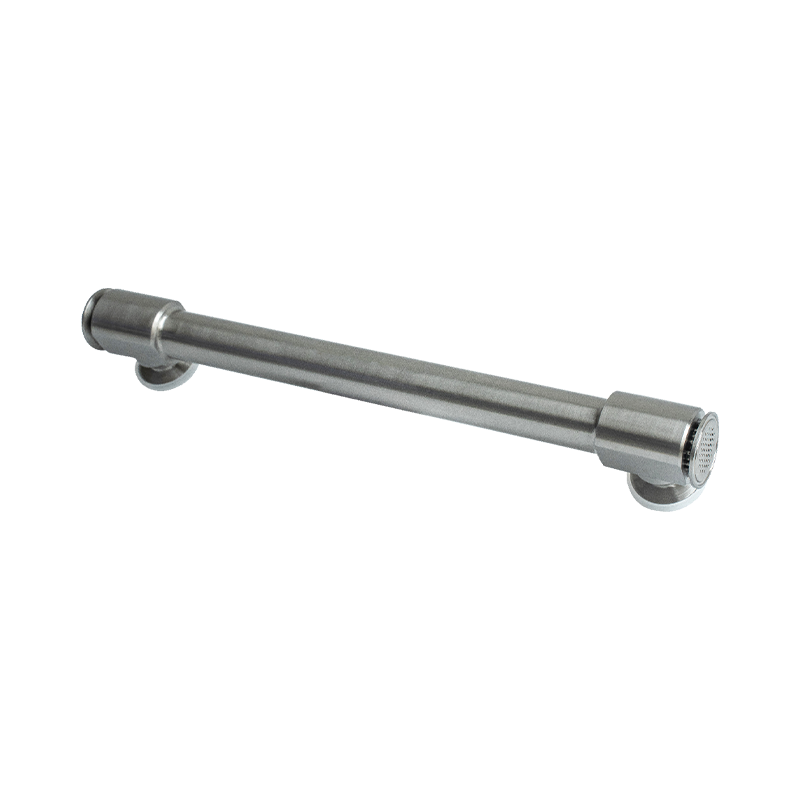 Custom Sanitary DTS (Double Tube Sheet) Heat Exchanger Manufacturers, FactoryShiloc (Shanghai) Industrial Trading Co., Ltd. Is China Custom Sanitary DTS (Double Tube Sheet) Heat Exchanger Manufacturers, Factory, 1....View Product →
| Component | Common Material | Primary Quality Driver |
|---|---|---|
| Product-contact tubing and vessels | 316L stainless steel, electropolished | Cleanability, low extractables, corrosion resistance |
| Heat-exchanger tubes | 316L or high-alloy stainless steel | Thermal efficiency, pitting resistance, leak containment |
| Gaskets and diaphragms | EPDM, FKM, PTFE-based compounds | Chemical compatibility, steam endurance, particle shedding |
| Exterior cladding and insulation | Non-shedding polymer with stainless jacket | Cleanability, mechanical protection, moisture ingress prevention |
How Material Choices Affect Fabrication and Process Results
The material of construction does not just sit in the skid; it determines how the skid is welded, polished, and sterilized. Welds are the most common source of problems. If the tubing and fittings come from different mill heats, or the weld filler is not matched, the weld zone can become sensitized and lose corrosion resistance. That is why a quality skid program specifies weld procedures, material certificates, and surface finishing after welding.
Surface finish also has a direct impact on product yield. In a chromatography skid or an ultrafiltration skid, rough surfaces create dead zones where product can pool and degrade. In a cell culture process, elevated metal-ion release from an inadequately passivated surface can affect growth. These are not theoretical concerns; they appear in deviation reports across the industry.
Thermal performance is equally affected. A heat-exchanger made from a lower-grade alloy can lose efficiency over time because fouling builds up faster on a rough surface. That fouling increases pressure drop and makes temperature control less precise. For processes that require temperature stability of 1 degree Celsius or better, the difference between a reusable, cleanable skid and a problematic one is often nothing more than the material specification.
Standards and Tests That Separate a Good Skid from a Cheap One
Material selection only protects your process if it is documented and verified. Compliance with recognized industry standards is an effective way to reduce risk. ASME BPE, for example, defines acceptable materials, surface finishes, and fabrication tolerances for bioprocessing equipment. ASTM A270 covers welded austenitic stainless steel tubing for sanitary applications.
Electropolishing is another differentiator. Mechanically polished stainless steel can look smooth but still contain a disturbed surface layer from grinding. Electropolishing removes that layer and produces a chromium-rich, passive surface that resists corrosion and microbial adhesion better than a simple mechanical polish. Ask your supplier whether the wetted surfaces are electropolished after welding and whether the roughness measurement was taken on a finished weld, not just on the raw tube.
Testing should include surface roughness measurement, weld ferrite testing, pressure and leak testing, and in some cases, a visual inspection with borescope for hard-to-reach areas. The best time to verify these properties is before fabrication begins, not after the skid is complete. A skid built to a complete material specification will have a shorter validation period and fewer deviations during commissioning.
Make Material Verification Part of Your Purchase Agreement
When you evaluate a bioprocess skid supplier, do not accept “316L” as a complete material specification. Add the following to your purchase agreement:
- Material certificates for each alloy lot used in the wetted path, including UNS number and heat number.
- A documented surface roughness measurement on critical product-contact surfaces, with a maximum acceptable value written into the specification.
- Witnessing of the electropolishing and passivation steps, including bath conditions and final rinse records.
- Confirmation that seals and gaskets have been tested with the same cleaning chemicals, temperatures, and sterilization cycles used in your process.
- A defined sampling plan for weld inspection and hydrostatic or pneumatic testing.
This level of checking matters because many skid fabrication problems appear only after repeated CIP and SIP cycles. A sharp inner corner can trap process fluid; a polymer seal that is incorrectly cured can leach extractables over time. A robust material specification protects you from those surprises.
For a compact, integrated arrangement, an intelligent bioprocess heat-transfer skid unit centralizes heating, cooling, and utility controls in a single frame, reducing the number of material interfaces you need to qualify. If your process requires independent temperature control across multiple zones, a precision temperature control unit for biopharma provides the required stability without oversized equipment. Both options simplify the documentation trail because every wetted component is traceable to a defined specification. As we outlined in our review of integrated bioprocess skids, the integration approach can reduce both validation effort and installation risk when the materials are specified correctly.
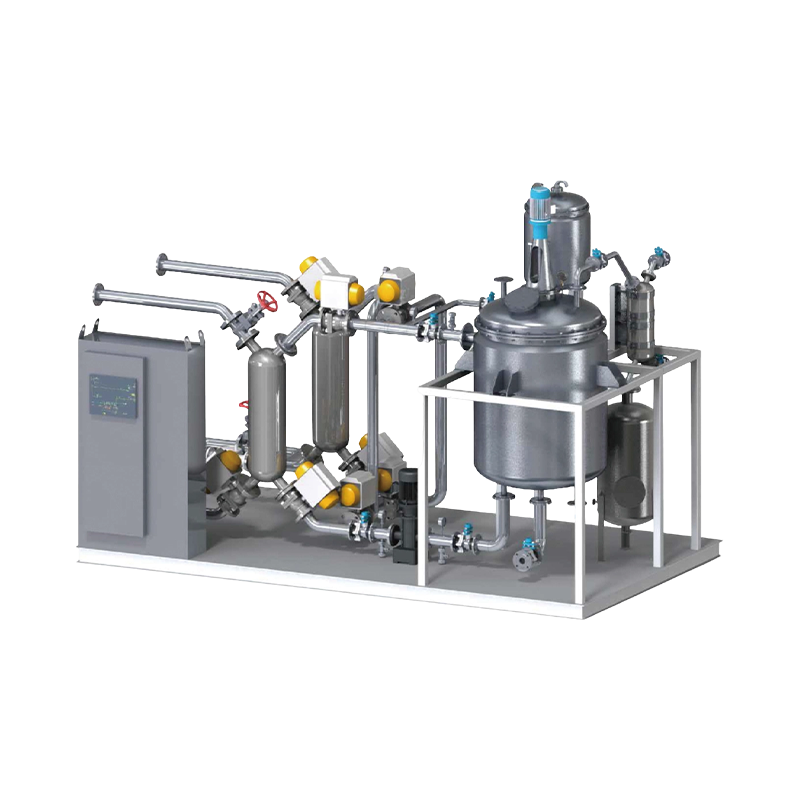 Custom Precision Temperature Control Unit (TCU) For Biopharma Manufacturers, FacShiloc (Shanghai) Industrial Trading Co., Ltd. Is China Custom Precision Temperature Control Unit (TCU) For Biopharma Manufacturers, Fact...View Product →
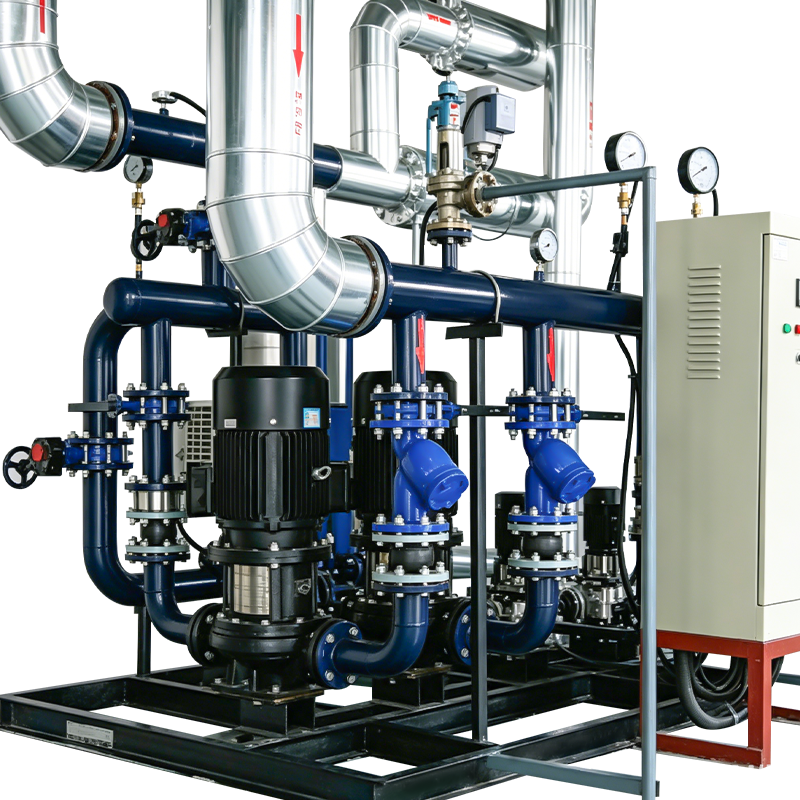 Custom Intelligent Bioprocess Heat Transfer Skid/Units Manufacturers, FactoryShiloc (Shanghai) Industrial Trading Co., Ltd. Is China Custom Intelligent Bioprocess Heat Transfer Skid/Units Manufacturers, Factory, Th...View Product →
Treat Material Selection as a Risk-Management Step
Material selection is not a secondary task after the process design. It should be part of the risk assessment from the first meeting. Decide which surfaces are product-contact, which utility streams could contaminate the process, and which cleaning or sterilization cycles will stress the materials. Then specify the alloy, surface finish, and seal materials based on those facts.
A well-specified skid will cost more at the order stage, but it will save time during qualification and give you lower operating costs over the equipment lifetime. When you work with a supplier that understands both process engineering and material performance, you avoid the hidden mismatch between a mechanically complete skid and one that is truly robust in production. Our engineering team applies this thinking to every skid we build, and you can read about our company approach to fluid equipment and material specifications if you want to understand how we handle the details.
The bottom line is simple: material selection determines skid quality before the first batch ever runs. Verify it, document it, and make it part of your acceptance criteria.
PREV:No previous article
NEXT:Bioprocess Integrated Skids for Vaccine Production: Engineering and Buying Guide
NEXT:Bioprocess Integrated Skids for Vaccine Production: Engineering and Buying Guide
Interested in cooperation or have questions?
Recommended LINS
✦
Skid Mounted Process System
Process Skid System
sanitary process skid system
stainless steel process skid system
Food Processing Skid System
sanitary stainless steel process skid
CIP Skid System for Food Industry
Sanitary Process Skid
food and beverage process skid system
Food and Beverage Process System
Let'S Work Together Welcome Aboard!
-

haikexin@haikexin.com
-
 +86-21-57560276
 -
 No. 2819, Sihu Road,Fengxian District, Shanghai, China
Join Our Mailing List
Copyright © Shiloc (Shanghai) Industrial Trading Co., Ltd. All Rights Reserved.
Process Systems & Equipment For Food & Biopharma Manufacturers
