
 English
 русский
 Português
 Français


 Read More

Product Category
NEW Category
Contact us
Contact Us
We specialise in the research, development and manufacture of electrical wires and cables.
 +86-21-57560276
How to Improve Bioprocess Skid System Efficiency: Key Engineering Levers
Content
- 1 What Defines Bioprocess Skid System Efficiency?
- 2 Raise the Heat Transfer Rate on the Process Service
- 3 Tighten Temperature Control to Reduce Overshoot
- 4 Consolidate Unit Operations into an Integrated Skid
- 5 Design for Cleanability and Fast CIP Turnaround
- 6 Track the KPIs That Move Batch Economics
- 7 Frequently Asked Questions
A 2,000 L fed-batch bioreactor running a 14-day campaign loses roughly 8 hours of productive time when the bioprocess skid needs 30 extra minutes per thermal step. At a conservative operating cost of US$120 per hour of bioreactor occupancy, that is nearly US$1,000 of avoidable expense per batch before yield loss is counted. Improving bioprocess skid system efficiency is an engineering task with a direct financial return.
Efficiency in a bioprocess skid is not about running an exchanger harder; it is about removing the time, energy, and product losses embedded in the design. The sections below cover the four levers that matter most in practice: heat transfer rate, temperature control accuracy, integrated skid architecture, and clean-in-place turnaround.
Shiloc (Shanghai) Industrial Trading Co., Ltd., a Shanghai-based fluid equipment manufacturer and engineering trader, builds its hygienic equipment range on a European-based engineering background and a documented quality control system.
What Defines Bioprocess Skid System Efficiency?
Bioprocess skid system efficiency is the ratio of useful energy and process time delivered to the culture versus the total energy input and clock time consumed by the skid. A skid that transfers heat quickly, holds temperature accurately, and returns to service after cleaning in the shortest possible window is efficient in both energy and schedule terms.
In practical terms, efficiency appears as heat transfer coefficient, thermal response time, hold-up volume, and cleaning turnaround. At plant level, the same concept appears as batch cycle time, utility consumption, and yield consistency.
The four variables that dominate results are:
- Heat transfer rate: the U-value and effective surface area of the exchangers in the loop
- Temperature control response: dead time, overshoot, and loop recovery behavior
- Hold-up volume and dead legs: drainability and product retention
- Cleaning and sterilization turnaround: CIP and SIP time between batches
Key number: A 30 percent increase in effective heat transfer coefficient can shorten a 40-minute heating step to under 30 minutes on a typical 2,000 L loop, assuming the control loop can respond.
Raise the Heat Transfer Rate on the Process Service
For most biopharma services, the fastest measurable efficiency gain comes from raising the heat transfer coefficient of the exchanger that actually touches the process fluid. The boundary layer between the fluid and the heat transfer wall controls how fast energy moves, and at the low flow rates typical of bioreactor side loops, large-diameter piping often runs laminar.
Shiloc addresses this with the sanitary capillary heat exchanger, a design with small channels that force turbulent flow even at low Reynolds numbers. Choosing the right geometry depends on the service:
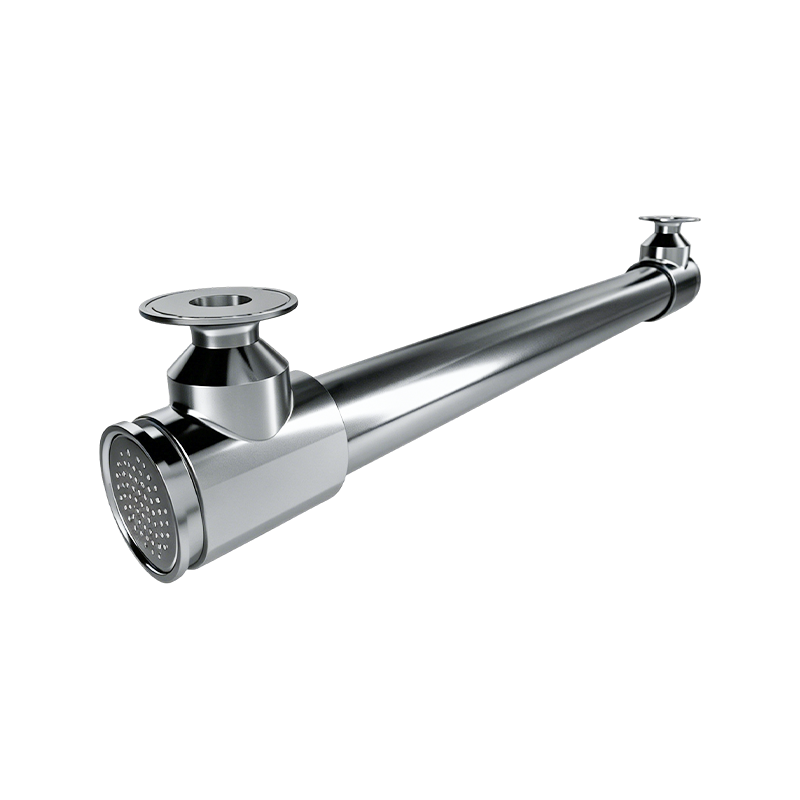 Custom Sanitary Capillary Heat Exchanger Manufacturers, FactoryShiloc (Shanghai) Industrial Trading Co., Ltd. Is China Custom Sanitary Capillary Heat Exchanger Manufacturers, Factory, The Sanitary Cap...View Product →
- Capillary exchangers: channel diameters of 1 to 6 mm, hold-up from 0.3 L, turbulent at low flow
- DTS double-tube-sheet exchangers: double mechanical barrier for utility isolation
- Sanitary tube-in-tube exchangers: countercurrent flow and simple visual inspection
Film coefficient is the thermal resistance of the thin stagnant fluid layer at the heat transfer wall. Reducing channel diameter and increasing local velocity are the two practical ways to cut that resistance without raising bulk flow or pressure drop to a level that disturbs the bioreactor.
Tighten Temperature Control to Reduce Overshoot
Temperature control accuracy is the second efficiency lever because it defines how quickly the culture reaches setpoint and how much time the controller spends correcting overshoot. A heat exchanger can deliver energy, but only a control loop decides where that energy goes.
The precision temperature control unit (TCU) for biopharma uses cascade control: a fast inner loop on the service temperature and a slower outer loop on the bioreactor temperature. This architecture removes dead time and holds the process in a tight band around setpoint.
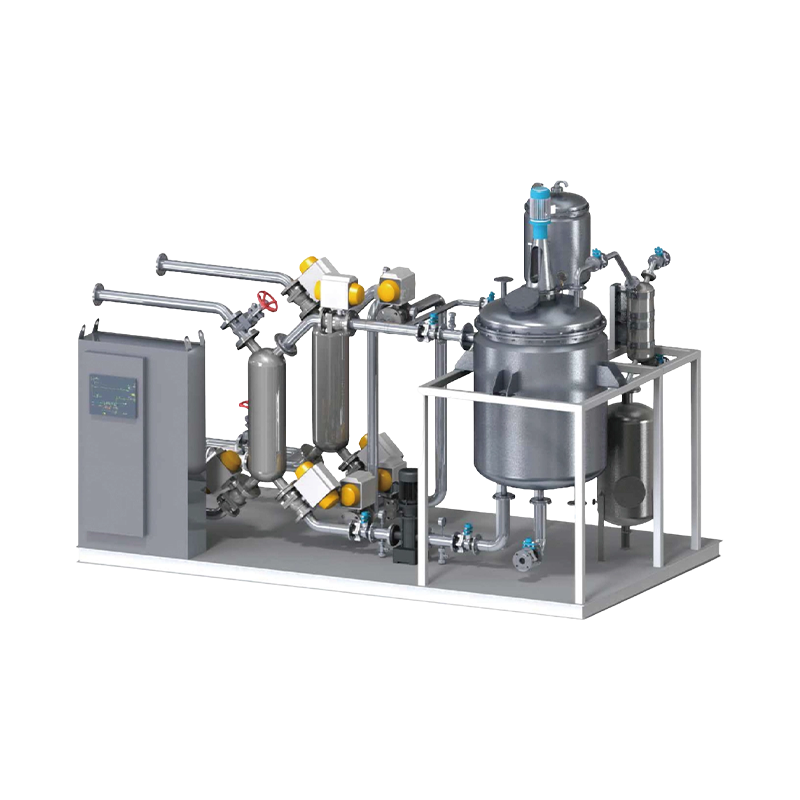 Custom Precision Temperature Control Unit (TCU) For Biopharma Manufacturers, FacShiloc (Shanghai) Industrial Trading Co., Ltd. Is China Custom Precision Temperature Control Unit (TCU) For Biopharma Manufacturers, Fact...View Product →
- Cascade control with an inner loop response below 2 seconds
- Proportional valve manifold with zero-dead-band hot and cold mixing
- Programmed preheat and cooldown ramps that avoid thermal shock
- Flow balancing when one TCU feeds several bioreactors
Practical result: A retuned TCU on a 2,000 L vessel can remove most of a 1.5 °C overshoot at 37 °C, cutting heating time by up to 25 percent and protecting temperature-sensitive proteins.
Consolidate Unit Operations into an Integrated Skid
An integrated bioprocess skid eliminates the piping volume, dead legs, and transfer loss that separate standalone components create. Integration shortens both process time and cleaning cycles because the energy path between utility and bioreactor becomes shorter and fully wetted.
Shiloc's intelligent bioprocess heat transfer skid units combine heating, cooling, temperature control, and utility distribution in one factory-tested package. The engineering approach is described further in our article on modern bioprocess integrated skid design.
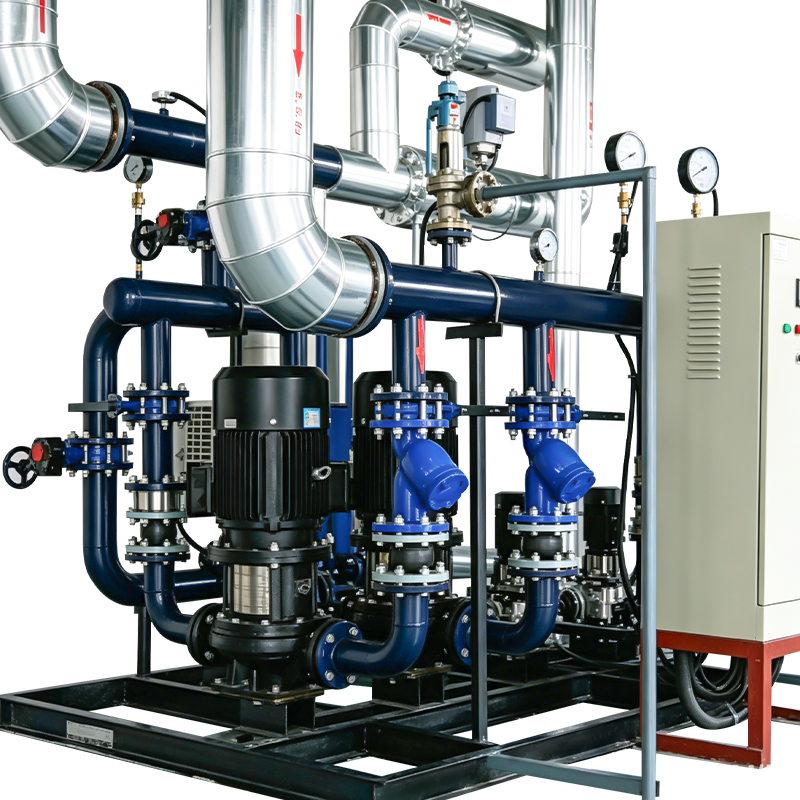 Custom Intelligent Bioprocess Heat Transfer Skid/Units Manufacturers, FactoryShiloc (Shanghai) Industrial Trading Co., Ltd. Is China Custom Intelligent Bioprocess Heat Transfer Skid/Units Manufacturers, Factory, Th...View Product →
Standalone components
- 4 to 6 interconnecting transfer points
- 8 to 12 m of additional piping
- 30 to 60 L of extra hold-up volume
- On-site assembly and extended I/O checks
Integrated bioprocess skid
- Single factory-tested package
- Less than 3 m of process piping
- Under 10 L of hold-up volume
- Pre-validated slope, welds, and instrumentation
Observed outcome: Plants that adopt an integrated skid for media conditioning and bioreactor temperature control typically report 15 to 20 percent shorter batch cycles during the first year, mainly because each thermal step starts at setpoint.
Design for Cleanability and Fast CIP Turnaround
CIP and SIP turnaround time often exceeds the productive process time, so every minute saved in cleaning directly improves overall skid efficiency. Cleanability is a design property, not a cleaning procedure: sloped piping, zero dead legs, and hygienic connections determine how fast a skid can be verified clean and returned to service.
- Slope all lines to low-point drains at the ASME BPE recommended 1/8 inch per foot
- Keep dead leg length below 1.5 pipe diameters
- Use double-mechanical-barrier exchangers to isolate utility water from process fluid
- Add conductivity, temperature, and flow instruments to prove the CIP endpoint
- Blow dry with sterile air or vacuum to reduce residual volume below 1 percent
When efficiency targets are not being met, run a four-step audit on the existing skid:
- Hydraulic audit: measure each heat exchanger's flow and pressure drop
- Thermal mapping: log supply and return temperatures during every phase
- CIP timer study: document drain, rinse, and cool-down durations
- Automation trim: adjust interlock delays and PID loop gains
Fast turnaround rule: A 2,000 L loop that drains in 3 minutes instead of 15 saves 24 minutes per cleaning cycle, which compounds to several days of recovered production across a year of daily batches.
Track the KPIs That Move Batch Economics
Real-time instrumentation converts a well-designed skid into a self-correcting asset, because the improvement sequence depends on knowing what the skid actually does. Flow, temperature, pressure, and conductivity readings on every cycle let operators compare batches and detect fouling before it becomes a failure.
| Metric | Target | Measurement method |
| Effective U-value | 1,200 to 1,500 W/m²K | Flow, temperature rise, and area calculation |
| Thermal overshoot | 0.5 °C or less at setpoint | RTD log at bioreactor inlet |
| Loop dead time | No more than 5 seconds | Valve position vs temperature trend |
| CIP drain time | 3 minutes or less per loop | Conductivity and drain flow log |
| Batch cycle time | 15 percent or more reduction in 12 months | Batch record comparison |
Automation is the final lever. Closed-loop control, batch alarms, and trend reports allow a small process team to run several skids reliably without adding manual validation steps at every transition.
Improving bioprocess skid system efficiency means selecting equipment that is turbulent, fast, integrated, cleanable, and measurable. Shiloc (Shanghai) Industrial Trading Co., Ltd. supplies these engineered packages and can benchmark your current loop against the KPIs above. Contact Shiloc's process engineering team with your flow rates, fluid properties, and existing pressure drop data.
Frequently Asked Questions
If your skid shows batch-to-batch cycle time variation above 5 percent, start with the hydraulic audit described above before buying new hardware.
What is the most common cause of bioprocess skid system inefficiency?
The most common cause is a laminar boundary layer in oversized heat exchanger circuits, which makes heat pickup slow and forces the temperature controller to wait. Replacing or reconfiguring the exchanger to maintain turbulent flow usually delivers the fastest reduction in cycle time.
How does a sanitary capillary heat exchanger improve skid efficiency?
A sanitary capillary heat exchanger keeps flow turbulent in its small channels at the low flow rates typical of bioreactor side loops. That raises the film coefficient, reduces hold-up, and shortens thermal response time, directly cutting heating and cooling duration.
Should we retrofit an existing skid or replace it?
Retrofitting the heat exchanger and retuning the TCU is justified when the existing piping and valves are sound. Replace the skid when it has poor slope, dead legs, or undersized instrumentation, because those defects cannot be fixed by changing one component.
How early can efficiency gains appear?
Thermal step time and overshoot improve in the first batch after an exchanger or TCU change, because the control loop responds faster. Cycle time and CIP gains accumulate over two to three campaigns as operators fine-tune the automated sequence and drain steps.
PREV:Bioprocess Skid Problems and Solutions: Common Failures, Root Causes and Maintenance
NEXT:Bioprocess Skids for Downstream Processing: Design, Heat Transfer & Selection Guide
NEXT:Bioprocess Skids for Downstream Processing: Design, Heat Transfer & Selection Guide
Interested in cooperation or have questions?
Recommended LINS
✦
Skid Mounted Process System
Process Skid System
Food Processing Skid System
CIP Skid System for Food Industry
Automatic UHT Sterilizer for Milk
automated process skid system for food processing
UHT Processing System for Dairy Products
Sanitary Process Skid
Food and Beverage Process System
food ingredient mixing skid system
Let'S Work Together Welcome Aboard!
-

haikexin@haikexin.com
+8613391278930
-
 +86-21-57560276
-
 No. 2819, Sihu Road,Fengxian District, Shanghai, China
Join Our Mailing List
Copyright © Shiloc (Shanghai) Industrial Trading Co., Ltd. All Rights Reserved.
Process Systems & Equipment For Food & Biopharma Manufacturers
