
 English
 русский
 Português
 Français

 Read More

Product Category
NEW Category
Contact us
Contact Us
We specialise in the research, development and manufacture of electrical wires and cables.
 +86-21-57560276
What Are Bioprocess Integrated Skids and Why Are They Essential for Modern Biopharmaceutical Manufacturing?
Content
- 1 What Are Bioprocess Integrated Skids?
- 2 Core Structure of Bioprocess Integrated Skids
- 3 Why Are Bioprocess Integrated Skids Becoming the Industry Standard?
- 4 Major Types of Bioprocess Skid Systems
- 5 Single Use Bioprocess Skids: Improving Flexibility and Reducing Contamination Risks
- 6 Automated Bioprocess Skids: The Role of Intelligent Process Control
- 7 Benefits of Automated Bioprocess Skids
- 8 Stainless Steel Bioprocess Skids: Reliable Solutions for Large-Scale Production
- 9 GMP Compliant Bioprocess Integrated Skids: Meeting Pharmaceutical Quality Standards
- 10 CIP SIP Process Skids: Ensuring Cleaning and Sterilization Efficiency
- 11 Integrated Skid Technology for Modern Biopharmaceutical Applications
- 12 Conclusion
- 13 FAQ
- 13.0.1 1. What are bioprocess integrated skids?
- 13.0.2 2. What are the main benefits of bioprocess skid systems?
- 13.0.3 3. What is the difference between custom bioprocess skids and standard skid systems?
- 13.0.4 4. Are single use bioprocess skids suitable for commercial manufacturing?
- 13.0.5 5. How do automated bioprocess skids improve production efficiency?
The global biopharmaceutical industry is rapidly shifting toward advanced therapies, personalized medicine, and next-generation biologics, prompting manufacturers to replace traditional installation methods with more flexible and efficient solutions. Bioprocess integrated skids have emerged as a key innovation, combining mechanical, automation, and validation-ready components into compact modular platforms that cut installation time, boost reliability, and speed up production.
This growing adoption is driven by the complexity of biologics manufacturing, which demands strict contamination control, fluid precision, and full traceability. Custom skids now address specific process and regulatory needs, while automation and single-use technologies further enhance real-time monitoring, consistency, and flexibility—especially in multi-product facilities where reducing cleaning and cross-contamination risks is critical.
What Are Bioprocess Integrated Skids?
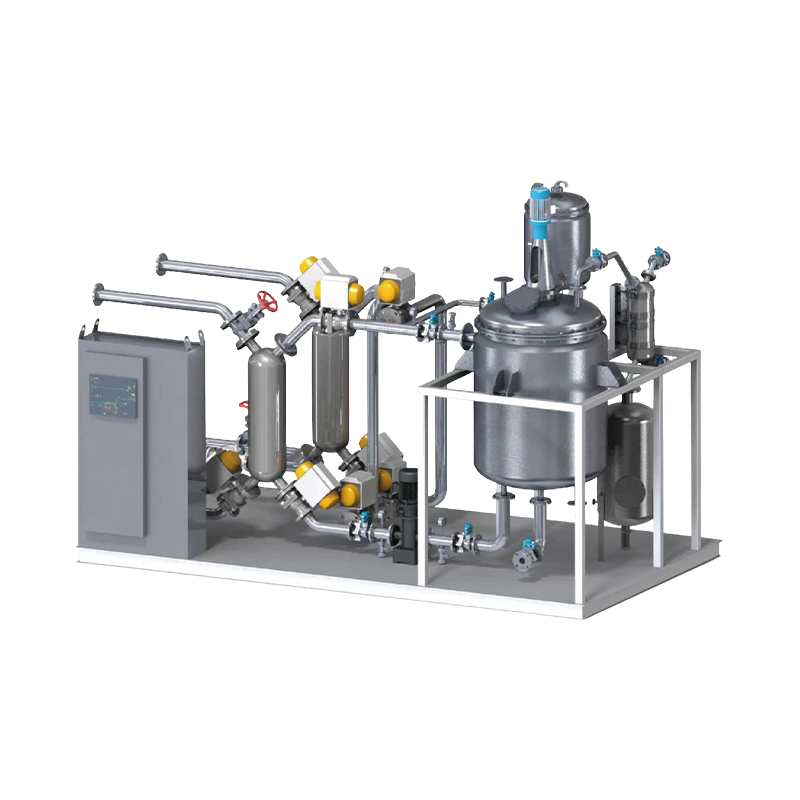
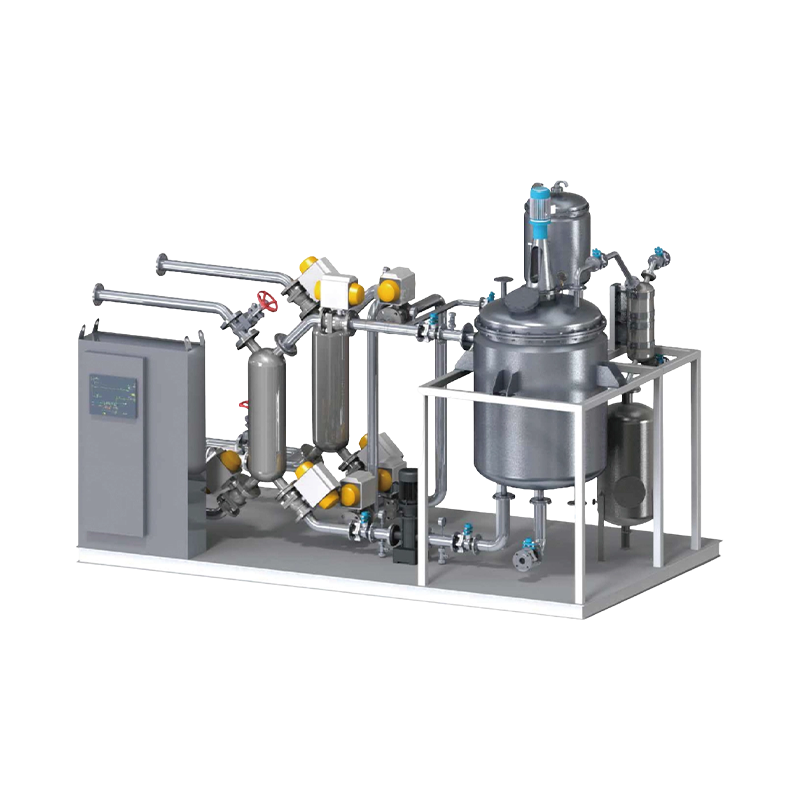
Bioprocess integrated skids are pre-engineered process equipment platforms designed to perform specific operations within biopharmaceutical manufacturing processes. Unlike traditional systems that require individual equipment installation and extensive onsite assembly, integrated skids combine essential components into a complete functional unit before delivery.
A typical skid system includes process vessels, pumps, valves, sensors, piping assemblies, control panels, automation systems, and supporting structures. These components are professionally engineered, assembled, tested, and validated as a complete package, allowing faster installation and commissioning at the production site.
The main purpose of bioprocess integrated skids is to simplify complex manufacturing operations while improving reliability and repeatability. They can be designed for a wide range of applications, including media preparation, buffer preparation, fermentation support, purification processes, cleaning systems, and sterile fluid transfer.
In modern biopharmaceutical facilities, space efficiency and production flexibility are becoming increasingly important. Modular skid designs allow manufacturers to expand production capacity without completely rebuilding existing facilities. This approach is particularly valuable for companies producing multiple biologic products or operating contract manufacturing organizations (CMOs).
Core Structure of Bioprocess Integrated Skids
A complete bioprocess skid system typically consists of several integrated layers:
Mechanical Processing Layer
The mechanical layer includes the physical equipment responsible for fluid handling and processing. Major components include:
- Process tanks
- Pumps
- Heat exchangers
- Filters
- Mixing systems
- Valves
- Tubing and piping assemblies
These components are selected based on process requirements such as flow rate, temperature, pressure, and material compatibility.
Instrumentation Layer
Accurate measurement and monitoring are essential for pharmaceutical manufacturing. Therefore, bioprocess integrated skids incorporate various sensors and instruments, including:
- Pressure transmitters
- Temperature sensors
- Flow meters
- Conductivity sensors
- Level monitoring devices
- pH measurement systems
These instruments provide real-time data that helps maintain stable process conditions.
Automation and Control Layer
Modern skid systems increasingly rely on automated control technologies. Automated bioprocess skids typically integrate:
- Programmable Logic Controllers (PLC)
- Human Machine Interfaces (HMI)
- Supervisory Control and Data Acquisition (SCADA)
- Data recording systems
- Remote monitoring functions
Automation improves process accuracy while reducing manual operation risks.
Main Components of Bioprocess Integrated Skids
| Component | Function | Importance in Bioprocess Manufacturing |
|---|---|---|
| Pumps | Transfer liquids between process stages | Ensures stable fluid movement |
| Valves | Control flow direction and pressure | Supports precise process control |
| Sensors | Monitor temperature, pressure, and flow | Maintains process consistency |
| PLC System | Controls automated operations | Improves efficiency and repeatability |
| HMI Interface | Allows operator interaction | Simplifies system management |
| Piping Assembly | Connects process components | Ensures hygienic fluid transfer |
| Heat Exchanger | Controls process temperature | Supports sensitive biological processes |
| Filtration Unit | Removes unwanted particles | Protects product quality |
Why Are Bioprocess Integrated Skids Becoming the Industry Standard?
The transition toward integrated skid technology is driven by several important factors affecting the pharmaceutical manufacturing industry.
Faster Installation and Commissioning
One of the biggest advantages of bioprocess skid systems is reduced onsite construction time. Traditional process installations often require extensive field fabrication, piping work, electrical integration, and system testing.
With modular skid technology, most engineering and assembly work is completed in a controlled manufacturing environment. Before shipment, systems can undergo factory acceptance testing (FAT), ensuring that equipment performance meets predefined specifications.
This approach allows pharmaceutical companies to shorten project schedules and bring production facilities online faster.
Improved Process Consistency
Biopharmaceutical production requires extremely precise control over manufacturing conditions. Even small variations in temperature, pressure, or flow rate can influence product quality.
Integrated skid systems provide standardized designs that improve repeatability between production batches. Automated monitoring and control features help maintain stable operating conditions throughout the manufacturing process.
Reduced Engineering Complexity
Large pharmaceutical projects often involve multiple engineering disciplines, including mechanical design, electrical systems, automation programming, and validation documentation.
Turnkey bioprocess skid solutions simplify this process by providing a complete engineered package. Suppliers can manage equipment design, fabrication, testing, and documentation, reducing the coordination burden for manufacturers.
Traditional Installation vs Bioprocess Integrated Skids
| Comparison Factor | Traditional Process Installation | Bioprocess Integrated Skids |
|---|---|---|
| Engineering Approach | Built mainly onsite | Pre-engineered modular design |
| Installation Time | Longer project duration | Faster deployment |
| Factory Testing | Limited | Comprehensive FAT available |
| System Integration | Requires multiple contractors | Integrated solution |
| Expansion Capability | Difficult modification | Flexible modular expansion |
| Validation Process | More complicated | Simplified documentation |
| Space Utilization | Larger footprint | Compact design |
| Process Reliability | Depends on onsite assembly | Factory-controlled quality |
Major Types of Bioprocess Skid Systems
Biopharmaceutical manufacturers require different skid configurations depending on production scale, process requirements, and regulatory expectations. The following are the most common categories used in modern facilities.
Custom Bioprocess Skids
Custom bioprocess skids are designed according to specific customer requirements. Unlike standard equipment packages, these systems are engineered around individual production processes, facility layouts, and operational goals.
Custom solutions are commonly used when manufacturers need:
- Unique process configurations
- Special material requirements
- Customized automation functions
- Integration with existing production systems
- Specific validation documentation
For complex biologics manufacturing, customized skid engineering provides greater flexibility and optimization opportunities.
Modular Bioprocess Skids
Modular bioprocess skids are designed with scalability and flexibility in mind. Their standardized structure allows manufacturers to add, remove, or modify process modules as production requirements change.
Advantages include:
- Faster facility expansion
- Reduced construction requirements
- Simplified maintenance
- Easier transportation
- Adaptability for future production needs
Modular designs are especially valuable for emerging biotechnology companies that need to increase capacity gradually.
Single Use Bioprocess Skids: Improving Flexibility and Reducing Contamination Risks
As biopharmaceutical manufacturing continues to move toward more flexible production models, single-use technologies have become increasingly important. Single use bioprocess skids are designed with disposable fluid pathways, including single-use tubing, bags, connectors, and processing assemblies, instead of traditional reusable stainless-steel components.
This technology has become particularly valuable for manufacturers producing vaccines, cell therapies, gene therapies, and personalized medicines, where rapid product changeover and contamination prevention are essential.
Unlike conventional stainless-steel systems that require extensive cleaning and sterilization procedures between production batches, single-use systems minimize cleaning requirements because product-contact components are replaced after use. This significantly reduces downtime and improves manufacturing efficiency.
The adoption of single-use bioprocess skids is also driven by the growth of smaller-scale and multi-product production facilities. Biotechnology companies increasingly require equipment that can support multiple manufacturing campaigns without major infrastructure modifications.
Key Advantages of Single Use Bioprocess Skids
| Feature | Description | Manufacturing Benefit |
|---|---|---|
| Disposable Fluid Path | Uses single-use tubing and containers | Reduces contamination risks |
| Faster Changeover | Minimal cleaning requirements | Improves production efficiency |
| Lower Water Consumption | Less CIP demand | Supports sustainable manufacturing |
| Compact Design | Smaller equipment footprint | Suitable for flexible facilities |
| Multi-Product Capability | Easy product switching | Supports diverse production pipelines |
| Reduced Validation Requirements | Less cleaning validation | Accelerates qualification |
Although single-use technology provides significant benefits, manufacturers must carefully evaluate material compatibility, extractables and leachables, process scale, and supply chain reliability before implementation.
For applications requiring high production volumes or repeated long-term operation, stainless steel systems may still provide advantages. Therefore, many modern facilities adopt hybrid strategies by combining single-use components with traditional stainless-steel infrastructure.
Automated Bioprocess Skids: The Role of Intelligent Process Control
Automation has become one of the most important development directions in modern bioprocess engineering. Automated bioprocess skids integrate advanced control systems to improve operational accuracy, reduce manual intervention, and enhance production traceability.
In traditional manufacturing environments, operators often need to manually adjust valves, monitor instruments, and record process parameters. These activities increase the possibility of human error and create challenges for maintaining consistent production quality.
Automated skid systems solve these problems by using PLC-based control architecture combined with sensors, software platforms, and data management systems.
A typical automated bioprocess skid may include:
- PLC control systems
- Touchscreen HMI interfaces
- Automated valve control
- Real-time parameter monitoring
- Alarm management
- Batch data recording
- Remote diagnostics
These features allow operators to monitor and control processes more efficiently.
Benefits of Automated Bioprocess Skids
Improved Process Accuracy
Biological processes are highly sensitive to environmental changes. Automated systems continuously monitor critical parameters such as temperature, pressure, flow rate, and conductivity.
When deviations occur, the system can automatically adjust operating conditions or notify operators.
Enhanced Data Management
Regulatory authorities require pharmaceutical manufacturers to maintain detailed production records. Automated systems can collect and store process data, supporting:
- Batch documentation
- Quality analysis
- Regulatory audits
- Process optimization
Reduced Labor Requirements
Automation reduces repetitive manual tasks and allows skilled operators to focus on higher-value activities such as process improvement and quality management.
Automated vs Manual Bioprocess Systems
| Category | Manual Process System | Automated Bioprocess Skids |
|---|---|---|
| Operation | Operator-controlled | Software-controlled |
| Data Recording | Manual documentation | Automatic data logging |
| Process Adjustment | Human intervention | Automated response |
| Error Risk | Higher | Lower |
| Monitoring | Limited | Real-time monitoring |
| Traceability | More difficult | Improved |
Stainless Steel Bioprocess Skids: Reliable Solutions for Large-Scale Production
While single-use systems are gaining popularity, stainless steel bioprocess skids remain a preferred choice for many commercial-scale pharmaceutical manufacturing facilities.
Stainless steel systems provide excellent durability, mechanical strength, and long-term operational stability. They are particularly suitable for applications requiring frequent cleaning, sterilization, and continuous operation.
High-quality stainless steel materials such as 316L stainless steel are commonly selected because they offer:
- Excellent corrosion resistance
- Smooth hygienic surfaces
- Easy cleaning capability
- Long service life
- Compatibility with sterilization processes
Stainless steel bioprocess skids are widely used in:
- Large-scale biologics production
- Fermentation systems
- Buffer preparation
- Media preparation
- Purification processes
- Bulk drug manufacturing
Stainless Steel vs Single Use Bioprocess Skids
| Comparison | Stainless Steel Skids | Single Use Skids |
|---|---|---|
| Equipment Life | Long-term reusable | Disposable components |
| Cleaning Requirement | Requires CIP/SIP | Minimal cleaning |
| Initial Investment | Higher | Lower |
| Operating Cost | Lower over long periods | Depends on consumables |
| Production Scale | Large-scale production | Small to medium scale |
| Flexibility | Moderate | High |
| Sustainability | Reusable materials | Less water usage |
The choice between stainless steel and single-use systems depends on production goals, facility design, product characteristics, and operational strategy.
GMP Compliant Bioprocess Integrated Skids: Meeting Pharmaceutical Quality Standards
Good Manufacturing Practice (GMP) compliance is a fundamental requirement for pharmaceutical manufacturing. GMP compliant bioprocess integrated skids are designed to meet strict requirements related to equipment design, material selection, documentation, validation, and operational control.
A GMP-oriented skid design focuses on preventing contamination, maintaining process consistency, and ensuring complete traceability.
Important GMP Design Considerations
Hygienic Equipment Design
Bioprocess equipment must minimize areas where microorganisms or residues can accumulate. Therefore, GMP skid systems typically incorporate:
- Smooth internal surfaces
- Hygienic piping layouts
- Minimized dead legs
- Drainable designs
- Sanitary connections
Material Selection
Materials used in pharmaceutical processing must be compatible with biological products and cleaning agents.
Common requirements include:
- Corrosion resistance
- Chemical compatibility
- Surface quality
- Sterilizability
Documentation and Validation Support
A professional GMP skid supplier typically provides technical documentation including:
- Equipment specifications
- Material certificates
- Welding records
- Pressure testing reports
- Calibration documents
- FAT reports
- Operation manuals
GMP Bioprocess Skid Qualification Process
| Qualification Stage | Purpose |
|---|---|
| Design Qualification (DQ) | Confirms design meets requirements |
| Installation Qualification (IQ) | Verifies correct installation |
| Operational Qualification (OQ) | Confirms equipment operation |
| Performance Qualification (PQ) | Validates production performance |
| Factory Acceptance Test (FAT) | Tests equipment before shipment |
| Site Acceptance Test (SAT) | Confirms onsite performance |
CIP SIP Process Skids: Ensuring Cleaning and Sterilization Efficiency
Cleaning and sterilization are critical operations in pharmaceutical manufacturing. CIP SIP process skids provide automated solutions for maintaining hygienic production environments.
CIP refers to Cleaning In Place, a process that removes residues, contaminants, and unwanted materials from equipment surfaces without requiring disassembly.
SIP refers to Sterilization In Place, which uses methods such as steam sterilization to eliminate microorganisms before production.
Together, CIP and SIP systems help manufacturers maintain sterile processing conditions and meet regulatory requirements.
CIP/SIP Process Functions
Cleaning In Place (CIP)
CIP systems typically involve:
- Cleaning solution preparation
- Controlled circulation
- Temperature management
- Flow monitoring
- Waste discharge
The process ensures that internal equipment surfaces are properly cleaned between production cycles.
Sterilization In Place (SIP)
SIP systems use controlled sterilization methods to achieve microbial reduction. Critical parameters include:
- Steam temperature
- Exposure time
- Pressure control
- Sterility verification
CIP vs SIP Comparison Table
| Item | CIP System | SIP System |
|---|---|---|
| Main Purpose | Remove residues | Eliminate microorganisms |
| Main Medium | Cleaning chemicals and water | Steam |
| Application Stage | Before sterilization | Before production |
| Automation Level | High | High |
| Validation Requirement | Required | Required |
Integrated Skid Technology for Modern Biopharmaceutical Applications
The combination of modular design, automation, GMP compliance, and advanced process control has transformed bioprocess integrated skids into essential infrastructure for modern pharmaceutical manufacturing.
These systems support a wide range of applications, including:
- Vaccine production
- Monoclonal antibody manufacturing
- Cell and gene therapy
- Recombinant protein production
- Fermentation processes
- Buffer preparation
- Media preparation
- Purification operations
Conclusion
The rapid evolution of the biopharmaceutical industry has created new challenges for manufacturers seeking higher efficiency, improved flexibility, and stronger regulatory compliance. Traditional equipment installation approaches are often unable to meet the demands of modern biologics production, where speed, precision, and adaptability have become essential factors.
In this changing environment, bioprocess integrated skids have emerged as a strategic solution for pharmaceutical and biotechnology companies. By combining process equipment, automation systems, instrumentation, piping assemblies, and control technologies into a complete modular platform, these systems provide a more efficient approach to designing and operating advanced manufacturing facilities.
FAQ
1. What are bioprocess integrated skids?
Bioprocess integrated skids are complete process equipment systems that combine mechanical components, automation systems, piping, instrumentation, and control technologies into a pre-engineered platform. They are widely used in pharmaceutical and biotechnology manufacturing.
2. What are the main benefits of bioprocess skid systems?
The main benefits include faster installation, improved process consistency, reduced engineering complexity, easier validation, and better production flexibility.
3. What is the difference between custom bioprocess skids and standard skid systems?
Custom bioprocess skids are designed according to specific customer requirements, including unique processes, facility conditions, and automation needs. Standard systems are based on predefined configurations.
4. Are single use bioprocess skids suitable for commercial manufacturing?
Yes. Single use bioprocess skids are widely used in many commercial applications, especially where flexibility, rapid changeover, and contamination prevention are important.
5. How do automated bioprocess skids improve production efficiency?
Automated systems provide real-time monitoring, automatic control, data recording, and process optimization, reducing manual operation requirements and improving consistency.
PREV:Automatic Pasteurization System Guide for Dairy & Beverage
NEXT:Bioprocess Integrated Skids for Modern Bioprocess Manufacturing
NEXT:Bioprocess Integrated Skids for Modern Bioprocess Manufacturing
Interested in cooperation or have questions?
Let'S Work Together Welcome Aboard!
-

haikexin@haikexin.com
-
 +86-21-57560276
 -
 No. 2819, Sihu Road,Fengxian District, Shanghai, China
Join Our Mailing List
Copyright © Shiloc (Shanghai) Industrial Trading Co., Ltd. All Rights Reserved.
Process Systems & Equipment For Food & Biopharma Manufacturers
