
 English
 русский
 Português
 Français

 Read More

Product Category
NEW Category
Contact us
Contact Us
We specialise in the research, development and manufacture of electrical wires and cables.
 +86-21-57560276
How to Successfully Validate Bioprocess Integrated Skids for GMP Biomanufacturing
Content
- 1 Why an Integrated Skid Needs Its Own Validation Plan
- 2 Start With the Design Basis and Risk Assessment
- 3 Make FAT the First Complete Execution Test
- 4 Confirm the New Location With SAT and IQ
- 5 Prove Performance With OQ and PQ
- 6 Document the Full Traceability Path
- 7 Align Validation Requirements With Your Supplier
- 8 Build the Proof Alongside the Skid
Why an Integrated Skid Needs Its Own Validation Plan
Suppose your biomanufacturing team receives a new upstream buffer preparation skid. The skid looks complete, wiring is finished, and the controller boots up cleanly. The real question is not whether it can operate, but whether you can prove that it operates within defined tolerance limits across every expected batch condition. That proof is the essence of validation.
Validating a bioprocess integrated skid is not the same as validating one pump or one heat exchanger. You are validating a system in which piping, instruments, control logic, and process functions are mounted on a common frame. The interactions among those components create new failure modes, so the validation plan must consider the complete skid as a single critical process system.
If you are new to the equipment format, a review of what bioprocess integrated skids contain and why they are essential helps to frame the validation effort. After that, the actual qualification work follows a repeatable sequence.
Start With the Design Basis and Risk Assessment
A skid cannot be retroactively validated if the design was never correct. The first validation input is the user requirement specification (URS). Write down the intended process, the fluid properties, the required temperatures and flow rates, the acceptable deviations, the hygienic design expectations, and the automation and data-recording requirements. Every downstream test should trace back to a statement in the URS.
Once the skid manufacturer issues a design, perform a design qualification (DQ). Compare the proposed equipment with the URS. Pay attention to material certificates, surface finishes, welding documentation, component specifications, instrument calibration ranges, and the control architecture. The DQ should also include a risk assessment that identifies where contamination, cross-flow, overpressure, or control failure could originate.
If the skid includes a sanitary boundary with double containment for heat transfer media, verify the design of the heat-transfer unit. For example, a skid with a sanitary double-tube-sheet heat exchanger requires evidence that the equipment prevents cross-flow between service fluids and process fluids. That evidence belongs directly in the design qualification file.
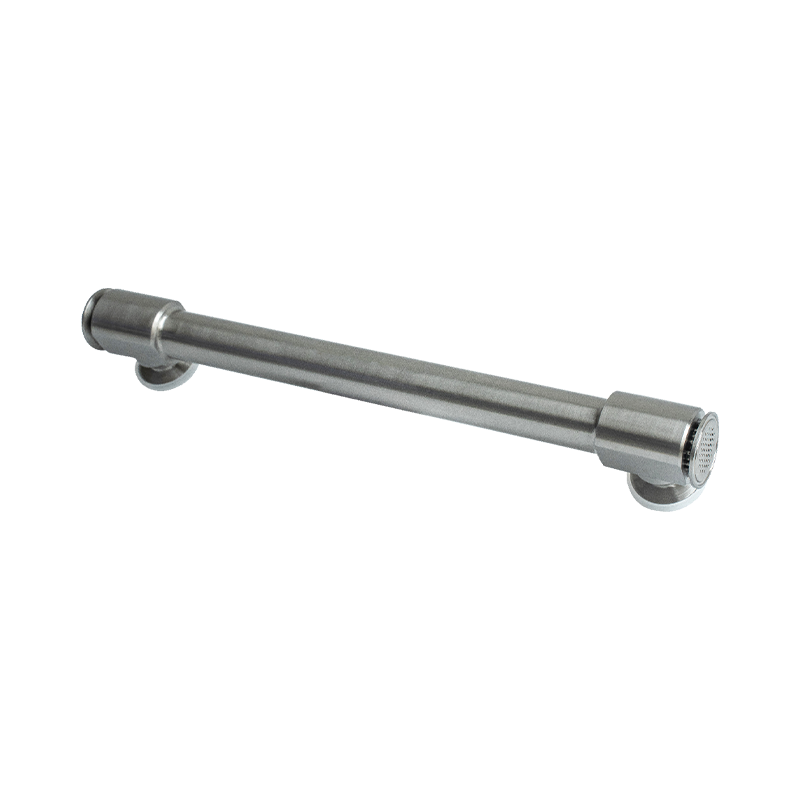 Custom Sanitary DTS (Double Tube Sheet) Heat Exchanger Manufacturers, FactoryShiloc (Shanghai) Industrial Trading Co., Ltd. Is China Custom Sanitary DTS (Double Tube Sheet) Heat Exchanger Manufacturers, Factory, 1....View Product →
Make FAT the First Complete Execution Test
Factory acceptance testing (FAT) is the first point where the physical skid can be tested as a unit. It is also the best opportunity to fix issues before shipment. Write a FAT protocol with clear pass or fail criteria that agree with the URS. The protocol should cover the items below.
- Visual and mechanical inspection of the frame, piping, and component alignment.
- Component verification against the approved bill of materials.
- Material certificates, weld maps, and surface finish documentation review.
- Calibration verification for pressure, temperature, flow, conductivity, and pH loops.
- Alarm, safety interlock, and fail-safe sequence tests.
- Automated run sequences at normal and worst-case setpoints.
- Documentation completeness of the final dossier before release.
For intelligent bioprocess heat transfer skid units, the FAT must include not only heat transfer performance but also the logic that controls pumps, valves, and utility supplies. Watch for inconsistent results between similar components, because variation usually becomes visible only during repetitive automated sequences.
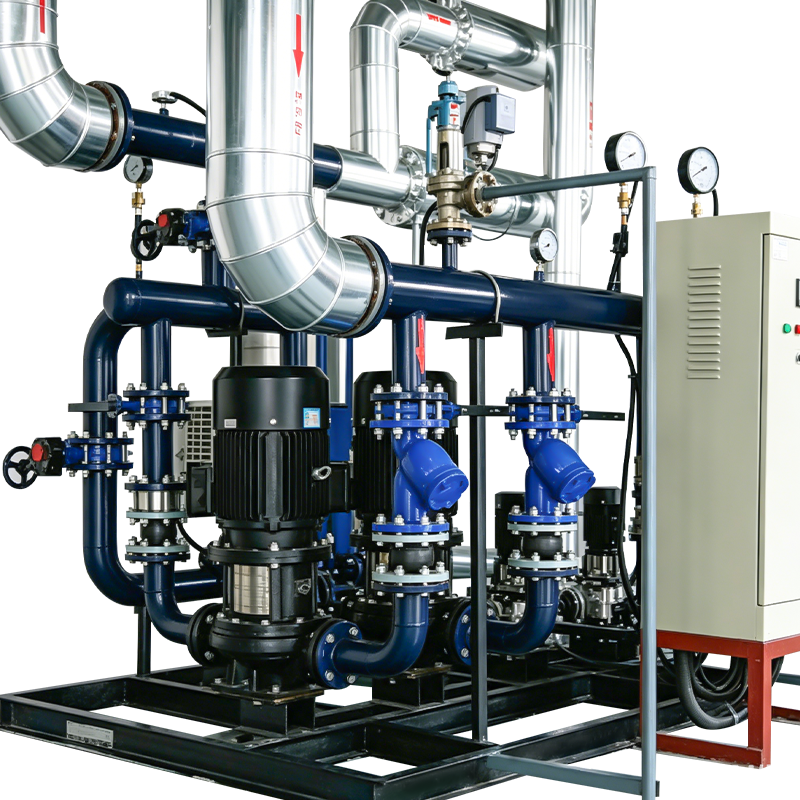 Custom Intelligent Bioprocess Heat Transfer Skid/Units Manufacturers, FactoryShiloc (Shanghai) Industrial Trading Co., Ltd. Is China Custom Intelligent Bioprocess Heat Transfer Skid/Units Manufacturers, Factory, Th...View Product →
Treat CIP and SIP as Part of the FAT
If the skid includes cleaning or sterilization functions, the FAT should verify cleaning-in-place and sterilization-in-place cycles. Confirm that target temperatures and hold times are reached, that flushing steps remove residual material, and that the sequence recovers reliably when a process step is interrupted. These results reduce risk before the skid reaches the facility.
Confirm the New Location With SAT and IQ
After transport and rigging, site acceptance testing (SAT) checks for transit damage, correct utility connections, and overall readiness. The goal is to confirm that the unit is complete and safe to power on, and that the physical installation matches the approved site layout.
Installation qualification (IQ) takes this further. IQ verifies that all installed components match the approved design, that the instrument list corresponds to the documented configuration, that calibration remains valid in the final location, and that utilities such as electricity, steam, compressed air, process water, and drains are within specification. In a GMP setting, IQ also records the skid in the equipment register so that future maintenance, calibration, and change management can be traced.
Prove Performance With OQ and PQ
Operational qualification (OQ) tests the skid under defined operating conditions to prove that every function works within its specified limits. Run sequences at minimum, normal, and maximum process setpoints. Repeat alarms and recovery paths. Document control output responses and compare them with the design intent.
If a skid contains a precision temperature control unit for biopharma, OQ should verify temperature accuracy during heat-up, cool-down, and hold phases. Look at controller response time, overshoot, and stability across the working range.
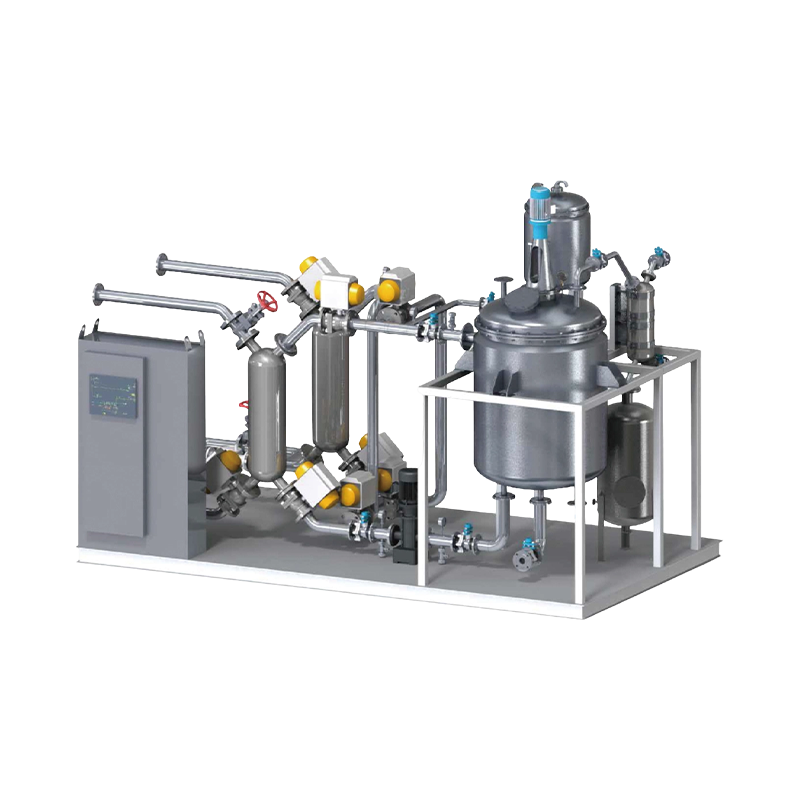 Custom Precision Temperature Control Unit (TCU) For Biopharma Manufacturers, FacShiloc (Shanghai) Industrial Trading Co., Ltd. Is China Custom Precision Temperature Control Unit (TCU) For Biopharma Manufacturers, Fact...View Product →
Automation and Software Verification
For skids with automation software, include software verification activities such as user access control, audit trail review, recipe parameter configuration, and backup or restore tests. Use a GAMP-based risk assessment to decide how deep the software validation needs to go. In most biopharma contexts, this also means checking that electronic records and signatures meet the applicable data integrity expectations.
Performance Qualification Uses Real Process Conditions
Performance qualification (PQ) uses the actual production process to prove that the skid consistently delivers the intended outcome under routine operating conditions. For a bioprocess skid, this typically means repeated batches, realistic cleaning runs, and final product or intermediate samples that meet acceptance criteria. A written sampling plan and a statistical review of the results complete the PQ.
Document the Full Traceability Path
Validating an integrated skid creates a complete document set. The file normally includes the items below.
- Validation plan and final report.
- User requirement specification and design qualification documents.
- Risk assessment.
- FAT and SAT protocols with executed reports.
- IQ, OQ, and PQ protocols with results and conclusions.
- Calibration reports and certificates.
- Piping and instrumentation diagrams and bill of materials.
- SOPs, training records, and maintenance plans.
- Deviation, nonconformance, and change control records.
A traceability matrix compares every key requirement with a verification test and shows that no requirement has been left unverified. Keep the matrix updated when requirements change. This document is usually the first item an auditor asks to see.
Align Validation Requirements With Your Supplier
The quality of validation depends heavily on the equipment supplier. A manufacturer that understands GMP expectations will build documentation quality into the project from the beginning. Ask about the supplier’s experience with skid systems, the depth of FAT documentation, the accuracy of piping and instrumentation diagrams, the traceability of materials, and the team’s familiarity with qualification protocols.
Review published examples of bioprocess integrated skids for modern bioprocess manufacturing to see how equipment is presented from a process and compliance standpoint. If the supplier already highlights hygienic design, control integration, and GMP readiness, you will likely receive stronger support during the qualification work.
Before finalizing the purchase order, confirm that the supplier will support URS review, design review, FAT execution, and site support during commissioning. Contact the supplier with your specific qualification questions, and keep the validation team involved from the first technical meeting.
Build the Proof Alongside the Skid
A robust validation of a bioprocess integrated skid is built step by step: clear design basis, early risk assessment, complete factory testing, installation and operational checks, performance runs, and a well-organized document set. Each stage reduces the risk of late discovery and turns the skid into a controlled part of the biomanufacturing process.
Start the validation conversation early, involve your quality and engineering teams from the beginning, and build the validation file alongside the equipment itself. That approach is still the fastest way to make an integrated skid defensible in a GMP environment.
PREV:Quality Standards for Bioprocess Integrated Skid Manufacturing: A Practical Guide
NEXT:Future Trends in Modular Bioprocessing Technology: What Biopharma Must Plan For
NEXT:Future Trends in Modular Bioprocessing Technology: What Biopharma Must Plan For
Interested in cooperation or have questions?
Let'S Work Together Welcome Aboard!
-

haikexin@haikexin.com
-
 +86-21-57560276
 -
 No. 2819, Sihu Road,Fengxian District, Shanghai, China
Join Our Mailing List
Copyright © Shiloc (Shanghai) Industrial Trading Co., Ltd. All Rights Reserved.
Process Systems & Equipment For Food & Biopharma Manufacturers
