
 English
 русский
 Português
 Français

 Read More

Product Category
NEW Category
Contact us
Contact Us
We specialise in the research, development and manufacture of electrical wires and cables.
 +86-21-57560276
Future Trends in Modular Bioprocessing Technology: What Biopharma Must Plan For
Content
- 1 Why Modular Bioprocessing Is Now the Default Delivery Model
- 2 Trend 1: Digital Control and Artificial Intelligence Become Standard
- 3 Trend 2: Single-Use Convergence and Hybrid Modular Trains
- 4 Trend 3: Standardized Platforms and Plug-and-Play Process Trains
- 5 Trend 4: Energy Efficiency Becomes a Purchasing Condition
- 6 Trend 5: Procurement Resilience and Integrated Vendor Capability
- 7 Frequently Asked Questions About Modular Bioprocessing
Most new biopharma capacity projects planned since 2024 specify modular execution for at least part of the process train, and the economics explain why. Modular bioprocessing technology is the engineering approach in which process functions such as heat transfer, temperature control, mixing, cleaning, and sampling are delivered as standardized, factory-tested skid units that can be configured, scaled, and relocated as one complete process train. For a mid-size monoclonal antibody facility, a modular temperature control and heat transfer package can reduce on-site installation from months to days, lower engineering effort by more than 50 percent, and compress the path from design freeze to product qualification.
Why Modular Bioprocessing Is Now the Default Delivery Model
Modular delivery has become the default for bioprocess utilities because it moves the highest-risk work - field installation, utility integration, and validation - into factory-tested and repeatable operations. Smaller batch sizes, multi-product facilities, and compressed launch timelines leave no room for the 12 to 18 month installation campaigns that were once standard.
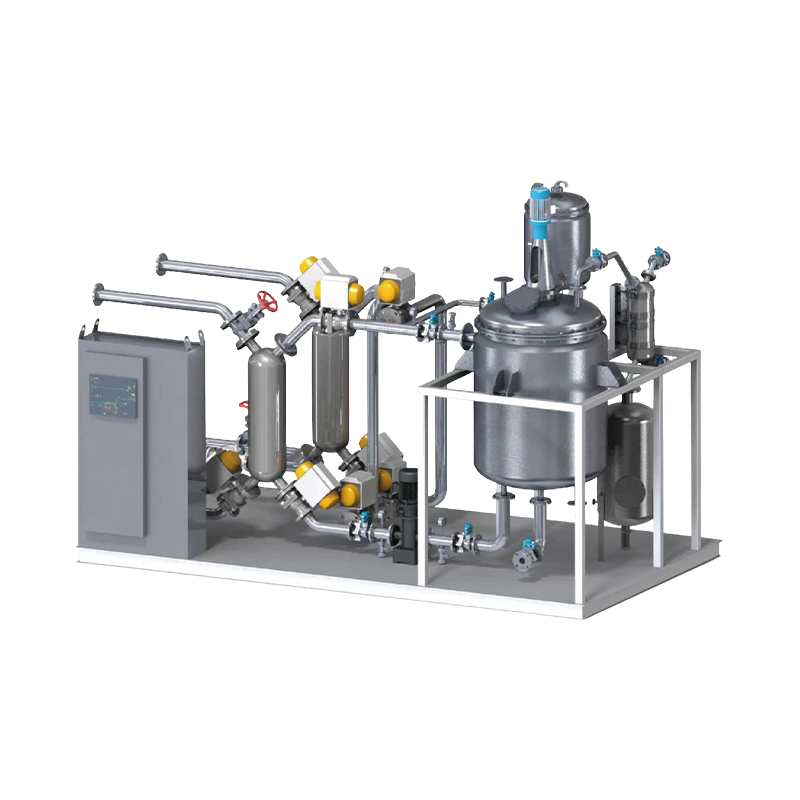
Equipment that used to be specified piece-by-piece, such as pumps, valves, heat exchangers, and instrumentation, is now engineered as one functional unit. The same logic applies to the temperature control loops, cleaning circuits, and sample-cooling systems around a bioreactor or harvest train. This is why modern bioprocess integrated skids are structured around a repeatable architecture rather than a unique drawing set.
| Attribute | Conventional plant | Modular skid approach |
| Engineering and design | Custom engineering per project | Configurable platform with validated defaults |
| Factory pre-testing | Limited before site delivery | Full FAT and documentation before shipment |
| On-site installation | 12 to 18 months | 2 to 4 weeks |
| Qualification path | Extended site CIP and validation | Reduced site validation with pre-validated parameter sets |
| Change control | Major re-engineering | Module swap or reconfiguration |
| Facility footprint | Large stainless steel utility rooms | Compact, skid-mounted and wall-mountable units |
The pattern is consistent across utilities and process units. Once the thermal and fluidic boundaries of a skid are defined, the rest of the facility can be designed in parallel, which shortens the critical path before any equipment arrives on site.
50%Typical overall project schedule reduction when heat transfer and utility functions are delivered as modular skids
30-40%Estimated capital cost reduction reported for skid-based utility systems versus conventional plant construction
Trend 1: Digital Control and Artificial Intelligence Become Standard
The first decisive trend is that digital control and artificial intelligence (AI) are becoming standard on modular bioprocessing equipment, not optional extras. A skid without a digital profile will look incomplete in almost every tender issued after 2025.
Sensors for flow, pressure, temperature, and conductivity are built in at the fabrication stage, and the control logic is configured for process analytical technology (PAT) from the start. The result is a continuous record of thermal and fluidic performance that quality teams can review without additional instrumentation.
Predictive Maintenance and Digital Twins
With a digital twin of the skid, operators compare live data against the design envelope and detect fouling, pump wear, or valve drift weeks before failure. In practice, this reduces unplanned downtime and shortens deviation investigations, because equipment data and process data share one timeline.
A modular skid is no longer a heat exchanger with pipes. It is a data node with a process function, and the data is becoming as important as the thermal duty.
AI-assisted operation will close the loop: the control system will adjust ramp rates, valve positions, and utility set points against live product-quality models. The hardware already exists; the remaining work is standardizing data interfaces between skid suppliers, bioreactor vendors, and site historians.
Trend 2: Single-Use Convergence and Hybrid Modular Trains
Hybrid trains that combine single-use bioreactors with reusable hygienic skids will dominate new facilities because they balance flexibility, closure, and lifecycle cost. Single-use systems remove the cleaning burden from product-contact surfaces, but they still need precise external control of temperature, pressure, and fluid movement.
Closing the Contamination Gap
The interface between a single-use bag and a stainless utility loop is the weakest point in a hybrid train, because a leak or cross-contamination event at that point can compromise an entire campaign. A double-tube-sheet design, such as the sanitary DTS double-tube-sheet heat exchanger, creates a physical and thermal barrier between the utility fluid and the product loop, which is exactly what hybrid architectures require.
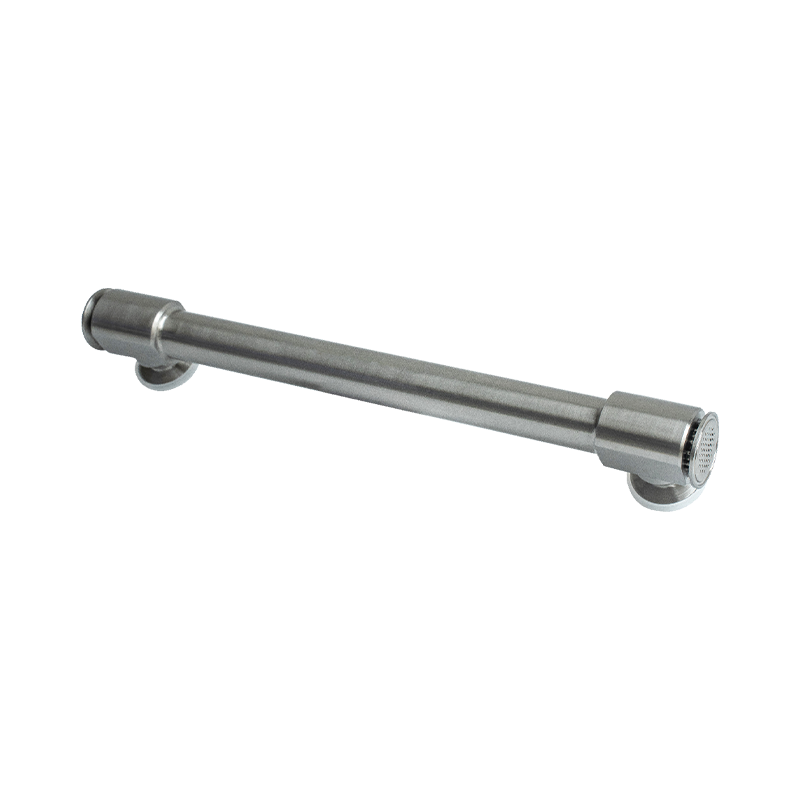 Custom Sanitary DTS (Double Tube Sheet) Heat Exchanger Manufacturers, FactoryShiloc (Shanghai) Industrial Trading Co., Ltd. Is China Custom Sanitary DTS (Double Tube Sheet) Heat Exchanger Manufacturers, Factory, 1....View Product →
Design rule for hybrid trains: every utility-to-product interface must include a secondary barrier or a leak-detection zone, so the first failure cannot reach the product stream.
Thermal Accuracy at the Single-Use Interface
Single-use bioreactors have lower thermal mass than stainless vessels, so they respond faster to utility temperature swings, which makes control stability harder, not easier. The skid must deliver tight temperature control with minimal overshoot while the bioreactor volume changes during feeding and harvest.
Suppliers that combine hygienic wetted parts with fast-responding control loops will lead this segment. The practical checklist for hybrid trains includes:
- Double barrier or double tube-sheet construction at every utility-to-product interface
- Fast valve actuation and low dead volume in the temperature control loop
- Compatibility with disposable sensor ports and single-use bag connectors
- Documented surface finish and material traceability for all wetted parts
Trend 3: Standardized Platforms and Plug-and-Play Process Trains
Standardization is the third trend: buyers no longer request unique bespoke skids; they request configurable platforms with validated defaults that still allow process-specific tuning. The same pattern already changed process automation, where consolidated control platforms replaced one-off cabinet builds.
Standardized platforms reduce engineering effort, shorten factory acceptance testing, and make spare-part stocking predictable. They also make it possible to move a skid between product lines with controlled reconfiguration rather than full re-engineering. The practical expression of this trend is the intelligent bioprocess heat transfer skid units that arrive with pre-engineered control logic and documented performance envelopes.
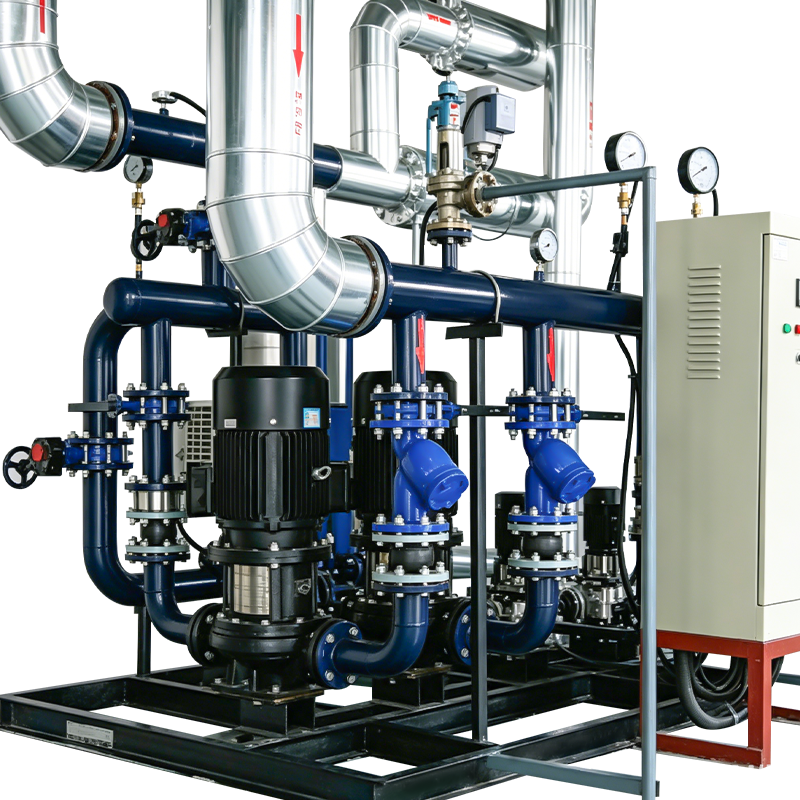 Custom Intelligent Bioprocess Heat Transfer Skid/Units Manufacturers, FactoryShiloc (Shanghai) Industrial Trading Co., Ltd. Is China Custom Intelligent Bioprocess Heat Transfer Skid/Units Manufacturers, Factory, Th...View Product →
Relative scale where a conventional stainless steel utility plant equals 100 for each metric. Illustrative averages based on recent biotech capacity projects and skid supplier documentation.
Plug-and-play execution changes qualification strategy as well. Instead of validating every field-installed connection, the project team validates the skid as an integrated unit and then verifies the simplified on-site interfaces. In practice, this is the fastest credible path to a GMP-ready utility system.
The business case is simple: a one-week reduction in a biologics facility schedule is worth more than the entire utility skid package on most projects.
Trend 4: Energy Efficiency Becomes a Purchasing Condition
Energy efficiency is now a purchasing condition for new biopharma modules, not a promotional feature, and the precision temperature control unit is the main lever. Biomanufacturing is thermal-intensive because utilities run continuously, and heating and cooling dominate the energy balance.
Modern skid designs minimize fluid inventory, recover heat between heating and cooling loops, and size pumps and valves for part-load rather than peak-load performance. A precision temperature control unit (TCU) for biopharma with a heat recovery loop can cut heating and cooling energy by 20 to 35 percent compared with older single-pass designs, while reducing chilled water and steam demand at the plant level.
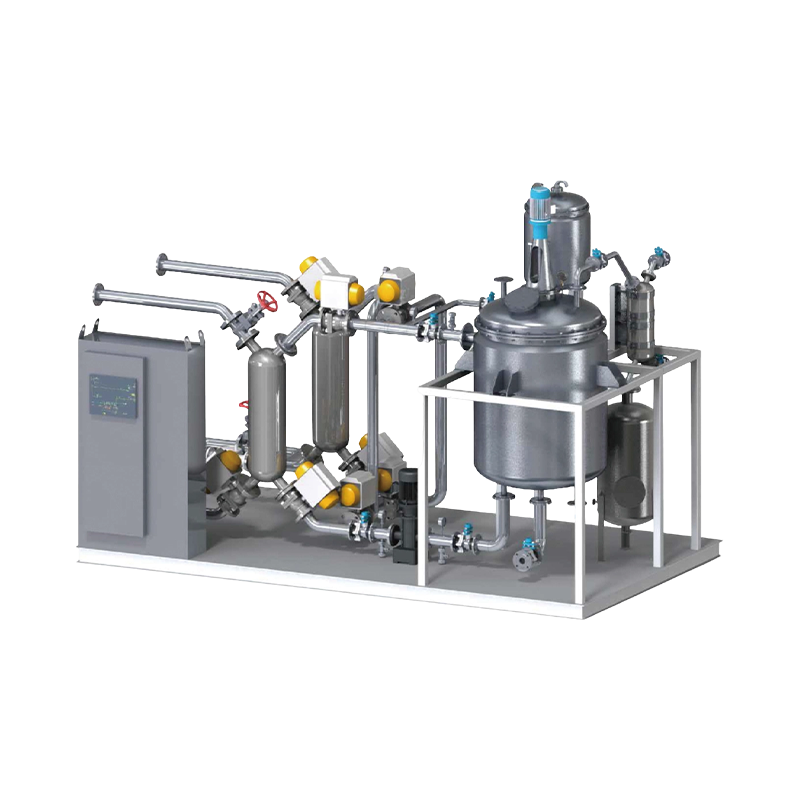 Custom Precision Temperature Control Unit (TCU) For Biopharma Manufacturers, FacShiloc (Shanghai) Industrial Trading Co., Ltd. Is China Custom Precision Temperature Control Unit (TCU) For Biopharma Manufacturers, Fact...View Product →
Documented energy performance is becoming a gateway criterion in vendor qualification, alongside pressure rating, wetted materials, and control functionality.
Sustainability scoring now appears in vendor questionnaires, and buyers ask for heat-loss values, insulation standards, and energy consumption per temperature ramp cycle. A skid that cannot answer those questions is filtered out before the commercial discussion begins.
Trend 5: Procurement Resilience and Integrated Vendor Capability
The quietest but most consequential trend is supply-chain resilience: a bottleneck in one module type can delay an entire plant, so buyers are consolidating on suppliers that can engineer, manufacture, and ship complete packages. Component lead times and cross-border logistics have replaced price as the first filter in equipment selection.
This favors companies that combine equipment manufacturing, engineering services, and trade execution in one organization. It is the model behind Shiloc (Shanghai) Industrial Trading Co., Ltd., a Shanghai-based company focused on fluid process equipment, technology import and export, and after-sales engineering support for food, beverage, and biopharma customers.
Detailed selection principles for bioprocessing systems help translate process needs into equipment requirements, but procurement teams should also verify five items during the commercial review:
- Ability to perform full factory acceptance testing with the actual control system
- Traceability of materials, welds, and surface finish records for every wetted component
- Proven logistics for oversized or fragile skid shipments to the destination site
- Spare parts availability and defined lead times for pumps, valves, and sensors
- Local support or partner network for commissioning and troubleshooting
When two suppliers propose identical skid specifications, the final decision is made on documentation quality, after-sales response time, and the ability to deliver within the agreed logistics window.
Frequently Asked Questions About Modular Bioprocessing
What is modular bioprocessing technology?
Modular bioprocessing technology delivers process functions such as heat transfer, temperature control, cleaning, and sampling as standardized, factory-tested skid units. These units are configured, qualified, and scaled as part of a complete bioprocess train instead of being built field-installed from loose components.
How much faster is a modular bioprocess project?
Based on current skid-based utility projects, overall project schedules are typically cut by 40 to 50 percent versus conventional plant construction. On-site installation falls from 12 to 18 months to 2 to 4 weeks, and factory acceptance testing eliminates most field rework.
Can modular skids work with single-use bioreactors?
Yes. Hybrid trains with single-use bioreactors and reusable hygienic skids are becoming the standard configuration. The key requirement is a secure barrier at the interface, such as double-tube-sheet heat exchanger construction, to prevent cross-contamination between utility and product streams.
What should buyers verify in a modular equipment supplier?
Buyers should verify factory testing capability, material traceability, logistics experience, spare part lead times, and local support coverage. Documentation quality and after-sales engineering service are as important as the equipment itself in a GMP-regulated production environment.
PREV:How to Successfully Validate Bioprocess Integrated Skids for GMP Biomanufacturing
NEXT:How Bioprocess Skids Are Designed and Manufactured | Engineering Guide
NEXT:How Bioprocess Skids Are Designed and Manufactured | Engineering Guide
Interested in cooperation or have questions?
Recommended LINS
✦
Food Processing Skid System
modular food processing skid system
hygienic process skid for food industry
beverage processing skid system
food processing equipment skid system
CIP process skid system for food industry
stainless steel process skid system
automated process skid system for food processing
milk processing skid system
beverage blending skid system
Let'S Work Together Welcome Aboard!
-

haikexin@haikexin.com
-
 +86-21-57560276
 -
 No. 2819, Sihu Road,Fengxian District, Shanghai, China
Join Our Mailing List
Copyright © Shiloc (Shanghai) Industrial Trading Co., Ltd. All Rights Reserved.
Process Systems & Equipment For Food & Biopharma Manufacturers
