
 English
 русский
 Português
 Français

 Read More

Product Category
NEW Category
Contact us
Contact Us
We specialise in the research, development and manufacture of electrical wires and cables.
 +86-21-57560276
How Bioprocess Skids Are Designed and Manufactured | Engineering Guide
Content
- 1 What Exactly Is a Bioprocess Skid?
- 2 Design Inputs: Process First, Equipment Second
- 3 Hygienic and Mechanical Design Practices
- 4 Manufacturing Sequence and Fabrication Controls
- 5 Automation and Temperature Control Integration
- 6 Testing, Factory Acceptance, and Documentation
- 7 Why Modular Skid Delivery Makes Sense
When a monoclonal antibody or cell-culture process moves from proof-of-concept to GMP production, the equipment conversation changes. Engineers stop specifying individual pumps and heat exchangers and start specifying a complete system that must heat, cool, transfer, monitor, and document every step. That system is the bioprocess skid, and the way it is designed and manufactured determines how smoothly it integrates with your facility and how defensible your process data will be during an audit.
Designed correctly, a bioprocess skid is built around a simple idea: every component exists to serve a defined process function under strict hygienic conditions. The practical consequence is that design decisions, from heat exchanger type to weld finish, are made before fabrication begins, and manufacturing controls ensure that what was designed is what gets delivered.
What Exactly Is a Bioprocess Skid?
A bioprocess skid is a pre-assembled module of process equipment mounted on a common structural frame. It typically includes process piping, heat transfer units, valves, instrumentation, and a local control panel, all integrated so the skid performs one or more complete process functions. Typical duties include media preparation, bioreactor temperature control, harvest cooling, and CIP/SIP support.
Typical skid contents
- Process and utility piping in 316L stainless steel with hygienic surface finishes
- Heat transfer equipment sized for the specified thermal duty
- Valves, such as diaphragm, butterfly, or ball types, selected for cleanability and process compatibility
- Sensors for temperature, pressure, flow, conductivity, and level
- A PLC-based control system with interlocks, alarms, and data recording
In practice, the difference between a well-designed and a poorly designed skid is rarely visible in a photograph. It shows up in the quality of the heat transfer calculation, in the slope of the drain lines, and in the completeness of the weld documentation. This is why modern bioprocess manufacturing increasingly relies on suppliers that treat skid design as an engineering discipline rather than as piping assembly.
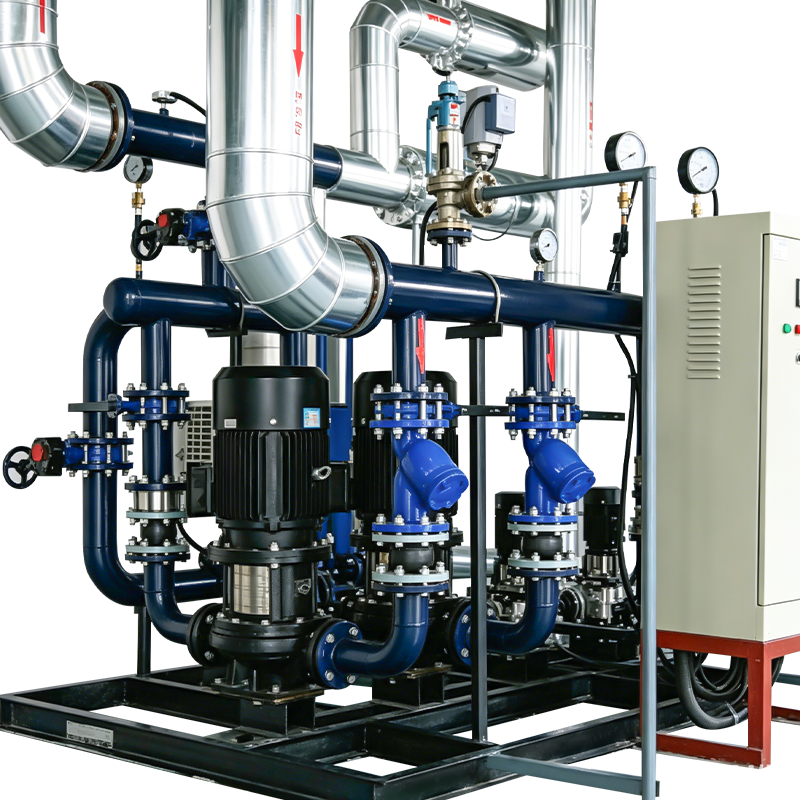
For applications where a single module must handle multiple heating and cooling duties, intelligent bioprocess heat transfer skid units integrate heat exchanger banks, control valves, and monitoring logic into one compact package.
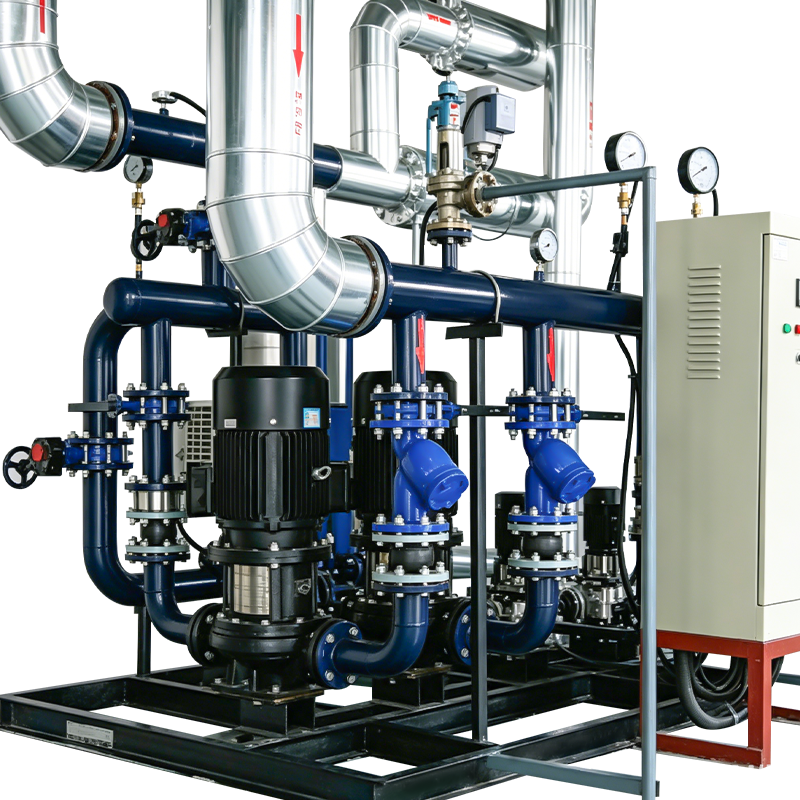 Custom Intelligent Bioprocess Heat Transfer Skid/Units Manufacturers, FactoryShiloc (Shanghai) Industrial Trading Co., Ltd. Is China Custom Intelligent Bioprocess Heat Transfer Skid/Units Manufacturers, Factory, Th...View Product →
Design Inputs: Process First, Equipment Second
The starting point of any skid design is not the equipment catalog; it is the process data sheet. The engineer needs fluid composition, viscosity, density, inlet and outlet temperatures, flow rate, pressure drop limits, batch size, and required cycle time. With these numbers, thermal and hydraulic calculations determine the heat transfer surface area and the piping diameters.
Thermal duty determines the heat exchanger
Consider a harvest-cooling task: 2,000 liters of cell culture broth at 35°C must be cooled to 15°C in 45 minutes. The sensible heat duty is approximately 120 kW. The skid therefore needs a heat exchanger with sufficient surface area and a temperature control valve with enough authority to prevent overshoot. Selecting the exchanger type, whether plate, tube-in-tube, capillary, or double tube sheet, then becomes a question of hygiene, viscosity, and allowable pressure drop.
Utility and facility constraints
Skid design also depends on what the facility can supply: chilled water temperature, plant steam pressure, clean steam availability, WFI flow, and instrument air quality. A skid designed for −8°C glycol behaves differently from one designed for 7°C chilled water. Clarifying these conditions early prevents expensive field changes, particularly in biopharmaceutical process applications where utilities are controlled by the clean utility distribution system.
Hygienic and Mechanical Design Practices
The heart of bioprocess skid design is hygienic engineering. Every surface that contacts the process must be cleanable, drainable, and compatible with the biological and chemical environment.
Materials and surface quality
316L stainless steel is the standard contact material. Critical wetted surfaces are usually electropolished to a roughness of Ra ≤ 0.5 µm, and internal welds must be free of pits and crevices. Gaskets and diaphragms require material compatibility studies with the process fluid, cleaning agents, and sterilization temperatures.
Drainability and dead-leg control
Piping is sloped toward low-point drains, and the design minimizes dead legs where product could stagnate. ASME BPE provides the reference that defines acceptable dead-leg lengths and slope requirements. For a skid to be validated for CIP, every internal surface must be reachable by cleaning solution at the correct velocity and temperature.
Heat exchanger selection for process safety
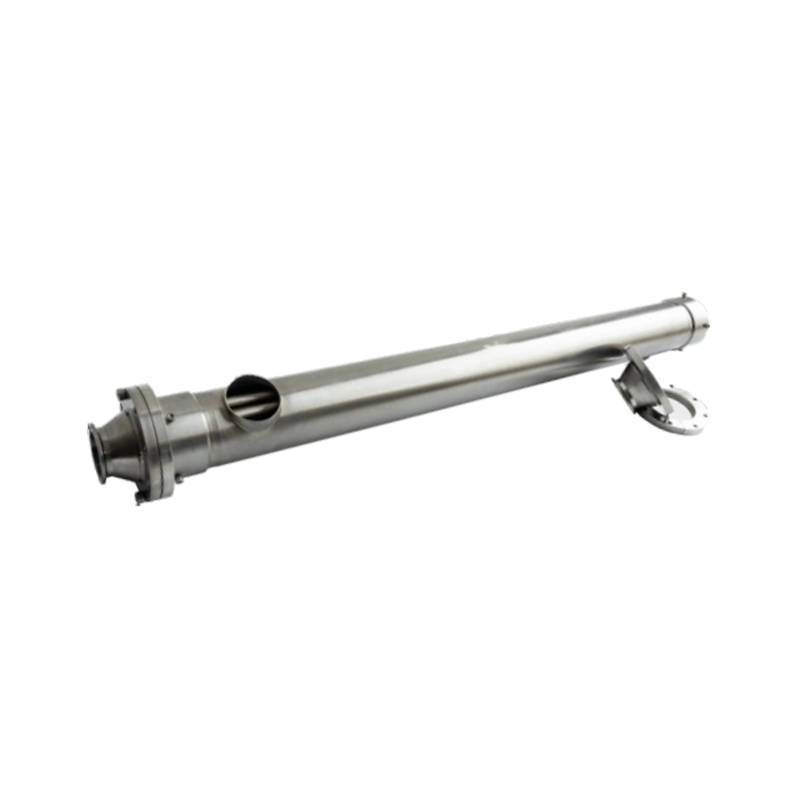
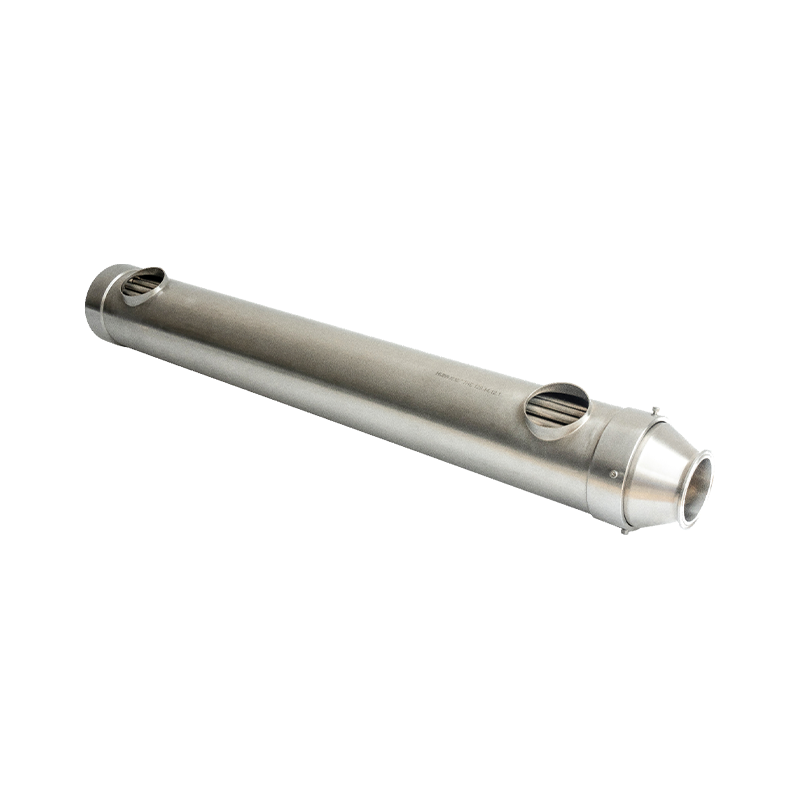
In bioprocess skids, heat transfer units must prevent cross-contamination between process and service fluids. A common solution is the use of sanitary DTS double tube sheet heat exchangers, where a secondary tube sheet ensures that a leak from the thermal fluid cannot migrate into the process stream. For small-volume or high-viscosity streams, sanitary capillary and tube-in-tube exchangers offer controlled flow and precise thermal performance.
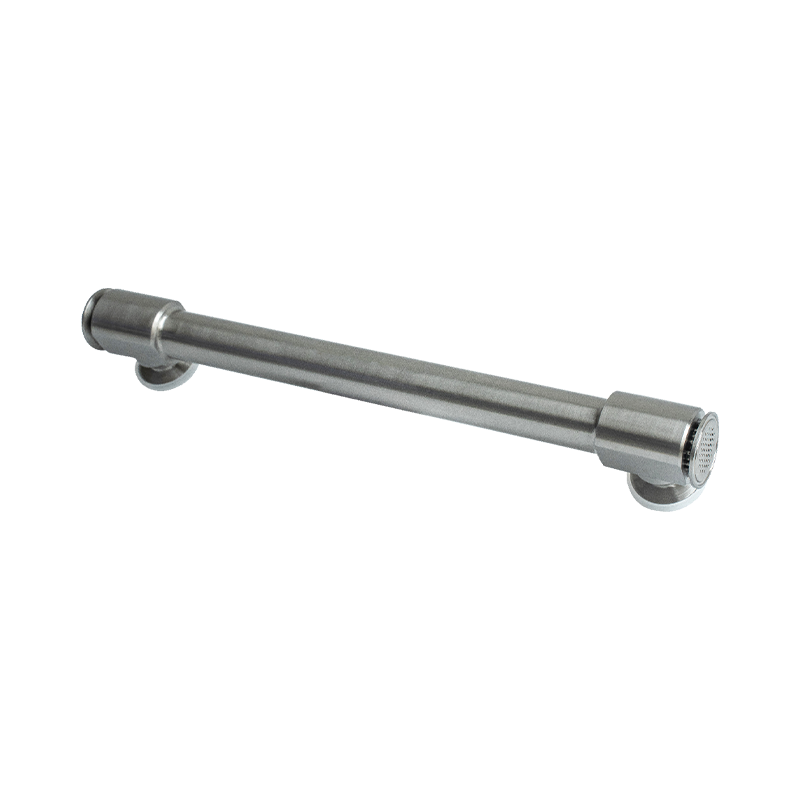 Custom Sanitary DTS (Double Tube Sheet) Heat Exchanger Manufacturers, FactoryShiloc (Shanghai) Industrial Trading Co., Ltd. Is China Custom Sanitary DTS (Double Tube Sheet) Heat Exchanger Manufacturers, Factory, 1....View Product →
Manufacturing Sequence and Fabrication Controls
Once the design is frozen, fabrication follows a repeatable sequence. The frame is built first; piping spools are then fitted, welded, and assembled with valves and instruments. Heat exchangers and pumps are installed, followed by the control system wiring and pneumatic tubing.
- Frame fabrication and alignment
- Piping spool preparation and orbital welding
- Installation of valves, pumps, heat exchangers, and sensors
- Pneumatic and electrical wiring
- Pressure and leak testing
- Surface finish verification and passivation
- Factory acceptance testing and commissioning of control loops
Welding quality is the deciding factor
Orbital GTAW welding is standard for hygienic piping, performed with an inert gas purge on the internal side. Each weld receives an identification number and a visual record. In GMP environments, weld documentation becomes part of the validation file and is one of the first documents auditors request.
| Fabrication Stage | Key Check |
|---|---|
| Frame fabrication | Alignment, levelness, and load capacity |
| Piping and welding | Weld ID, internal purge, and surface quality |
| Component installation | Valve orientation, sensor position, and accessibility |
| Wiring and pneumatics | Point-to-point checks and signal isolation |
| Testing | Hydrostatic, helium leak, and surface roughness |
| Factory acceptance test | I/O checks, alarm tests, and simulated process cycles |
Automation and Temperature Control Integration
A bioprocess skid is only as good as its control system. Most modern designs use a PLC with a local HMI that controls temperature, flow, pressure, and valve position through PID loops. Because temperature control is the most common skid function, the quality of heating and cooling control directly affects product yield and batch reproducibility.
For bioprocess applications, precision temperature control units for biopharma are designed to deliver repeatable ramp rates and tight steady-state tolerances, often within ±0.5°C during culture and hold steps. The control strategy typically combines a primary heat exchanger with a bypass control valve so the system can respond quickly during transitions between heating, cooling, and temperature hold.
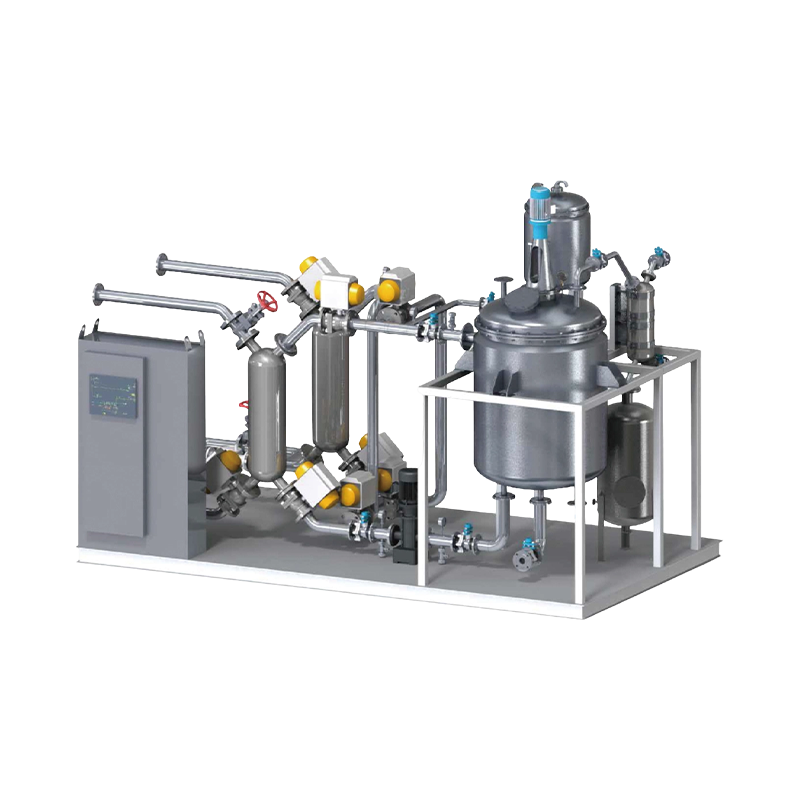 Custom Precision Temperature Control Unit (TCU) For Biopharma Manufacturers, FacShiloc (Shanghai) Industrial Trading Co., Ltd. Is China Custom Precision Temperature Control Unit (TCU) For Biopharma Manufacturers, Fact...View Product →
Data integrity and batch records
Skid control systems record process data continuously. In regulated environments, the system should support electronic signatures, audit trails, and secure data export. Aligning the skid's control and data architecture with GMP expectations during design, rather than retrofitting after installation, saves significant time during validation.
Testing, Factory Acceptance, and Documentation
The final stage of manufacturing is verification. Hydrostatic and pneumatic pressure tests prove mechanical integrity; helium leak tests detect micro-leaks in welds; and surface finish checks confirm that sanitary requirements are met. The factory acceptance test (FAT) is the last gate before shipment.
During the FAT, the skid is tested under simulated process conditions. Engineers check input and output wiring, alarm setpoints, interlock logic, pump start-stop behavior, valve sequence, and control loop tuning. Any deviation is corrected while the skid is still in the workshop, where changes are far cheaper than on site.
Documentation that supports commissioning and validation
No skid design or manufacturing effort is complete without documentation. Material certificates, weld maps, heat exchanger datasheets, calibration certificates, electrical schematics, and FAT reports travel with the skid. This documentation is the foundation for site acceptance, installation qualification (IQ), and operational qualification (OQ).
Why Modular Skid Delivery Makes Sense
Taking the integrated approach rather than assembling equipment in the field offers measurable advantages for bioprocess facilities:
- Faster site installation because pre-tested skids only need utility connections.
- Smaller cleanroom footprint, as modules arrive enclosed and ready to operate.
- Consistent quality from controlled factory conditions and repeatable weld and test procedures.
- Lower project risk because the FAT catches problems before equipment leaves the workshop.
- Stronger lifecycle support thanks to clear drawings, documentation, and spare part traceability.
Bioprocess skid design and manufacturing is a combination of process engineering, hygienic design, precision fabrication, and automation. When these disciplines are coordinated, the result is a module that starts up quickly, validates cleanly, and performs reliably batch after batch. If you are planning a new bioprocess line or upgrading existing capacity, discuss your skid project with our engineers to translate process requirements into a buildable, testable, and auditable module.
PREV:Future Trends in Modular Bioprocessing Technology: What Biopharma Must Plan For
NEXT:What Are Bioprocess Integrated Skids and How Do They Support Modern Biomanufacturing?
NEXT:What Are Bioprocess Integrated Skids and How Do They Support Modern Biomanufacturing?
Interested in cooperation or have questions?
Recommended LINS
✦
Let'S Work Together Welcome Aboard!
-

haikexin@haikexin.com
-
 +86-21-57560276
 -
 No. 2819, Sihu Road,Fengxian District, Shanghai, China
Join Our Mailing List
Copyright © Shiloc (Shanghai) Industrial Trading Co., Ltd. All Rights Reserved.
Process Systems & Equipment For Food & Biopharma Manufacturers
