
 English
 русский
 Português
 Français

 Read More

Product Category
NEW Category
Contact us
Contact Us
We specialise in the research, development and manufacture of electrical wires and cables.
 +86-21-57560276
Sanitary Heat Exchanger: Key Material, Surface Finish and Hygienic Requirements
Content
- 1 What a Sanitary Heat Exchanger Actually Is
- 2 Material Requirements: 316L First, Alternatives When Needed
- 3 Surface Finish: Where Cleanability Is Decided
- 4 Hygienic Design: Drains, Joints, and Dead Legs
- 5 Welds and Passivation: The Finish Extends to Every Joint
- 6 Selection Guidance for Food and Biopharma Duty
- 7 Frequently Asked Questions
A dairy plant once traced a CIP validation failure to a sanitary heat exchanger that looked clean but had been supplied with Ra 0.8 um mechanical polish and bolted, non-flush gaskets. The thermal duty was correct; the hygienic duty was not. For food, beverage, and biopharmaceutical producers, a sanitary heat exchanger is defined by three controlled characteristics: material, surface finish, and hygienic design.
The working definition: a sanitary heat exchanger is a heat transfer device engineered for cleanability, drainability, and contamination control. Every wetted surface, weld, gasket, and connection must survive aggressive CIP chemicals and repeated thermal exposure without degrading.
Ra 0.4 um Typical biopharma product-contact specification; food contact duty commonly starts at Ra 0.8 um.
What a Sanitary Heat Exchanger Actually Is
The short answer: a sanitary heat exchanger is a closed-loop heat transfer unit whose product-contact surfaces are cleanable, drainable, and corrosion-resistant by design. It is built to cope with the worst case - biofilm, scaling, chemical residue - not ideal operation.
That requirement changes geometry and connections before it changes the thermal calculation. Hygienic clamps replace bolted flanges on food lines, double-tube-sheet designs separate product from utility in pharma duty, and gaskets sit flush with the flow path.
- Pasteurizing milk, juice, and liquid egg
- Ultra-high-temperature sterilization lines
- Cooling water-for-injection loops
- Heating CIP solutions to the correct contact temperature
- Fermenter jacket and harvest cooling in bioprocessing
Hygienic design means a component can be cleaned without disassembly, drained without pooling, and inspected without doubt.
Material Requirements: 316L First, Alternatives When Needed
Type 316L stainless steel is the default wetted material for sanitary heat exchangers. The low-carbon limit, maximum 0.03%, keeps carbide precipitation out of weld heat-affected zones, while the chromium (16-18%), nickel (10-14%), and molybdenum (2-3%) content provides resistance to the chlorides found in common CIP and sanitizing chemistry.
If chloride levels move beyond normal CIP exposure - coastal cooling loops or brine service, for example - 316L can pit. Alloy 904L and duplex grades add nickel and molybdenum for better localized corrosion resistance; titanium handles seawater but changes welding and cost expectations.
| Alloy | Key characteristic | Typical service | Relative cost |
| 304L | Chromium-nickel base | Low-chloride utility streams | Low |
| 316L | Molybdenum addition | CIP, food products, WFI loops | Moderate |
| 904L / Duplex | Higher nickel and molybdenum | Chloride-rich brine | High |
| Titanium | Exceptional chloride resistance | Seawater cooling | Highest |
Gasket materials deserve the same scrutiny as the metal. EPDM handles hot caustic CIP cycles, PTFE resists aggressive oxidizers, and FKM suits higher-temperature service. An exchanger is only as sanitary as its weakest seal.
Material selection rule: choose the alloy for the cleaning agent, not just for the product. Hot caustic, nitric, and peracetic acid cycles expose metal surfaces more aggressively than most products do, so the CIP recipe sets the corrosion baseline.
Surface Finish: Where Cleanability Is Decided
Surface finish is the most inspected requirement in a sanitary heat exchanger. The measurable target is average roughness (Ra): lower Ra means less anchorage for bacteria and faster wetting by cleaning solutions.
For food contact, Ra 0.8 um is the working baseline for mechanically polished surfaces. For biopharmaceutical product contact, Ra 0.4 um is common, and critical systems call for ASME BPE SF3 or SF4 levels of 0.25 um and 0.2 um.
Maximum product-contact surface roughness (lower is cleaner)
Values are maximum Ra limits commonly written into purchase specifications.
Mechanical polishing removes macroscopic peaks and leaves a smooth surface; electropolishing goes further by dissolving the chromium-depleted layer left from machining and forming a chromium-rich passive oxide film. That film resists pitting and releases product residues more readily, which is why electropolishing is standard for sterile biopharma paths.
The acceptance criterion should be written as Ra 0.4 um measured, not fine polish. Vague wording is how non-compliant surfaces enter a plant.
Hygienic Design: Drains, Joints, and Dead Legs
Geometry matters as much as roughness. A perfectly polished surface that traps fluid in a dead leg is still a contamination risk. Hygienic design eliminates those traps: surfaces slope to a low point, radii avoid crevices, and branch connections stay short.
- Drainability: every product-contact surface drains completely after CIP
- Short dead legs: branch connections hold an L/D ratio of 2 or less
- Flush gaskets: gasket bore matches pipe bore with no exposed lip
- Crevice-free joints: hygienic clamps or welded connections instead of threaded unions
- Double tube sheet: a vented gap between product and service fluid prevents cross-contamination
- Inspection access: every contact surface can be checked visually or with a borescope
Compliance is defined by standards, not aesthetics. EHEDG certification, 3-A Sanitary Standards, FDA Title 21, and ASME BPE give auditable design and acceptance criteria. If a vendor cannot name the standard that applies to your duty, treat it as a red flag.
Max L/D 2
Dead leg ratio is the length of a stagnant branch divided by its inner diameter. Hygienic piping practice caps it at two diameters; going beyond that invites product entrapment and biological growth.
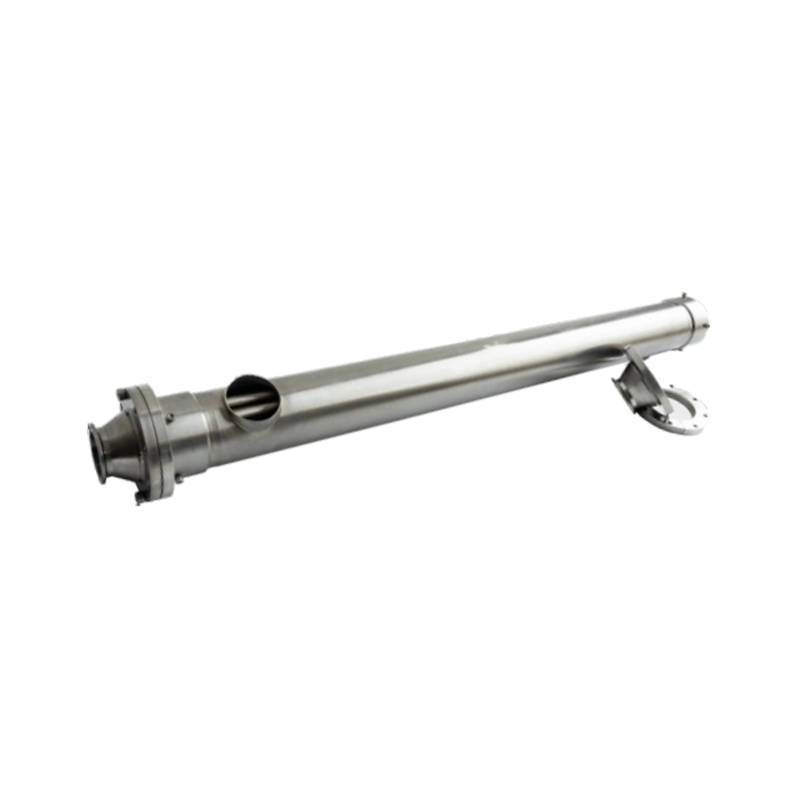
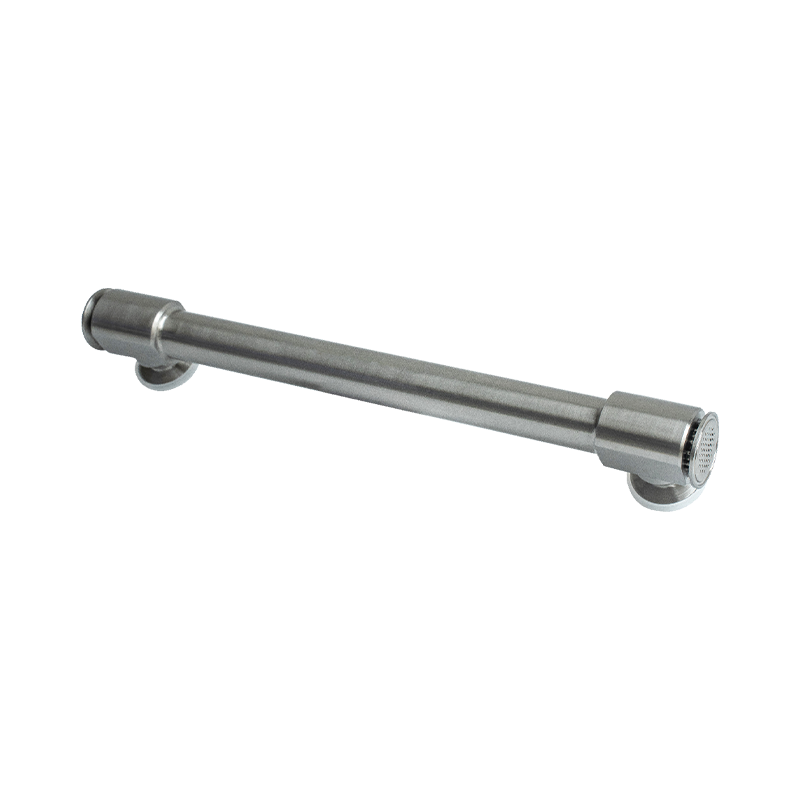 Sanitary Double Tube Sheet Heat Exchanger with Leak DetectionDual-tube-sheet construction prevents cross-contamination and provides leak detection points, meeting FDA and cGMP full-drain requirements for pharmaceutical water systems.View Product →
Welds and Passivation: The Finish Extends to Every Joint
Welds are where material and finish failures start. A manual weld with heat tint and chromium depletion turns a compliant 316L surface into a corrosion site. Sanitary heat exchangers use autogenous orbital welding with argon backing, followed by heat-tint removal and passivation.
- Weld preparation: square, machine-cut ends and clean edges with no oil residue
- Orbital welding: automated tungsten arc welding under inert gas purge
- Heat-tint removal: pickling or electropolishing strips the oxide layer
- Passivation: nitric or citric acid restores the chromium-rich passive film
- Verification: Ra measurement, ferrite check, and leak testing before release
A practical acceptance checklist includes no weld discoloration, weld Ra matching the parent surface, and full penetration at every joint.
If the supplier cannot state the weld acceptance criterion in writing, the heat exchanger is not to specification.
Selection Guidance for Food and Biopharma Duty
Choose the exchanger geometry after the product, cleaning regime, and safety requirement are fixed. Plate heat exchangers suit low-viscosity liquids in food lines; tube-in-tube and multitube units handle viscous or particulate fluids; capillary and double-tube-sheet types fit sterile biopharma loops.
For food and beverage lines, sanitary plate units combine compact footprint with high heat recovery, and they can be opened for inspection quickly. Shiloc (Shanghai) Industrial Trading Co., Ltd., an equipment manufacturer and trading company with European-based technology, supplies complete plate pasteurization skids for this duty.
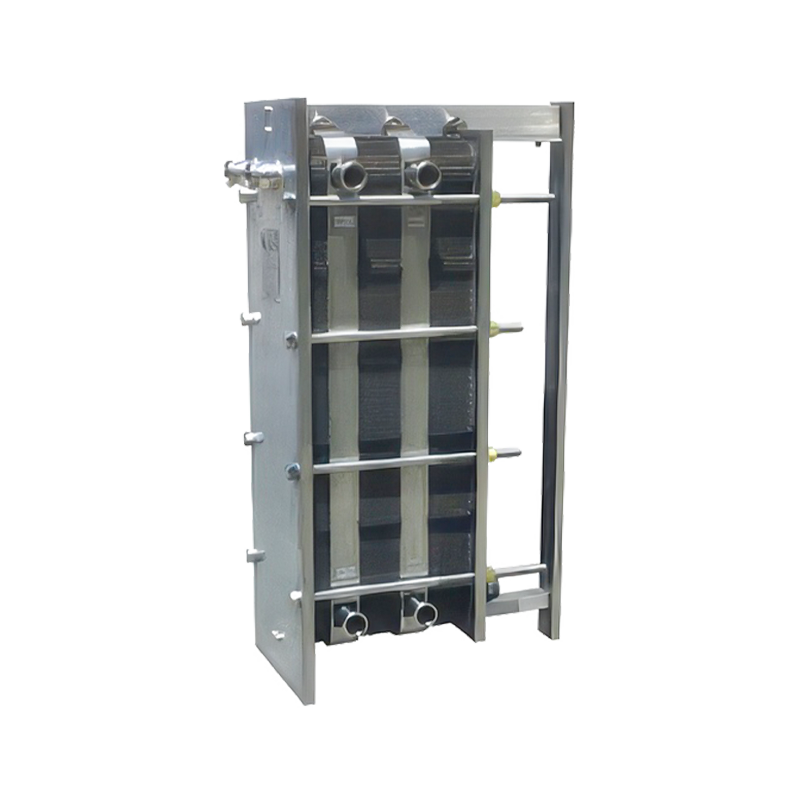
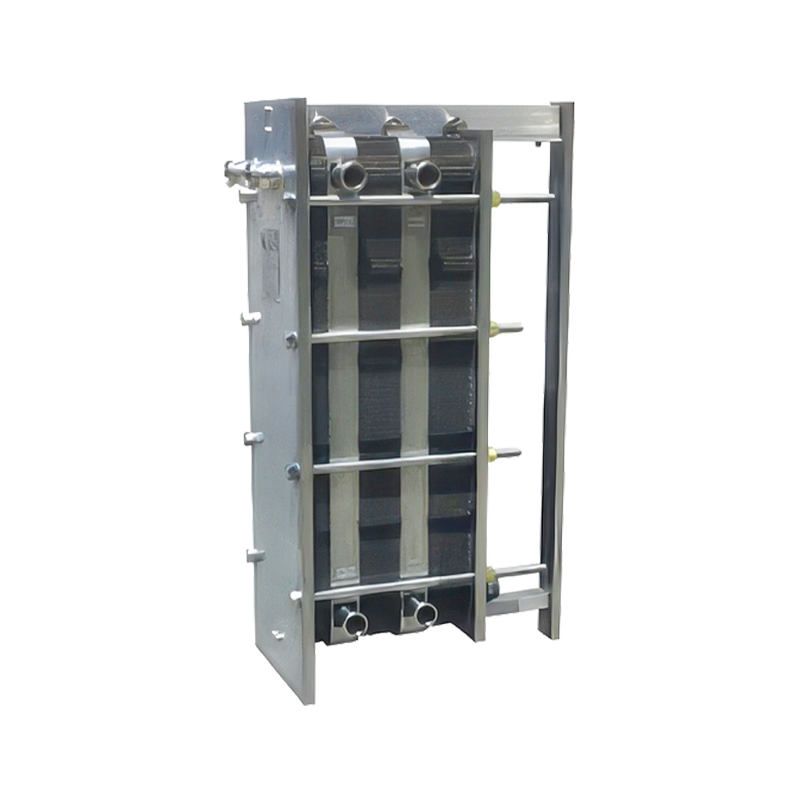 Detachable Sanitary Plate Heat Exchanger for Hygienic ProcessingCorrugated food-grade plates enhance turbulence and heat transfer, while the detachable design permits fast inspection and flexible capacity adjustment for food and dairy lines.View Product →
For sterile pharmaceutical water and protein-containing streams, a capillary design keeps hold-up volume low and temperature control tight. The same supplier documents the material certificate, surface finish, and weld report on every sanitary unit, so the paper trail matches the hardware.
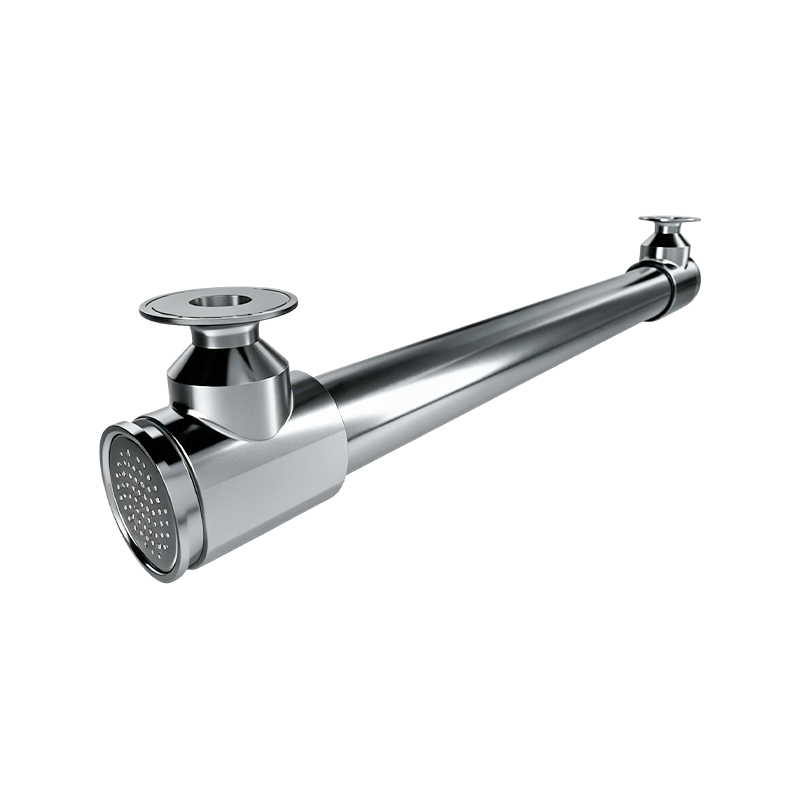 Sanitary Capillary Heat Exchanger with Dead-Leg-Free FlowFine capillary tubes increase heat exchange area and enable precise low-flow temperature control, while quick-connect fittings and 316L construction support CIP and clean disassembly.View Product →
If your duty involves a chloride-rich utility, a viscous product, or a sterilizing-grade application, contact the engineering team with the flow rates and CIP recipe before requesting a quote.
Frequently Asked Questions
What is the difference between Ra 0.8 um and Ra 0.4 um surface finish?
Ra 0.8 um is the usual ceiling for food-contact surfaces, while Ra 0.4 um is common for biopharmaceutical product contact. The numerical value halves, but cleanability changes significantly: lower roughness gives bacteria less anchorage and lets CIP chemistry work faster, which is why critical sterile loops specify 0.4 um or better.
Is electropolishing always better than mechanical polishing?
For sterile and high-purity duty, yes. Electropolishing removes the deformed surface layer left by machining and creates a passive, chromium-rich film that resists pitting and releases residue more easily. For low-risk food contact, a correctly executed mechanical polish to Ra 0.8 um is sufficient and more economical.
Why use a double-tube-sheet heat exchanger in biopharma?
A double-tube-sheet design provides two separate tube-to-sheet joints with a vented intermediate gap. If a leak develops, the service fluid drains into the gap and is detected instead of migrating into the product. It is the standard choice when product and utility must be separated by two positive barriers.
Do sanitary heat exchangers need EHEDG or 3-A approval?
Not everywhere, but certification is the fastest way to prove hygienic compliance. EHEDG and 3-A are recognised by food and pharma auditors worldwide, so specifying one of them shortens validation and reduces the chance of a failed plant inspection.
A hygienic heat exchanger specification is complete only when it names the alloy, the Ra limit, the weld acceptance criterion, and the design standard.
Interested in cooperation or have questions?
Let'S Work Together Welcome Aboard!
-

haikexin@haikexin.com
+8613391278930
-
 +86-21-57560276
 -
 No. 2819, Sihu Road,Fengxian District, Shanghai, China
Join Our Mailing List
Copyright © Shiloc (Shanghai) Industrial Trading Co., Ltd. All Rights Reserved.
Process Systems & Equipment For Food & Biopharma Manufacturers
