
 English
 русский
 Português
 Français

 Read More

Product Category
NEW Category
Contact us
Contact Us
We specialise in the research, development and manufacture of electrical wires and cables.
 +86-21-57560276
Bioprocess Integrated Skids for Vaccine Production: Engineering and Buying Guide
Content
- 1 Why Heat Transfer Becomes the Critical Decision in Vaccine Production
- 2 What Are Bioprocess Integrated Skids?
- 3 How Vaccine Manufacturing Benefits from a Skid-Based Approach
- 4 Key Technical Specifications to Compare Before Specifying a Vaccine Skid
- 5 Design and Compliance Considerations for Vaccine Duty
- 6 Procurement Risks and How to Mitigate Them
- 7 Making the Right Choice for Vaccine Production
Why Heat Transfer Becomes the Critical Decision in Vaccine Production
A single temperature excursion during a vaccine intermediate hold step can trigger a batch disposition investigation that runs for weeks. The data logs usually point to the same place: the heat transfer loop, the response time of the control valve, the position of the temperature sensor, and whether the skid was sized to meet the required ramp rate at the actual flow. In vaccine manufacturing, these are not secondary details. They determine whether a batch is released or quarantined.
Bioprocess integrated skids exist to move that risk out of the field and into the factory. By pre-assembling heat exchangers, control valves, pumps, sensors, and automation into one hygienic, testable unit, a well-designed skid removes many of the decisions that would otherwise be made by piping contractors on-site. It replaces improvisation with a controlled engineering process. This article explains what these skids are, why they matter for vaccine production, which technical and compliance criteria deserve attention, and how to avoid the most common procurement mistakes.
What Are Bioprocess Integrated Skids?
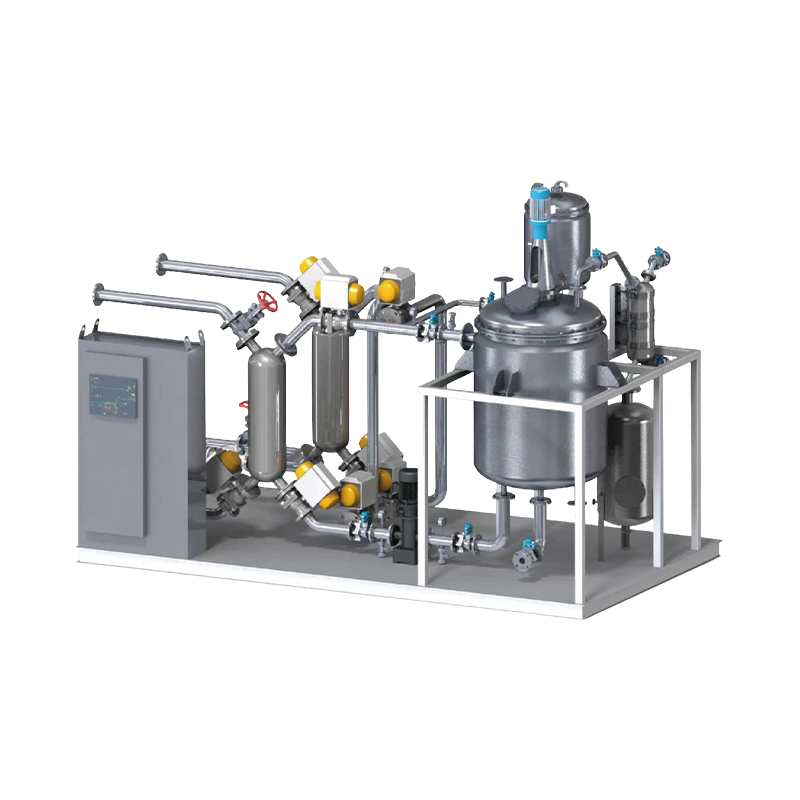
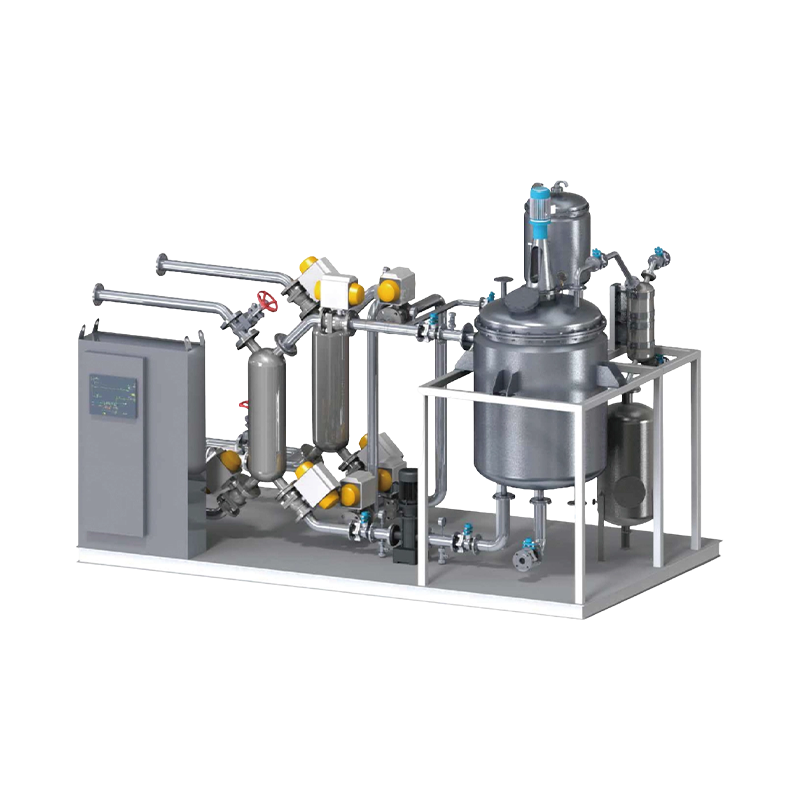
A bioprocess integrated skid is a factory-built process module that performs one or more related functions, most commonly heat transfer, temperature control, fluid transfer, and cleaning, under the control of a local or remote automation system. In vaccine facilities, skids are typically deployed around bioreactors, viral inactivation tanks, purification columns, and final formulation vessels.
Rather than installing individual heat exchangers and control loops at scattered points in the plant, the skid arranges them in a compact framework with defined process and utility connections. The internal piping is welded or clamped to hygienic standards, the instruments are calibrated and pre-wired, and the control sequences are preprogrammed. The result is a clearly bounded scope: the user knows that the hardware, software, and supporting services come from one integrated supplier.
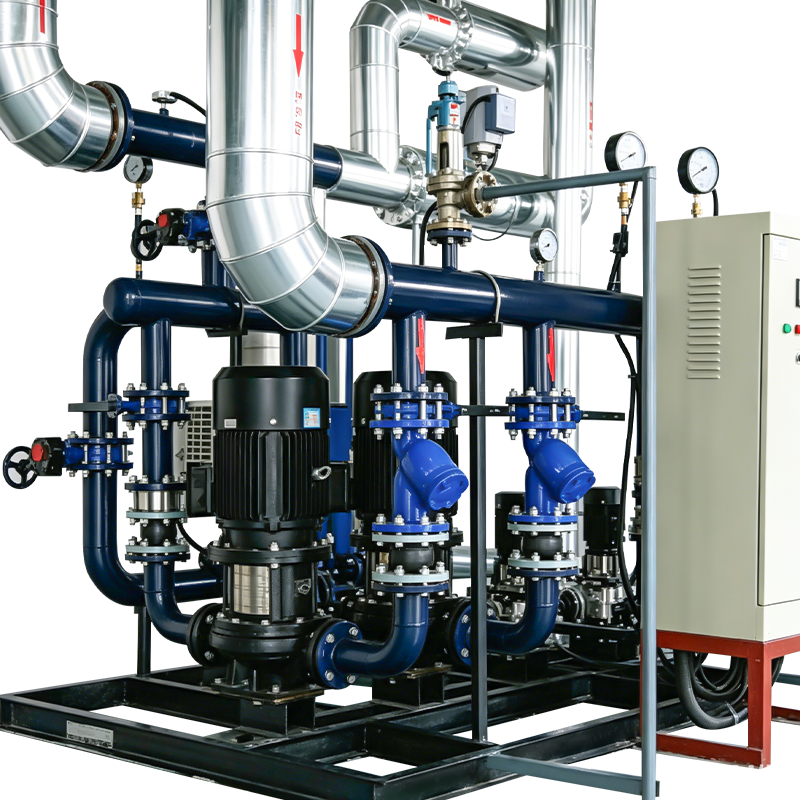
For a broader explanation of the concept and its practical advantages, it is useful to review what bioprocess integrated skids are and why they are essential. When the application involves process heating or cooling, the core of the module is typically a hygienic heat exchanger paired with a control strategy. Shiloc's intelligent bioprocess heat transfer skid units combine plate, tubular, or double-tube-sheet exchangers with automated valves and process instrumentation to deliver repeatable thermal performance in a compact footprint.
How Vaccine Manufacturing Benefits from a Skid-Based Approach
Vaccine production has several characteristics that make integrated skids particularly attractive. The process is biologically sensitive, the hold times and thermal limits are strict, and the qualification burden for any new line is substantial. A skid addresses all three constraints at once.
- Shorter project timelines: The skid is manufactured and factory-tested while civil work and other site preparation continue in parallel.
- Lower contamination risk: Fewer field welds and pipe connections mean less exposure to particle and microbial contamination during installation.
- Better batch-to-batch consistency: Pre-tested control logic is repeated across identical skids, reducing the variables introduced by different installation teams.
- Simpler validation: Factory acceptance testing catches integration problems before shipment, and the documentation package supports a faster IOQ on site.
These benefits become even more valuable when a vaccine manufacturer needs multiple identical production lines. Because each skid is fabricated to the same specification and test record, the second line can be replicated without re-engineering the thermal system. The practical experience of applying bioprocess integrated skids in modern bioprocess manufacturing shows that the degree of standardization directly influences how quickly a process can be transferred from development to commercial production.
Key Technical Specifications to Compare Before Specifying a Vaccine Skid
Before comparing prices, compare the parameters that determine whether a skid can hold your process inside its thermal envelope. A skid that is too small will struggle to reach the required ramp rate, while one that is oversized may lack the control resolution needed for steady temperature maintenance.
| Parameter | What to verify | Why it matters |
|---|---|---|
| Flow rate range (L/h) | Operating window at normal and peak demand | Under-sizing causes slow ramps; over-sizing reduces control resolution. |
| Temperature range (°C) | Minimum and maximum process and utility temperatures | Confirms material selection, insulation, and heat exchanger capacity. |
| Heating and cooling ramp rate (°C/min) | Response time across the full operating window | Directly affects hold-time steps and viral inactivation cycles. |
| Approach temperature (°C) | Closest achievable difference between utility and process | Determines heat exchanger sizing and utility consumption. |
| Wetted materials | 316L stainless steel, electro-polished surfaces, gasket material | Must be compatible with process buffers, proteins, and cleaning agents. |
| Surface finish (Ra) | Certificate for all product-contact surfaces | Influences cleanability and the risk of fouling or microbial growth. |
| Temperature sensor accuracy | Calibration procedure and tolerance | Supports batch record integrity and deviation investigations. |
| SIP and CIP compatibility | Steam and chemical resistance of all wetted components | Determines the skid's long-term reliability and validation scope. |
These specifications are interlinked. A higher ramp rate may require a larger heat transfer surface, which in turn affects the approach temperature and the utility demand. Evaluating them together helps avoid a design that is technically correct on paper but impractical to operate.
Design and Compliance Considerations for Vaccine Duty
Beyond datasheet values, the design philosophy of the skid determines how well it performs during actual vaccine production and how easily it can be qualified.
Hygienic Design and GMP Alignment
A skid intended for vaccine production must be designed so that every fluid-facing surface can be cleaned and, where required, sterilized in place. Low-point drains, angled branch connections, and zero-dead-leg instrument tees are not optional details. GMP expectations also extend to documentation: material certificates, weld logs, surface finish certificates, and software validation documents should all be available for review before the skid is accepted.
Wetted Materials and Surface Finish
While 316L stainless steel is the common baseline, the surface finish and passivation state are often more significant than the alloy designation alone. Electro-polished surfaces with low roughness reduce the risk of protein fouling and microbial colonization. Check whether the supplier can provide surface roughness certificates and material heat numbers for the components in the process path.
Temperature Control and Cross-Contamination Prevention
The most sensitive part of a vaccine skid is often not the heat exchanger itself but the control response around it. A precision temperature control unit (TCU) for biopharma service should provide stable temperature maintenance, reproducible ramps, and smooth transitions between heating and cooling modes. The control strategy must account for the thermal dynamics of the vessel or loop, not just the setpoint.
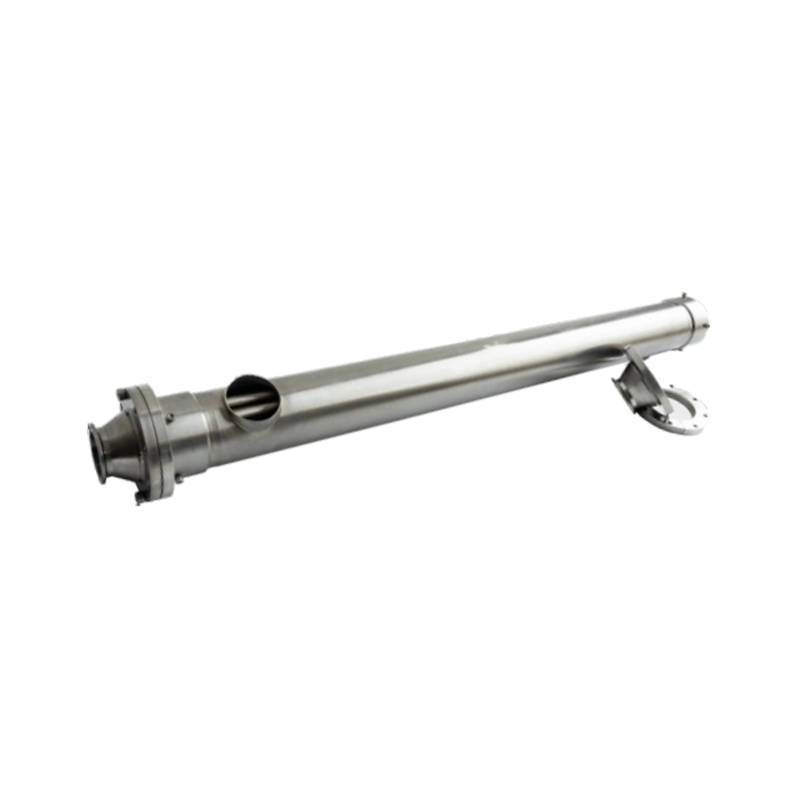
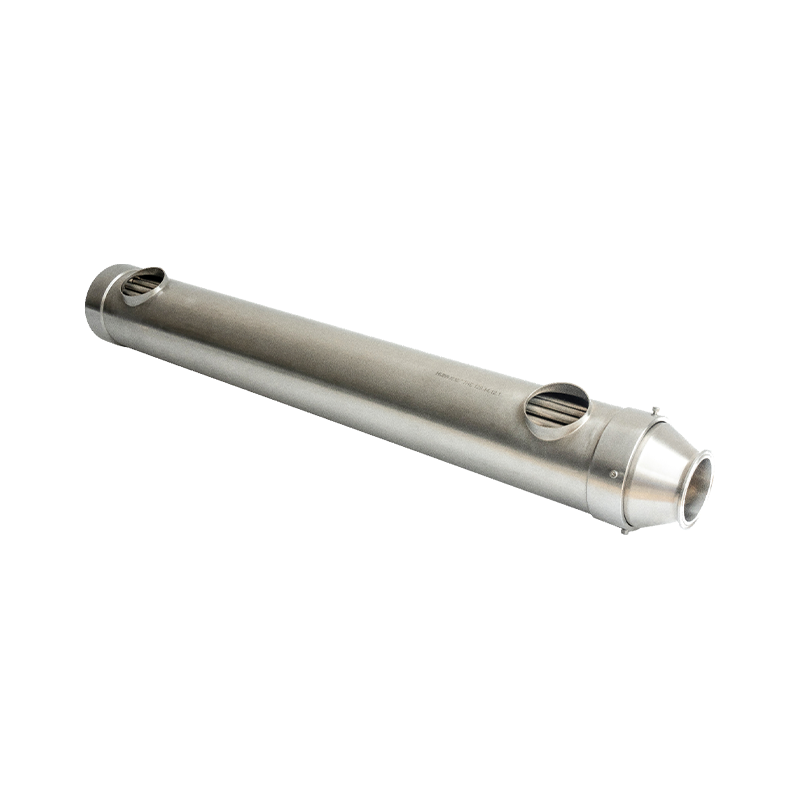
For utilities where even a small leak between process and utility fluids cannot be tolerated, a sanitary DTS double-tube-sheet heat exchanger is a common specification. The double tube sheet provides a detectable leak path and prevents cross-contamination even if a tube-to-tubesheet joint fails. This design is particularly relevant for heat transfer loops that serve live vaccine processes or intermediates exposed to temperature-sensitive biological material.
Procurement Risks and How to Mitigate Them
The gap between a good skid and a failed project is often found not in the hardware but in the documentation, the delivery plan, and the level of engineering support provided after shipment.
Documentation, FAT, and Validation Support
Ask whether the supplier can provide an IOQ protocol, electrical schematics, and a P&ID in editable format. Confirm that the factory acceptance test includes functional testing of all control sequences, not just a hydrostatic pressure test. If you plan to rely on the supplier for installation supervision, verify that their scope covers control-loop tuning after start-up and not only mechanical installation.
Delivery, Installation, and Long-Term Operation
Skid delivery involves freight, import, lifting, and connection to site utilities. A supplier that understands international project logistics can reduce the risk of delays. It is also worth asking about spare parts availability and whether the automation platform used on the skid matches the maintenance skills already present in your facility. If your project team needs clarification on connection designs, commissioning boundaries, or documentation requirements, it is practical to contact the engineering team before the specification is finalised.
Making the Right Choice for Vaccine Production
Choosing bioprocess integrated skids for vaccine production is not simply a matter of ordering a piece of hardware. It is a decision about how much risk will remain in the field, how much variability will appear between batches, and how much documentation burden will be carried into qualification. A well-designed skid, supported by a transparent and experienced supplier, narrows each of those unknowns.
Start with the thermal and hydraulic envelope of your process. Include the cleaning and sterilization cycles in the same analysis, and evaluate materials and control response as part of a single purchasing decision. When the specification is clear, the right skid and the right supplier become much easier to identify.
PREV:How Material Selection Affects Bioprocess Skid Quality: A Buyer's Engineering Guide
NEXT:Single Use Bioprocess Skids vs Stainless Steel Skids: Complete Buyer's Guide
NEXT:Single Use Bioprocess Skids vs Stainless Steel Skids: Complete Buyer's Guide
Interested in cooperation or have questions?
Let'S Work Together Welcome Aboard!
-

haikexin@haikexin.com
-
 +86-21-57560276
 -
 No. 2819, Sihu Road,Fengxian District, Shanghai, China
Join Our Mailing List
Copyright © Shiloc (Shanghai) Industrial Trading Co., Ltd. All Rights Reserved.
Process Systems & Equipment For Food & Biopharma Manufacturers
