
 English
 русский
 Português
 Français


 Read More

Product Category
NEW Category
Contact us
Contact Us
We specialise in the research, development and manufacture of electrical wires and cables.
 +86-21-57560276
Bioprocess Skid Engineering and Fabrication Services Explained | Shiloc
Content
- 1 What Bioprocess Skid Engineering and Fabrication Covers
- 2 The Engineering Decisions That Determine Skid Reliability
- 3 Fabrication Quality: Welding, Surface Finish, and Testing
- 4 Skid-Based Delivery versus Field-Built Piping
- 5 How to Evaluate a Bioprocess Skid Fabrication Partner
- 6 Frequently Asked Questions
Expanding a biologics process from clinical to commercial scale forces a project team to choose between building process piping in the field and buying pre-assembled modules. A typical downstream purification train contains more than 200 process welds, 60 valves, and 15 instruments; when that work happens inside a cleanroom, schedule risk and labor cost multiply quickly. Bioprocess skid engineering and fabrication moves the same scope into a controlled workshop, where piping is welded, tested, and documented before the module ever reaches your facility.
What Bioprocess Skid Engineering and Fabrication Covers
Bioprocess skid engineering and fabrication is the design, assembly, and factory testing of a complete process module - piping, valves, pumps, heat exchangers, instruments, and controls - on one structural frame that arrives ready for installation and commissioning.
The scope starts with a P&ID and ends with a fully documented, FAT-passed module. Engineering includes hydraulic and thermal sizing, 3D pipe routing, component selection, and control system design. Fabrication then executes that design with orbital welding, surface finishing, and frame assembly. Because the whole module is built and tested in one place, bioprocess skids are now a standard delivery format for upstream and downstream applications, including media preparation, cell culture feed, chromatography, and buffer handling.
Definition: a bioprocess skid is a factory-fabricated, factory-tested module containing all process equipment, piping, and controls required for one defined unit operation, supplied as a single ready-to-connect assembly.
The practical consequence is that a skid behaves like one machine rather than a collection of parts. Component vendors deliver to the fabricator, not to a construction site. Interface responsibility sits with one engineering team, and the buyer receives one validation package instead of chasing certificates from ten suppliers.
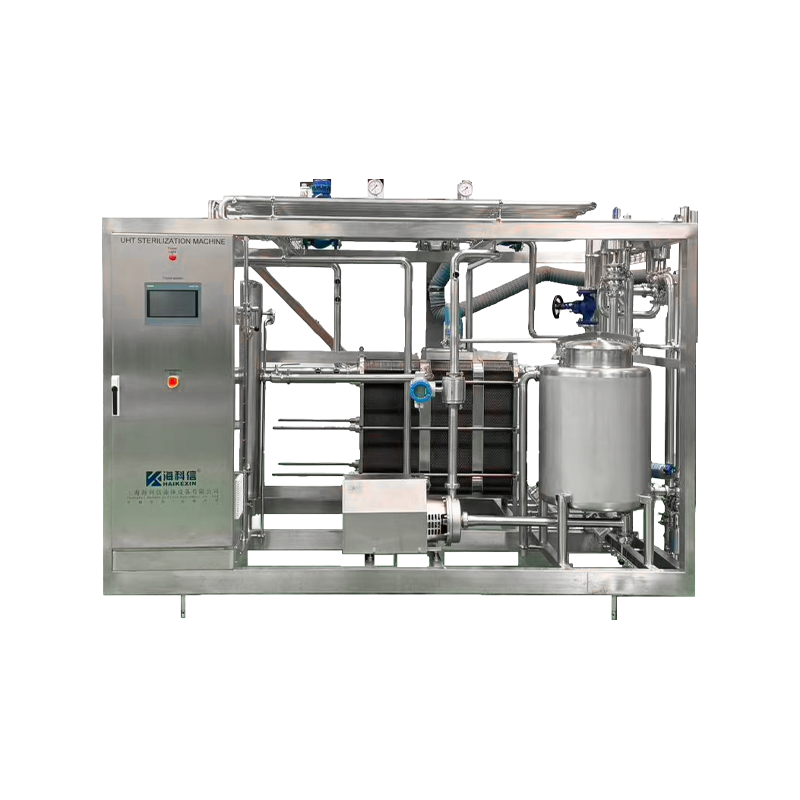
For heat-transfer-led operations, a single intelligent bioprocess heat transfer skid unit can combine heating and cooling circuits, circulation pumps, and control logic in one frame, replacing separate utility assemblies and shrinking the number of interconnections the site must qualify.
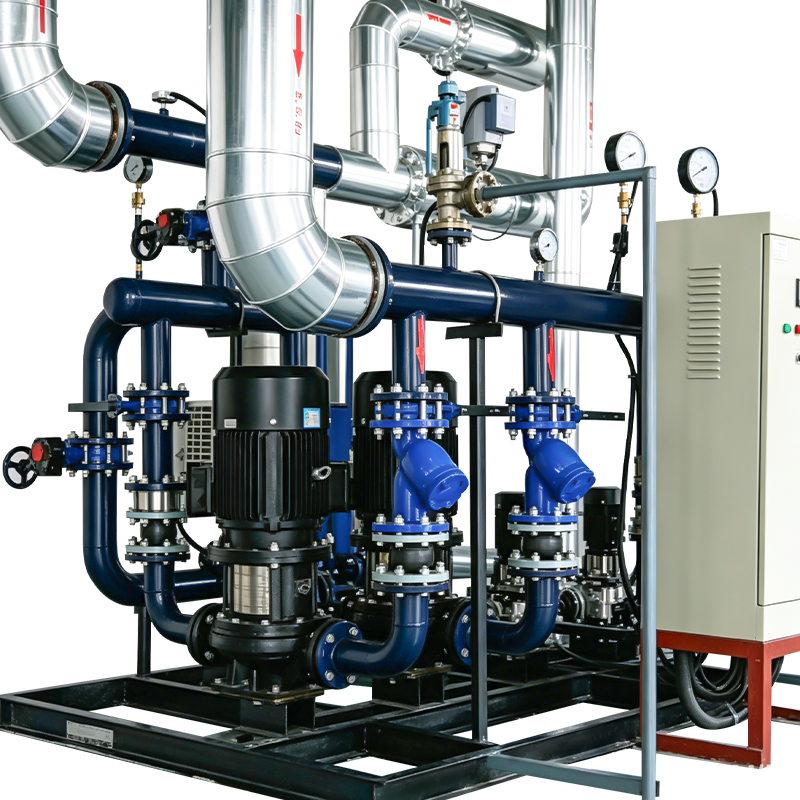 Custom Intelligent Bioprocess Heat Transfer Skid/Units Manufacturers, FactoryShiloc (Shanghai) Industrial Trading Co., Ltd. Is China Custom Intelligent Bioprocess Heat Transfer Skid/Units Manufacturers, Factory, Th...View Product →
The Engineering Decisions That Determine Skid Reliability
The reliability of a bioprocess skid is decided during engineering, not during assembly, and four design choices carry most of the risk: piping geometry, heat-transfer configuration, component selection, and control architecture.
Piping layout, dead legs, and drainability
Hygienic piping rules dominate skid layout. Dead legs should stay below 1.5 times the pipe diameter, and every line must slope to a drainable low point. A pocket that traps product becomes a cleaning validation problem later, so an experienced fabricator reviews the 3D model against cleanability criteria before cutting pipe. In cell culture and protein purification work, the difference between a drainable loop and a poorly sloped run can add hours of CIP time per batch.
Heat transfer and temperature control
Most skids miss process targets because the heat-transfer side was undersized or misconfigured. Temperature control in bioprocesses is about response, not just capacity. A jacketed bioreactor with a heavy exothermic load needs a utility supply that switches quickly between heating and cooling, which is why a precision temperature control unit for biopharma is commonly specified to hold supply temperature within 0.5 degrees Celsius under variable load.
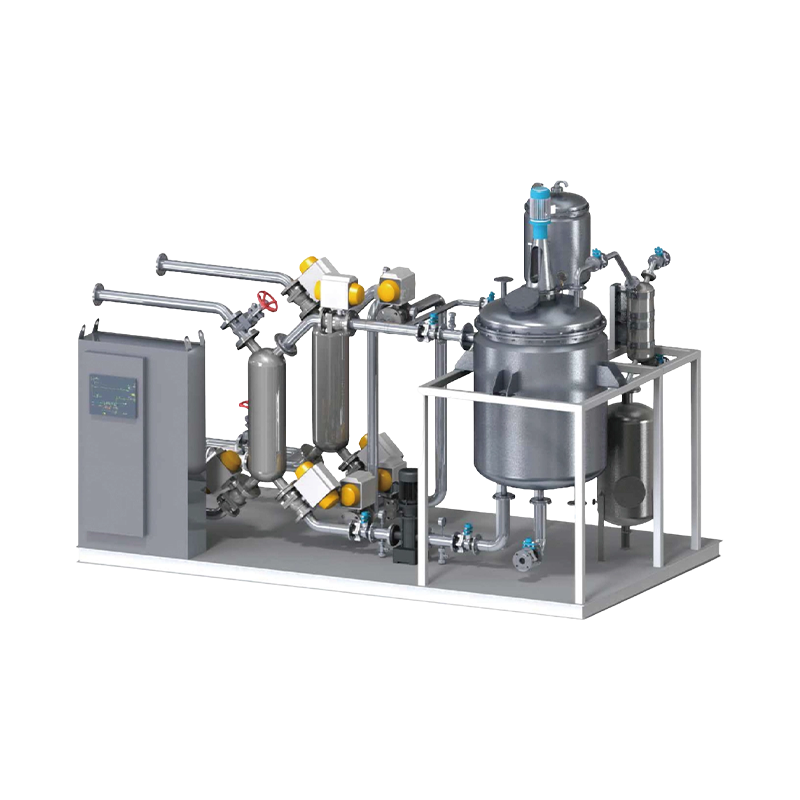 Custom Precision Temperature Control Unit (TCU) For Biopharma Manufacturers, FacShiloc (Shanghai) Industrial Trading Co., Ltd. Is China Custom Precision Temperature Control Unit (TCU) For Biopharma Manufacturers, Fact...View Product →
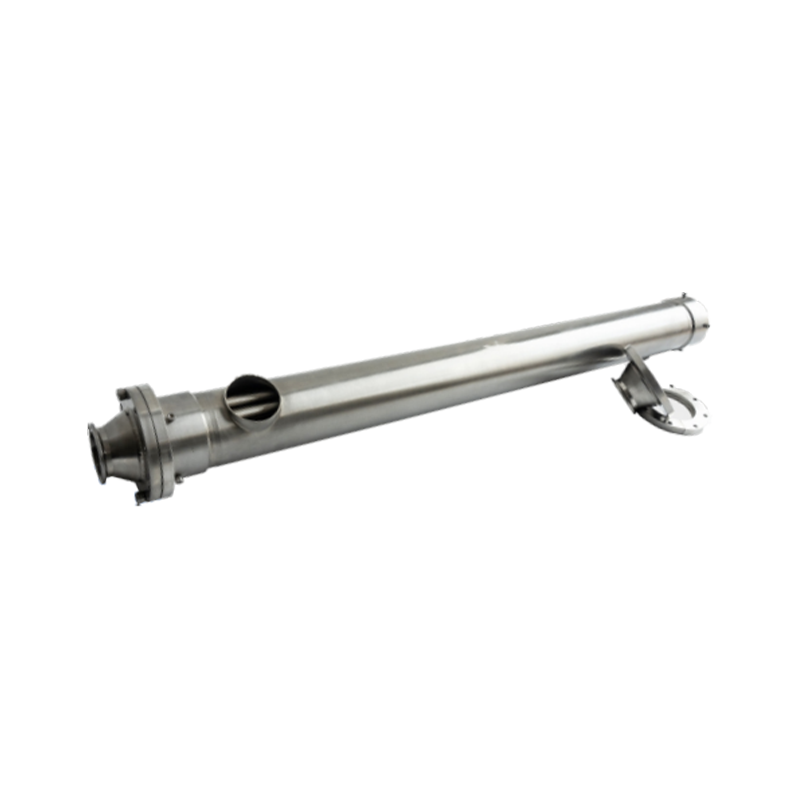
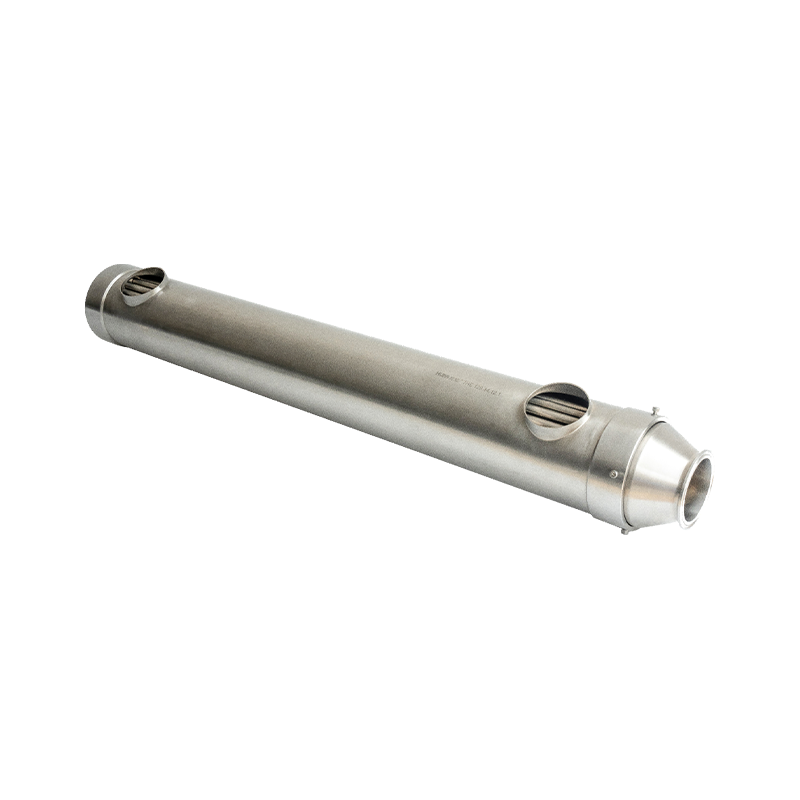
Where steam or hot water is the utility, a sanitary double tube sheet heat exchanger adds a second physical barrier that keeps utility fluid out of the process stream even if a tube leaks.
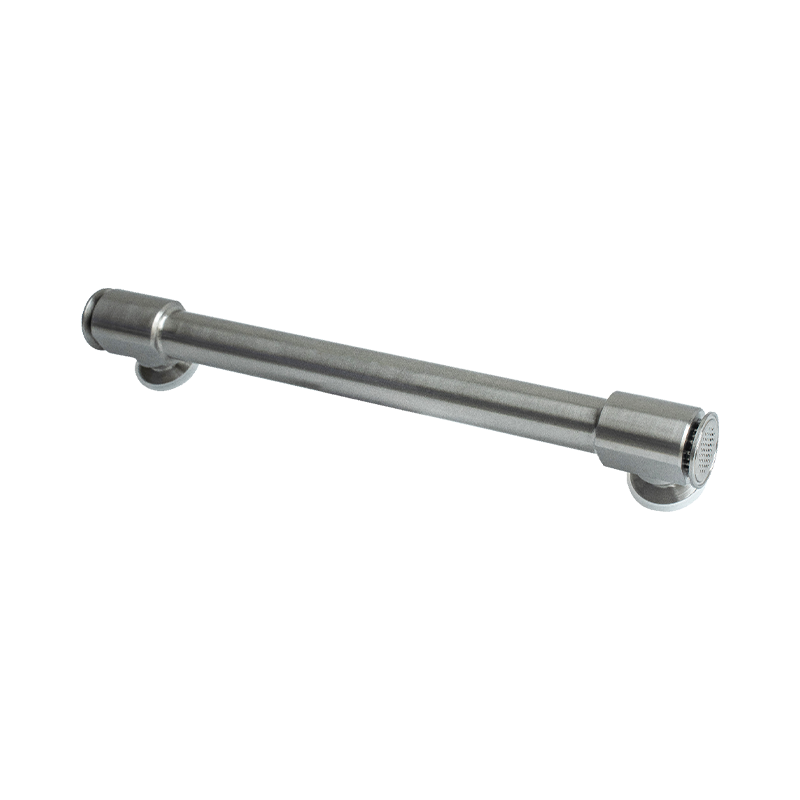 Custom Sanitary DTS (Double Tube Sheet) Heat Exchanger Manufacturers, FactoryShiloc (Shanghai) Industrial Trading Co., Ltd. Is China Custom Sanitary DTS (Double Tube Sheet) Heat Exchanger Manufacturers, Factory, 1....View Product →
Instrumentation and control architecture
The control system turns a skid into a repeatable process. Modern designs use distributed I/O at the skid, a local panel, and a recipe layer that links to the plant historian. Data integrity expectations mean electronic records, audit trails, and user access control follow 21 CFR Part 11 principles even when formal computer system validation is delayed. Signal lists, interlocks, and alarm handling should all be defined in the design phase, not during commissioning.
Delivered correctly, a skid typically cuts site installation time by 40-60 percent and reduces field change orders by more than half, because the module arrives tested and the interfaces are already defined.
Fabrication Quality: Welding, Surface Finish, and Testing
Fabrication quality is what separates a skid you can validate quickly from one that generates deviations for years, and it is controlled by welding procedure, surface finish, and a disciplined factory acceptance test.
Welding standards and inspection
Wetted process welds on bioprocess skids should be orbitally welded with argon purge backing, logged with a unique weld number, and inspected against ASME BPE or equivalent criteria. Visual inspection by a certified inspector, followed by ferrite measurement on duplex grades, is standard practice. If a fabricator cannot produce a weld map linking each weld to its procedure qualification record, the documentation gap will surface at your audit, not at the factory.
Surface finish and material traceability
Surface roughness controls cleanability. A typical specification for wetted parts is Ra 0.4 micrometer or better after electropolishing; mechanical polishing alone rarely reaches the same cleaning performance at an equivalent reading. Material certificates with heat numbers for every pipe and fitting must be traceable to the final installed location.
Documentation and factory acceptance testing
The FAT is the buyer's last chance to catch problems before shipment. A complete FAT protocol includes hydrostatic or pneumatic pressure testing, loop checks, valve and instrument verification, cleanliness verification, and a run test under control. Every deviation must be resolved or formally accepted in writing.
| P&ID and 3D model | Process flows, valve and instrument numbering, pipe routing | Baseline for design review and change control |
| Weld map and material certificates | Weld numbers, filler material, heat number traceability | Proof of traceability from raw material to installed joint |
| Surface finish reports | Ra values, passivation and electropolishing records | Confirms hygienic cleanability |
| FAT protocol with results | Pressure test, loop check, cleanliness verification | Demonstrates readiness for installation |
Rule of thumb: if a fabricator cannot show a completed FAT protocol from a previous project of similar scope, treat documentation risk as project risk.
Skid-Based Delivery versus Field-Built Piping
For a new facility or a major expansion, a pre-assembled skid outperforms field-built piping on installation time, cleanroom footprint, traceability, and change control, in exchange for tighter engineering definition before fabrication starts.
Pre-assembled skid
- Single interface and single vendor responsibility
- Factory welding in a controlled environment
- FAT completed before arrival
- Defined change control through one engineering team
- Minimum cleanroom access time
Field-built piping
- Multiple trades coordinated on site
- Welding inside active construction zones
- Quality verification after installation
- Changes managed across several contractors
- Long cleanroom occupation
The two extra weeks spent freezing the P&ID before fabrication are typically recovered four times over during commissioning, because the skid arrives with its sequence, interlocks, and cleaning routines already proven.
100%factory testing and documentation completed before delivery
1responsible engineering team from design through FAT
0cleanroom weld hours needed at the site
How to Evaluate a Bioprocess Skid Fabrication Partner
Evaluate a skid fabricator the same way you would evaluate a process equipment vendor: engineering depth, fabrication controls, FAT discipline, and documentation quality come before price.
- Audit the engineering process. Ask for a sample P&ID-to-FAT workflow and confirm that thermal and hydraulic sizing is done in-house rather than deferred to component vendors.
- Inspect fabrication controls. Check orbital welding capability, surface-finish measurement equipment, and the material traceability system.
- Review the FAT protocol template. A detailed template issued at the quotation stage predicts a predictable execution later.
- Confirm documentation delivery. Weld logs, IQ/OQ support, and loop documents should be structured for your plant historian from day one.
- Test after-sales support. Ask who responds when a component fails during commissioning and which spare parts are held as standard.
A fabricator with real fabrication depth will let you review these systems before you sign. Confirm that their experience matches your unit operations, because regulatory expectations differ between cell culture, downstream purification, and final formulation.
Shiloc (Shanghai) Industrial Trading Co., Ltd. designs and builds hygienic process modules based on European process technology, with engineering, fabrication, and export documentation handled by one team. Compare our engineering and quality background against your own checklist before freezing the P&ID.
Frequently Asked Questions
What is a bioprocess skid?
A bioprocess skid is a pre-assembled module containing the piping, valves, pumps, heat exchangers, instruments, and controls needed for one biopharmaceutical unit operation, delivered factory-tested on a single frame.
What documentation should a bioprocess skid fabricator provide?
At minimum: full P&IDs and 3D models, a weld map with procedure qualification records, material certificates with heat numbers, surface-finish reports, and a completed FAT protocol with signed deviations and resolutions.
How long does bioprocess skid engineering and fabrication take?
A typical project runs 12 to 20 weeks from frozen P&ID to FAT, depending on complexity. Heat-transfer skids built around standard component sets are usually faster than multi-unit trains with custom automation.
What is the difference between a skid and a standalone process module?
A standalone module is usually one piece of equipment with its own control loop, while a skid integrates multiple functions around a defined unit operation. Skids reduce interconnections and push a larger share of the validation burden back to the factory.
For a broader introduction to module types and selection logic, read our primer on why bioprocess integrated skids are essential.
PREV:How to Choose a Reliable Bioprocess Integrated Skid Manufacturer | Expert Guide
NEXT:Bioprocess Skids for Cell Culture: Design, Validation, and Procurement Essentials
NEXT:Bioprocess Skids for Cell Culture: Design, Validation, and Procurement Essentials
Interested in cooperation or have questions?
Recommended LINS
✦
Let'S Work Together Welcome Aboard!
-

haikexin@haikexin.com
+8613391278930
-
 +86-21-57560276
-
 No. 2819, Sihu Road,Fengxian District, Shanghai, China
Join Our Mailing List
Copyright © Shiloc (Shanghai) Industrial Trading Co., Ltd. All Rights Reserved.
Process Systems & Equipment For Food & Biopharma Manufacturers
