
 English
 русский
 Português
 Français

 Read More

Product Category
NEW Category
Contact us
Contact Us
We specialise in the research, development and manufacture of electrical wires and cables.
 +86-21-57560276
Related News
Hybrid / Direct Contact Heat Exchangers for Efficient Food, Beverage, and Biopharmaceutical Processing
Content
- 1 What Is a Hybrid / Direct Contact Heat Exchanger?
- 2 Operating Principle and Process Sequence
- 3 Core Design Features
- 4 Advantages Compared with Conventional Heat Exchange Equipment
- 5 Applications in Food and Beverage Manufacturing
- 6 Applications in Biopharmaceutical and Fine Chemical Facilities
- 7 Why Manufacturing Quality Determines Equipment Performance
- 8 Customization for Different Process Conditions
- 9 Manufacturing and Project Execution Strengths
- 10 Selection Guide for Buyers
- 11 Installation Recommendations
- 12 Startup, Operation, and Shutdown
- 13 Maintenance and Troubleshooting
- 14 Safety Considerations
- 15 Environmental and Energy Benefits
- 16 Why a Specialized Supplier Adds Value
- 17 Conclusion
- 18 Questions and Answers
- 18.1 What is the main function of a Hybrid / Direct Contact Heat Exchanger?
- 18.2 How is it different from a shell-and-tube heat exchanger?
- 18.3 Is the equipment suitable for food and beverage production?
- 18.4 Can it be used in biopharmaceutical facilities?
- 18.5 What media can be used?
- 18.6 Does the equipment contain a tube bundle?
- 18.7 Can the shell material be customized?
- 18.8 Can the connection positions be customized?
- 18.9 What information is needed for equipment selection?
- 18.10 How can uneven mixing be corrected?
- 18.11 What causes vibration or noise?
- 18.12 How should the equipment be maintained?
- 18.13 Can the supplier provide complete international procurement support?
- 19 References
- 20 Product: Hybrid / Direct Contact Heat Exchanger
Industrial manufacturers are under continuous pressure to improve energy efficiency, reduce production costs, protect product quality, and maintain reliable operation. Heat transfer is central to many of these objectives. Water must be heated, process gases must be cooled, steam must be condensed, waste heat must be recovered, and liquid streams must often be brought to a precise operating temperature before the next stage of production. In food, beverage, and biopharmaceutical facilities, these duties are further influenced by hygiene, traceability, corrosion resistance, cleaning requirements, process safety, and strict control of operating parameters.
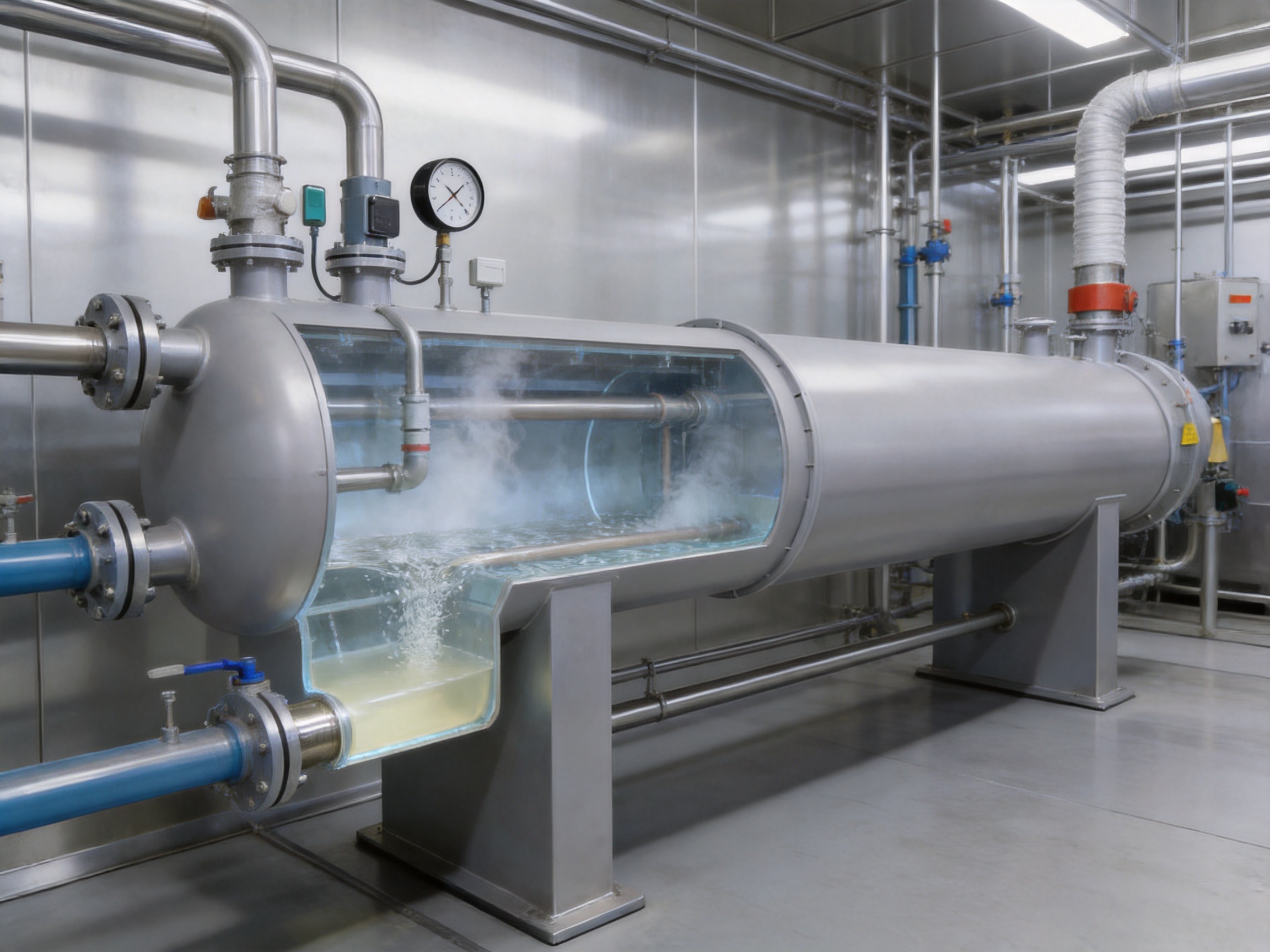
The Hybrid / Direct Contact Heat Exchanger is designed to address these requirements through a heat transfer method in which compatible hot and cold media come into direct contact. Instead of relying exclusively on a metal tube wall or plate to separate the two streams, the equipment allows heat transfer through direct mixing, spraying, gas-liquid contact, or other controlled contact arrangements. This approach can reduce the thermal resistance associated with conventional heat exchange surfaces while combining heat transfer and media mixing in a single process step.
Configured as a horizontal, long cylindrical shell, the equipment provides a pressure-resistant process chamber in which hot and cold media are introduced, distributed, mixed, and discharged. The design can be adapted for water heating, steam condensation, process gas cooling, direct-contact scrubbing, condensate recovery, and other duties involving media that are permitted to mix. Depending on the application, the shell can be manufactured from carbon steel or stainless steel, with pressure ratings, dimensions, connections, and internal distribution arrangements selected according to process conditions.
This article explains the operating principle, design characteristics, benefits, industrial applications, manufacturing strengths, customization process, installation requirements, maintenance considerations, and frequently asked questions associated with Hybrid / Direct Contact Heat Exchangers. It also examines why a supplier with engineering, fabrication, international trade, and technical service capabilities can provide greater value than a supplier focused only on basic equipment delivery.
What Is a Hybrid / Direct Contact Heat Exchanger?
A Hybrid / Direct Contact Heat Exchanger is a process heat transfer device that enables two compatible media at different temperatures to contact one another directly. Heat moves from the hotter medium to the colder medium through direct interaction. Depending on the duty, the equipment may combine liquid-liquid mixing, steam injection, gas-liquid contact, condensation, cooling, or other forms of direct thermal exchange.
In a conventional shell-and-tube heat exchanger, two fluids remain separated by tube walls. Heat must pass through a fluid film, a metal wall, and another fluid film. Every layer contributes thermal resistance. In a plate heat exchanger, the separation distance is smaller and the heat transfer area is often more compact, but the process still depends on a physical wall between the media. The Hybrid / Direct Contact Heat Exchanger takes a different approach when process conditions allow the two streams to mix.
Direct contact can deliver rapid heat transfer because the media interact over a broad contact interface rather than across a fixed wall. For example, steam can be injected into process water, condensing while transferring its latent heat directly to the water. A hot gas can be contacted with a cooling liquid, allowing both heat removal and scrubbing to occur in the same vessel. A hot condensable vapor can contact a colder stream and transfer energy through condensation and mixing.
The word “Hybrid” reflects the equipment’s ability to combine direct-contact functions with adaptable process arrangements. Depending on the customer’s process, the system may include controlled inlet distribution, internal mixing devices, gas-liquid contact zones, external piping, instrumentation, or auxiliary indirect heat exchange equipment. The exact configuration is selected according to the required temperature change, flow rate, pressure, phase behavior, material compatibility, hygiene requirements, and separation strategy.
Direct contact does not mean that every process stream should be mixed indiscriminately. The technology is most suitable when the media are compatible, when mixing is acceptable or beneficial, or when one stream can be recovered, separated, evaporated, condensed, or otherwise managed after contact. For product-contact applications, the design must be reviewed carefully to determine whether the heating or cooling medium meets the required quality standards. In food and biopharmaceutical processing, this point is essential.
Operating Principle and Process Sequence
The basic operating sequence begins with the controlled introduction of hot and cold media through separate or strategically positioned inlets. The flow direction, inlet angle, nozzle arrangement, and flow ratio influence the quality of mixing and the resulting temperature distribution. The media contact one another inside the horizontal cylindrical shell, where heat transfer takes place through direct mixing, condensation, evaporation, or gas-liquid interaction.
After the desired thermal exchange has occurred, the mixed stream leaves through an outlet connection. The outlet arrangement depends on the process. A water-heating application may discharge a uniformly heated liquid. A steam-condensation application may discharge condensate and non-condensable gases through separate or controlled outlets. A waste-gas cooling application may send cooled gas and liquid together to a downstream separator, scrubber, treatment unit, or recovery system.
The equipment’s pressure-resistant shell provides a defined process volume and supports operation under specified pressure and temperature conditions. The shell is not simply an enclosure; it is an engineered pressure boundary that must be evaluated for mechanical loads, thermal expansion, corrosion, nozzle forces, support reactions, and applicable manufacturing standards.
Internal components are minimized compared with many traditional heat exchangers. The absence of a dense tube bundle can reduce the number of narrow passages where solids, fibers, crystallized materials, or fouling deposits may accumulate. However, a direct-contact system still requires proper flow design. Poorly selected inlet velocities, unsuitable injection angles, or an incorrect hot-to-cold flow ratio can result in uneven mixing, excessive turbulence, vibration, water hammer, or incomplete heat transfer.
For this reason, process design and equipment fabrication must be considered together. A reliable system is based on a coordinated understanding of the media, thermodynamic duty, mechanical design, piping arrangement, control strategy, cleaning plan, and operating sequence.
Core Design Features
Horizontal Cylindrical Shell
The horizontal long-shell configuration provides a practical process chamber for controlled media contact. Its geometry can support a defined residence time and allow the hot and cold streams to develop a consistent mixing pattern before discharge. The shell length and diameter can be adjusted to meet flow capacity, pressure rating, installation space, and process residence requirements.
A horizontal arrangement can also simplify integration into existing industrial piping systems. Flanged connections may be positioned according to the customer’s layout, reducing unnecessary pipe routing and supporting easier installation, inspection, and maintenance. The support structure can be designed for the operating weight of the shell, piping loads, liquid inventory, insulation, and connected accessories.
Direct Media Contact
The most important feature is the direct contact between the hot and cold media. When the two streams are chemically and operationally compatible, this arrangement can achieve fast temperature equalization and eliminate the need for a heat transfer wall between them. The resulting process can be more compact than a conventional system performing the same heating or cooling duty through indirect transfer.
Direct contact can be especially valuable for steam heating. Steam introduced into water can condense directly, transferring latent heat with high effectiveness. This may eliminate or reduce the need for a separate steam jacket, shell-and-tube exchanger, or external heating loop. It may also simplify the process by combining heating and mixing in the same operation.
Reduced Fouling Risk from Tube Bundles
Many traditional heat exchangers rely on tube bundles or narrow channels. These surfaces can be affected by scaling, biological growth, fibrous materials, suspended solids, corrosion products, or high-viscosity deposits. Fouling reduces heat transfer performance and increases pressure drop. In severe cases, it can require frequent shutdowns for chemical cleaning or mechanical descaling.
The Hybrid / Direct Contact Heat Exchanger does not depend on a conventional internal tube bundle. This simplified internal structure can reduce the risk of blockage caused by deposits in small passages. It does not eliminate fouling from the process entirely, because materials may still accumulate on shell surfaces or downstream components, but it can make the main contact chamber easier to inspect and clean.
Integrated Mixing and Heat Transfer
In a conventional process, mixing and heat transfer may require separate equipment. A static mixer, blending tank, heat exchanger, pump, and recirculation loop may all be used to achieve a uniform temperature. A direct-contact unit can combine several of these functions, reducing equipment count and potentially decreasing installation footprint, pipe length, valve count, and energy consumption.
Integrated functionality is particularly useful when the process already requires the two media to mix. In such cases, separating the media with a heat transfer wall may add unnecessary complexity. The direct-contact approach allows the thermal and mixing objectives to be addressed in one controlled vessel.
Pressure-Resistant Construction
Industrial heating and cooling systems may operate under elevated pressure and temperature. The shell, heads, nozzles, flanges, supports, welds, and inspection arrangements must therefore be designed as a complete pressure-containing assembly. The appropriate design pressure, design temperature, corrosion allowance, material grade, wall thickness, and inspection requirements depend on the specific application.
Carbon steel may be suitable for certain utility water, non-corrosive gas, and general industrial services. Stainless steel is often selected when the media are corrosive, when a higher level of cleanliness is needed, or when food and pharmaceutical process requirements place greater emphasis on surface condition and material compatibility. The final material selection should be based on actual chemical composition, chloride level, pH, temperature, cleaning agents, operating cycles, and regulatory expectations.
Flexible Connection Arrangement
Flanged connections are compatible with common industrial piping practices and can simplify removal, inspection, and replacement. Connection size and location can be customized according to the media flow direction, equipment orientation, maintenance clearance, and existing plant layout. Instrument ports, drains, vents, sampling points, pressure relief connections, and temperature measurement locations can also be incorporated where required.
Advantages Compared with Conventional Heat Exchange Equipment
| Evaluation Area | Hybrid / Direct Contact Heat Exchanger | Traditional Indirect Heat Exchanger |
|---|---|---|
| Heat transfer mechanism | Direct contact, mixing, condensation, or gas-liquid interaction | Heat passes through tubes, plates, jackets, or other separating walls |
| Thermal resistance | Can be reduced because no primary heat transfer wall is required between compatible media | Includes resistance from fluid films and the separating wall |
| Mixing capability | Heat transfer and mixing can occur in one unit | Usually requires separate mixing equipment when the streams must be blended |
| Internal obstruction | No conventional tube bundle is required | Tube bundles or narrow channels may be susceptible to fouling and blockage |
| Application flexibility | Suitable for compatible media, steam condensation, process water heating, and gas-liquid treatment | Suitable when the streams must remain completely separated |
| Product separation | Not inherently provided; downstream separation may be necessary | Maintains separation between the two streams |
| Maintenance considerations | Simple contact chamber and fewer internal heat transfer parts | May require tube cleaning, plate replacement, gasket service, or bundle inspection |
| Customization | Shell dimensions, injection arrangement, materials, and pressure ratings can be configured | Also customizable, but often constrained by tube, plate, or gasket design |
Lower Thermal Resistance in Suitable Applications
The principal technical advantage of direct contact is the reduction of resistance associated with a heat transfer wall. When steam condenses directly into water, the energy transfer mechanism can be highly effective because condensation releases a large amount of latent heat. When a hot gas contacts a liquid, the available contact area can be expanded through controlled distribution and turbulence.
Actual performance depends on many factors, including temperature difference, phase behavior, flow rate, pressure, contact area, residence time, mixing quality, heat capacity, and the thermodynamic properties of the media. The direct-contact concept should therefore be evaluated through process calculations rather than judged only by equipment type. Properly designed, it can provide a strong solution for applications where the two streams are allowed to mix.
Reduced Equipment Complexity
A tube bundle contains a large number of tubes, tube sheets, baffles, seals, and connections. A plate exchanger contains multiple plates, gaskets, tightening systems, and ports. These designs are highly effective for many applications, but they also include numerous components that require inspection and maintenance.
A direct-contact shell can use a simpler internal arrangement. Fewer internal components may reduce assembly complexity, simplify visual inspection, and lower the number of parts exposed to fouling or mechanical wear. A simpler structure can also make it easier to adapt the equipment to unusual media or special flow requirements.
Potentially Lower Maintenance Burden
Maintenance costs are influenced by cleaning frequency, spare part requirements, labor, downtime, chemical consumption, and access to technical support. By avoiding a traditional tube bundle, the Hybrid / Direct Contact Heat Exchanger can reduce certain maintenance tasks, especially in applications involving suspended particles or materials that would otherwise block narrow passages.
Maintenance benefits are not automatic. The equipment must still be drained, inspected, cleaned, and protected from corrosion. Gaskets, flanges, valves, instruments, supports, and external insulation require routine attention. The advantage is that maintenance can focus on a comparatively accessible shell and a controlled set of process components rather than a complex internal heat transfer bundle.
Simultaneous Heat Transfer and Media Blending
Many industrial processes require a final mixture at a target temperature. A separate blending tank may provide the necessary mixing, while an indirect heat exchanger provides temperature control. Combining these objectives can reduce the number of process steps and shorten the residence time between heating and use.
In process water heating, for example, direct steam injection can heat and agitate the water at the same time. In gas treatment, liquid contact can cool the gas while transferring soluble contaminants into the liquid phase. In condensate recovery, vapor condensation and liquid collection can be managed as part of a single process arrangement.
Applications in Food and Beverage Manufacturing
Process Water Heating
Food and beverage plants consume significant quantities of hot water for production, cleaning, sanitation, dissolution, blending, and utility services. Direct steam heating can rapidly raise the temperature of process water when the steam quality and water quality are appropriate for the intended use.
The equipment can be integrated into a hot-water generation skid, a central utility system, or a production line. Temperature sensors, pressure controls, steam valves, flow meters, and automatic shutdown functions can be used to maintain stable operation. The design may also include a drain and vent arrangement to facilitate startup, shutdown, and cleaning.
Where heated water comes into direct contact with a product or product-contact surface, the steam must be evaluated for suitability. Culinary or clean steam may be required depending on the product, process, and applicable standards. The direct-contact equipment itself cannot compensate for poor utility quality, so the complete system must be specified appropriately.
Steam Condensation and Condensate Recovery
Steam condensation converts vapor energy into liquid heat and can support energy recovery. A direct-contact arrangement may condense steam into a compatible liquid stream, allowing the latent heat to be recovered rather than rejected. Condensate can then be collected, monitored, treated, or returned to the utility system as appropriate.
Effective condensate recovery can reduce boiler makeup water demand, chemical treatment requirements, and fuel consumption. It may also lower the temperature and volume of discharge streams. The equipment design should account for non-condensable gases, pressure changes, condensate drainage, water hammer prevention, and the possibility of flashing during pressure reduction.
Liquid Ingredient Preparation
Some food and beverage processes require water or another liquid to be heated before dissolving powders, concentrates, sugars, salts, or other ingredients. A uniform temperature can improve dissolution, reduce processing time, and support consistent product quality. The Hybrid / Direct Contact Heat Exchanger may be used upstream of a blending tank or integrated into a continuous preparation system.
For hygienic applications, the materials, weld finish, drainability, cleanability, and connection design must be selected according to the required hygiene level. If the equipment handles only utility water and does not contact the final product, the specification may differ from that of a direct product-contact vessel. Clarifying this distinction during engineering is important for achieving the right balance between performance and cost.
Waste Gas Cooling and Scrubbing
Food and beverage plants may generate hot exhaust gases, humid air, vapor, or process emissions. Direct contact with a cooling liquid can reduce gas temperature while also capturing soluble contaminants, dust, or condensable components. This creates an integrated cooling and scrubbing function that can support downstream environmental treatment.
The system may be connected to a separator, demister, filtration stage, chemical dosing system, or wastewater treatment unit. Material selection must consider gas composition, liquid chemistry, temperature, and the possibility of condensation containing corrosive compounds.
Applications in Biopharmaceutical and Fine Chemical Facilities
Biopharmaceutical manufacturing demands careful control of contamination, material compatibility, cleaning, sterilization, documentation, and process repeatability. Direct-contact equipment is not suitable for every product stream, particularly when two media cannot be mixed or when a sterile boundary must be maintained. However, it can be valuable in utility systems, waste treatment, process support operations, and selected compatible media applications.
Utility and Process Support Systems
Biopharmaceutical facilities use hot water, clean utilities, process gases, cooling systems, and condensate management equipment. A Hybrid / Direct Contact Heat Exchanger may support heating or cooling duties in utility areas where the streams are compatible and where the equipment does not compromise product protection.
Examples include heating non-product-contact process water, managing condensate, cooling exhaust gases, or recovering energy from compatible utility streams. The system boundary should be clearly defined so that product-contact requirements, clean utility requirements, and general industrial utility requirements are not confused.
Waste Gas and Effluent Treatment
Biopharmaceutical and fine chemical production can generate warm exhaust gas, humid air, or process off-gas requiring cooling and treatment. Direct gas-liquid contact can transfer heat and support the removal of selected soluble components. The cooled gas can then be directed to additional treatment equipment, while the liquid phase is collected for further processing.
In these applications, material selection and process safety are especially important. The equipment may need to handle corrosive vapors, solvents, biological residues, or cleaning chemicals. The design should be reviewed for hazardous area classification, ventilation, pressure relief, chemical compatibility, and waste handling requirements.
Heat Recovery
Energy recovery is an important objective in modern pharmaceutical and chemical plants. Hot discharge streams may contain usable energy that can be transferred to colder utility streams. A direct-contact unit can provide a compact method of recovering heat when the two streams are compatible or when downstream separation is already part of the process.
Heat recovery studies should consider annual operating hours, temperature profiles, contamination risk, utility costs, cleaning requirements, and the value of recovered energy. A technically efficient system is most valuable when it remains stable under actual production conditions and provides a reasonable return on investment.
Why Manufacturing Quality Determines Equipment Performance
The performance of a direct-contact heat exchanger depends on more than its general concept. The shell must withstand the specified mechanical and thermal loads. Inlets must distribute the media effectively. Welds must be sound and appropriately finished. Flanges must align with the piping system. Internal surfaces must meet the required cleanliness and corrosion resistance. Inspection records must support traceability.
Manufacturing quality is therefore a major differentiator between suppliers. A product with an attractive outline drawing may still perform poorly if its inlet arrangement is not suited to the process, if shell supports are undersized, if weld distortion affects flange alignment, or if material documentation is incomplete.
Shiloc (Shanghai) Industrial Trading Co., Ltd. combines equipment supply with manufacturing and engineering capabilities. The company’s Shanghai facility covers approximately 3,000 square meters and includes resources for processing, welding, polishing, and quality control. A technical team of more than 20 specialists supports equipment development, process communication, manufacturing coordination, and technical service.
Engineering Based on European Know-How and Danish Design
The company’s equipment approach is built on European know-how and Danish design concepts. This foundation emphasizes practical process engineering, clean mechanical layouts, reliable fabrication, and attention to operating details. Design experience is translated into equipment configurations that can be adapted to customer requirements rather than limited to a single standard size.
For a Hybrid / Direct Contact Heat Exchanger, engineering review may include the media properties, flow rates, inlet and outlet temperatures, pressure conditions, heat duty, phase changes, material compatibility, residence time, cleaning approach, support arrangement, and connection orientation. These factors determine whether direct contact is appropriate and how the equipment should be configured.
Processing and Fabrication Capability
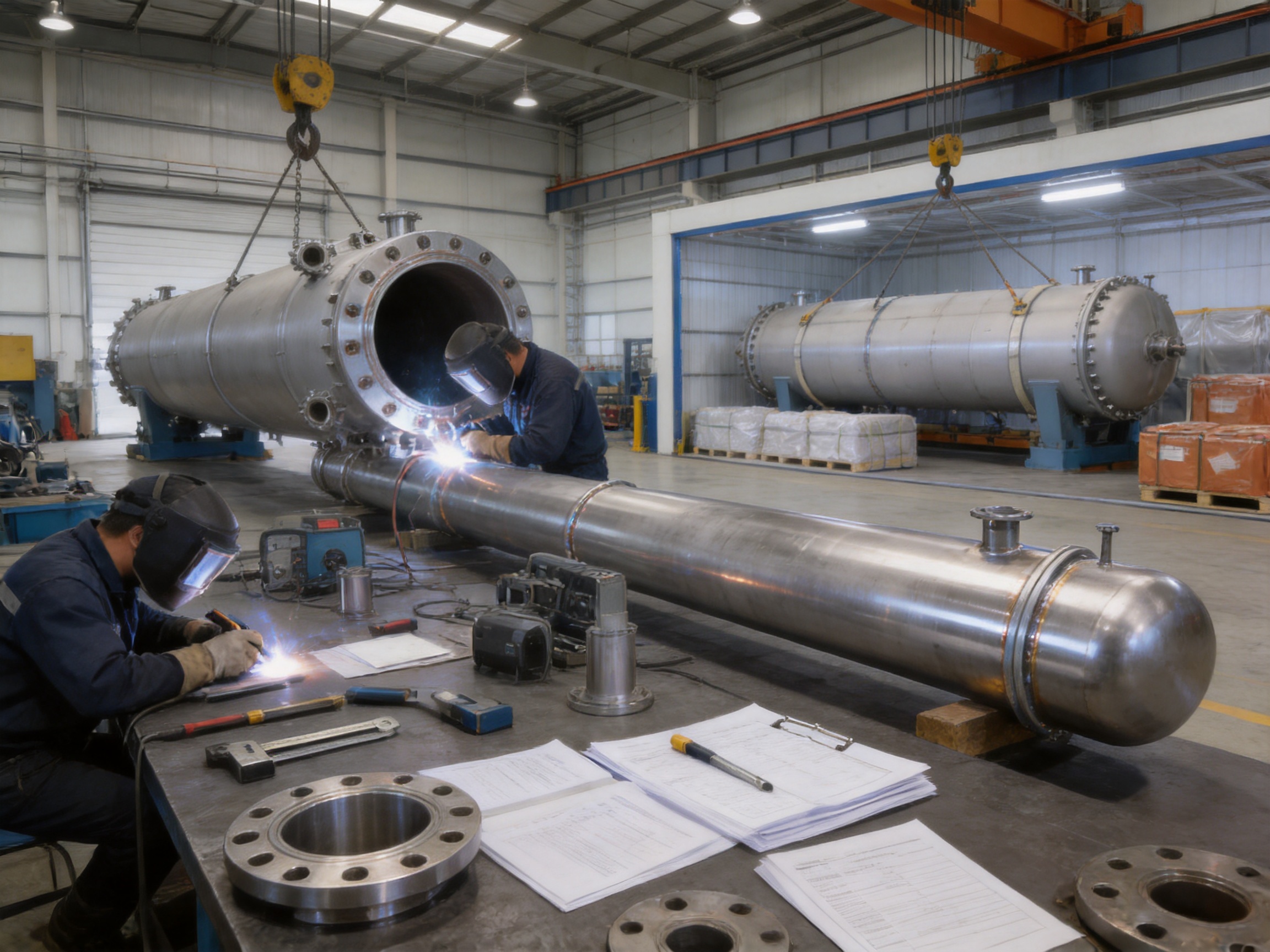
Manufacturing begins with the correct material and a controlled fabrication plan. Plate, pipe, flange, nozzle, support, and internal components must be identified and prepared according to approved drawings. Cutting, forming, fit-up, welding, grinding, polishing, and dimensional inspection are coordinated to produce a pressure-resistant and serviceable assembly.
Welding quality is particularly important for cylindrical pressure shells. Weld preparation, alignment, heat input, filler material, shielding, interpass cleaning, and post-weld inspection all affect the final result. For stainless steel equipment, protection against contamination and discoloration is also important. Surface treatment and polishing may be specified according to the required corrosion resistance, cleanability, and visual finish.
Where the application involves food, beverage, or pharmaceutical utilities, internal surfaces should be evaluated for crevices, sharp transitions, dead legs, rough welds, and areas that could retain liquid or product residues. The appropriate standard depends on the process classification and customer requirements, but the manufacturing objective is consistent: create a robust, inspectable, and maintainable process surface.
Quality Control and Traceability
Quality control should cover incoming material verification, dimensional inspection, weld inspection, pressure testing, nozzle orientation, flange alignment, surface condition, and final documentation. Material certificates, welding records, inspection reports, test results, and equipment identification data can support traceability throughout the project life cycle.
Traceability is especially valuable for international customers and regulated industries. It helps users confirm that the delivered equipment corresponds to the approved design and that critical materials and inspections were controlled. It also supports future maintenance, replacement part selection, and technical investigation if operating conditions change.
Polishing and Surface Treatment
Polishing requirements vary according to the media and hygiene classification. Carbon steel surfaces may be protected through suitable coating or corrosion-control measures where appropriate. Stainless steel surfaces may require grinding, polishing, passivation, or other treatment to improve corrosion resistance and cleanability.
A smooth, well-finished surface can reduce the tendency of deposits to adhere and can make inspection and cleaning more effective. Surface quality must be considered together with weld design, drainage, access, and cleaning chemistry. Polishing alone cannot correct poor geometry or inaccessible areas.
Customization for Different Process Conditions
There is no single direct-contact configuration that meets every industrial requirement. Customization begins with a process data sheet and an understanding of the customer’s operating objectives. Important information includes the identity and composition of each medium, flow rate range, inlet and outlet temperature, pressure, allowable pressure drop, viscosity, suspended solids, corrosiveness, density, heat capacity, phase condition, and required production capacity.
The equipment can be customized in several areas:
Shell diameter and length can be selected according to flow capacity, residence time, installation space, and pressure requirements.
Material selection can be adjusted between carbon steel, stainless steel, and other compatible materials where technically justified.
Inlet and outlet positions can be coordinated with existing piping, skid layouts, drainage requirements, and maintenance access.
Injection angles and distribution arrangements can be modified to improve contact, reduce stratification, and achieve a more uniform outlet temperature.
Pressure ratings and wall thickness can be selected according to design pressure, design temperature, corrosion allowance, and applicable codes.
Instrumentation connections can be added for temperature, pressure, flow, level, sampling, venting, and safety functions.
Supports, lifting points, insulation interfaces, platforms, and protective covers can be adapted to the installation environment.
Cleaning and draining features can be considered for facilities that require frequent sanitation, controlled flushing, or protection against residual liquid.
Customization should not be limited to physical dimensions. It should also address the operating sequence. Startup and shutdown procedures influence water hammer, thermal shock, cavitation, pressure surges, and uneven mixing. A well-engineered supply includes recommendations for valve opening rates, flow stabilization, venting, pressure control, and emergency isolation.
Manufacturing and Project Execution Strengths
Integrated International Trade Support
Industrial equipment procurement often involves more than manufacturing. Customers may need support with technical clarification, quotation comparison, drawing approval, export documentation, packing, shipping coordination, customs information, installation communication, and after-sales service. A supplier with international trade experience can reduce coordination gaps between the engineering, manufacturing, logistics, and end-user teams.
Shiloc provides import and export agency services as well as equipment manufacturing and engineering support. This integrated structure enables the company to assist customers from initial product consultation through international procurement and technical coordination. The result is a more unified communication process, particularly for customers purchasing customized equipment across borders.
Technical Communication
Direct-contact equipment requires accurate communication because its performance depends heavily on the relationship between the media and the process. The supplier must understand not only the required heat duty but also whether mixing is acceptable, whether contamination could occur, how the mixed stream will be handled, and what operating limits must be maintained.
A technically capable supplier can help the customer identify missing process information, clarify assumptions, review connection drawings, and evaluate practical installation requirements. This reduces the risk of receiving equipment that meets a nominal capacity but does not fit the actual process.
Reliable Supply and Personalized Service
Reliable supply includes consistent manufacturing schedules, controlled procurement, clear documentation, suitable export packaging, and responsive technical communication. Personalized service is particularly important for equipment that must fit an existing production line or be integrated with other process systems.
Shiloc focuses on innovative design, process optimization, safe and efficient equipment, supply reliability, traceability, and individualized customer support. These strengths are relevant to customers who want more than a standard vessel and require a partner capable of coordinating technical and commercial details.
Selection Guide for Buyers
Confirm Whether Direct Mixing Is Acceptable
The first selection question is whether the two media can come into direct contact. If the streams must remain completely separate because of product quality, regulatory, chemical, or safety requirements, an indirect heat exchanger may be more appropriate. If the media are compatible or if mixing is part of the process objective, direct contact may provide significant advantages.
Define the Thermal Duty
The required heat duty should be calculated from the mass flow rate, specific heat, inlet temperature, outlet temperature, phase changes, and expected heat losses. For condensation or evaporation, latent heat must be included. Operating ranges should be provided rather than only a single design point so that the equipment can be evaluated under minimum, normal, and maximum production conditions.
Evaluate Pressure and Temperature
Design pressure and temperature must reflect possible operating deviations, startup conditions, shutdown conditions, utility fluctuations, and relief scenarios. The shell, flanges, nozzles, valves, instruments, and connected piping should be considered as a complete pressure system.
Review Media Compatibility
Media compatibility includes chemical compatibility, phase behavior, contamination risk, corrosion, viscosity, suspended solids, foaming, and downstream separation. A liquid that appears harmless at room temperature may become significantly more corrosive at elevated temperature. Cleaning chemicals may also impose more severe conditions than the normal process.
Consider Hygiene and Cleanability
For food, beverage, and pharmaceutical facilities, the buyer should define whether the equipment is used for general utility service, hygienic service, clean utility service, or direct product contact. This classification influences material, weld finish, surface roughness, drainability, gasket selection, inspection, cleaning, and documentation.
Review Total Cost of Ownership
Purchase price is only one part of equipment value. Buyers should consider energy consumption, steam usage, pump requirements, cleaning costs, spare parts, downtime, inspection labor, installation cost, and expected service life. A simpler direct-contact system may provide lower lifecycle cost when it replaces several pieces of equipment or reduces frequent tube cleaning.
Installation Recommendations
Before installation, verify the equipment identification, dimensions, connection positions, material documentation, pressure rating, and approved drawings. Confirm that lifting equipment is suitable for the shipping weight and that the foundation or support frame can handle operating loads.
Media flow direction and connection positions must be checked carefully. Reverse installation can affect mixing performance, drainage, venting, and pressure behavior. The equipment should be installed with sufficient clearance for flange access, inspection, cleaning, instrument service, and possible removal.
Connected piping should be independently supported so that excessive forces are not transferred to the shell nozzles. Thermal expansion, vibration, valve movement, and pump pulsation should be considered during piping design. Where required, flexible connectors, expansion joints, guides, or vibration-control measures may be used.
Pressure and temperature instruments should be installed at locations that represent actual process conditions. Drains should be positioned so that residual liquid can be removed during shutdown. Vents should support safe air removal during filling and controlled depressurization during draining.
Before commissioning, flush the connected piping and remove construction debris, welding residue, rust, and foreign material. Confirm that valves are correctly oriented and that safety devices, interlocks, alarms, and emergency shutdown functions have been tested.
Startup, Operation, and Shutdown
Startup should be gradual. Sudden introduction of high-pressure steam or a large flow of cold liquid can create thermal shock, water hammer, pressure surges, or unstable mixing. Open valves progressively and allow the equipment to reach a stable flow condition before increasing the process load.
Flow rates should remain within the design range. Excessive flow can increase pressure drop, vibration, noise, erosion, and the risk of cavitation. Insufficient flow can reduce contact quality, create temperature stratification, and produce an uneven outlet condition.
Temperature and pressure should be monitored continuously during operation. Unexpected changes may indicate a blocked inlet, incorrect valve position, unstable utility pressure, fouling, a malfunctioning control loop, or a change in media composition. Operators should be trained to recognize abnormal noise, vibration, flashing, leakage, and unstable outlet temperature.
Shutdown should also be controlled. Reduce the hot-media flow before isolating the cold stream when appropriate, or follow the approved process sequence for the specific system. Drain the equipment when required, particularly if the media may freeze, crystallize, settle, ferment, or corrode the shell during a long outage.
Maintenance and Troubleshooting
Uneven Media Mixing
Uneven mixing may result in a large temperature distribution at the outlet. Possible causes include an unsuitable inlet flow rate, incorrect injection angle, damaged distribution devices, a changed media flow ratio, or operation outside the design range.
Operators should first verify the actual flow rates and compare them with the design values. The inlet valves, nozzles, and distribution devices should be inspected for blockage or damage. If the media properties have changed, the original mixing arrangement may need to be reassessed.
Vibration or Excessive Noise
Vibration or noise may be caused by excessive flow, loose supports, water hammer, cavitation, flashing, unstable gas-liquid flow, or poorly supported connected piping. Check the shell supports, anchor points, pipe supports, valve operation, pressure profile, and pump conditions.
Water hammer is particularly important in steam and condensate systems. Proper drainage, gradual valve operation, suitable trap arrangements, and elimination of low points can help reduce the risk. If vibration persists, the equipment should be isolated and inspected by qualified personnel.
Flange or Shell Connection Leakage
Leakage at a shell connection may be caused by an aged or damaged gasket, corrosion, flange deformation, uneven bolt tightening, thermal cycling, or pipe loads. Do not simply continue tightening bolts without identifying the cause. Inspect the gasket, flange faces, bolt condition, alignment, and connected piping.
Replacement gaskets should match the media, temperature, pressure, and hygiene requirements. Bolts should be tightened evenly according to an appropriate sequence and torque specification. If a flange face is damaged or distorted, corrective machining or component replacement may be necessary.
Corrosion or Sediment Accumulation
The shell interior should be inspected at a frequency determined by the media, operating temperature, corrosion potential, and production schedule. Sediment, scale, biological deposits, and chemical residues should be removed using an approved cleaning method.
Cleaning chemicals must be compatible with the shell and weld materials. Stainless steel equipment can still suffer from pitting or stress corrosion under unsuitable chloride, temperature, or cleaning conditions. Carbon steel equipment may require coating inspection, corrosion allowance review, and more frequent protection checks.
Safety Considerations
A Hybrid / Direct Contact Heat Exchanger may contain hot water, steam, pressurized gas, chemicals, or contaminated process fluids. Appropriate pressure relief, insulation, guarding, labeling, access control, and personal protective equipment are required.
Hot surfaces should be insulated or guarded to reduce burn hazards and heat loss. Steam and condensate lines should be designed to prevent uncontrolled discharge. Gas systems should be reviewed for toxic, flammable, oxygen-deficient, or corrosive conditions. Where hazardous materials are present, the equipment and surrounding system must comply with applicable site safety procedures and regulations.
Because the hot and cold media mix, the discharge composition may differ from both inlet streams. The downstream system must be designed to handle the resulting temperature, pressure, concentration, phase, and chemical characteristics. Ventilation, drainage, wastewater treatment, and gas treatment requirements should be reviewed before commissioning.
Environmental and Energy Benefits
Industrial energy efficiency is closely linked to heat recovery and effective process integration. A direct-contact system can reduce energy losses by transferring heat efficiently between compatible streams. Steam condensation and hot-water recovery may lower fuel demand and reduce the quantity of high-temperature discharge.
In waste-gas treatment, cooling and scrubbing in one stage can reduce the size or duty of downstream equipment. Heat recovery from hot exhaust or condensate can also reduce the load on boilers, chillers, cooling towers, or other utility systems.
Environmental performance depends on the complete installation. The system should be evaluated for water consumption, wastewater generation, chemical use, emissions, energy demand, and downstream treatment. A direct-contact exchanger may reduce one environmental burden while increasing another if the mixed liquid is not properly managed. Process integration and lifecycle analysis are therefore important.
Why a Specialized Supplier Adds Value
Choosing a direct-contact heat exchanger involves more than comparing shell dimensions and quoted prices. The supplier must understand the customer’s process, identify whether direct mixing is appropriate, select materials, design the flow arrangement, fabricate the pressure boundary, provide documentation, and support installation and operation.
A specialized supplier can help prevent common procurement problems, such as selecting an exchanger that cannot handle the actual media, underestimating corrosion, overlooking downstream separation, failing to account for thermal shock, or providing connections that do not match the plant layout.
Shiloc (Shanghai) Industrial Trading Co., Ltd. supports customers through a combination of manufacturing capability, engineering communication, import and export services, and technical coordination. Established in Shanghai, the company serves the food and beverage, biopharmaceutical, daily chemical, and fine chemical sectors with fluid equipment and process solutions.
Its capabilities cover equipment manufacturing, welding, polishing, processing, quality control, international procurement, and technical service support. This combination is valuable for customers who need customized equipment and prefer to work with one partner throughout the project cycle.
The company’s stated emphasis on integrity, pragmatism, innovation, development, excellent quality, and global sharing reflects the practical requirements of industrial equipment supply. For end users, these values should be demonstrated through clear specifications, transparent communication, controlled manufacturing, traceable documentation, and responsive service.
Conclusion
The Hybrid / Direct Contact Heat Exchanger offers an alternative to conventional indirect heat exchange when hot and cold media can safely and acceptably mix. Its direct-contact operating principle can reduce thermal resistance, accelerate heat transfer, combine heating or cooling with mixing, and avoid the complexity of a traditional tube bundle. The horizontal cylindrical shell, adaptable pressure rating, flanged connections, and configurable materials make it suitable for a broad range of industrial applications.
In food and beverage manufacturing, the equipment can support process water heating, steam condensation, condensate recovery, ingredient preparation, waste-gas cooling, and scrubbing. In biopharmaceutical, fine chemical, and industrial utility systems, it can support compatible heating, cooling, heat recovery, exhaust treatment, and condensate management duties. Its suitability must always be confirmed against product protection, hygiene, contamination, chemical compatibility, and downstream separation requirements.
The greatest value is achieved when the equipment is designed around the process rather than selected as a generic vessel. Media properties, flow rates, pressure, temperature, residence time, inlet distribution, material selection, cleaning, instrumentation, and safety must all be evaluated together.
Manufacturing quality is equally important. Controlled processing, welding, polishing, inspection, pressure testing, dimensional accuracy, and traceability determine whether the equipment can provide reliable long-term service. With a Shanghai manufacturing facility, technical specialists, European know-how, Danish design experience, and international trade support, Shiloc is positioned to provide customized Hybrid / Direct Contact Heat Exchanger solutions for customers seeking efficient and dependable process equipment.
For manufacturers aiming to reduce energy consumption, simplify process layouts, improve heat transfer, and optimize lifecycle costs, direct-contact technology deserves careful evaluation. When correctly engineered and manufactured, it can become an effective component of modern food, beverage, biopharmaceutical, chemical, and environmental process systems.
Questions and Answers
What is the main function of a Hybrid / Direct Contact Heat Exchanger?
The main function is to transfer heat between compatible hot and cold media through direct contact, mixing, condensation, or gas-liquid interaction. The equipment can perform heating, cooling, condensation, heat recovery, and mixing in one process chamber.
How is it different from a shell-and-tube heat exchanger?
A shell-and-tube exchanger keeps the two media separated by tube walls. A Hybrid / Direct Contact Heat Exchanger allows compatible media to mix directly. This can reduce thermal resistance and eliminate the need for a conventional tube bundle, although it also means that downstream separation or recovery may be required in some applications.
Is the equipment suitable for food and beverage production?
Yes, it can be suitable for process water heating, steam condensation, condensate recovery, waste-gas cooling, and other compatible duties. If the heating or cooling medium comes into direct contact with a food product, its quality and hygienic suitability must be confirmed. The equipment material, weld finish, cleanability, and documentation should match the required application classification.
Can it be used in biopharmaceutical facilities?
It can be used in selected utility, waste treatment, exhaust cooling, condensate recovery, and compatible process-support applications. It is not automatically suitable for every product-contact or sterile application. The customer and supplier must determine whether direct mixing is acceptable and whether the equipment can meet the required cleanliness, sterilization, validation, and contamination-control conditions.
What media can be used?
Typical media include steam, water, process gases, condensate, and liquid streams that can be safely and acceptably mixed. The final selection depends on chemical compatibility, temperature, pressure, viscosity, suspended solids, corrosion potential, and downstream handling requirements.
Does the equipment contain a tube bundle?
The basic direct-contact design does not require a conventional tube bundle. This can reduce internal obstruction and the risk of blockage in narrow passages. The equipment may still include selected distribution or mixing components depending on the process design.
Can the shell material be customized?
Yes. Carbon steel and stainless steel are common options, with the choice based on media characteristics, corrosion potential, temperature, pressure, cleanliness, and customer specifications. Other material requirements should be evaluated through a technical review.
Can the connection positions be customized?
Yes. Flanged inlet and outlet connections can be arranged according to flow direction, existing piping, equipment orientation, drainage, venting, maintenance access, and installation space.
What information is needed for equipment selection?
Important information includes media identity and composition, flow rate, inlet and outlet temperatures, operating and design pressure, phase condition, heat duty, viscosity, solids content, corrosiveness, allowable pressure drop, cleaning method, installation conditions, and whether the media may mix.
How can uneven mixing be corrected?
Check the actual media flow rates, inlet flow direction, injection angle, distribution devices, valve positions, and media flow ratio. The equipment should not be operated outside its designed range. If the process conditions have changed, the inlet arrangement may need to be reviewed by an engineer.
What causes vibration or noise?
Potential causes include excessive flow, loose supports, water hammer, cavitation, flashing, unstable gas-liquid flow, poor piping support, or abrupt valve operation. The system should be inspected safely, with particular attention to pressure conditions, support integrity, and startup and shutdown procedures.
How should the equipment be maintained?
Maintenance includes routine inspection, drainage, cleaning, checking flange gaskets, inspecting welds and shell surfaces, verifying supports, checking instruments, and removing sediment or impurities. The maintenance frequency should be based on the media, operating conditions, corrosion risk, and production schedule.
Can the supplier provide complete international procurement support?
Shiloc provides import and export agency services, equipment manufacturing, engineering and technical services, technical communication, and international procurement support. The exact scope should be confirmed for each project, including drawings, documentation, packing, shipping, installation coordination, and after-sales service.
References
1. Perry’s Chemical Engineers’ Handbook, sections covering heat transfer, condensation, fluid flow, and process equipment selection.
2. Process Heat Transfer principles covering direct-contact heating, gas-liquid contact, condensation, and thermal resistance.
3. Pressure vessel engineering practices covering shell design, nozzle loads, pressure testing, material selection, and inspection.
4. Hygienic design principles for food, beverage, pharmaceutical, and biopharmaceutical process equipment.
5. Industrial steam and condensate system engineering practices covering steam injection, water hammer prevention, drainage, and condensate recovery.
6. Industrial wastewater and waste-gas treatment references covering gas cooling, scrubbing, heat recovery, and downstream separation.
7. Welding and fabrication quality-control practices for carbon steel and stainless steel pressure equipment.
8. Technical materials supplied for the Hybrid / Direct Contact Heat Exchanger product and associated process equipment capabilities.
9. General industrial guidance on energy efficiency, process integration, heat recovery, equipment maintenance, and lifecycle cost evaluation.
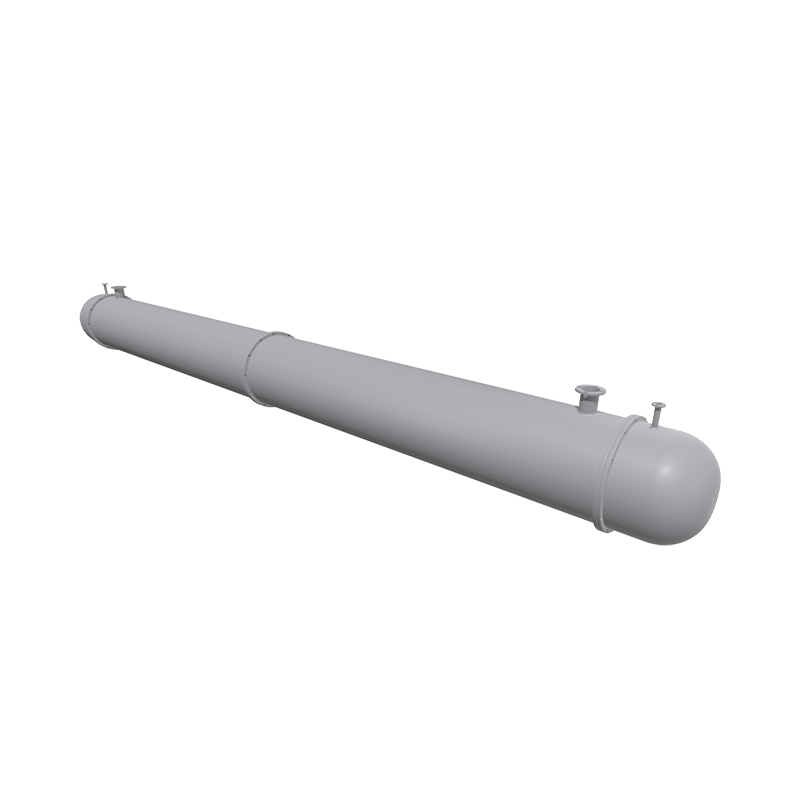
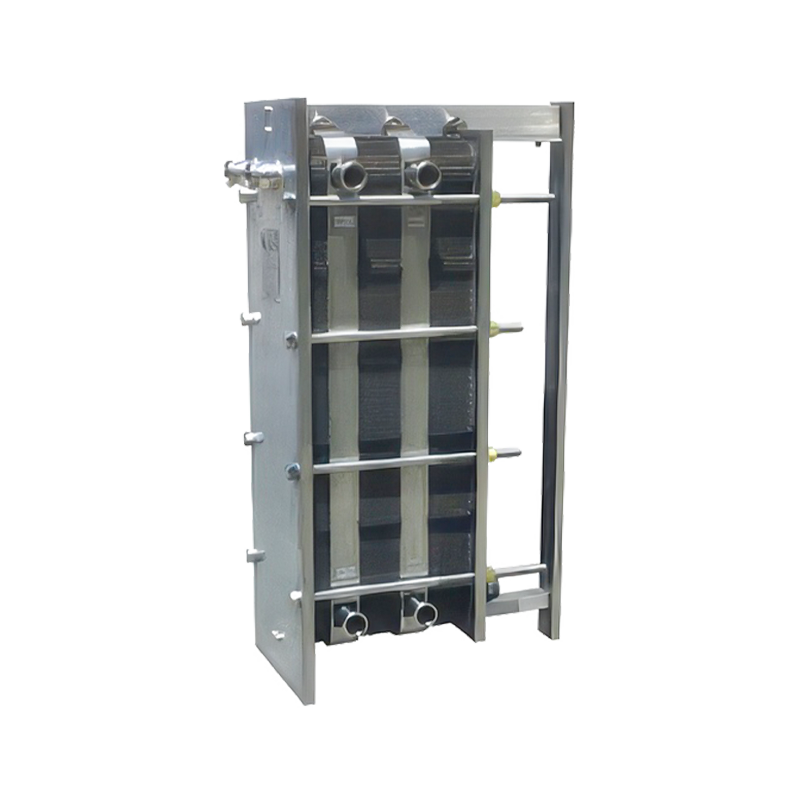
Hybrid / Direct Contact Heat Exchanger
Product: Hybrid / Direct Contact Heat Exchanger
PREV:Sanitary Double Tube Sheet Heat Exchanger: A Safer and More Reliable Solution for Food and Biopharmaceutical Processing
NEXT:Sanitary Steam Ejector / Injector: Hygienic Direct Heating, Mixing, and Vacuum Process Solutions
NEXT:Sanitary Steam Ejector / Injector: Hygienic Direct Heating, Mixing, and Vacuum Process Solutions
Interested in cooperation or have questions?
Recommended LINS
✦
Food and Beverage Process System
Food Processing Skid System
CIP Skid System for Food Industry
food and beverage process skid system
hygienic process skid for food industry
CIP process skid system for food industry
automated process skid system for food processing
modular food processing skid system
beverage processing skid system
food processing equipment skid system
Let'S Work Together Welcome Aboard!
-

haikexin@haikexin.com
+8613391278930
-
 +86-21-57560276
 -
 No. 2819, Sihu Road,Fengxian District, Shanghai, China
Join Our Mailing List
Copyright © Shiloc (Shanghai) Industrial Trading Co., Ltd. All Rights Reserved.
Process Systems & Equipment For Food & Biopharma Manufacturers
