
 English
 русский
 Português
 Français


 Read More

Product Category
NEW Category
Contact us
Contact Us
We specialise in the research, development and manufacture of electrical wires and cables.
 +86-21-57560276
Sanitary Double Tube Sheet Heat Exchanger: A Safer and More Reliable Solution for Food and Biopharmaceutical Processing
Content
- 1 Why Hygienic Heat Exchange Requires a Different Design Approach
- 2 Double Tube Sheet Technology and Cross-Contamination Prevention
- 3 Sanitary Construction for Food and Biopharmaceutical Applications
- 4 U-Tube Design for Mechanical Reliability
- 5 Advanced Tube-to-Baffle Expansion Process
- 6 Thermal Design and Energy Efficiency
- 7 Pressure, Vibration, and Mechanical Analysis
- 8 Manufacturing Capabilities and Quality Control
- 9 Inspection, Testing, and Pre-Shipment Verification
- 10 Standards and Documentation Support
- 11 Technical Specifications and Configuration Options
- 12 Installation, Maintenance, and Operational Considerations
- 13 Customization for Different Process Requirements
- 14 Why Supplier Capability Matters in International Procurement
- 15 Applications in Food, Beverage, and Biopharmaceutical Plants
- 16 How the Equipment Supports Long-Term Production Stability
- 17 Recommended Selection Procedure
- 18 Q&A: Sanitary DTS Heat Exchanger Frequently Asked Questions
- 18.1 Q1: What is a sanitary DTS heat exchanger?
- 18.2 Q2: How does the double-tube-sheet design reduce contamination risk?
- 18.3 Q3: Is the double-tube-sheet design suitable for biopharmaceutical production?
- 18.4 Q4: Can the heat exchanger be used in food and beverage production?
- 18.5 Q5: Why is a U-tube design used?
- 18.6 Q6: Does the heat transfer area include the U-bends?
- 18.7 Q7: Can the equipment be installed horizontally?
- 18.8 Q8: What stainless steel materials are available?
- 18.9 Q9: What surface finish can be supplied?
- 18.10 Q10: What tests are performed before shipment?
- 18.11 Q11: Can the heat exchanger be customized?
- 18.12 Q12: Which standards may apply to the equipment?
- 18.13 Q13: What information is needed for a quotation?
- 18.14 Q14: How does the manufacturer support overseas customers?
- 19 Conclusion
- 20 References
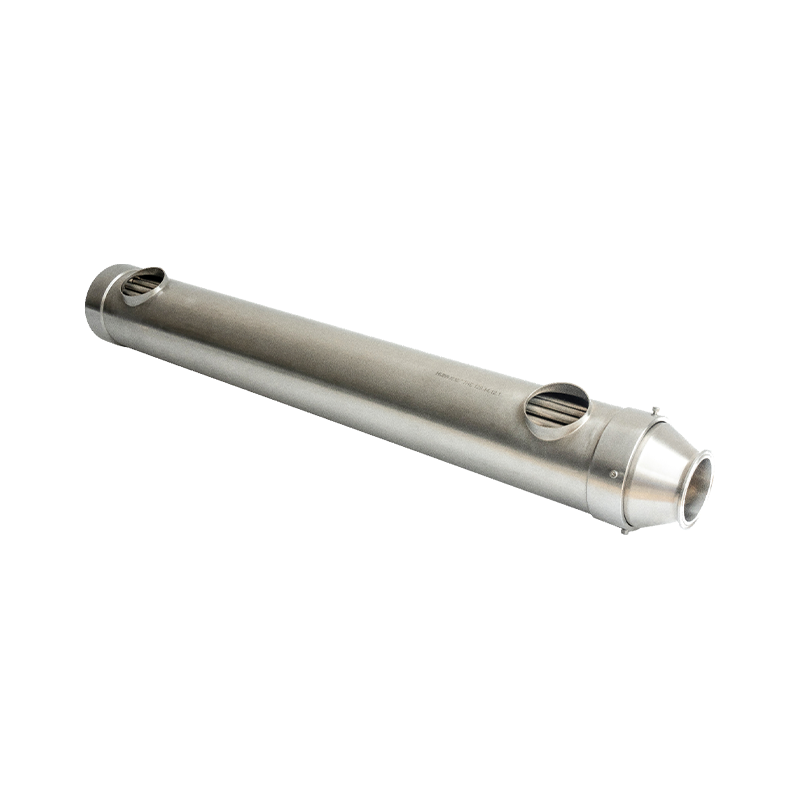
- 21 Product: Sanitary DTS (Double Tube Sheet) Heat Exchanger
In food, beverage, and biopharmaceutical manufacturing, heat exchange equipment must do much more than transfer thermal energy. It must protect product integrity, support hygienic operation, withstand repeated pressure and temperature cycles, and remain compatible with strict cleaning and validation procedures. A heat exchanger used in these industries is therefore an important part of the overall process safety system.
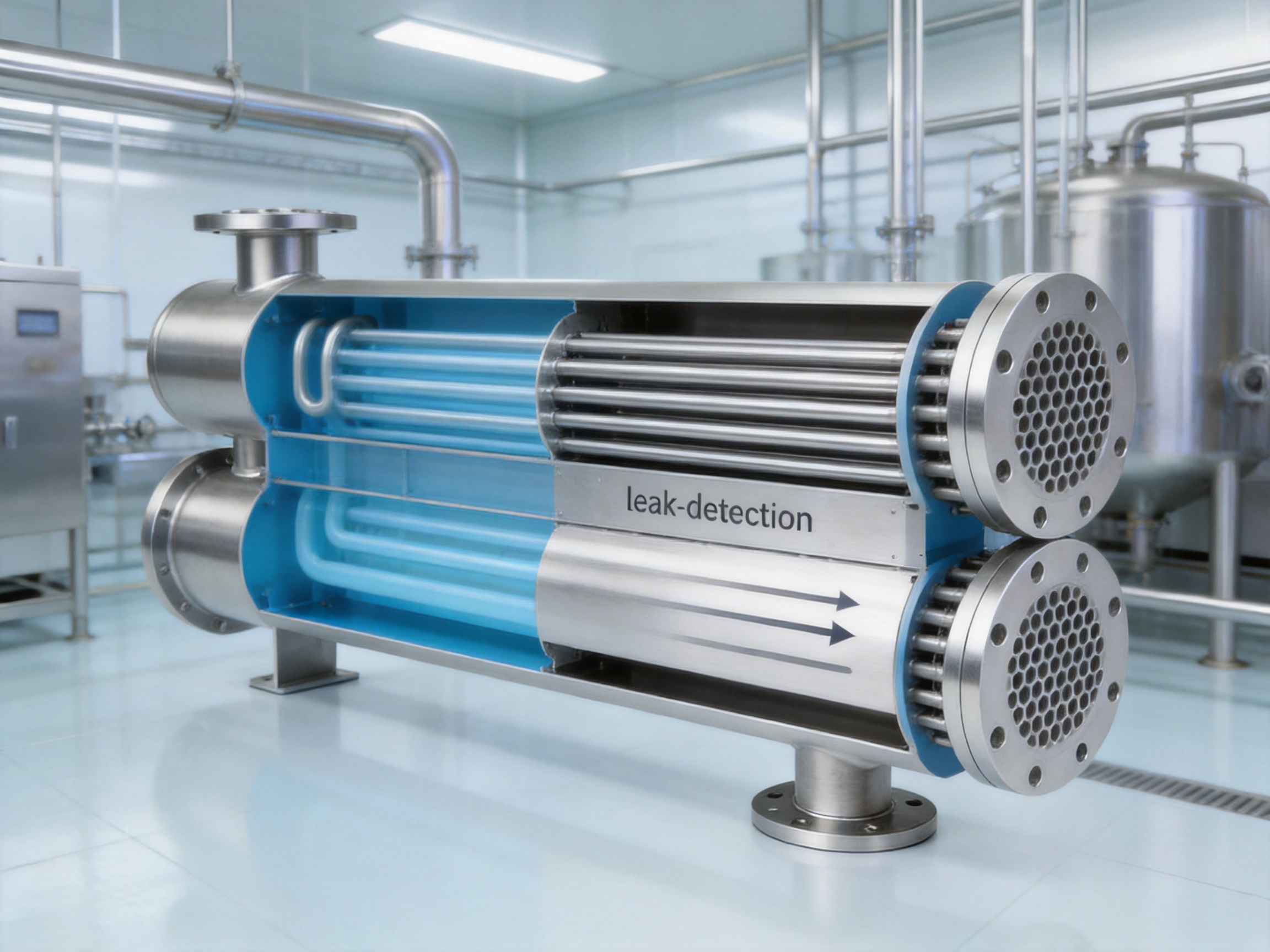
The Sanitary DTS (Double Tube Sheet) Heat Exchanger is designed for applications where cross-contamination between the product side and the utility side cannot be accepted. Its double-tube-sheet construction creates an additional physical safety barrier at the tube ends. The space between the tube sheets can serve as a leak detection zone, allowing potential failures to be identified before one process medium enters the other.
Compared with a conventional single-tube-sheet heat exchanger, the DTS design provides an additional level of protection for sensitive fluids. It is particularly appropriate for purified water, water for injection systems, pharmaceutical intermediates, liquid food products, beverages, and other hygienic process media. The equipment combines sanitary materials, full-drainability, precise thermal design, advanced tube expansion technology, and rigorous inspection procedures.
Manufactured and supplied by Shiloc (Shanghai) Industrial Trading Co., Ltd., the equipment can be customized according to process parameters, installation conditions, heat transfer requirements, and customer documentation standards. The company combines equipment manufacturing, engineering support, international trade services, and process equipment expertise to provide a complete supply solution for customers in China and overseas markets.
Why Hygienic Heat Exchange Requires a Different Design Approach
In many industrial applications, a heat exchanger is selected primarily according to heat transfer area, operating temperature, pressure rating, and purchase cost. These factors remain important in sanitary processing, but they are not sufficient on their own. The equipment must also control contamination risk, prevent product retention, support cleaning procedures, and provide clear evidence of manufacturing quality.
Food and biopharmaceutical processes often involve valuable or sensitive materials. A small amount of contamination can affect an entire batch, trigger an investigation, or require the disposal of finished product. In regulated environments, a process deviation may also require extensive documentation and corrective action. Consequently, the mechanical design of the heat exchanger must contribute directly to process security.
Temperature cycling presents another challenge. During normal operation, the tube bundle may experience repeated heating and cooling. Pressure changes can occur when pumps start or stop, valves open or close, or cleaning fluids are introduced. Over time, these operating conditions may create stress at tube-to-tube-sheet joints and other high-load areas.
A sanitary heat exchanger must therefore provide stable performance over its service life, not simply achieve the required heat transfer rate during initial commissioning. The Sanitary DTS Heat Exchanger addresses these requirements by combining a double-tube-sheet safety structure with a U-tube bundle, expansion-joint-free construction, hygienic surface finishing, and detailed design analysis.
Double Tube Sheet Technology and Cross-Contamination Prevention
The core feature of the Sanitary DTS Heat Exchanger is its double-tube-sheet configuration. The ends of the heat exchange tubes are secured by two separate tube sheets rather than one. This arrangement separates the product and utility regions and creates an intermediate area that can be monitored for leakage.
In a conventional single-tube-sheet design, a tube failure or tube-to-tube-sheet leakage may allow one medium to enter the other side of the exchanger. Depending on the operating pressure relationship, the direction of leakage may not always be immediately obvious. In a biopharmaceutical or food process, this creates a significant risk because a cooling medium, heating medium, cleaning solution, or other utility could contaminate the product stream.
The double-tube-sheet design establishes an additional barrier between the two circuits. If a leak develops in the first tube-to-tube-sheet connection, the intermediate space can provide an opportunity for detection before the failure results in direct mixing. The tube-sheet ends serve as leak detection points, supporting more proactive inspection and maintenance.
This safety concept is especially valuable when the two sides of the exchanger have different levels of hygiene or different chemical compositions. For example, the product side may contain purified water or a pharmaceutical solution, while the utility side may contain cooling water. Separating these circuits through a monitored double-tube-sheet structure helps reduce the consequences of a mechanical failure.
The DTS configuration does not eliminate the need for inspection, preventive maintenance, pressure testing, or proper process control. Instead, it adds a reliable engineering safeguard that works together with these procedures. This layered approach is more suitable for critical applications than relying solely on operating pressure control or routine visual inspection.
Advantages Over Conventional Single-Tube-Sheet Heat Exchangers
The principal advantage over a conventional single-tube-sheet heat exchanger is improved separation between the two process media. The double-tube-sheet structure provides a physical and inspectable safety barrier, while the intermediate region can support early detection of tube or joint leakage.
Additional advantages include easier risk assessment, more controlled maintenance planning, and stronger compatibility with quality systems. In regulated plants, the ability to identify a potential leak before product contamination occurs may reduce production disruption and simplify deviation management.
The design is also suitable for customers who require a higher level of process assurance than a standard heat exchanger can provide. This is particularly relevant for water-for-injection systems, purified water systems, aseptic processes, and high-value liquid products.
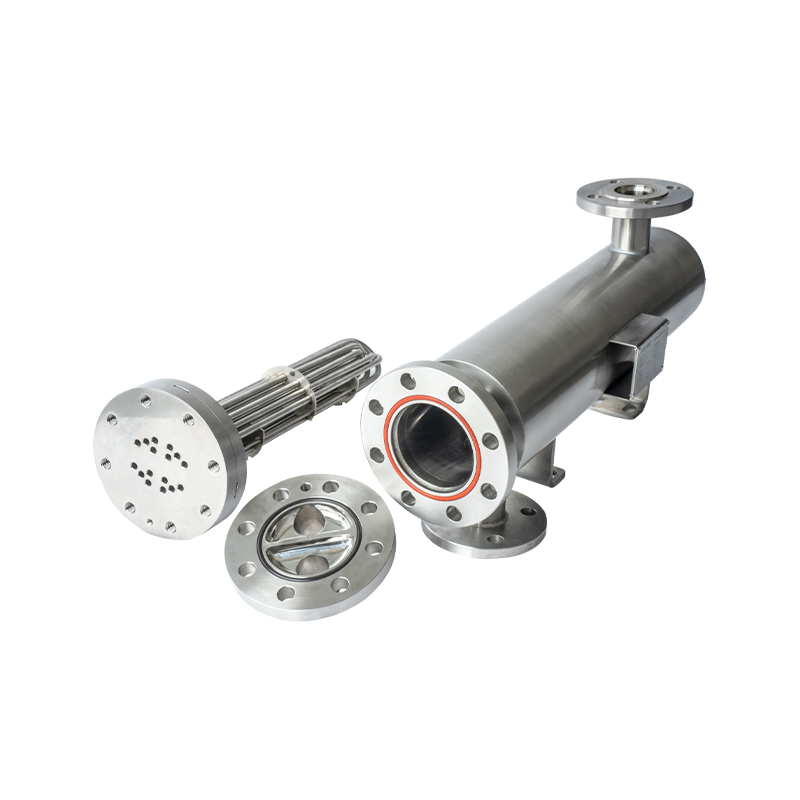
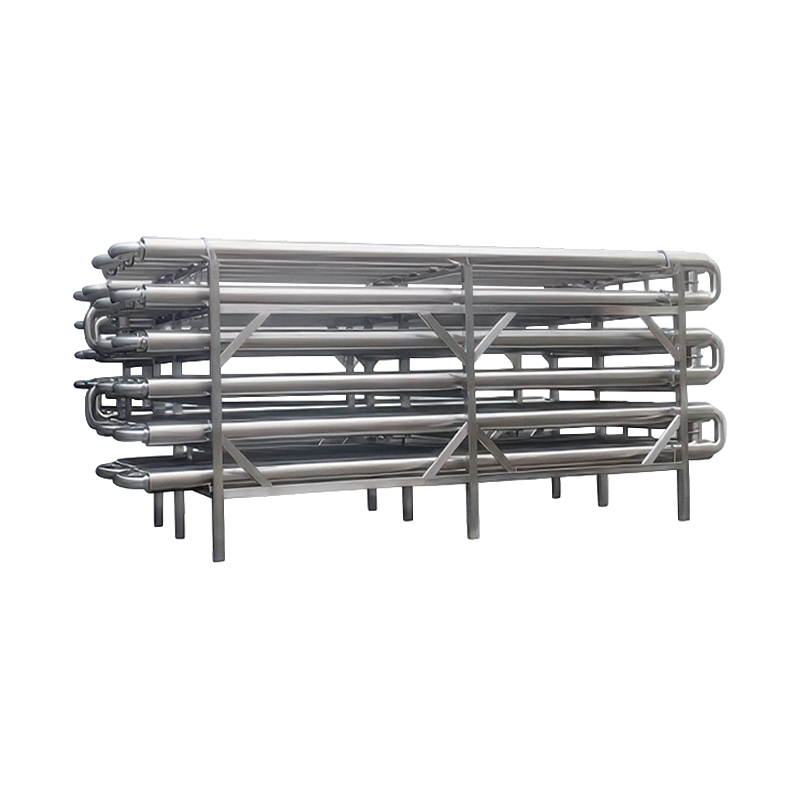
Sanitary DTS (Double Tube Sheet) Heat Exchanger
Sanitary Construction for Food and Biopharmaceutical Applications
All wetted surfaces must be designed with hygiene and cleanability in mind. The Sanitary DTS Heat Exchanger uses stainless steel construction options including 304, 316L, and other materials selected according to the process medium and customer requirements. Imported SUS316L stainless steel heat exchange tubes are available for applications requiring strong corrosion resistance and a high level of surface quality.
316L stainless steel is widely used in pharmaceutical and food processing because of its corrosion resistance, weldability, and compatibility with common cleaning and sanitizing procedures. Material selection must nevertheless be confirmed against the actual process chemistry, temperature, chloride concentration, cleaning agents, and sterilization conditions.
The internal surface finish can be customized for the application. The available specification includes polished and electropolished surfaces with surface roughness values such as Ra below 0.25 micrometers, depending on the selected configuration and inspection requirements. Other finish ranges, including approximately 0.4, 0.6, or 0.8 micrometers, may also be considered according to the process design.
A controlled surface finish reduces the likelihood of product retention and makes it easier to clean the internal surfaces. Smooth surfaces also reduce the number of locations where residues, microorganisms, or particulate matter can accumulate. For biopharmaceutical applications, surface quality is an important part of a broader hygienic design strategy that includes drainage, weld quality, cleaning validation, and equipment installation.
Full Drainability and Side-Drain Design
Complete drainage is a fundamental requirement for hygienic process equipment. Residual liquid trapped inside an exchanger can become a source of microbial growth, product degradation, cross-batch carryover, or cleaning chemical retention. The Sanitary DTS Heat Exchanger uses a drainable design intended to minimize residual hold-up after processing and cleaning.
The side-drain arrangement supports the discharge of internal media and can be configured according to the installation position and process piping layout. The exchanger may be installed vertically or horizontally. The choice depends on available space, piping design, drainage requirements, maintenance access, and customer preference.
For water intake cooling in purified water and water-for-injection systems, drainability is particularly important. The exchanger must be integrated with the surrounding piping so that low points, dead legs, valve positions, and drain lines do not compromise the performance of the equipment. Proper installation and qualification remain essential to achieving the intended sanitary result.
The full-drain design is intended to support FDA- and CGMP-oriented process requirements. Actual compliance depends on the complete equipment specification, materials, welding procedures, surface finish, inspection records, installation, cleaning validation, and the standards applicable to the specific project.
U-Tube Design for Mechanical Reliability
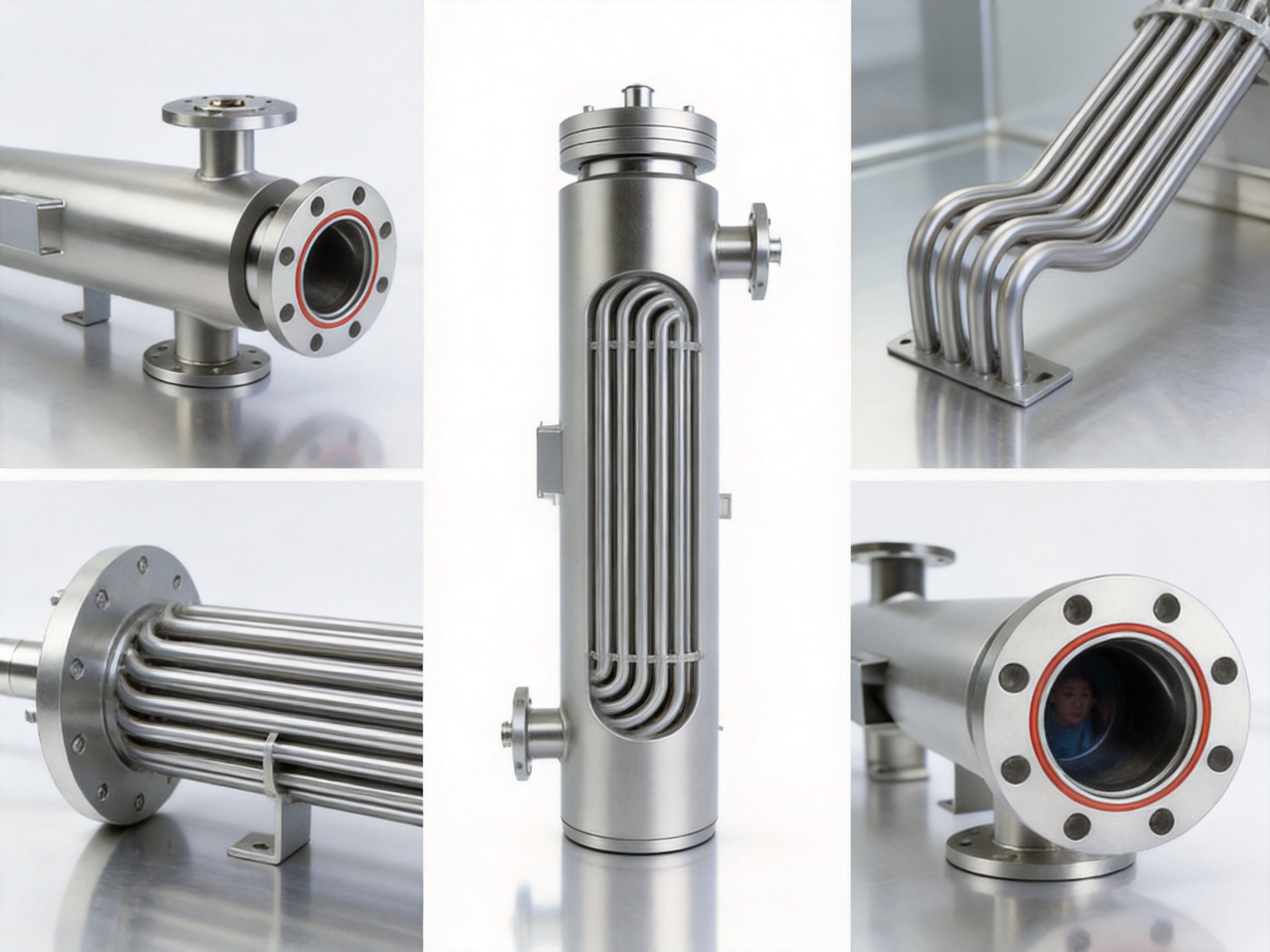
The heat exchanger uses a U-tube configuration. U-tube heat exchangers are widely recognized for their ability to accommodate thermal expansion because the tube bends can flex as the tube bundle experiences temperature changes. This makes the design suitable for applications involving repeated heating and cooling cycles.
In a fixed straight-tube exchanger, differential expansion between the tubes and shell can generate considerable stress. The design may require an expansion joint or another mechanical compensation arrangement. Expansion joints can increase construction complexity and may introduce additional inspection and maintenance considerations.
The expansion-joint-free U-tube design reduces the need for a separate shell expansion joint. The U-shaped tubes provide natural flexibility within the tube bundle, helping to accommodate differential thermal movement. This can reduce the risk of expansion-joint malfunction and simplify the overall mechanical structure.
The U-tube layout also allows a compact exchanger arrangement while maintaining a practical heat transfer path. The design can be adapted to different tube counts, tube diameters, shell diameters, heat transfer areas, and connection arrangements. The actual configuration is selected through process calculations and mechanical verification.
U-Tube Manufacturing Quality
The bend radius of each U-tube is designed according to applicable ASME requirements. Accurate bending is important because excessive deformation, wrinkling, thinning, or flattening can affect flow resistance and mechanical strength. Consistent tube contact and controlled bend geometry also support predictable performance throughout the bundle.
Imported equipment is used for seamless joints and tube processing. The manufacturing objective is to achieve high-strength connections and a long service life while maintaining the required sanitary surface condition. For seamless electrode tubes, the inner surface roughness may typically range from approximately 0.3 to 0.6 micrometers. Sanitary welded tube options may be specified with roughness not exceeding approximately 0.75 micrometers, depending on the selected material and finish.
Heat transfer area is calculated only from the straight tube sections. The U-bends are excluded from the stated heat transfer area calculation. This approach provides a clear and conservative basis for design documentation, allowing customers to understand exactly how the declared area has been determined.
Advanced Tube-to-Baffle Expansion Process
The connection between the heat exchange tubes and baffles is a critical manufacturing area. Poorly controlled expansion can damage the tube surface, create local thinning, or produce inconsistent contact. These issues may reduce mechanical reliability and increase the possibility of future leakage or vibration.
The Sanitary DTS Heat Exchanger uses an advanced hydraulic expansion process to join the tubes and baffles. Compared with conventional roller expansion, hydraulic expansion can reduce surface damage associated with mechanical deformation. It can also provide more consistent expansion along the required connection areas.
The process is intended to reduce stress concentration at the tube-to-baffle interface. Monolithic bidirectional thin-wall tubes help create a more consistent connection and may reduce maintenance requirements during the operating life of the equipment.
Controlled expansion is especially important for equipment exposed to pressure fluctuations, temperature changes, and repeated cleaning cycles. The objective is to maintain tube integrity while achieving sufficient support within the bundle. Process parameters are controlled according to tube material, dimensions, wall thickness, baffle configuration, and mechanical design requirements.
Hydraulic expansion is only one part of manufacturing quality. It must be supported by material traceability, dimensional inspection, weld control, surface finishing, pressure testing, and documented quality assurance. The combination of these steps is what differentiates a process-oriented manufacturer from a supplier that only assembles standard components.
Thermal Design and Energy Efficiency
The main purpose of the heat exchanger is to transfer heat efficiently while maintaining the required product conditions. A well-designed unit must provide the specified outlet temperature without creating excessive pressure drop or unnecessary energy consumption.
The design process begins with the customer’s process data. Important parameters include the type of product and utility fluids, inlet and outlet temperatures, flow rates, operating and design pressures, allowable pressure drop, fouling characteristics, cleaning conditions, installation orientation, and available space.
Specialized selection software and heat exchanger databases are used to support equipment selection. These tools help engineers evaluate heat transfer area, flow velocity, pressure drop, tube-side and shell-side conditions, and design margins. The final design is reviewed against the customer’s approved process data and mechanical requirements.
Flow Velocity and Pressure Drop Control
Internal flow velocity has a direct influence on heat transfer efficiency. Increasing velocity may improve turbulence and heat transfer, but it can also raise pressure drop, pumping requirements, and mechanical stress. Reducing velocity may lower pressure drop but can result in a larger heat transfer area or increased fouling risk.
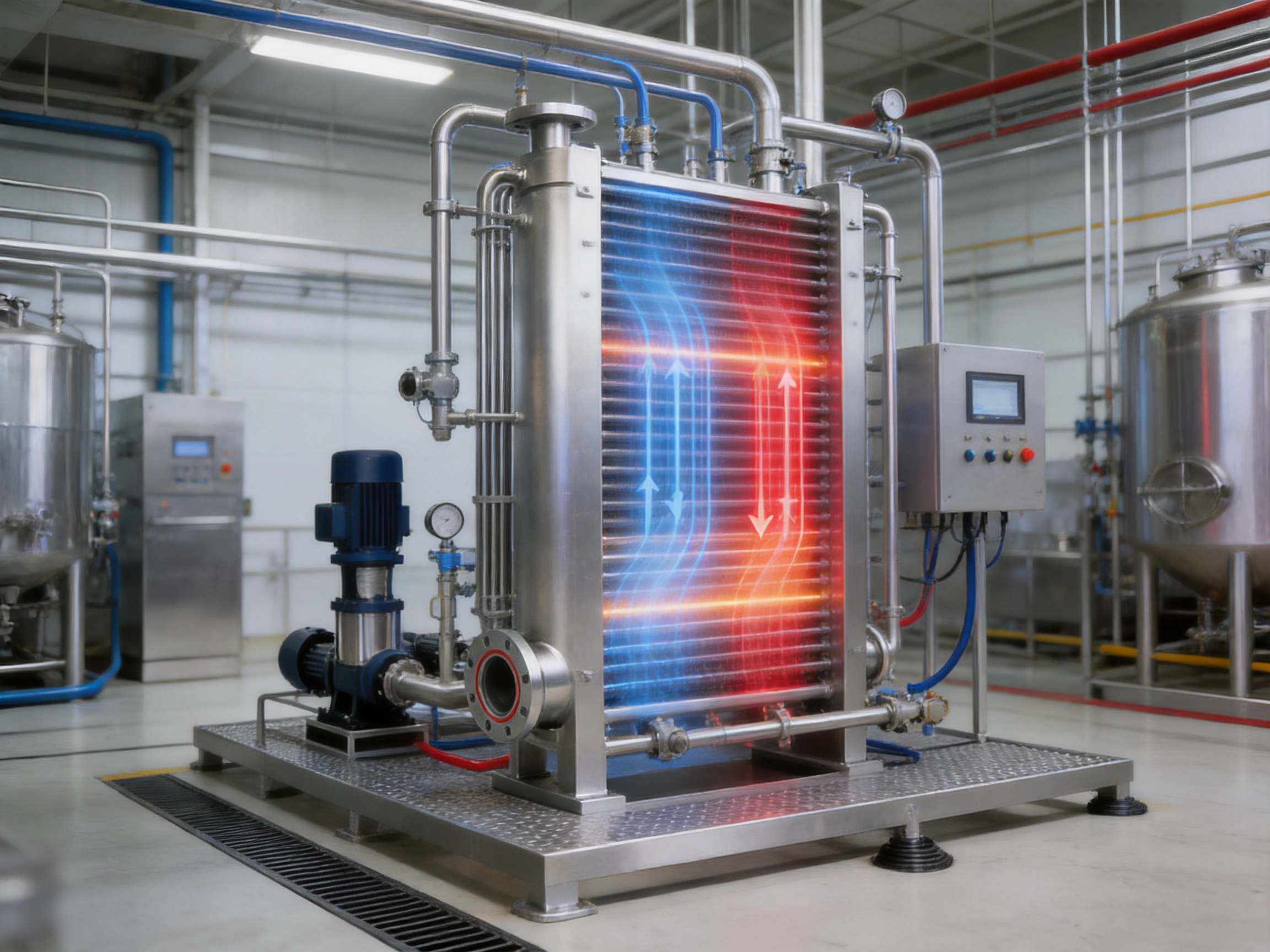
The Sanitary DTS Heat Exchanger is designed to optimize internal flow velocity within customer-specified pressure-drop limits. The product flows through the inner tube bundle, while the cooling or heating medium moves through the surrounding flow path. The arrangement can be designed to support counter-current or cross-flow heat transfer according to the process requirements.
Counter-current flow is often advantageous because it can maintain a favorable temperature difference along a greater portion of the exchanger length. Cross-flow analysis may also be necessary in multi-pass arrangements or where the physical configuration creates a combination of flow patterns. The design report includes analysis of these conditions to support thermal optimization.
Design Margins for Future Capacity
Appropriate design margins can help accommodate moderate changes in production requirements. A facility may increase batch size, modify flow rates, introduce a different product concentration, or extend operating hours. A heat exchanger designed with a reasonable margin may continue to meet process requirements under such changes.
Design margin must be selected carefully. Excessive oversizing can reduce velocity, increase equipment cost, and create operational difficulties. Insufficient margin may limit future production growth. The engineering objective is to balance current performance, future flexibility, energy consumption, and total cost of ownership.
Fouling factors are applied in accordance with TEMA recommendations and the expected process conditions. Fouling factors account for the gradual formation of deposits or films on heat transfer surfaces. Their use helps ensure that the exchanger can maintain stable performance over the intended operating period rather than only under clean conditions.
Pressure, Vibration, and Mechanical Analysis
Thermal performance cannot be separated from mechanical safety. The tube side and shell side are exposed to pressure and temperature conditions that must be evaluated independently. Design reports can include precise pressure points for the tube walls and shell walls based on customer-approved calculation locations.
The forged, thickened, aseptic double-plate tube-sheet design improves structural safety and fatigue resistance. The tube sheets must withstand pressure loads, tube connection forces, thermal cycling, and the mechanical effects of installation and operation. A robust tube-sheet structure is essential to the reliability of a DTS exchanger because the tube sheets are central to both the pressure boundary and the contamination-prevention concept.
Vibration can occur when fluid flows through the tube bundle or shell-side passages. If the flow-induced vibration approaches a natural frequency of the tubes or supporting structure, resonance may develop. Excessive vibration can cause fatigue damage, tube wear, noise, or leakage.
For this reason, the design process includes vibration and resonance analysis. Multi-pass heat exchangers with straight tubes or U-tubes are analyzed according to their flow arrangement, support spacing, tube dimensions, and operating conditions. This analysis helps identify potential vibration risks before fabrication.
A complete engineering review considers pressure containment, thermal expansion, flow-induced vibration, tube support, weld configuration, lifting loads, transport conditions, and maintenance access. These analyses contribute to stable operation and help reduce the likelihood of unexpected shutdowns.
Manufacturing Capabilities and Quality Control
Shiloc (Shanghai) Industrial Trading Co., Ltd. was established in March 2026 in Fengxian District, Shanghai. The company focuses on international trade, equipment manufacturing, import and export agency services, and engineering and technical support for process industries.
The company operates a 3,000-square-meter facility with more than 20 technical specialists. Its capabilities include processing, welding, polishing, inspection, quality control, and project coordination. These capabilities support the manufacture and supply of fluid equipment for food and beverage, biopharmaceutical, daily chemical, and fine chemical applications.
For sanitary heat exchangers, manufacturing quality is determined by the control of many individual operations. Tube preparation, U-bending, tube-sheet fabrication, hydraulic expansion, welding, polishing, cleaning, testing, and packaging must be coordinated as one controlled process.
Material and Fabrication Control
Materials are selected according to the process requirements and customer specifications. Stainless steel grades, tube dimensions, surface finishes, connection types, gaskets, and other wetted components can be reviewed during the engineering stage.
Welded and seamless components are fabricated using procedures appropriate to the material and equipment design. Sanitary welding requires careful control of joint preparation, heat input, shielding, penetration, and post-weld finishing. Improperly finished welds may create crevices or rough areas that are difficult to clean.
Imported equipment is used to create seamless joints and high-strength connections. The manufacturing process is supported by inspection and quality documentation intended to provide traceability from material receipt through final testing.
Surface Polishing and Electropolishing
Surface finishing is performed to meet the requirements of hygienic process equipment. Mechanically polished and electropolished surfaces are checked to verify the specified roughness. The stated inspection target for selected configurations is a surface roughness below Ra 0.25 micrometers.
Electropolishing can improve surface smoothness and remove a small amount of material from the surface in a controlled electrochemical process. It may also improve the visual uniformity and corrosion resistance of stainless steel surfaces when properly applied. The choice between mechanical polishing and electropolishing depends on the application, material, customer specification, and validation requirements.
Surface roughness testing is conducted using a surface profilometer. Additional visual and endoscopic inspections help verify that internal areas are free from visible defects, residues, foreign matter, or unacceptable surface conditions.
Inspection, Testing, and Pre-Shipment Verification
Every Sanitary DTS Heat Exchanger undergoes a pre-shipment inspection process. The purpose is to confirm pressure integrity, drainability, surface condition, internal cleanliness, documentation completeness, and compliance with the agreed technical specification.
The pressure retention test verifies the stability of the equipment under the specified fluid pressure. Hydrostatic testing is commonly used to identify pressure-boundary defects and confirm that the fabricated unit can withstand the required test conditions.
Drainability testing checks whether internal media can be removed from the equipment through the designated drain connections. This test is particularly important for sanitary applications where liquid retention may affect cleaning, sterilization, or product changeover.
Surface roughness testing verifies the Ra value of mechanically polished and electrochemically polished surfaces. The inspection method and acceptance criteria are established according to the project specification.
Endoscopic inspection is used to examine internal areas that cannot be fully evaluated from the exterior. It can help identify foreign matter, surface damage, incomplete cleaning, or other conditions inside tubes and process passages.
Before packing, an internal blowout inspection is performed to help ensure that the equipment is free of debris. Appropriate cleaning and protection procedures are important because sanitary equipment can be contaminated during handling, storage, or transportation even after fabrication is complete.
Visual inspection, dimensional checks, coding, and compliance reviews are also included. Computer-based functionality and performance verification may be performed where the equipment is supplied with relevant monitoring or control functions.
Standards and Documentation Support
The Sanitary DTS Heat Exchanger can be designed and documented with reference to recognized industry standards. The supplied material identifies ASME BPE-2005, TEMA recommendations, ASME pressure equipment requirements, Canadian Registration Number requirements, and CE/PED-related requirements among the applicable standards and certifications.
ASME BPE provides guidance for bioprocessing equipment design, materials, fabrication, surface finish, and hygienic construction. TEMA recommendations are commonly used as a reference for heat exchanger design, performance, fouling factors, mechanical construction, and inspection.
CE/PED requirements may apply when the equipment is supplied for markets or applications within the scope of the European Pressure Equipment Directive. Canadian Registration Number requirements may apply in Canadian jurisdictions. The specific certification route depends on the equipment category, design parameters, jurisdiction, and project contract.
Documentation may include design calculations, material certificates, inspection records, pressure test reports, surface roughness records, weld documentation, dimensional inspection results, cleaning records, and final drawings. Customers can discuss additional documentation requirements during the quotation and engineering stages.
For regulated industries, documentation is not an optional administrative feature. It supports installation qualification, operational qualification, maintenance planning, change control, supplier evaluation, and audit preparation. A supplier capable of coordinating both equipment manufacturing and technical documentation can reduce the workload placed on the customer’s engineering and quality teams.
Technical Specifications and Configuration Options
The standard technical range includes heat transfer areas from approximately 1 to 20 square meters, a design temperature of up to 143°C, and a design pressure of up to 10 bar for the listed configuration. Available materials include 304 stainless steel, 316L stainless steel, and KFM or other customer-specified materials where technically appropriate.
Connection options include Tri-Clamp and flanged connections. Internal surface finishes can be specified according to the process, with available roughness requirements such as Ra below 0.25 micrometers and other finish levels including approximately 0.4, 0.6, or 0.8 micrometers.
| Technical Item | Reference Range or Option | Design Consideration |
| Heat transfer area | 1–20 m² | Final area is selected from process heat-load calculations |
| Design temperature | Up to 143°C | Must be confirmed against product, utility, cleaning, and sterilization conditions |
| Design pressure | Up to 10 bar | Tube-side and shell-side pressures require separate review |
| Tube material | 304 or 316L stainless steel; other options by request | Material compatibility depends on process chemistry |
| Connection type | Tri-Clamp or flange | Selected according to piping, hygiene, and installation requirements |
| Internal surface finish | Ra below 0.25, 0.4, 0.6, or 0.8 μm options | Final acceptance value must be defined in the project specification |
| Installation | Horizontal or vertical | Determined by space, drainage, piping, and maintenance access |
The following reference models illustrate several combinations of U-tube quantity, tube diameter, shell diameter, total length, and approximate weight. These values are for preliminary selection only. Final dimensions and weight may change according to materials, connections, insulation, support brackets, instrumentation, and customer-specific design requirements.
| Model | Number of U-Tubes | U-Tube Diameter | Shell Diameter | Total Length | Approximate Weight |
| HY-SD-09065 | 9 | 10 mm | 90 mm | 1,050 mm | 56 kg |
| HY-SD-11065 | 11 | 10 mm | 102 mm | 1,050 mm | 75 kg |
| HY-SD-19150 | 19 | 10 mm | 116 mm | 1,900 mm | 90 kg |
| HY-SD-21150 | 21 | 10 mm | 140 mm | 1,900 mm | 115 kg |
Installation, Maintenance, and Operational Considerations
The heat exchanger can be installed vertically or horizontally. The best orientation is determined by site conditions, flow direction, drainage, access for inspection, and the arrangement of connected equipment.
Factory-welded lifting and mounting brackets are available to simplify installation. These features can reduce on-site fabrication work and support safer handling during positioning. The final support structure must be designed for the operating weight, test weight, piping loads, thermal movement, and any vibration generated by pumps or flow control equipment.
Sanitary connections should be installed with proper alignment and without excessive stress on the exchanger nozzles. Piping should be arranged to avoid unnecessary dead legs and to support complete drainage. Valves, instruments, and drains should be accessible for operation, cleaning, inspection, and maintenance.
Preventive maintenance should include inspection of the leak detection points, pressure testing as required, verification of drainage, examination of connections and gaskets, and review of operating trends. Changes in pressure drop, outlet temperature, flow rate, or cleaning performance may indicate fouling, blockage, or another developing issue.
The double-tube-sheet structure supports earlier identification of leakage, but operators must establish appropriate monitoring procedures. The inspection frequency depends on the process risk, operating schedule, cleaning regime, fluid characteristics, and applicable quality requirements.
Customization for Different Process Requirements
Sanitary process systems rarely have identical requirements. A food producer may need a compact cooler for a beverage or liquid ingredient, while a biopharmaceutical manufacturer may require a highly documented exchanger for purified water or a process solution. Site constraints, production capacity, fluid properties, and utility availability can vary significantly.
The Sanitary DTS Heat Exchanger can be customized according to heat transfer area, tube diameter, tube quantity, shell diameter, overall length, material grade, surface finish, connection type, drain arrangement, installation orientation, support structure, and documentation package.
Engineering customization begins with a review of process data. The customer may provide flow rates, temperatures, pressures, density, viscosity, specific heat, thermal conductivity, allowable pressure drop, fouling factor, cleaning conditions, and utility details. These values are used to determine the appropriate configuration.
Space limitations can also influence the design. A horizontal installation may be preferred where ceiling height is restricted, while a vertical arrangement may simplify drainage or reduce the floor footprint. Mounting brackets, lifting points, nozzle orientation, and service clearance can be incorporated during the design stage rather than modified after delivery.
Non-standard designs can be evaluated for specialized process conditions. Customers should contact the manufacturer with complete engineering information so that the equipment can be checked for thermal performance, mechanical strength, cleanability, drainability, and regulatory requirements before an order is finalized.
Why Supplier Capability Matters in International Procurement
Purchasing process equipment from an overseas supplier involves more than comparing product prices. Customers must review technical specifications, drawings, inspection plans, documentation, packaging, shipping, customs requirements, installation support, and after-sales communication.
A supplier with both manufacturing and international trade capabilities can coordinate these activities more efficiently. Shiloc provides import and export agency services, engineering support, equipment manufacturing, and project communication for global customers. This integrated approach is intended to reduce coordination difficulties between the end user, equipment manufacturer, quality department, logistics provider, and installation contractor.
International customers may require English documentation, certification packages, customized nameplates, export packaging, special connection standards, and inspection by a third party. These requirements should be identified early. Clear communication during the technical clarification stage can prevent costly changes later in the manufacturing process.
The company’s Shanghai facility and technical team support activities such as processing, welding, polishing, inspection, and quality coordination. Its stated operating principles include innovation, process optimization, safe and efficient equipment, reliable supply, traceability, and personalized customer service.
For customers developing new production lines, replacing outdated equipment, or expanding capacity, a project-oriented supplier can provide more value than a source that only delivers a standard catalog model. The objective is to deliver a heat exchanger that fits the complete process rather than merely matching a nominal heat transfer area.
Applications in Food, Beverage, and Biopharmaceutical Plants
The Sanitary DTS Heat Exchanger is suitable for a range of hygienic thermal processing applications. In food and beverage plants, it may be used for water cooling, ingredient temperature control, beverage processing, liquid product cooling, and utility separation.
In biopharmaceutical facilities, it can be considered for purified water systems, water-for-injection intake cooling, process liquid temperature adjustment, and other applications where the product side must be protected from utility-side leakage.
The exchanger can also support daily chemical and fine chemical processes when the product requires hygienic construction, controlled surface finish, and reliable separation from the heating or cooling medium. Material compatibility must be evaluated for each application, especially when corrosive chemicals, solvents, concentrated cleaning agents, or high-chloride fluids are present.
Typical project objectives include reducing contamination risk, improving drainage, maintaining stable outlet temperature, minimizing pressure drop, simplifying inspection, and supporting documentation requirements. The final application suitability should be confirmed through a formal process and mechanical design review.
How the Equipment Supports Long-Term Production Stability
Production stability depends on more than the rated heat transfer capacity of a unit. It also depends on how consistently the exchanger performs under changing conditions and how quickly operators can identify problems.
The double-tube-sheet structure provides a safety-oriented design that helps control the consequences of tube leakage. The U-tube configuration accommodates thermal expansion. The expansion-joint-free structure reduces the number of components that require inspection. Hydraulic tube expansion supports reliable tube-to-baffle connections. Surface finishing and drainability support hygienic operation.
These features work together. A strong tube sheet without proper surface finishing would not fully address sanitary requirements. A smooth internal surface without reliable leak detection would not provide the same level of process separation. High heat transfer performance without drainability could create cleaning and changeover problems.
The value of the equipment therefore lies in the integration of thermal, mechanical, sanitary, and quality-control features. This integrated approach can help manufacturers achieve more controllable operation, easier maintenance planning, and greater confidence during audits and process validation.
Recommended Selection Procedure
Customers should begin by defining the process duty. The required heat load, fluid flow rates, inlet temperatures, outlet temperatures, and utility conditions should be provided as accurately as possible.
The next step is to identify the risk level of the application. If cross-contamination could affect product safety, batch release, or regulatory compliance, a double-tube-sheet design should be seriously evaluated. The customer should also define the required leak detection method and monitoring arrangement.
Material and surface requirements should then be established. These include product-contact material, tube grade, gasket material, internal surface roughness, polishing method, and compatibility with cleaning and sterilization agents.
Mechanical requirements must include design temperature, design pressure, operating pressure, pressure-test conditions, installation orientation, support loads, nozzle arrangement, and available space. The customer should also define applicable standards and certification requirements for the destination market.
Finally, the inspection and documentation plan should be agreed before fabrication. This may include material certificates, weld records, surface roughness reports, hydrostatic test reports, drainability test records, endoscopic inspection results, dimensional drawings, and final quality documents.
Q&A: Sanitary DTS Heat Exchanger Frequently Asked Questions
Q1: What is a sanitary DTS heat exchanger?
A sanitary DTS heat exchanger is a hygienic heat transfer unit that uses two tube sheets at the ends of the tube bundle. The double-tube-sheet construction separates the product and utility circuits and creates an intermediate region that can be used for leak detection.
Q2: How does the double-tube-sheet design reduce contamination risk?
The design introduces an additional barrier between the two media. If a tube or tube-to-tube-sheet connection develops a leak, the intermediate area can help reveal the problem before direct mixing occurs. It provides an additional layer of protection compared with a conventional single-tube-sheet exchanger.
Q3: Is the double-tube-sheet design suitable for biopharmaceutical production?
Yes. It is especially suitable for applications where product protection, hygienic construction, drainability, and leak detection are important. Examples include purified water and water-for-injection-related systems, subject to the complete project design and validation requirements.
Q4: Can the heat exchanger be used in food and beverage production?
Yes. The exchanger can be used for liquid product cooling, water cooling, beverage processing, ingredient temperature control, and other sanitary heat transfer duties. The material, surface finish, connection type, and thermal capacity should be selected according to the actual product and utility conditions.
Q5: Why is a U-tube design used?
A U-tube configuration provides flexibility for thermal expansion. It can accommodate differential movement between the tube bundle and shell without requiring a separate expansion joint. This can improve mechanical reliability and reduce the number of expansion-related components requiring maintenance.
Q6: Does the heat transfer area include the U-bends?
No. The stated heat transfer area is calculated from the straight tube sections only. The U-bends are excluded from the calculation, providing a clear and conservative basis for comparing design capacity.
Q7: Can the equipment be installed horizontally?
Yes. The unit can be installed horizontally or vertically. The preferred orientation depends on the available space, drainage arrangement, process piping, service access, and customer requirements.
Q8: What stainless steel materials are available?
Common options include 304 and 316L stainless steel. Imported SUS316L heat exchange tubes are available for applications requiring enhanced corrosion resistance and sanitary performance. Other material options can be reviewed according to process chemistry and project specifications.
Q9: What surface finish can be supplied?
Surface finish options include Ra values below 0.25 micrometers and other specified levels such as approximately 0.4, 0.6, or 0.8 micrometers. The final value depends on the product, cleaning method, regulatory requirements, and customer specification.
Q10: What tests are performed before shipment?
Inspection may include hydrostatic pressure testing, drainability testing, surface roughness measurement, visual inspection, endoscopic inspection, internal blowout inspection before packing, dimensional checks, coding, and documentation review. Computer-based performance or functionality verification may also be performed where applicable.
Q11: Can the heat exchanger be customized?
Yes. Customization may include heat transfer area, tube diameter, tube quantity, shell diameter, length, materials, surface finish, connection type, drain arrangement, mounting brackets, installation orientation, and documentation requirements.
Q12: Which standards may apply to the equipment?
Depending on the project and destination market, design and documentation may reference ASME BPE, TEMA recommendations, ASME pressure equipment requirements, CE/PED requirements, Canadian Registration Number requirements, and other applicable industry standards.
Q13: What information is needed for a quotation?
Important information includes the product and utility fluids, flow rates, inlet and outlet temperatures, operating and design pressures, allowable pressure drop, heat load, fouling factor, cleaning and sterilization conditions, material requirements, surface finish, connections, installation orientation, available space, applicable standards, and documentation requirements.
Q14: How does the manufacturer support overseas customers?
Shiloc combines equipment manufacturing, engineering and technical services, import and export agency services, and international trade coordination. This can help customers manage technical clarification, quality documentation, export packaging, logistics, and communication during the procurement process.
Conclusion
The Sanitary DTS Heat Exchanger is designed for process environments where hygienic performance, product protection, and mechanical reliability are equally important. Its double-tube-sheet construction provides an additional barrier against cross-contamination and creates a practical basis for leak detection. Its U-tube configuration accommodates thermal expansion without a separate expansion joint, while hydraulic expansion technology supports reliable tube-to-baffle connections.
Full-drain construction, sanitary stainless steel materials, controlled surface roughness, flexible installation, and detailed inspection procedures further extend its suitability for food, beverage, and biopharmaceutical applications. Thermal design is supported by flow analysis, pressure-drop control, fouling factors, design margins, and vibration assessment.
As a China-based process equipment supplier, Shiloc (Shanghai) Industrial Trading Co., Ltd. combines manufacturing capabilities with engineering coordination and international trade services. Its facility and technical team support customized equipment production, quality control, documentation, and global project delivery.
For manufacturers upgrading an existing line or developing a new hygienic process system, the selection of a heat exchanger should be treated as a process safety and lifecycle decision rather than a simple equipment purchase. A properly specified DTS heat exchanger can help improve contamination control, maintenance planning, production stability, and long-term confidence in the process.
References
1. ASME BPE, Bioprocessing Equipment Standard, American Society of Mechanical Engineers.
2. TEMA Standards, Standards of the Tubular Exchanger Manufacturers Association.
3. U.S. Food and Drug Administration, Current Good Manufacturing Practice Requirements for Pharmaceutical and Biopharmaceutical Manufacturing.
4. European Pressure Equipment Directive, Pressure Equipment Safety and Conformity Requirements.
5. Good Manufacturing Practice Guidance for Food, Beverage, and Biopharmaceutical Processing Facilities.
6. Hygienic Design Principles for Stainless Steel Process Equipment and Fluid Systems.
7. Manufacturer-provided design, inspection, testing, and technical specification materials for the Sanitary DTS Heat Exchanger.
Product: Sanitary DTS (Double Tube Sheet) Heat Exchanger
PREV:Bottom-Entry High-Shear Magnetic Emulsifiers for Hygienic Food and Biopharmaceutical Processing
NEXT:Hybrid / Direct Contact Heat Exchangers for Efficient Food, Beverage, and Biopharmaceutical Processing
NEXT:Hybrid / Direct Contact Heat Exchangers for Efficient Food, Beverage, and Biopharmaceutical Processing
Interested in cooperation or have questions?
Recommended LINS
✦
Food and Beverage Process System
Food Processing Skid System
CIP Skid System for Food Industry
food and beverage process skid system
Sanitary Process Skid
automated process skid system for food processing
hygienic process skid for food industry
CIP process skid system for food industry
food ingredient mixing skid system
beverage blending skid system
Let'S Work Together Welcome Aboard!
-

haikexin@haikexin.com
+8613391278930
-
 +86-21-57560276
 -
 No. 2819, Sihu Road,Fengxian District, Shanghai, China
Join Our Mailing List
Copyright © Shiloc (Shanghai) Industrial Trading Co., Ltd. All Rights Reserved.
Process Systems & Equipment For Food & Biopharma Manufacturers
