
 English
 русский
 Português
 Français

 Read More

Product Category
NEW Category
Contact us
Contact Us
We specialise in the research, development and manufacture of electrical wires and cables.
 +86-21-57560276
Sanitary Steam Ejector / Injector: Hygienic Direct Heating, Mixing, and Vacuum Process Solutions
Content
- 1 1. Operating Principle of a Sanitary Steam Ejector / Injector
- 2 2. Product Advantages Over Conventional Alternatives
- 3 3. Sanitary Design and Material Selection
- 4 4. Application in Food and Beverage Manufacturing
- 5 5. Application in Biopharmaceutical and Pharmaceutical Processing
- 6 6. Application in Industrial and HVAC Systems
- 7 7. Preventing Cavitation, Pressure Instability, and Water Hammer
- 8 8. Installation, Commissioning, and Shutdown Procedures
- 9 9. Troubleshooting Guide
- 10 10. Engineering and Customization Considerations
- 11 11. Manufacturing Strengths and Quality Control
- 12 12. Why the Product Is Competitive
- 13 13. Recommended Maintenance Program
- 14 14. Frequently Asked Questions
- 14.1 Q1: What is the primary function of a sanitary steam ejector / injector?
- 14.2 Q2: How does the injector heat a process liquid?
- 14.3 Q3: Does the equipment require an electric motor?
- 14.4 Q4: Which stainless steel grades are available?
- 14.5 Q5: Can the injector be used in pharmaceutical production?
- 14.6 Q6: What causes poor entrainment performance?
- 14.7 Q7: How can water hammer be prevented?
- 14.8 Q8: Can the product be installed directly on a pipeline or tank?
- 14.9 Q9: How often should the nozzle be inspected?
- 14.10 Q10: What information is needed for customized selection?
- 14.11 Q11: What services does Shiloc provide?
- 15 15. Conclusion
- 16 References
- 17 Product: Sanitary Steam Ejector / Injector
In food and beverage and biopharmaceutical manufacturing, process equipment must deliver more than simple heat transfer or fluid movement. It must provide reliable performance, hygienic construction, efficient operation, easy integration, and consistent results under demanding production conditions. The Sanitary Steam Ejector / Injector is designed to meet these requirements by using high-pressure steam as a motive fluid for entrainment, mixing, direct heating, conveying, and vacuum assistance.
Based on the Venturi principle, the equipment converts steam pressure into high-velocity flow through a precision nozzle. This high-speed jet creates a low-pressure zone that draws in liquid or gaseous media. The steam and entrained medium then mix within an integrated chamber, enabling rapid heat transfer and controlled process flow without rotating components, motors, impellers, or complex mechanical drive systems.
Constructed from food-grade stainless steel, including 304 and 316L options, the sanitary steam ejector / injector is suitable for applications in dairy processing, beverage production, pharmaceutical liquids, aseptic manufacturing, daily chemical production, fine chemical processing, industrial water systems, and HVAC heating systems. Its compact structure can be installed directly on pipelines or tanks, helping manufacturers reduce equipment footprint and simplify system design.
Compared with conventional mechanical mixers, indirect heat exchangers, and separate vacuum-generation systems, a properly selected steam injector can combine several process functions in one compact unit. It can heat and mix a liquid at the same time, assist with conveying, or create vacuum conditions through controlled steam flow. The absence of moving parts also reduces mechanical wear and simplifies maintenance.
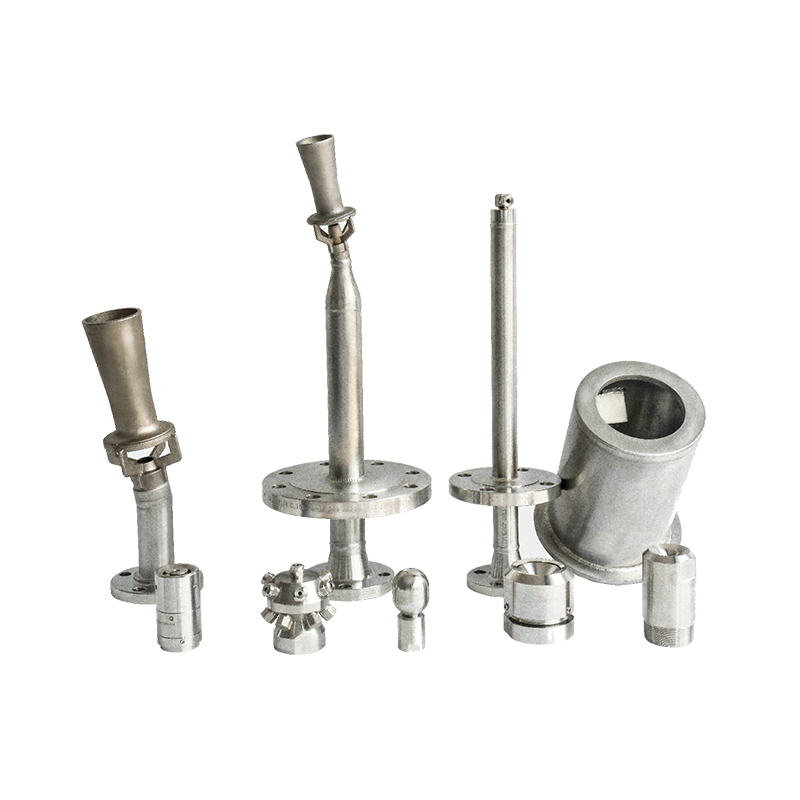
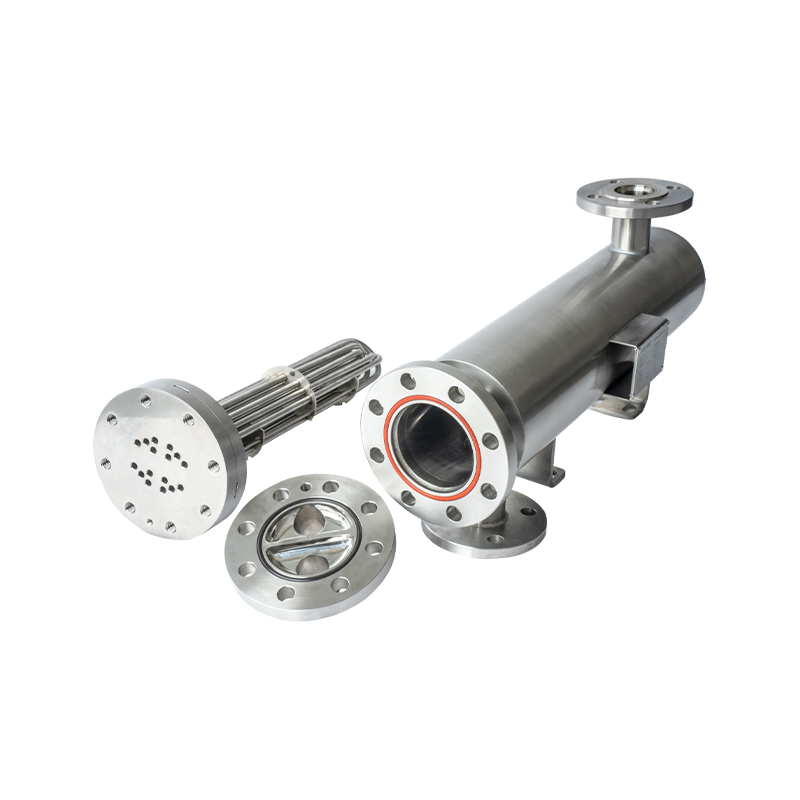
Sanitary Steam Ejector / Injector
1. Operating Principle of a Sanitary Steam Ejector / Injector
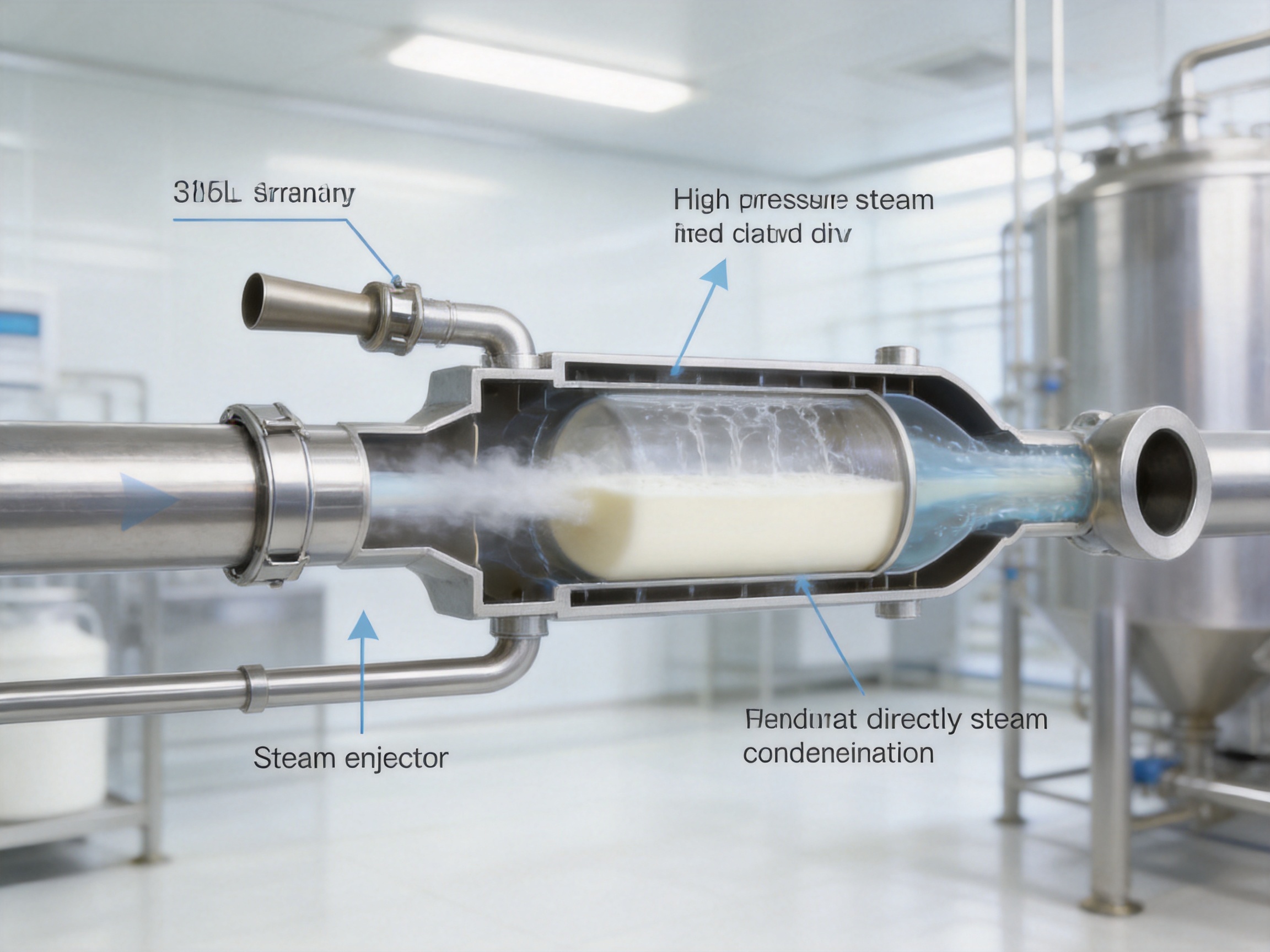
The operating principle is based on fluid entrainment and the Venturi effect. High-pressure steam enters the injector through the motive-fluid inlet and passes through a specially designed nozzle. As the steam accelerates, its velocity increases while its static pressure decreases. The resulting low-pressure area enables the equipment to draw in a secondary medium through a suction or entrainment inlet.
The secondary medium may be water, a liquid food product, a pharmaceutical solution, process gas, or another compatible fluid. The steam and secondary medium meet inside the mixing chamber, where momentum transfer and direct heat exchange take place. Depending on the system design, the combined stream can then be discharged into a pipeline, tank, heating loop, sterilization section, or vacuum-assisted process.
In a direct heating application, the steam condenses into the process liquid and transfers its latent heat directly. This eliminates the metal wall between the steam and the product that is present in an indirect heat exchanger. Because the heat transfer path is short and direct, the system can respond quickly to changing production requirements.
In a mixing application, the steam jet provides the energy required to pull another medium into the chamber. The resulting flow promotes rapid dispersion and temperature equalization without an electric motor or mechanical agitator. This configuration can be useful when the production line requires compact equipment and has access to a suitable clean steam supply.
In a vacuum assistance application, the high-velocity steam flow can reduce pressure in a connected section of the process system. This effect can support vacuum formation, gas removal, product transfer, or other operations that require controlled pressure reduction. The final performance depends on steam pressure, temperature, nozzle geometry, back pressure, entrained-medium properties, and system layout.
Key Components
A sanitary steam ejector / injector generally includes a steam inlet, a precision nozzle, an entrainment inlet, a mixing chamber, and a discharge section. The integrated arrangement minimizes the number of separate components required in the process line. Depending on the application, the equipment can also be supplied with sanitary clamps, flanges, control valves, check valves, instrumentation connections, and customized transition sections.
The nozzle is one of the most important functional elements. Its diameter, length, internal profile, and surface finish influence steam velocity, entrainment capacity, pressure behavior, and mixing performance. Deposits, scale, wear, or deformation in the nozzle can change operating conditions and reduce efficiency. For this reason, nozzle inspection and cleaning are essential parts of preventive maintenance.
The mixing chamber must provide sufficient space and flow control for the motive steam and entrained medium to combine smoothly. A suitable chamber design helps reduce unnecessary turbulence, supports uniform heat distribution, and limits dead zones where product residue could accumulate. For hygienic applications, internal surfaces should be smooth and easy to clean.
2. Product Advantages Over Conventional Alternatives
The sanitary steam ejector / injector offers several advantages over conventional process arrangements. Its greatest value is not limited to one performance characteristic. Instead, it combines direct heat transfer, static mixing, compact installation, low mechanical complexity, and hygienic construction in a single process device.
No Moving Parts and Reduced Mechanical Maintenance
Traditional mixers often rely on motors, shafts, bearings, couplings, impellers, and mechanical seals. These components can wear over time and may require lubrication, alignment, replacement, and periodic adjustment. They can also increase the risk of product contamination if seals fail or if lubricant enters the production environment.
The steam ejector / injector has no rotating components. Its operating energy comes from the pressure and velocity of the motive steam rather than from an electric motor. This reduces the number of mechanical failure points and can lower routine maintenance requirements. Operators do not need to manage impeller wear, shaft vibration, bearing temperature, or motor alignment.
The static design also supports fast troubleshooting. If performance declines, inspection can focus on steam pressure, inlet flow, valves, the nozzle, the mixing chamber, and the installation direction. This is generally simpler than diagnosing a motor-driven mixing assembly with multiple mechanical interfaces.
Direct Heating With Lower Heat Transfer Resistance
Indirect heating systems transfer heat through a separating wall. Although heat exchangers are highly useful in many processes, the wall, fouling layer, and temperature difference all influence the rate of heat transfer. In applications where direct contact between clean steam and the process medium is acceptable, steam injection can provide faster and more direct heating.
When steam condenses in the liquid, its latent heat is released directly into the medium. This can shorten heating time and improve temperature response. The system may also reduce the need for a large heat-transfer surface or a separate circulation pump, depending on the process design.
Direct steam heating is especially valuable for water, dairy products, beverages, and compatible pharmaceutical liquids. However, the steam quality must be appropriate for the product and process. The steam supply, condensate management, and product formulation should be evaluated during equipment selection to ensure that direct contact does not adversely affect concentration, quality, or regulatory compliance.
Compact Installation and Flexible Integration
A conventional heating and mixing system may require a heat exchanger, circulation pump, motorized agitator, control cabinet, support frame, and multiple connecting pipes. A steam injector can combine the primary heating and mixing function in a smaller footprint. It can be mounted directly on a pipeline or tank, which is beneficial in facilities with limited floor space.
The equipment supports different connection configurations, including sanitary flanges and quick-clamp connections. The final connection arrangement can be selected according to pipeline size, cleaning method, pressure rating, and maintenance requirements. Compact installation can also reduce pipe length and simplify the layout between steam supply, process media, and discharge points.
Hygienic Construction for Sensitive Production
Food, beverage, and biopharmaceutical systems require careful control of contamination risks. The use of stainless steel 304 or 316L provides corrosion resistance and compatibility with many common cleaning conditions. The selected grade depends on the product, cleaning chemistry, temperature, chloride exposure, and applicable plant standards.
A dead-leg-free structure helps minimize stagnant areas in which product residue or microorganisms could accumulate. Smooth internal surfaces support drainage and cleaning. An integrated structure with fewer seals can also reduce potential leakage points and simplify inspection.
Hygienic design is not achieved through material selection alone. Welding quality, internal polishing, joint geometry, drainability, surface finish, connection design, and installation orientation are equally important. These factors should be considered as part of the complete process system rather than treated as isolated product features.
Efficient Use of Steam Energy
The injector uses steam not only as a heating medium but also as the motive force for entrainment and mixing. This dual function can improve the overall efficiency of a system where steam is already available. Direct condensation transfers heat efficiently, while the steam jet eliminates the need for a separate mechanical drive in many applications.
Actual energy consumption depends on the required product temperature, steam pressure, entrained-media flow rate, back pressure, insulation, control strategy, and operating schedule. Correct sizing is therefore essential. An oversized unit may consume more steam than necessary, while an undersized unit may fail to reach the required temperature or entrainment rate.
3. Sanitary Design and Material Selection
Sanitary equipment must maintain product quality while allowing effective cleaning, inspection, and maintenance. The Sanitary Steam Ejector / Injector is designed around these priorities, using stainless steel construction and a compact internal flow path suitable for hygienic production lines.
304 and 316L Stainless Steel Options
Stainless steel 304 is widely used for general food, beverage, water, and industrial service. It provides good corrosion resistance and is suitable for many clean-steam and water-based applications. Stainless steel 316L contains molybdenum and generally offers improved resistance in more demanding environments, including applications involving certain cleaning agents, salts, or pharmaceutical process conditions.
The correct material should be selected according to the complete chemical and thermal environment. Product acidity, chloride concentration, cleaning chemicals, sterilization temperature, pressure, and exposure time all influence material suitability. A technical review should be completed before confirming the final configuration.
Dead-Leg Reduction and Internal Cleanability
A dead leg is an area in a process system where fluid movement is restricted or absent. Such areas can retain product residue and make cleaning more difficult. A sanitary injector should therefore use a streamlined internal geometry that limits stagnant zones and supports effective flushing.
Connection points should be positioned so that the equipment can drain as completely as practical. Installation orientation, pipe slope, valve selection, and support design can have a significant effect on cleanability. Even a well-designed injector may perform poorly from a hygienic perspective if it is installed in a position that traps liquid or condensate.
Reduced Sealing Complexity
The integrated design of the steam ejector / injector reduces the number of mechanical interfaces. Fewer seals can mean fewer potential leakage locations and less routine replacement work. This is particularly useful in systems that undergo frequent cleaning, thermal cycling, or sterilization.
Where seals and gaskets are required, they should be selected for compatibility with the product, steam temperature, cleaning chemicals, and applicable sanitary standards. Maintenance teams should inspect gasket condition during scheduled disassembly and replace components that show compression damage, cracking, swelling, or permanent deformation.
4. Application in Food and Beverage Manufacturing
Food and beverage production frequently requires rapid heating, temperature stabilization, pasteurization, water conditioning, blending, and hygienic transfer. The sanitary steam injector can support these operations by introducing clean steam directly into compatible liquid streams.
Dairy Processing
Dairy systems may require controlled heating of milk, cream, whey, liquid blends, or cleaning solutions. Direct steam injection can provide fast temperature adjustment and may be integrated into pasteurization or heat-treatment lines. The stainless steel construction and sanitary connections support the hygiene requirements of dairy production.
Process engineers should evaluate the effect of direct steam addition on product concentration and mass balance. Condensing steam adds water to the product, so the quantity of steam must be included in formulation and process calculations. Where product characteristics are sensitive to shear, air incorporation, or temperature gradients, the nozzle and chamber configuration should be selected accordingly.
Beverage Heating and Pasteurization
Beverage manufacturers may use steam injection for water heating, syrup preparation, liquid blending, and temperature control before filling or further processing. The fast response of direct heating can help reduce the time required to bring a product to its target temperature.
For pasteurization-related applications, temperature sensors and control valves should be positioned to verify that the product reaches and maintains the required process conditions. The injector itself provides heat and mixing, but the complete pasteurization system must include suitable monitoring, residence time control, flow regulation, and hygienic handling.
Process Water and Cleaning Solutions
Heating process water is a common application because the water can absorb condensed steam while benefiting from rapid temperature rise. The injector can be installed in a hot-water loop or upstream of a tank. It may also support the preparation of heated cleaning solutions, provided that material compatibility and cleaning procedures are confirmed.
When installed in a cleaning system, the equipment should be evaluated for chemical exposure, temperature cycling, flow velocity, and drainability. Regular flushing and inspection are important because mineral deposits may form in the nozzle or chamber when hard water is used.
5. Application in Biopharmaceutical and Pharmaceutical Processing
Biopharmaceutical and pharmaceutical manufacturers require high levels of process control, cleanliness, repeatability, and documentation. The sanitary steam ejector / injector can support heating, sterilization, vacuum formation, and process-liquid conditioning when the equipment and steam supply are properly qualified for the application.
Heating of Pharmaceutical Liquids
Pharmaceutical liquids may require controlled heating before formulation, sterilization, transfer, or filling. Direct steam injection can reduce heat-up time and provide uniform mixing within the flow path. Stainless steel 316L is often considered for demanding pharmaceutical environments because of its corrosion resistance and compatibility with hygienic process design.
Process validation should confirm that the injector produces the required temperature profile and does not introduce unacceptable contamination, air, particles, or chemical residues. Steam quality, condensate quality, surface finish, cleaning procedures, and sterilization conditions must all be addressed in the validation plan.
In-Line Sterilization Support
In-line steam injection can support sterilization by rapidly raising the temperature of a compatible process stream. The injector may be positioned in a line leading to a holding section, sterile tank, or downstream processing unit. The system design should provide accurate temperature measurement and sufficient residence time for the required sterilization cycle.
Because sterilization processes are sensitive to pressure and temperature changes, steam valves should be opened gradually. Sudden opening can create water hammer, pressure shock, or unstable flow. Proper condensate drainage and pipeline slope are also important for reliable operation.
Vacuum Formation and Gas Removal
Some pharmaceutical and sanitary processes require vacuum assistance for gas removal, transfer, concentration, or tank preparation. A steam ejector can generate a pressure reduction without a mechanical vacuum pump. This may reduce the number of moving components and simplify integration in areas where hygienic access is important.
Vacuum performance depends on the motive steam condition and the downstream system. The ejector must be selected according to the required suction pressure, gas load, discharge pressure, and operating temperature. Condensation and exhaust handling should be considered during system design.
6. Application in Industrial and HVAC Systems
Although the product is designed for sanitary applications, the same Venturi-based principle can be used in industrial utility systems. Process water heating, waste-gas entrainment, vacuum assistance, and hot-water mixing are examples of non-food applications.
Industrial Water Heating
Industrial facilities often need to heat process water quickly for washing, production, or utility service. A steam injector can be connected to a water line or hot-water tank. Direct steam condensation provides rapid heat transfer while the jet promotes mixing.
The water quality should be assessed because suspended solids, hardness, and scale-forming minerals can affect the nozzle. Filtration, water treatment, and scheduled cleaning can help maintain stable performance.
Waste-Gas Entrainment and Process Assistance
In certain industrial systems, steam ejectors may be used to entrain or transport gases. The application must be reviewed for gas composition, temperature, corrosiveness, emissions requirements, and discharge conditions. The material and connection design should be adapted to the actual service rather than selected solely from the nominal flow rate.
HVAC Hot-Water Systems
Steam injection can also be used for direct heating and mixing in hot-water systems. The compact design is beneficial where plant rooms have limited space. The system may be integrated with temperature controls, pressure-reducing valves, check valves, and circulation loops.
HVAC installations require attention to noise, vibration, condensate, and water hammer. Gradual valve operation, correct pipe support, proper drainage, and suitable control logic help maintain stable performance.
7. Preventing Cavitation, Pressure Instability, and Water Hammer
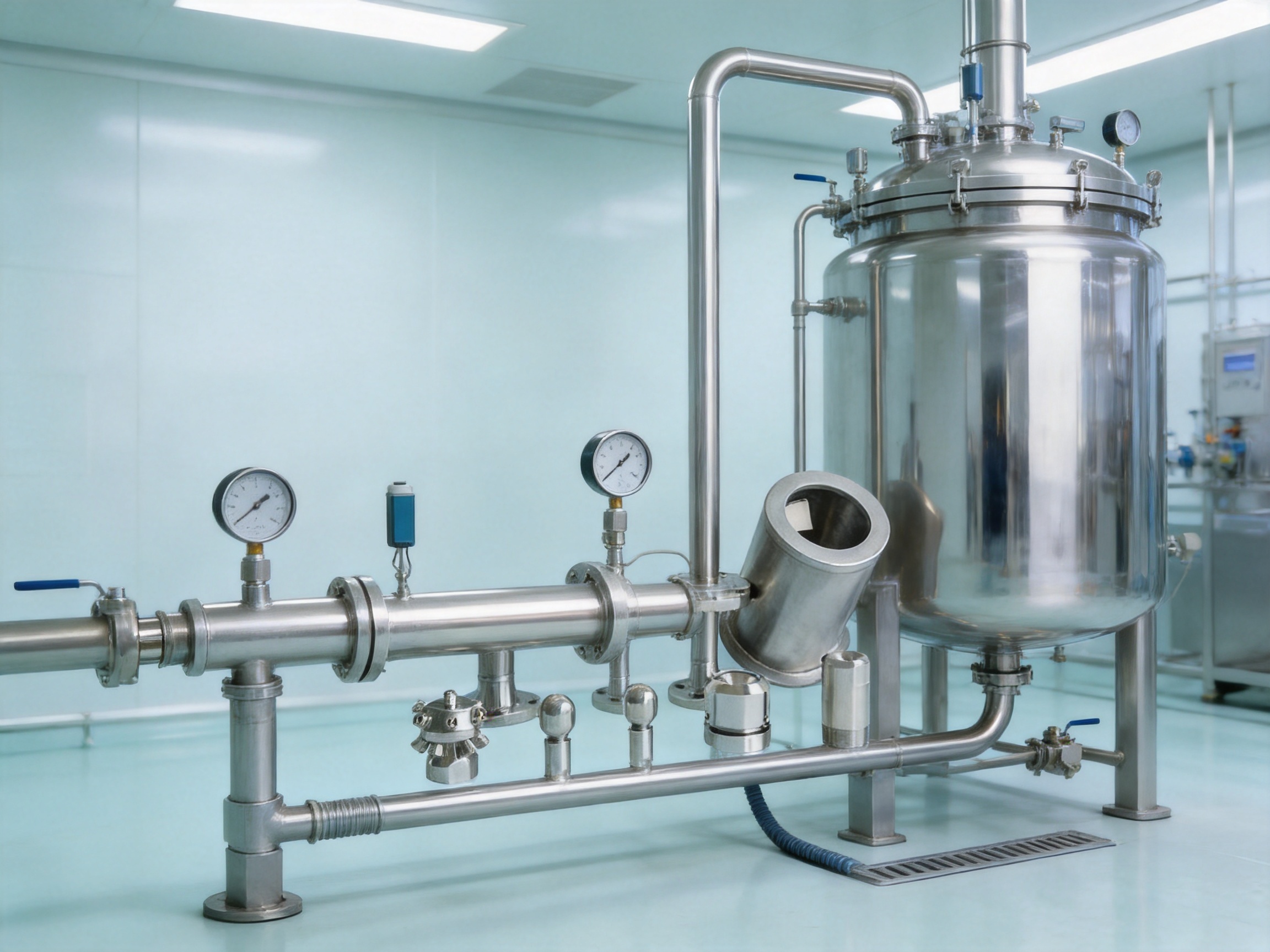
In steam injection systems, operators sometimes describe unstable pressure, flashing, vibration, or noise as cavitation. The underlying condition may involve local pressure reduction, rapid condensation, two-phase flow, water hammer, insufficient inlet pressure, or an unsuitable combination of steam and entrained-medium flow. Regardless of the exact mechanism, stable operating conditions are essential for protecting the equipment and maintaining heating efficiency.
Maintain the Correct Steam Pressure
The steam supply must remain within the design range of the injector. If the pressure is too low, the steam jet may not generate sufficient velocity or entrainment force. If the pressure is excessively high, the system may experience unnecessary noise, high consumption, unstable mixing, or excessive downstream pressure.
Steam pressure should be measured near the injector inlet rather than assumed from a distant plant header. Long pipe runs, undersized valves, clogged strainers, and pressure-regulating devices can create a significant difference between header pressure and actual equipment inlet pressure.
Control the Entrained-Medium Flow
The flow rate, temperature, viscosity, density, and gas content of the entrained medium influence injector performance. Sudden changes in liquid flow can alter the pressure balance inside the chamber. If the liquid contains excessive dissolved or entrained gas, the flow may become unstable and the heating result may fluctuate.
Flow-control valves and instrumentation should be selected to avoid abrupt changes. Where necessary, a buffer tank, degassing arrangement, or upstream stabilizing section can help maintain consistent inlet conditions.
Prevent Water Hammer
Water hammer occurs when a moving liquid or condensate is stopped or accelerated rapidly. In steam systems, accumulated condensate can be driven through the pipeline when the valve opens, producing impact, vibration, and noise. This can damage valves, supports, joints, and the injector nozzle.
To reduce water hammer, steam valves should be opened slowly during startup. Steam lines should be properly drained, insulated, and supported. Traps and condensate removal devices should be checked regularly. The system should also be arranged to prevent condensate pockets before the injector inlet.
Verify Installation Direction
The steam flow direction and entrained-medium flow direction must match the equipment design. Reverse installation can prevent correct entrainment and may increase the risk of backflow. Directional arrows on the equipment should be checked during installation and commissioning.
The injector should be supported independently when required. It should not impose excessive mechanical loading on adjacent sanitary piping, tank nozzles, valves, or instruments. Thermal expansion should also be considered in systems operating at elevated temperatures.
Inspect the Nozzle and Mixing Chamber
Scale, rust particles, gasket fragments, or product deposits can restrict the nozzle and change the steam jet profile. Nozzle wear or deformation can also reduce entrainment efficiency. Regular disassembly and inspection should form part of the maintenance schedule.
Cleaning methods should be compatible with the stainless steel surface and the process requirements. Mechanical tools that scratch polished surfaces should be avoided. If the nozzle has been damaged or its dimensions have changed significantly, replacement may be necessary.
8. Installation, Commissioning, and Shutdown Procedures
Installation Preparation
Before installation, confirm the product model, connection size, pressure rating, material grade, flow direction, and design conditions. Review the steam pressure, steam temperature, entrained-medium flow rate, discharge pressure, and expected operating temperature.
All upstream pipelines should be cleaned before connection. Foreign material in the line can enter the injector and damage or block the nozzle. The piping should be aligned correctly without forcing the equipment into position. Sanitary gaskets and clamps should be installed according to the applicable procedure.
Startup
During startup, verify that the downstream path is open and that the entrained medium is available. Open the secondary-medium valve or establish the required flow condition, then introduce steam gradually. A slow steam-valve opening reduces the possibility of pressure shock and water hammer.
Observe pressure, temperature, flow, vibration, and sound during the initial operating period. A small amount of adjustment may be required to achieve the desired heating or entrainment performance. Abnormal vibration, loud impact, unstable temperature, or reverse flow should be investigated before continuous operation.
Normal Operation
Stable steam pressure and steady secondary-medium flow are the foundation of reliable performance. Operators should monitor the system for changes in outlet temperature, pressure differential, noise, and product flow. Sudden performance changes may indicate a blocked nozzle, valve malfunction, insufficient steam, excessive back pressure, or a change in product properties.
Shutdown
During shutdown, close the steam valve first to stop the motive force. The remaining process medium should then be drained or flushed according to the process procedure. This sequence helps reduce the risk of entrained-media backflow into the steam line.
Where the equipment is included in a cleaning-in-place system, the cleaning cycle should be completed according to validated procedures. If manual inspection is required, isolate pressure sources and confirm that the equipment has cooled to a safe temperature before disassembly.
9. Troubleshooting Guide
| Observed Condition | Possible Cause | Recommended Action |
|---|---|---|
| Low entrainment efficiency | Insufficient steam pressure, blocked nozzle, excessive back pressure, or incorrect media flow | Check pressure and flow readings, inspect the nozzle, confirm discharge conditions, and verify system sizing |
| Unstable outlet temperature | Fluctuating steam supply, inconsistent liquid flow, or poor control-valve response | Stabilize inlet conditions, inspect control valves, and verify temperature-sensor location |
| Noise or vibration | Water hammer, poor support, air or gas in the line, or nozzle damage | Drain condensate, open valves gradually, check pipe supports, and inspect internal components |
| Backflow of process medium | Insufficient pressure differential, incorrect installation direction, or failed check valve | Confirm flow direction, inspect check valves, and verify steam pressure relative to the secondary medium |
| High steam consumption | Oversized nozzle, excessive heat loss, low insulation, or operation outside the design range | Review operating parameters, inspect insulation, and confirm correct equipment selection |
| Restricted flow | Scale, product deposits, foreign particles, or damaged connection components | Isolate the equipment, clean the internal passages, and replace damaged parts |
Most operating problems can be reduced through proper commissioning, regular inspection, and accurate process data. Maintenance records should include steam pressure, process flow, outlet temperature, cleaning frequency, nozzle condition, gasket replacement, and any abnormal operating observations.
10. Engineering and Customization Considerations
There is no single injector configuration that is suitable for every process. Selection should be based on the motive-steam condition, secondary-medium characteristics, target temperature, required flow rate, downstream pressure, connection standard, cleaning method, and installation environment.
Steam Conditions
Important steam parameters include pressure, temperature, dryness, flow rate, and quality. Wet steam can reduce effective heating performance and may contribute to water hammer. The steam supply should therefore be evaluated together with separators, strainers, regulators, traps, and condensate drainage.
Entrained-Medium Properties
Water and low-viscosity liquids are generally easier to entrain than viscous products. Density, viscosity, solids content, gas content, temperature, and sensitivity to shear all affect the design. Food and pharmaceutical products may also require special consideration for residence time, thermal exposure, and product quality.
Connection and Layout Requirements
Flanges, quick clamps, and other sanitary connection methods can be selected according to the pipeline and plant standard. The layout should provide sufficient access for inspection and cleaning. Isolation valves, pressure gauges, temperature sensors, check valves, and drains should be placed where they can be serviced safely.
Control and Instrumentation
A steam injector is often integrated into an automated process system. Modulating valves can regulate steam flow, while temperature and pressure sensors provide feedback. Control logic should prevent steam injection when the secondary-medium flow is absent or when downstream conditions are unsuitable.
For sterilization and pasteurization duties, instrumentation accuracy and calibration are especially important. The control system should support alarms for high temperature, low flow, abnormal pressure, and unexpected process deviation.
11. Manufacturing Strengths and Quality Control
The performance of a sanitary steam ejector / injector depends on both its engineering design and manufacturing quality. Nozzle geometry, welding integrity, internal surface finish, dimensional accuracy, and connection alignment all influence process behavior. Manufacturing controls are therefore essential for consistent equipment performance.
Shiloc (Shanghai) Industrial Trading Co., Ltd. combines European engineering experience and Danish design concepts with local manufacturing and technical service capabilities. Its Shanghai facility covers approximately 3,000 square meters and includes technical specialists responsible for processing, welding, polishing, assembly coordination, and quality control.
Engineering-Based Product Development
The company’s engineering approach begins with the customer’s process requirements rather than with a fixed standard product alone. Steam pressure, entrained-medium flow, temperature target, system back pressure, material requirements, and connection configuration are reviewed to determine a suitable design.
This approach allows the injector to be adapted for different production lines. Food and beverage users may prioritize cleanability and rapid heating, while pharmaceutical users may require stricter material, surface, documentation, and validation considerations. Industrial and HVAC customers may focus more heavily on utility efficiency, pressure stability, and installation cost.
Precision Processing
Precision processing is important because small variations in the nozzle can affect velocity and entrainment. Machining and finishing processes should maintain the intended internal profile and dimensional tolerances. The mixing chamber must also be manufactured with accurate connection alignment and consistent internal geometry.
These controls help ensure that units supplied for the same application provide repeatable behavior. They also make maintenance more predictable because replacement parts can be produced to the required specifications.
Stainless Steel Welding and Polishing
Sanitary welding requires attention to penetration, heat input, distortion, discoloration, and surface condition. Poorly controlled welds may create crevices or rough areas that are difficult to clean. Proper welding procedures and post-weld finishing help support hygienic performance.
Internal polishing reduces surface roughness and can improve cleanability. The required finish depends on the application and customer specification. Inspection should verify that polished areas are free of unacceptable scratches, pits, embedded particles, and excessive discoloration.
Traceability and Quality Management
Traceability is important for equipment used in regulated or hygiene-sensitive industries. Material records, processing information, welding documentation, inspection results, and final configuration details can help customers maintain consistent maintenance and validation records.
Shiloc states that its operating practices include ISO9001, environmental management, and safety management principles. These systems support structured quality control, process oversight, and continuous improvement. International sourcing networks and local manufacturing coordination also help the company manage component availability and delivery requirements.
Integrated Technical Service
Beyond equipment supply, the company provides product selection support, manufacturing coordination, engineering assistance, and delivery management. This integrated model can be valuable when a customer needs a customized connection, a special material grade, a specific steam-pressure range, or assistance integrating the injector into an existing sanitary process.
The combination of international technical resources and local production capability allows the company to respond to project-specific requirements while maintaining communication through design, manufacturing, inspection, and delivery.
12. Why the Product Is Competitive
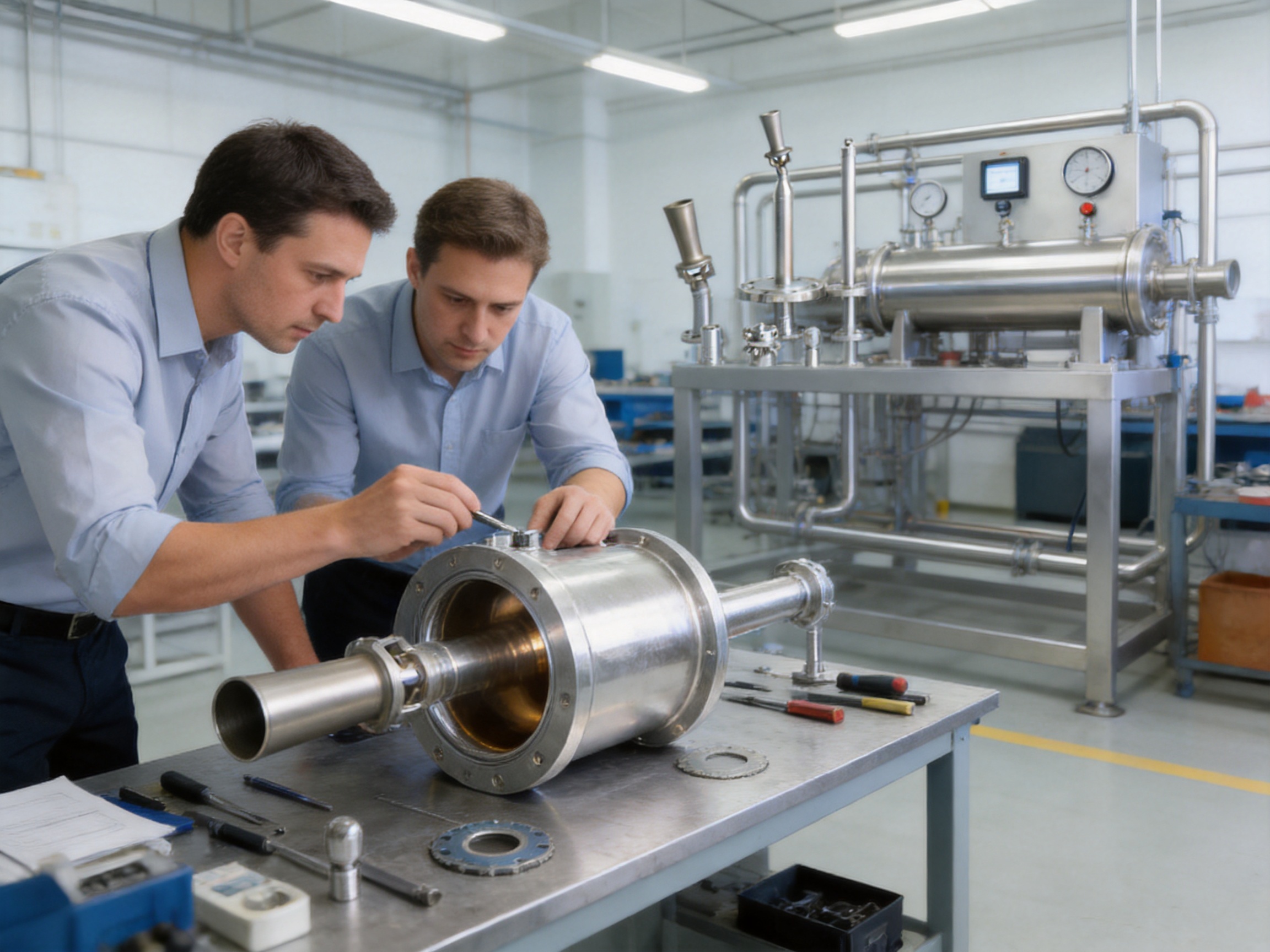
The sanitary steam ejector / injector competes effectively because it addresses several common limitations of conventional process equipment at the same time. It provides direct heating without a separate heat-transfer wall, static mixing without an electric motor, compact installation without a large support structure, and hygienic construction without unnecessary mechanical complexity.
Its no-moving-parts design can reduce maintenance compared with motor-driven mixers. Its direct steam-to-liquid contact can improve heating response compared with indirect systems in suitable applications. Its integrated structure can reduce footprint compared with a combination of pump, mixer, heat exchanger, and vacuum equipment. Its stainless steel construction and hygienic geometry make it more appropriate for food, beverage, and pharmaceutical environments than general-purpose industrial ejectors.
Another competitive advantage is configurability. The equipment can be designed around steam pressure and entrained flow requirements rather than forcing every customer to use one fixed model. Connection types, materials, dimensions, and installation arrangements can be discussed according to process needs.
However, the product should be selected based on engineering suitability rather than on general claims of efficiency alone. A steam injector is most effective when the system has an appropriate clean steam supply, compatible secondary media, suitable pressure differential, proper controls, and correct installation. A technically matched unit will outperform an incorrectly sized alternative regardless of equipment category.
13. Recommended Maintenance Program
A preventive maintenance program helps preserve heating efficiency and hygienic performance. The inspection frequency should be based on operating hours, product composition, water quality, cleaning conditions, steam quality, and the consequences of process interruption.
Routine Operator Checks
Operators should check for unusual noise, vibration, temperature fluctuation, pressure changes, leakage, and reduced entrainment. They should also confirm that valves are functioning correctly and that the steam supply remains within the operating range.
Scheduled Internal Inspection
At scheduled intervals, the nozzle and mixing chamber should be inspected for scale, deposits, corrosion, erosion, and deformation. The condition of gaskets, clamps, flanges, check valves, and instrument connections should also be reviewed.
Cleaning and Descaling
Cleaning procedures should be based on the actual product and contamination risk. Mineral scale may require an approved descaling solution, while product residue may require an alkaline or enzymatic cleaning step. All chemicals must be compatible with the stainless steel grade, seals, and plant cleaning procedure.
After chemical cleaning, the equipment should be thoroughly rinsed. Any remaining chemical residue can affect product quality or damage components. Where manual cleaning is necessary, non-abrasive tools should be used to protect the internal surface.
14. Frequently Asked Questions
Q1: What is the primary function of a sanitary steam ejector / injector?
Its primary function is to use high-pressure steam as a motive fluid to entrain, mix, heat, convey, or assist in creating vacuum conditions for a compatible liquid or gas. The exact function depends on the nozzle design, operating parameters, and system configuration.
Q2: How does the injector heat a process liquid?
Steam passes through a nozzle at high velocity and enters the mixing chamber. It draws in the process liquid and condenses directly into it, transferring latent heat through direct contact. This can provide rapid heating when the steam is suitable for direct product contact.
Q3: Does the equipment require an electric motor?
No. The equipment has no moving parts and does not require a motor or separate mechanical drive for its basic entrainment and heating function. It does require an appropriate steam supply and may be integrated with valves, sensors, and automated controls.
Q4: Which stainless steel grades are available?
Food-grade stainless steel 304 and 316L are available options. The selection depends on product chemistry, cleaning agents, temperature, chloride exposure, regulatory expectations, and customer specifications.
Q5: Can the injector be used in pharmaceutical production?
Yes. It can support pharmaceutical liquid heating, sterilization, vacuum formation, and other compatible sanitary processes. The final design should be reviewed for steam quality, surface finish, cleanability, material compatibility, validation, and documentation requirements.
Q6: What causes poor entrainment performance?
Common causes include insufficient steam pressure, excessive downstream back pressure, an obstructed or damaged nozzle, incorrect flow direction, unstable secondary-medium flow, or operation outside the design range. Checking actual inlet and outlet conditions is the first step in troubleshooting.
Q7: How can water hammer be prevented?
Steam valves should be opened gradually, steam lines should be properly drained, condensate pockets should be avoided, and pipe supports should be correctly installed. Traps, strainers, and drainage components should be inspected regularly.
Q8: Can the product be installed directly on a pipeline or tank?
Yes. Its compact integrated structure allows direct installation on pipelines or tanks when the connection arrangement, support, orientation, and pressure conditions are suitable. The installation should provide access for inspection and cleaning.
Q9: How often should the nozzle be inspected?
The frequency depends on steam quality, water hardness, product composition, operating hours, and cleaning conditions. Systems exposed to scale-forming water or particulate contamination require more frequent inspection. A condition-based maintenance plan is recommended.
Q10: What information is needed for customized selection?
Important information includes steam pressure and temperature, steam quality, required entrained-medium flow rate, fluid composition, viscosity, density, target outlet temperature, downstream pressure, connection size, installation orientation, cleaning method, material preference, and applicable hygienic or regulatory requirements.
Q11: What services does Shiloc provide?
Shiloc (Shanghai) Industrial Trading Co., Ltd. provides equipment manufacturing support, engineering and technical services, product selection assistance, customized configuration, international trade coordination, quality control, and delivery management. The company serves food and beverage, biopharmaceutical, daily chemical, fine chemical, and related industrial sectors.
15. Conclusion
The Sanitary Steam Ejector / Injector is a versatile process device for manufacturers seeking efficient heating, controlled entrainment, hygienic mixing, and vacuum assistance in a compact format. Its Venturi-based operating principle enables high-pressure steam to perform both as a motive fluid and as a direct heat-transfer medium.
The absence of moving parts reduces mechanical complexity and maintenance requirements. Direct steam heating can improve response speed and reduce heat-transfer resistance in suitable applications. Stainless steel 304 or 316L construction, sanitary connections, dead-leg reduction, integrated geometry, and reduced sealing complexity support food, beverage, pharmaceutical, and biopharmaceutical production requirements.
Successful operation depends on correct selection, stable steam pressure, controlled secondary-medium flow, proper installation, gradual startup, effective condensate management, and regular inspection of the nozzle and chamber. When these factors are addressed, the injector can provide reliable process performance while reducing equipment footprint and simplifying system integration.
Shiloc (Shanghai) Industrial Trading Co., Ltd. strengthens this product offering through European engineering experience, Danish design concepts, local manufacturing capability, stainless steel processing, welding, polishing, quality control, and technical support. Its Shanghai facility and engineering team enable the company to provide customized solutions for customers requiring dependable sanitary process equipment and coordinated international supply.
References
1. Venturi Effect and Fluid Entrainment Principles. General fluid mechanics and process engineering reference material.
2. Hygienic Design Principles for Food and Beverage Processing Equipment. Industry guidance on cleanability, drainability, dead-leg reduction, and sanitary construction.
3. Stainless Steel Selection for Food, Pharmaceutical, and Chemical Process Equipment. Technical guidance concerning 304 and 316L material applications.
4. Steam Systems and Condensate Management. Engineering practices for steam pressure control, water-hammer prevention, steam traps, and condensate drainage.
5. Direct Steam Injection Heating in Industrial Process Systems. Process engineering guidance on steam condensation, heat transfer, flow control, and product compatibility.
6. Preventive Maintenance of Static Mixing and Ejector Equipment. General recommendations for nozzle inspection, deposit removal, gasket replacement, and performance monitoring.
Product: Sanitary Steam Ejector / Injector
PREV:Hybrid / Direct Contact Heat Exchangers for Efficient Food, Beverage, and Biopharmaceutical Processing
NEXT:No next article
NEXT:No next article
Interested in cooperation or have questions?
Recommended LINS
✦
Let'S Work Together Welcome Aboard!
-

haikexin@haikexin.com
+8613391278930
-
 +86-21-57560276
 -
 No. 2819, Sihu Road,Fengxian District, Shanghai, China
Join Our Mailing List
Copyright © Shiloc (Shanghai) Industrial Trading Co., Ltd. All Rights Reserved.
Process Systems & Equipment For Food & Biopharma Manufacturers
