
 English
 русский
 Português
 Français


 Read More

Product Category
NEW Category
Contact us
Contact Us
We specialise in the research, development and manufacture of electrical wires and cables.
 +86-21-57560276
Automatic UHT Sterilizer: Advanced Process Efficiency for Food and Biopharmaceutical Manufacturers
Content
- 1 1. The Role of UHT Sterilization in Modern Liquid Processing
- 2 2. How an Automatic UHT Sterilizer Works
- 3 3. Main Advantages Over Conventional Sterilization Equipment
- 4 4. Hygienic Design and Material Quality
- 5 5. Automation and Intelligent Process Control
- 6 6. CIP Cleaning and Hygienic Maintenance
- 7 7. Applications Across Food, Beverage, and Biopharmaceutical Production
- 8 8. Manufacturing Strengths Behind the Equipment
- 9 9. Customization for Different Production Requirements
- 10 10. Installation, Commissioning, and Validation
- 11 11. Operating and Maintenance Recommendations
- 12 12. Economic and Environmental Benefits
- 13 13. How the Equipment Creates a Competitive Advantage
- 14 14. Why Choose Shiloc for a Customized UHT Solution?
- 15 15. Recommended Selection Checklist
- 16 16. Conclusion
- 17 Questions and Answers
- 17.1 Q1: What is the primary function of an automatic UHT sterilizer?
- 17.2 Q2: Which products can be processed in a UHT sterilizer?
- 17.3 Q3: How does automation improve sterilization consistency?
- 17.4 Q4: What is heat recovery in a UHT system?
- 17.5 Q5: Is the equipment compatible with clean-in-place cleaning?
- 17.6 Q6: Why is stainless steel commonly used?
- 17.7 Q7: Can the sterilizer be customized?
- 17.8 Q8: What should be considered when selecting the heat exchanger?
- 17.9 Q9: How does the system protect against under-processing?
- 17.10 Q10: Does the equipment require trained operators?
- 17.11 Q11: Can the equipment be used in biopharmaceutical production?
- 17.12 Q12: What support does Shiloc provide?
- 18 References
- 19 Product: Automatic UHT (Ultra-High Temperature) Sterilizer
Modern food, beverage, and biopharmaceutical manufacturers must achieve several objectives at the same time: reliable microbial control, consistent product quality, efficient production, low energy consumption, hygienic operation, and compliance with applicable standards. These requirements are especially demanding when processing liquid products that are sensitive to heat, contamination, oxidation, or changes in viscosity. An automatic ultra-high temperature sterilizer provides an integrated solution by combining rapid thermal treatment, precise process control, efficient heat recovery, automated cleaning, and hygienic equipment design.
The automatic UHT sterilizer described in this article is designed for liquid food, beverage, nutritional, and selected biopharmaceutical applications. It applies controlled ultra-high temperature treatment for a short holding period, followed by rapid cooling and aseptic or hygienic discharge. This operating principle reduces microorganisms while limiting unnecessary thermal exposure. As a result, manufacturers can improve product safety and shelf stability while protecting important sensory and nutritional characteristics.
Unlike basic heating units or manually operated batch sterilizers, an integrated automatic UHT system coordinates product flow, preheating, sterilization, holding, cooling, cleaning, safety protection, and production monitoring. Its design can also incorporate efficient heat recovery of 85% or more, depending on the process configuration and operating conditions. This significantly reduces thermal energy waste and can lower the total cost of ownership for high-volume production.
Shiloc (Shanghai) Industrial Trading Co., Ltd. supports the supply of customized process equipment and engineering services for food and beverage, biopharmaceutical, daily chemical, and fine chemical manufacturers. Through technical coordination, equipment selection, process analysis, and international supply support, the company helps customers develop sterilization solutions suited to their products, capacity requirements, plant conditions, and regulatory expectations.
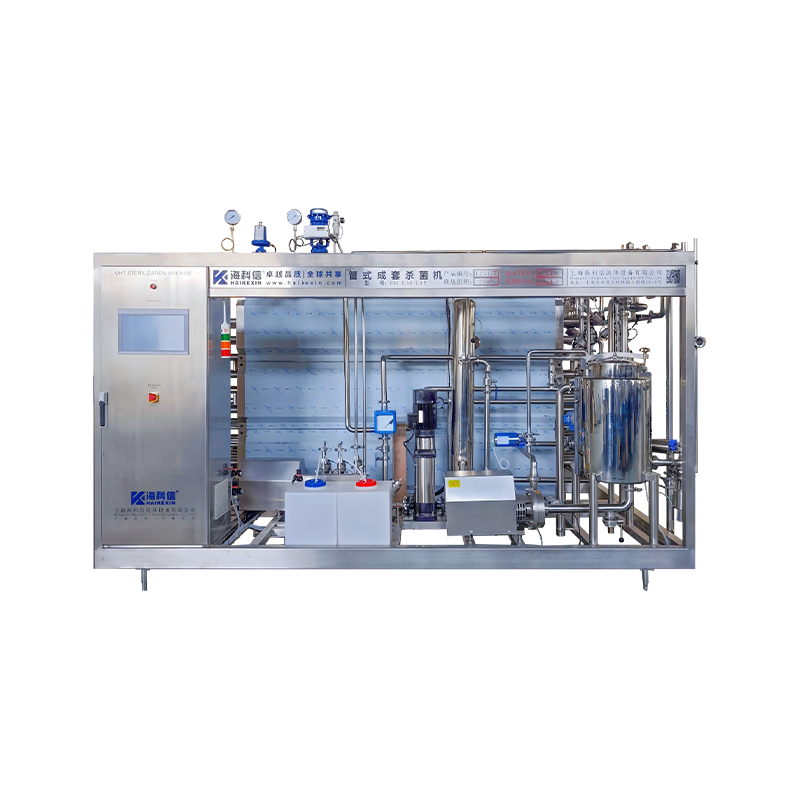
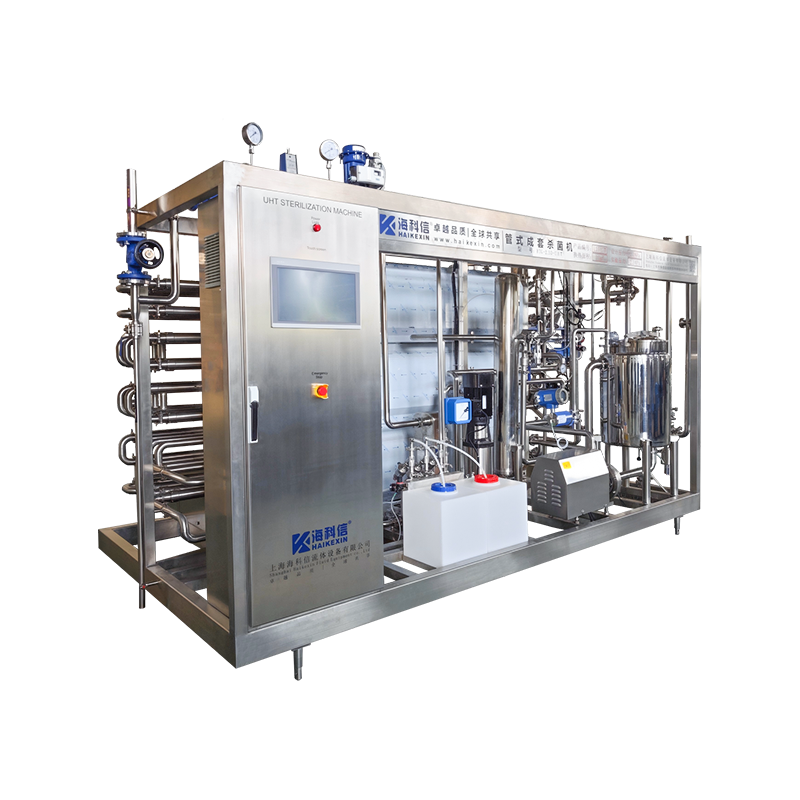
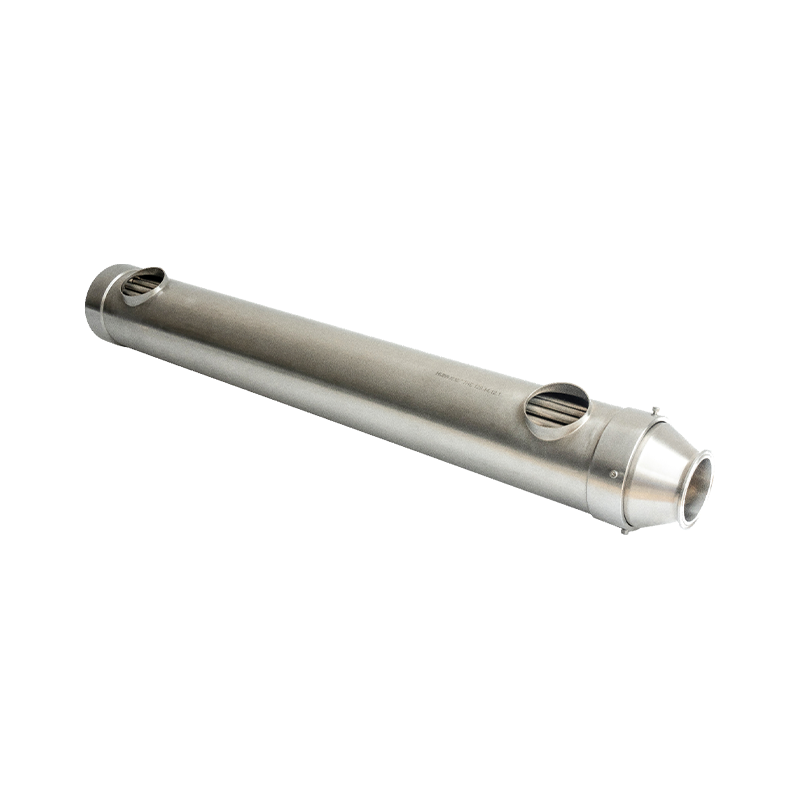
Automatic UHT (Ultra-High Temperature) Sterilizer
1. The Role of UHT Sterilization in Modern Liquid Processing
Liquid products create distinctive challenges for manufacturers. Their composition can support microbial growth, and many products must be processed without excessive heating that could damage flavor, color, texture, vitamins, proteins, or active ingredients. A sterilization system therefore needs to provide sufficient microbial reduction while controlling the complete thermal history of the product.
Ultra-high temperature processing addresses this challenge by applying a high temperature for a short period. The product is heated rapidly, maintained at the required temperature for a defined holding time, and then cooled quickly. Compared with longer, lower-temperature treatments, this approach can reduce the time that the product spends under thermal stress. The exact temperature, holding time, flow rate, and cooling profile depend on the product formulation, process validation requirements, and applicable regulations.
UHT technology is widely associated with milk and dairy beverages, but its application extends beyond traditional dairy processing. Suitable products may include plant-based beverages, liquid nutritional products, flavored drinks, liquid supplements, sauces, formulated beverages, and other pumpable liquid foods. In carefully controlled conditions, related process designs may also be adapted for selected biopharmaceutical or biotechnology liquids.
The purpose of a UHT sterilizer is not simply to increase temperature. It is to control a complete and repeatable process. The equipment must ensure that the product reaches the required temperature, remains within the validated treatment range, and is discharged safely without recontamination. This requires coordinated control of heat transfer surfaces, pumps, valves, sensors, flow paths, control logic, cleaning procedures, and safety interlocks.
An automatic system provides a major advantage because it can execute these activities in a defined sequence. It can manage product start-up, water displacement, heating, sterilization, production, product recovery, cooling, cleaning, rinsing, and shutdown. This reduces dependence on manual adjustments and helps operators maintain stable conditions during long production campaigns.
2. How an Automatic UHT Sterilizer Works
An automatic UHT sterilizer generally consists of a product inlet, balance tank or feed arrangement, product pump, preheating section, final heating section, holding tube, cooling section, aseptic or hygienic outlet, instrumentation, control cabinet, and cleaning connections. The final configuration depends on the product, capacity, filling method, required level of aseptic protection, and plant utilities.
2.1 Product Feeding and Balance Control
The process begins when the liquid product enters the system from an upstream preparation tank or storage vessel. A balance tank or equivalent feed-control arrangement helps maintain a stable product supply to the pump and heat exchanger. Stable flow is important because the residence time in the holding section is related to flow rate. Excessive variation can affect the validated treatment condition.
Level sensors, pressure transmitters, and flowmeters provide information to the control system. The product pump can then be adjusted to maintain the required flow. Where appropriate, frequency-controlled motors can provide smooth adjustment and reduce unnecessary energy consumption during start-up, product changeover, or reduced-capacity operation.
2.2 Regenerative Preheating
In the preheating stage, incoming product is warmed by heat recovered from the hot, sterilized product leaving the final heating and holding sections. This regenerative exchange is one of the most important methods for reducing energy consumption in a UHT plant.
Instead of transferring all required heat from steam, hot water, or another external utility, the system reuses thermal energy already present in the processed product. The incoming cold product absorbs heat while the outgoing hot product is partially cooled. This improves the overall thermal balance and reduces the load on the final heating section and cooling utilities.
A properly designed heat exchanger can achieve heat recovery of 85% or more, subject to product properties, temperature programs, flow rates, pressure differences, and equipment configuration. The practical result is lower steam or hot-water demand, reduced cooling demand, and a smaller environmental footprint per unit of product processed.
2.3 Final Heating
After regenerative preheating, the product enters the final heating stage. Depending on the application, this may use steam injection, steam infusion, tubular heat exchange, plate heat exchange, or a combination of heating technologies. The selected method must match the product’s viscosity, particulate content, sensitivity to shear, foaming behavior, solids concentration, and required processing conditions.
The final heating section is controlled by temperature sensors and automated control valves. The control system compares the measured temperature with the process set point and adjusts the heating medium accordingly. This allows the system to respond to changes in product flow, utility pressure, or inlet temperature while maintaining stable operating conditions.
2.4 Holding Section
Following final heating, the product passes through a holding tube or other validated residence-time section. The length and internal diameter of the holding section are selected according to the required flow rate and treatment time. The system must be designed so that the product receives the required thermal exposure before entering the cooling section.
Flow measurement and temperature monitoring are essential during this stage. If the process temperature or flow rate falls outside the permitted range, the automatic control system can activate a diversion or safety sequence. This prevents inadequately treated product from entering the finished-product route.
2.5 Rapid Cooling
After the holding period, the product is cooled rapidly. Regenerative cooling may first transfer heat back to the incoming product. Additional cooling can then be supplied by chilled water, cooling water, or another controlled utility. Rapid cooling helps limit continued thermal exposure and supports the desired flavor, color, texture, and nutritional characteristics.
For aseptic applications, the cooling path and downstream components must be designed to protect the product from environmental contamination. Hygienic valves, appropriate pressure relationships, sterile air systems, and validated cleaning and sterilization procedures may be incorporated depending on the process risk assessment.
2.6 Automated Product Discharge
The treated product can be sent to an aseptic filling machine, hygienic storage tank, downstream blending system, or other production equipment. Automated valve sequencing helps separate product, water, cleaning solution, and transition phases. This reduces the possibility of cross-contamination and minimizes product losses during changeover.
| Process Stage | Main Equipment Function | Primary Production Benefit |
|---|---|---|
| Product feeding | Maintains stable flow and supply pressure | Supports consistent residence time |
| Regenerative preheating | Transfers heat from processed product to incoming product | Improves energy efficiency |
| Final heating | Raises the product to the required UHT temperature | Provides controlled microbial treatment |
| Holding | Maintains the product under validated conditions | Ensures repeatable process performance |
| Rapid cooling | Reduces product temperature after treatment | Protects quality and limits thermal impact |
| Automated discharge | Transfers treated product through a controlled hygienic route | Reduces contamination and handling risks |
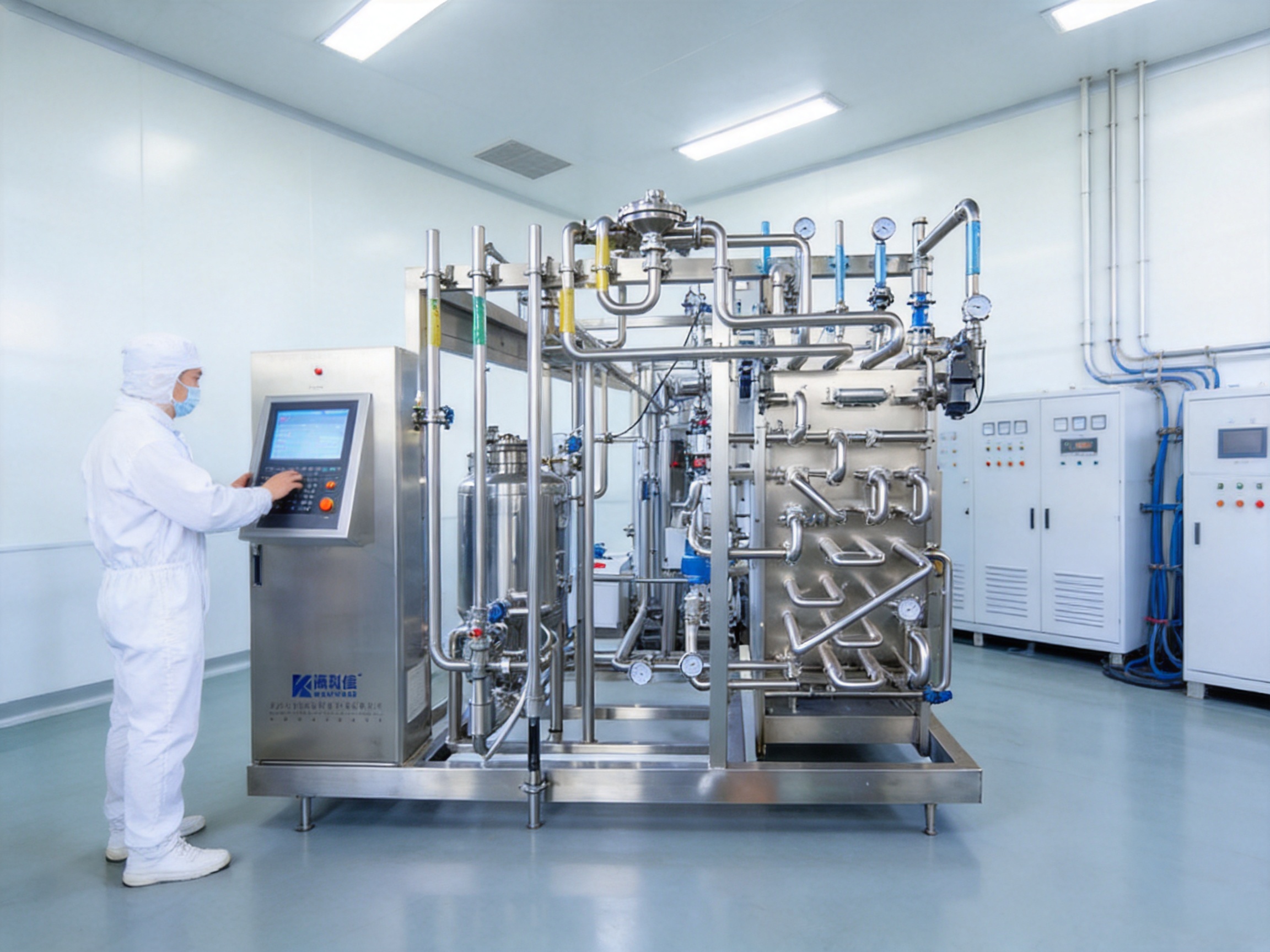
3. Main Advantages Over Conventional Sterilization Equipment
The automatic UHT sterilizer offers advantages over manually controlled heating systems, simple batch sterilizers, and poorly integrated process lines. These advantages result from combining thermal engineering, automation, hygienic design, heat recovery, and customized equipment configuration rather than relying on a single component.
3.1 More Consistent Sterilization
Manual operation can introduce variation in temperature, flow, holding time, valve position, and changeover timing. Even when operators are experienced, long production runs and frequent product changes can make complete consistency difficult to maintain.
An automatic UHT system continuously monitors critical parameters and executes programmed sequences. Temperature, pressure, flow, tank level, valve position, and other process variables can be recorded and compared with defined limits. This improves repeatability from one production cycle to the next and supports process documentation.
3.2 Higher Production Efficiency
Continuous UHT processing is generally more efficient than repeated batch heating when the product and production volume are suitable for continuous treatment. Once the system reaches stable conditions, it can process a large amount of product with fewer interruptions. Automated start-up and shutdown sequences also reduce the amount of time required for routine operation.
The system can be integrated with upstream mixing, filtration, homogenization, storage, and downstream filling equipment. This creates a coordinated process line in which material movement is controlled automatically. Reduced manual transfer and fewer unnecessary stops can improve line utilization and labor productivity.
3.3 Improved Energy Utilization
Heat recovery is a major difference between an optimized UHT system and a basic heating arrangement. Regenerative heat exchange reuses thermal energy and reduces the external heating requirement. With heat recovery above 85% under suitable conditions, the system can deliver substantial utility savings over the operating life of the equipment.
Energy efficiency also depends on insulation, heat exchanger design, pump selection, control strategy, steam regulation, cooling-water management, and production scheduling. A complete equipment solution must therefore consider the whole thermal system rather than focusing only on the nominal sterilization temperature.
3.4 Better Product Quality Preservation
Long exposure to heat can adversely affect sensitive liquid products. It may produce cooked flavors, color changes, nutrient loss, protein instability, viscosity changes, or degradation of heat-sensitive ingredients. UHT processing reduces exposure time by applying rapid heating and cooling under controlled conditions.
The exact outcome depends on the product formulation and process design. Nevertheless, the short-time principle gives manufacturers a useful way to balance microbial safety with quality preservation. Fine control of heating and cooling rates further helps operators adapt the system to different products.
3.5 Lower Dependence on Manual Labor
Automated operation reduces the need for operators to adjust individual valves, manually record temperatures, or repeatedly coordinate cleaning steps. Personnel can focus more on process supervision, quality verification, sanitation management, and maintenance planning.
Automation does not eliminate the need for trained personnel. Operators remain responsible for recipe management, inspection, sanitation verification, production release, troubleshooting, and compliance activities. However, the equipment reduces repetitive tasks and provides clearer information for decision-making.
3.6 More Efficient Cleaning and Changeover
The sterilizer can be configured for clean-in-place operation. CIP allows cleaning solutions and rinse water to circulate through the product-contact path without complete disassembly. Automated cleaning sequences can control chemical concentration, temperature, flow, circulation time, and rinse conditions.
Efficient cleaning supports hygienic production and can reduce downtime between products. It also helps limit the risks associated with manual cleaning, including incomplete coverage, inconsistent chemical exposure, and unnecessary equipment opening.
3.7 Stronger Process Safety
Safety functions can include high-temperature alarms, low-flow protection, pressure monitoring, automatic product diversion, emergency shutdown, pump interlocks, valve-position verification, and utility-failure responses. These functions protect the product, equipment, operators, and downstream filling system.
A well-designed control strategy also prevents conflicting valve positions or unsafe operating sequences. The system can require confirmation of suitable conditions before allowing production to begin. This is especially important for aseptic or high-hygiene applications where process deviations must be managed promptly.
4. Hygienic Design and Material Quality
Hygienic design is essential for equipment that handles food, beverage, nutritional, or pharmaceutical liquids. Product-contact surfaces should be manufactured from appropriate food-grade or process-grade stainless steel, with suitable corrosion resistance, cleanability, and mechanical strength.
Stainless steel provides a durable foundation for hygienic processing because it resists corrosion and can be finished to support effective cleaning. The quality of the material is only one part of the design. Weld geometry, surface finish, drainage, valve selection, gasket compatibility, dead-leg control, pipe routing, and equipment accessibility also affect hygienic performance.
Product-contact piping should be arranged to avoid stagnant zones. Lines should be drainable where required, and components should be selected for the pressure, temperature, chemical, and mechanical conditions of the process. Welds must be properly prepared, completed, inspected, and finished to minimize crevices or irregularities that could retain product residue.
The use of high-quality fittings improves the reliability of the entire system. Depending on customer requirements, components may be sourced from leading international or Chinese manufacturers. The selection can be based on process compatibility, availability, service support, validation needs, replacement strategy, and budget.
For food and beverage applications, the design may be developed in accordance with recognized hygienic and engineering requirements, including ASME, PMO, and 3-A expectations where applicable. The correct standards and certification pathway depend on the destination market, product type, local authority, and project specification.
4.1 Hygienic Heat Exchanger Considerations
The heat exchanger is one of the most important components in the UHT system. Its design must provide efficient thermal transfer while minimizing fouling and supporting cleaning. Plate heat exchangers may be suitable for lower-viscosity liquids with appropriate particle characteristics, while tubular exchangers may be preferred for products containing particles, fibers, or higher viscosity.
Heat exchanger selection should consider product flow behavior, solids content, pressure drop, temperature difference, cleaning chemistry, gasket material, thermal expansion, and expected production hours. An improperly selected exchanger can increase fouling, reduce heat recovery, increase pressure drop, and make cleaning more difficult.
4.2 Hygienic Valve and Instrumentation Selection
Valves must provide reliable isolation, accurate routing, and cleanable internal surfaces. Seat valves, butterfly valves, mix-proof valves, check valves, and control valves may be used in different parts of the system. The selection depends on the required function and the risk of product-to-cleaning-fluid interaction.
Instrumentation should be selected for accuracy, response time, hygienic connection, operating temperature, calibration requirements, and compatibility with the control platform. Common instruments include temperature transmitters, pressure transmitters, flowmeters, conductivity sensors, level sensors, and valve feedback switches.
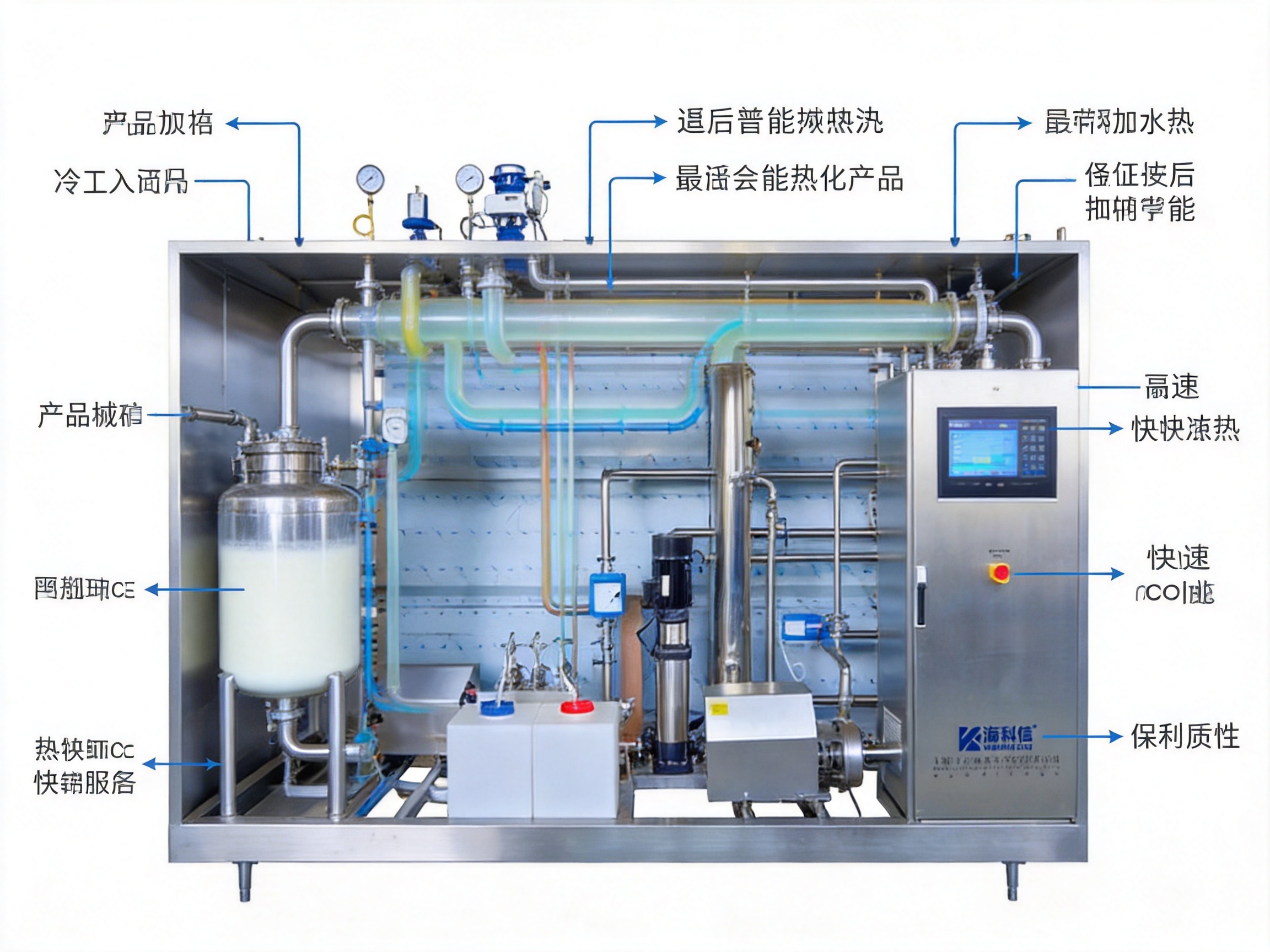
5. Automation and Intelligent Process Control
The automation system is the operational center of the automatic UHT sterilizer. It coordinates the movement of product and utilities and maintains the required process conditions. A typical control architecture may include a programmable logic controller, human-machine interface, field instruments, motor control equipment, control valves, safety circuits, and data-recording functions.
5.1 Recipe and Parameter Management
Different products may require different heating temperatures, holding times, flow rates, cooling conditions, cleaning programs, and diversion settings. Recipe management allows authorized users to select predefined process parameters rather than entering every value manually.
Access levels can be used to control who may change recipes, start production, modify alarm limits, or review historical records. This helps reduce unintended changes and supports production accountability.
5.2 Real-Time Monitoring
The operator interface can display process temperatures, product flow, pressures, tank levels, valve positions, pump status, alarm conditions, and cleaning progress. A clear graphical interface enables operators to identify abnormal conditions quickly and understand the current process phase.
Trend displays can help maintenance and quality personnel analyze gradual changes. For example, a rising pressure drop across a heat exchanger may indicate fouling, while a change in heating response may point to a utility or control-valve issue. Early detection allows corrective action before the problem causes a major production interruption.
5.3 Product Diversion and Deviation Management
One of the most important safety functions is the ability to prevent product that has not met the required sterilization conditions from entering the finished-product route. If temperature, flow, pressure, or another critical parameter moves outside the permitted range, the system can automatically divert the product to a designated return or recovery path.
The exact diversion logic must be established during process design and validation. It should account for sensor response time, valve actuation time, product residence time, start-up transitions, shutdown transitions, and the requirements of the downstream filling system.
5.4 Data Recording and Traceability
Electronic recording of process data provides evidence that the system operated within its defined parameters. Recorded data may include batch or production identifiers, time stamps, temperatures, flow rates, alarms, cleaning cycles, operator actions, and deviation events.
Traceability is valuable for quality release, customer audits, preventive maintenance, troubleshooting, and regulatory review. It also helps manufacturers compare production campaigns and identify opportunities for process improvement.
6. CIP Cleaning and Hygienic Maintenance
Cleaning is not a secondary function of a UHT sterilizer. It is a core part of the production system. Product residues can accumulate on heat-transfer surfaces, valves, pumps, pipes, and tanks. If residues are not removed effectively, they can reduce heat-transfer performance, increase pressure drop, create contamination risks, and shorten production time between cleaning cycles.
A typical CIP sequence may include a product recovery stage, pre-rinse, alkaline wash, intermediate rinse, acid wash, final rinse, and, where required, sanitization or sterilization. The specific chemicals and sequence depend on the product, soil type, equipment materials, local regulations, and validated cleaning procedure.
Effective CIP depends on four basic factors: time, temperature, chemical concentration, and mechanical action. Flow velocity must be high enough to create the required cleaning action within the product-contact path. Temperature and chemical concentration must be controlled within material and safety limits. Circulation time must be sufficient to remove the relevant residues.
An automatic system improves cleaning consistency by controlling these conditions systematically. Conductivity or concentration monitoring may help distinguish rinse water from cleaning solution. Temperature sensors confirm that the cleaning medium reaches the required level, while flow measurement provides evidence of adequate circulation.
Maintenance personnel should still inspect seals, valve seats, pumps, instruments, heat exchanger components, and safety devices according to a planned schedule. CIP reduces disassembly but does not remove the need for preventive maintenance. A maintenance program should include calibration, gasket replacement, lubrication where applicable, inspection of welds and connections, and verification of control functions.
7. Applications Across Food, Beverage, and Biopharmaceutical Production
The automatic UHT sterilizer is primarily intended for liquid food and beverage processing, but its flexible design can support a broader range of hygienic process applications. The suitability of the system must always be confirmed through product testing, process engineering, and validation.
7.1 Dairy Products
Milk, cream, flavored milk, liquid dairy products, and other dairy beverages require effective microbial control while maintaining a desirable taste and stable physical properties. A UHT system can be integrated with standardization, homogenization, aseptic filling, and hygienic storage systems.
Dairy products may be sensitive to fouling and protein deposition on heat-transfer surfaces. Heat exchanger selection, temperature profile, flow rate, cleaning chemistry, and product residence time should therefore be carefully evaluated during project development.
7.2 Plant-Based and Nutritional Beverages
Plant-based beverages and nutritional drinks can contain proteins, oils, minerals, stabilizers, fibers, or suspended ingredients. These formulations may behave differently during heating and cooling. The process design must account for viscosity, sedimentation, foaming, emulsification, and potential fouling.
Automated control helps manufacturers manage these differences through recipes and product-specific operating parameters. The system can be configured to support frequent product changes while maintaining the required cleaning and transition procedures.
7.3 Juice and Functional Beverages
Juice drinks and functional beverages may require microbial reduction while preserving aroma, color, flavor, and active ingredients. Rapid heating and cooling can help reduce unnecessary thermal exposure. The suitability of a particular UHT configuration depends on acidity, pulp content, viscosity, particle size, formulation stability, and filling method.
7.4 Liquid Sauces and Formulated Foods
Liquid sauces and formulated foods often have higher viscosity or contain particulates. Tubular heating equipment and carefully selected pumps may be more appropriate than systems designed only for low-viscosity liquids. The system must provide stable flow without excessive shear and must be cleanable under the expected product conditions.
7.5 Nutritional and Biopharmaceutical Liquids
Some nutritional and biopharmaceutical liquids require strict control of contamination, temperature, materials, and documentation. Not every biopharmaceutical product is suitable for UHT treatment, particularly when active ingredients are highly heat-sensitive. However, certain liquid process streams or support applications may benefit from high-hygiene thermal treatment.
For biopharmaceutical projects, the equipment specification may require additional attention to surface finish, material certificates, weld documentation, instrument calibration, cleanability, sterilization strategy, data integrity, and validation documentation. The process should be developed in cooperation with the customer’s quality, engineering, and regulatory teams.
| Application | Typical Product Characteristics | Important Design Considerations |
|---|---|---|
| Dairy beverages | Protein-containing, low to medium viscosity | Fouling control, homogenization compatibility, aseptic filling |
| Plant-based beverages | Variable solids, oils, proteins, and stabilizers | Emulsion stability, sedimentation, heat-transfer selection |
| Juice and functional drinks | Acidic liquids, flavors, pigments, or pulp | Rapid cooling, aroma preservation, particle handling |
| Liquid nutrition | Heat-sensitive ingredients and controlled formulations | Precise temperature profile, hygienic design, traceability |
| Liquid sauces | Higher viscosity or suspended particles | Tubular heating, pump selection, cleaning performance |
| Selected biopharmaceutical liquids | Strict hygiene and documentation requirements | Validation, materials, surface finish, data recording |
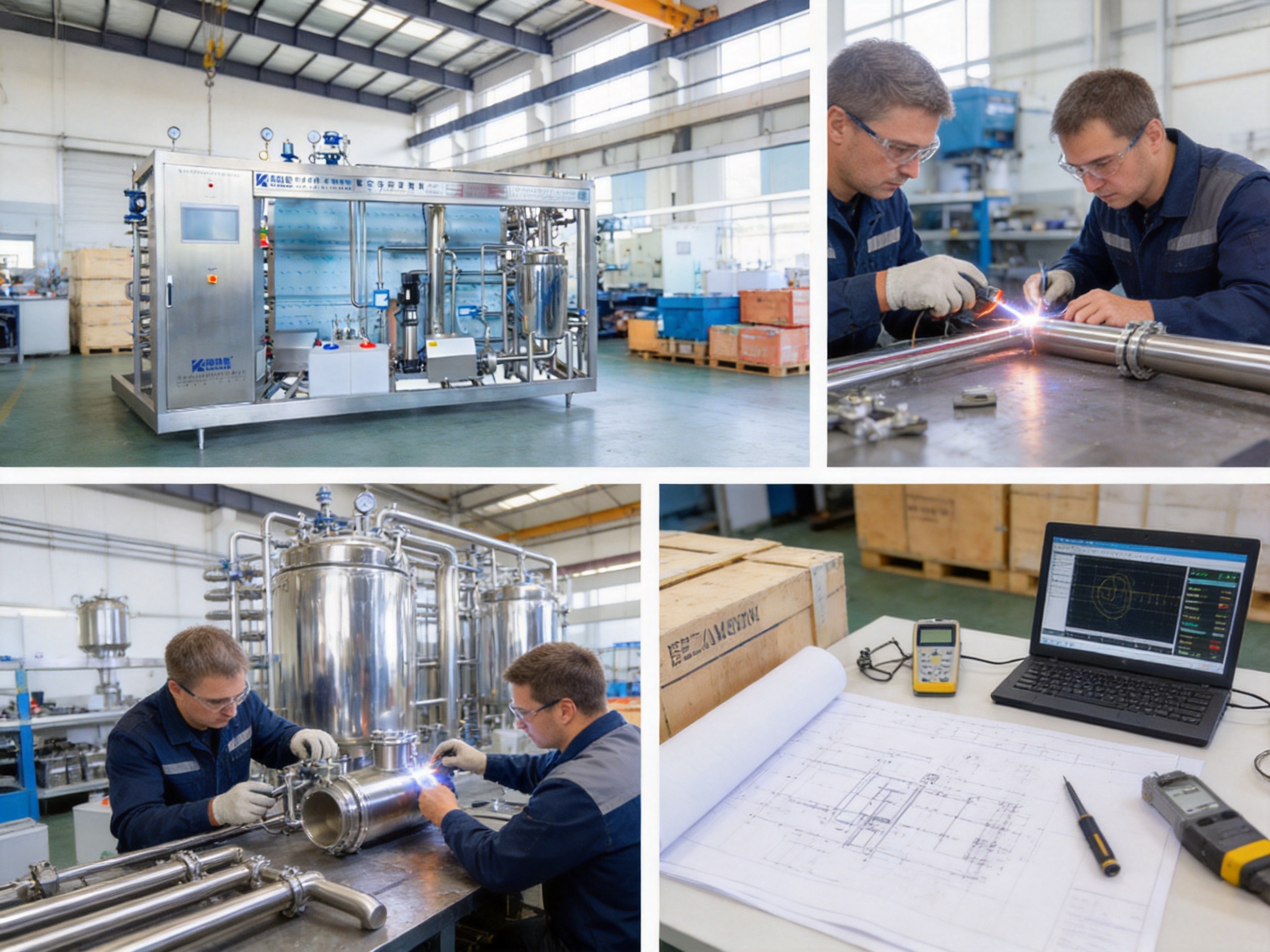
8. Manufacturing Strengths Behind the Equipment
The performance of a UHT sterilizer depends not only on the process concept but also on how the equipment is designed, fabricated, inspected, assembled, tested, and supported. Shiloc’s equipment and engineering capabilities are built around process coordination, fluid equipment supply, technical services, and customized solutions.
Shiloc (Shanghai) Industrial Trading Co., Ltd. was established in March 2026 in Fengxian District, Shanghai. The company operates a 3,000-square-meter facility and has more than 20 technical specialists. Its capabilities cover process equipment coordination, fabrication support, welding, polishing, quality control, international trade, and engineering technical services.
8.1 European Know-How and Danish Design Influence
The company’s equipment approach is built on European know-how and Danish design principles. In hygienic process engineering, this influence can be reflected in cleanable layouts, practical maintenance access, efficient flow paths, clear separation of product and utility circuits, and attention to material quality.
Design quality is especially important for a UHT system because the product passes through multiple interconnected stages. A weakness in one area can affect the performance of the entire line. A practical design must balance thermal efficiency, accessibility, safety, cost, capacity, and future expansion.
8.2 Welding and Polishing Capability
Welding quality is critical for stainless steel process equipment. Poorly executed welds can create crevices, surface irregularities, distortion, or contamination risks. Shiloc’s capability in welding and polishing supports the fabrication of hygienic equipment with attention to product-contact surfaces and structural integrity.
Polishing is not merely an aesthetic operation. Appropriate surface finishing can improve cleanability, reduce residue retention, and support hygienic performance. The required finish should be specified according to the product, process risk, applicable standard, and customer documentation requirements.
8.3 Quality Control and Traceability
Quality control should begin with material selection and continue through fabrication, assembly, testing, delivery, and installation support. Important controls may include material verification, dimensional inspection, weld inspection, pressure testing, surface inspection, instrument verification, valve testing, control-panel inspection, and functional testing.
Traceability allows the customer to connect materials, components, fabrication records, test results, and final equipment documentation. This is valuable when the equipment is used in regulated or audited production environments. It also simplifies future maintenance because replacement parts and component specifications can be identified more accurately.
8.4 Integrated Project Coordination
Many equipment problems occur not because individual components are unsuitable, but because the components are not properly coordinated. A UHT sterilizer must connect with product tanks, pumps, filling machines, utilities, drainage, cleaning systems, and plant controls. Shiloc’s role in international trade and engineering coordination helps consolidate communication among the customer, equipment suppliers, fabricators, and project stakeholders.
Integrated coordination can reduce misunderstandings involving connection sizes, electrical requirements, control interfaces, shipping dimensions, utility consumption, documentation, and installation responsibilities. It can also help customers compare alternative configurations according to both technical performance and budget.
9. Customization for Different Production Requirements
There is no single UHT sterilizer configuration that is optimal for every product or plant. Capacity, product properties, process temperature, filling method, utility availability, automation requirements, and regulatory expectations all influence the final design.
Shiloc provides flexible customization so that customers can select a solution appropriate for their operating conditions. Customization may involve the heat exchanger type, pump arrangement, tank volume, holding section, valve configuration, instrumentation, control platform, CIP system, material grade, surface finish, component brands, and documentation package.
9.1 Capacity and Flow Rate
The required production capacity determines the size of the product path, pump, heat exchanger, holding tube, and cooling system. Oversizing can increase capital cost and reduce efficiency during low-load operation. Undersizing can limit production capacity and create excessive pressure drop.
Capacity planning should consider current production demand, expected growth, product changeover frequency, operating hours, planned maintenance, and the relationship between the sterilizer and the filling line. A system should be designed for realistic operating conditions rather than only a theoretical maximum.
9.2 Product Viscosity and Particulates
Viscosity affects pump selection, pressure drop, heat transfer, and cleaning. Particles or fibers affect pipe diameter, valve design, heat exchanger choice, and the risk of blockage. Products with suspended solids may require tubular equipment or larger flow passages. Highly viscous products may need positive-displacement pumping or specialized heating arrangements.
9.3 Heating Technology
Indirect heating is commonly selected when product separation from the heating medium is important. Direct steam injection or infusion may provide very rapid heating and cooling, but requires suitable steam quality and process control. The final decision should consider product characteristics, available utilities, desired thermal profile, regulatory expectations, and customer operating preferences.
9.4 Component Selection
Customers may require specific brands or regional supply chains for pumps, valves, sensors, controllers, motors, and heat exchangers. The system can be customized with components from leading international or Chinese manufacturers, subject to technical compatibility and availability.
Using recognized components can support reliability, serviceability, spare-parts management, and customer confidence. At the same time, a balanced selection can help control project cost without compromising critical hygienic or safety functions.
9.5 Documentation and Compliance
Documentation requirements vary by industry and destination market. A project may require general arrangement drawings, piping and instrumentation diagrams, electrical drawings, material certificates, welding records, pressure-test reports, instrument calibration records, operation manuals, spare-parts lists, and factory acceptance test documents.
Shiloc can coordinate documentation according to the customer’s project needs. Where applicable, design and manufacturing may be aligned with ASME, PMO, 3-A, or other relevant requirements. The appropriate compliance pathway should be confirmed at the beginning of the project.
10. Installation, Commissioning, and Validation
A reliable sterilizer requires more than correct fabrication. Installation, commissioning, and operator training strongly influence long-term performance. The installation area must provide suitable foundations, drainage, utilities, ventilation, access, and hygienic separation.
Before commissioning, the customer and project team should verify product connections, utility connections, instrument installation, electrical power, control signals, safety devices, CIP circuits, and downstream interfaces. Piping should be checked for correct slope, support, drainage, and connection orientation.
Commissioning normally begins with dry checks and utility checks. Pumps, valves, sensors, motors, alarms, and control sequences are tested without product. Water trials can then be used to verify flow paths, heating and cooling response, pressure behavior, valve sequencing, and cleaning circulation.
Product trials are required to confirm actual performance with the customer’s formulation. These trials may evaluate temperature stability, holding time, pressure, heat recovery, product appearance, viscosity changes, flavor, fouling, cleaning results, and compatibility with filling equipment.
For regulated applications, process validation may include thermal validation, instrument calibration, data review, cleaning validation, microbial studies, and documented deviation management. Validation must be designed around the product and regulatory framework rather than treated as a generic equipment test.
11. Operating and Maintenance Recommendations
Operators should verify that the correct recipe, product route, and cleaning program have been selected before starting production. Product-contact circuits should be confirmed clean and properly assembled. Instruments should be within calibration, and utilities should meet the required pressure, temperature, quality, and flow conditions.
During operation, personnel should monitor temperature, flow, pressure, tank levels, alarms, product appearance, and equipment noise or vibration. Unexpected changes should be investigated promptly. A stable process normally produces predictable trends, while sudden deviations may indicate fouling, leakage, pump issues, valve problems, sensor drift, or utility instability.
Preventive maintenance should be based on operating hours, product type, cleaning frequency, component recommendations, and historical data. Common maintenance activities include checking pump seals, inspecting valve seats, replacing gaskets, calibrating instruments, testing safety interlocks, cleaning control cabinets, inspecting heat exchanger plates or tubes, and verifying emergency-stop functions.
Spare-parts planning is important for critical components. Recommended spare parts may include gaskets, seals, valve repair kits, temperature sensors, pressure transmitters, control relays, pump components, and other items with defined service lives. Maintaining suitable spares can reduce downtime and improve production continuity.
12. Economic and Environmental Benefits
The financial value of an automatic UHT sterilizer includes more than the purchase price. The total cost of ownership is affected by energy consumption, labor, cleaning chemicals, water usage, maintenance, product losses, downtime, rejected batches, and equipment life.
High heat recovery can reduce ongoing steam and cooling demand. Automated operation can reduce labor devoted to repetitive control tasks. CIP compatibility can shorten cleaning and changeover periods. Accurate product diversion can prevent non-conforming product from reaching finished-product packaging. These factors can provide substantial economic benefits over years of operation.
Energy efficiency also supports environmental objectives. Lower thermal utility consumption can reduce indirect emissions, while improved process control can reduce product waste. Efficient cleaning may reduce water and chemical consumption when the cleaning program is properly optimized and validated.
Environmental performance should be evaluated using actual production data. Important indicators may include energy per unit of product, water per cleaning cycle, chemical consumption, product loss during start-up and changeover, cleaning duration, and percentage of recovered heat. The automatic control system can provide data to support this analysis.
13. How the Equipment Creates a Competitive Advantage
The competitive advantage of this automatic UHT sterilizer is based on integrated performance. A low-cost heating unit may provide basic temperature increase, but it may not deliver the same combination of heat recovery, automation, hygienic design, cleaning efficiency, data recording, safety protection, and customization.
Compared with manually operated systems, the automatic sterilizer provides better repeatability and lower operating complexity. Compared with poorly optimized continuous systems, its regenerative heating arrangement can provide stronger energy performance. Compared with rigid standard machines, its customizable components and process configuration allow closer alignment with the customer’s product and facility.
The equipment also benefits from the company’s ability to combine manufacturing support with international trade and engineering services. Customers can receive assistance in evaluating process requirements, selecting components, coordinating documentation, arranging delivery, and managing technical communication. This is particularly valuable for international projects where language, standards, logistics, and supplier coordination can create additional challenges.
Material quality, welding, polishing, component selection, and quality control further support long-term reliability. These aspects may not be visible in a basic equipment quotation, but they influence cleanability, maintenance frequency, product safety, and equipment service life.
14. Why Choose Shiloc for a Customized UHT Solution?
Shiloc focuses on integrated equipment and engineering solutions for food and beverage, biopharmaceutical, daily chemical, and fine chemical manufacturers. The company’s business scope includes equipment manufacturing, international trade, import and export agency services, and engineering technical support.
Its Shanghai facility provides a base for equipment coordination, fabrication-related work, welding, polishing, inspection, and quality management. More than 20 technical specialists contribute to project communication and equipment development. The 3,000-square-meter facility supports the company’s ability to manage practical manufacturing and delivery requirements.
The company emphasizes innovative design, process optimization, safety, efficiency, supply reliability, traceability, and personalized service. These principles are relevant to UHT projects because each system must be matched to a real product, real production schedule, real facility, and real compliance requirement.
Shiloc also offers flexible solutions for different budgets. Customers may choose component configurations and automation levels that meet their technical needs without paying for unnecessary functions. At the same time, critical product-contact, safety, and control elements can be specified to a higher standard where the process requires them.
From initial analysis to final delivery, the company can help customers clarify capacity, product properties, heating method, cooling requirements, cleaning strategy, component preferences, documentation, and installation conditions. This structured approach reduces the risk of selecting equipment based only on nominal capacity or purchase price.
15. Recommended Selection Checklist
Before purchasing an automatic UHT sterilizer, manufacturers should prepare a detailed process brief. The brief should identify the products to be processed, expected production capacity, operating hours, product temperature, viscosity, solids content, particle size, heat sensitivity, required shelf life, filling method, and packaging format.
Utilities should also be evaluated. The project team should confirm steam or hot-water availability, cooling-water temperature, chilled-water capacity, compressed-air quality, electrical power, drainage, cleaning chemical storage, and plant-control interfaces.
The customer should ask for information about heat recovery, product-contact materials, surface finish, instrumentation, control architecture, CIP sequence, safety functions, factory testing, commissioning support, spare parts, maintenance access, and documentation. These details help compare solutions on operating value rather than only initial cost.
It is also important to consider future requirements. The system may need to process additional products, support higher capacity, connect to new filling equipment, or provide expanded data recording. Designing reasonable flexibility into the initial project can be more economical than major modifications later.
16. Conclusion
An automatic UHT sterilizer is a complete process system for manufacturers that need reliable microbial control, efficient continuous production, high product quality, and hygienic operation. Its main advantages come from the coordinated use of rapid heating, controlled holding, rapid cooling, automated monitoring, efficient heat recovery, CIP compatibility, safety protection, and high-quality materials.
With heat recovery of 85% or more under suitable process conditions, the system can reduce energy waste while maintaining stable production. Automation improves repeatability, reduces manual intervention, simplifies cleaning, and supports traceable process records. Hygienic stainless steel construction, quality fittings, careful welding, polishing, and appropriate instrumentation contribute to reliable long-term service.
The system can serve dairy, beverage, nutritional, liquid food, and selected biopharmaceutical applications when the process is properly evaluated and validated. Its flexible configuration allows the equipment to be adapted to different capacities, formulations, heat sensitivities, cleaning requirements, standards, and budgets.
Shiloc (Shanghai) Industrial Trading Co., Ltd. combines equipment manufacturing support, European know-how, Danish design influence, technical coordination, international trade services, and engineering assistance. This combination allows the company to provide more than a standard machine. It provides a customized process solution designed around product safety, production efficiency, quality preservation, energy management, and dependable project implementation.
Questions and Answers
Q1: What is the primary function of an automatic UHT sterilizer?
An automatic UHT sterilizer rapidly heats liquid products to an ultra-high temperature, maintains the required treatment condition for a controlled holding time, and then cools the products quickly. Its primary purpose is to reduce harmful microorganisms while preserving product quality and extending shelf stability.
Q2: Which products can be processed in a UHT sterilizer?
Suitable products may include milk, cream, dairy beverages, plant-based drinks, juice products, functional beverages, liquid nutritional products, sauces, liquid foods, and selected heat-treatable process liquids. Product suitability depends on viscosity, particle content, formulation, heat sensitivity, required shelf life, and filling method.
Q3: How does automation improve sterilization consistency?
Automation continuously monitors and controls temperature, flow, pressure, tank level, valve position, and processing time. It reduces manual adjustments and can automatically respond to deviations. This helps ensure that repeated production cycles operate within the defined process conditions.
Q4: What is heat recovery in a UHT system?
Heat recovery is the transfer of thermal energy from hot, processed product to cold, incoming product. It reduces the amount of external heating required and can also reduce cooling demand. Depending on the process design and operating conditions, heat recovery can reach 85% or more.
Q5: Is the equipment compatible with clean-in-place cleaning?
Yes. The automatic UHT sterilizer can be configured for CIP operation. Cleaning solutions, rinse water, and sanitizing media can circulate through the product-contact path without requiring complete disassembly. The cleaning program should be developed and validated for the specific product residues and equipment configuration.
Q6: Why is stainless steel commonly used?
Food-grade stainless steel offers corrosion resistance, durability, cleanability, and suitable hygienic performance. The correct grade, surface finish, gasket, welding method, and component design must be selected according to the product and applicable standards.
Q7: Can the sterilizer be customized?
Yes. Customization may include capacity, heat exchanger type, heating method, holding tube, pump arrangement, valve configuration, instrumentation, automation system, CIP functions, component brands, surface finish, documentation, and connection requirements.
Q8: What should be considered when selecting the heat exchanger?
Important factors include product viscosity, particle size, solids content, fouling tendency, required temperature profile, pressure drop, cleaning chemicals, flow rate, thermal expansion, and maintenance requirements. Plate and tubular heat exchangers may be suitable for different product conditions.
Q9: How does the system protect against under-processing?
The control system monitors critical parameters such as temperature and flow. If the process falls outside defined limits, automatic diversion or shutdown functions can prevent inadequately treated product from entering the finished-product route. The diversion logic should be established and validated for the specific line.
Q10: Does the equipment require trained operators?
Yes. Automation reduces repetitive work but does not replace competent operators. Personnel should understand product recipes, start-up and shutdown procedures, alarm handling, cleaning programs, safety requirements, quality checks, and basic troubleshooting.
Q11: Can the equipment be used in biopharmaceutical production?
It may be suitable for selected biopharmaceutical or biotechnology liquids, but not every biopharmaceutical product can tolerate UHT conditions. Product stability, active-ingredient sensitivity, contamination-control strategy, validation requirements, materials, surface finish, and documentation must be evaluated before selection.
Q12: What support does Shiloc provide?
Shiloc provides technical coordination, equipment selection, customized process solutions, international trade services, engineering support, quality coordination, and delivery assistance. The company can help align the equipment with product characteristics, production capacity, facility conditions, budget, and documentation expectations.
References
1. ASME Boiler and Pressure Vessel Code, relevant sections for hygienic process equipment and pressure-containing components.
2. Grade “A” Pasteurized Milk Ordinance, United States Public Health Service, relevant requirements for dairy processing equipment and thermal treatment.
3. 3-A Sanitary Standards, applicable standards for dairy and food-processing equipment design and fabrication.
4. Codex Alimentarius Commission, General Principles of Food Hygiene and hygienic food-processing practices.
5. EHEDG principles for hygienic design of food-processing equipment.
6. Standard engineering principles for heat exchanger design, regenerative heat recovery, and thermal process control.
7. General principles of clean-in-place system design, validation, chemical control, and hygienic maintenance.
8. Industry guidance for thermal processing, aseptic handling, process validation, and microbial control in liquid food production.
9. Manufacturer and engineering data concerning product properties, heat-transfer performance, pump selection, valve technology, and process automation.
Product: Automatic UHT (Ultra-High Temperature) Sterilizer
PREV:Bottom-Entry High-Shear Magnetic Emulsifiers for Hygienic Food and Biopharmaceutical Processing
NEXT:Sanitary Steam Ejectors and Injectors for Food and Biopharmaceutical Process Systems
NEXT:Sanitary Steam Ejectors and Injectors for Food and Biopharmaceutical Process Systems
Interested in cooperation or have questions?
Recommended LINS
✦
Food and Beverage Process System
Food Processing Skid System
Process Skid System
CIP Skid System for Food Industry
automated process skid system for food processing
CIP process skid system for food industry
hygienic process skid for food industry
food and beverage process skid system
Skid Mounted Process System
Sanitary Process Skid
Let'S Work Together Welcome Aboard!
-

haikexin@haikexin.com
+8613391278930
-
 +86-21-57560276
 -
 No. 2819, Sihu Road,Fengxian District, Shanghai, China
Join Our Mailing List
Copyright © Shiloc (Shanghai) Industrial Trading Co., Ltd. All Rights Reserved.
Process Systems & Equipment For Food & Biopharma Manufacturers
