
 English
 русский
 Português
 Français


 Read More

Product Category
NEW Category
Contact us
Contact Us
We specialise in the research, development and manufacture of electrical wires and cables.
 +86-21-57560276
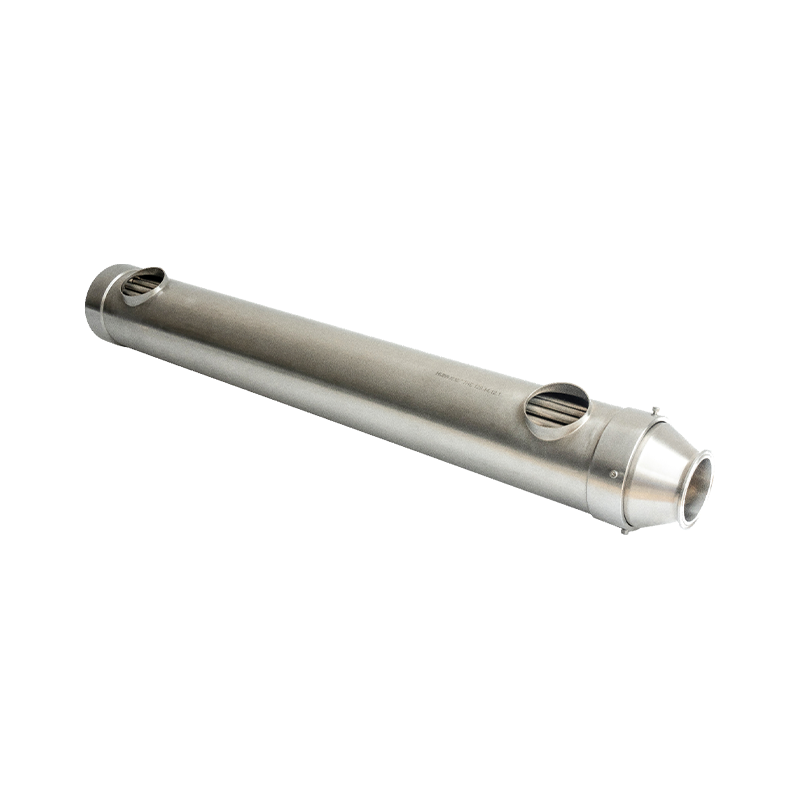
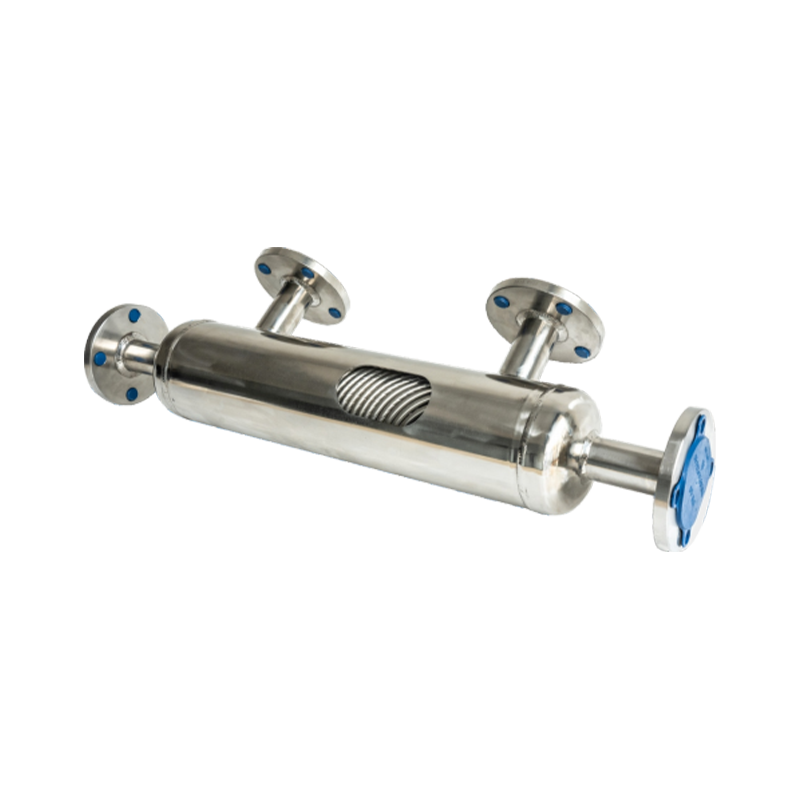
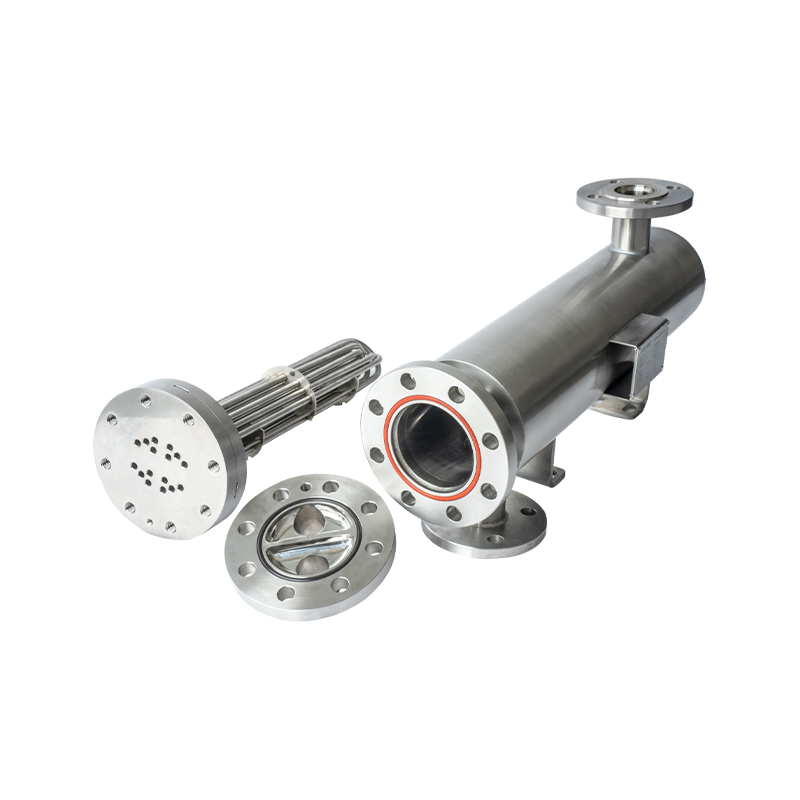
Shell and Tube Heat Exchanger-Flange Type: Hygienic, Maintainable Process Heat Transfer for Food and Biopharmaceutical Manufacturing
Content
- 1 1. Product Overview and Working Principle
- 2 2. Main Construction and Material Configuration
- 3 3. Performance Advantages Over Less Accessible Heat Exchanger Designs
- 4 4. Hygienic Design for Food and Biopharmaceutical Applications
- 5 5. Applications Across Food, Beverage, and Industrial Processing
- 6 6. Technical Configuration Options
- 7 7. Manufacturing Processes and Engineering Strengths
- 8 8. Quality Management and Project Support
- 9 9. Installation Recommendations
- 10 10. Maintenance and Cleaning Strategy
- 11 11. Flanged Models Compared With Quick-Connect Models
- 12 12. Total Cost of Ownership and Operational Value
- 13 13. Recommended Project Selection Process
- 14 14. Why Manufacturing Capability Matters to Customers
- 15 15. Frequently Asked Questions
- 15.1 Q1: What is a flanged shell-and-tube heat exchanger?
- 15.2 Q2: What is the main advantage of the flanged design?
- 15.3 Q3: Is this equipment suitable for food and beverage production?
- 15.4 Q4: Can the heat exchanger be used in biopharmaceutical facilities?
- 15.5 Q5: Does a removable tube bundle mean that maintenance is unnecessary?
- 15.6 Q6: Should the heat exchanger use parallel flow or countercurrent flow?
- 15.7 Q7: How can operators detect fouling?
- 15.8 Q8: What should be checked before opening a flanged heat exchanger?
- 15.9 Q9: How are flange leaks usually corrected?
- 15.10 Q10: What information is needed to select the equipment?
- 15.11 Q11: Can the company provide customized heat exchanger solutions?
- 15.12 Q12: Why should customers consider manufacturing and engineering capability together?
- 16 Conclusion
- 17 References
- 18 Product: Shell And Tube Heat Exchanger-Flange Type
Modern food, beverage, and biopharmaceutical manufacturers require heat transfer equipment that can deliver stable thermal performance while meeting strict hygiene, safety, maintenance, and traceability expectations. Heating, cooling, sterilization, pasteurization, condensation, and temperature control are central to many production processes. In each of these applications, the heat exchanger must transfer energy efficiently without contaminating the product, creating unnecessary downtime, or becoming difficult to inspect and clean.
The shell and tube heat exchanger-flange type is designed to address these requirements through a robust stainless steel shell-and-tube structure and detachable flanged end covers. The equipment separates two process media while allowing heat to pass through the heat exchange tube walls. Depending on the process design, the media may move in parallel flow or countercurrent flow, with countercurrent operation generally used when a greater temperature driving force and improved thermal efficiency are required.
Compared with compact but less accessible heat transfer solutions, a flanged shell-and-tube heat exchanger provides a practical balance between pressure resistance, service life, cleaning accessibility, process flexibility, and hygienic construction. Its removable or accessible tube bundle allows operators and maintenance personnel to inspect internal surfaces, remove fouling, verify tube conditions, and restore heat transfer performance more thoroughly.
This equipment is suitable for dairy processing, juice production, beverage manufacturing, food ingredient processing, pharmaceutical production, biopharmaceutical utilities, chemical processing, HVAC systems, and industrial cooling. It can be configured according to the required flow rate, temperature range, pressure, materials, connection standards, number of passes, and cleaning method.
1. Product Overview and Working Principle
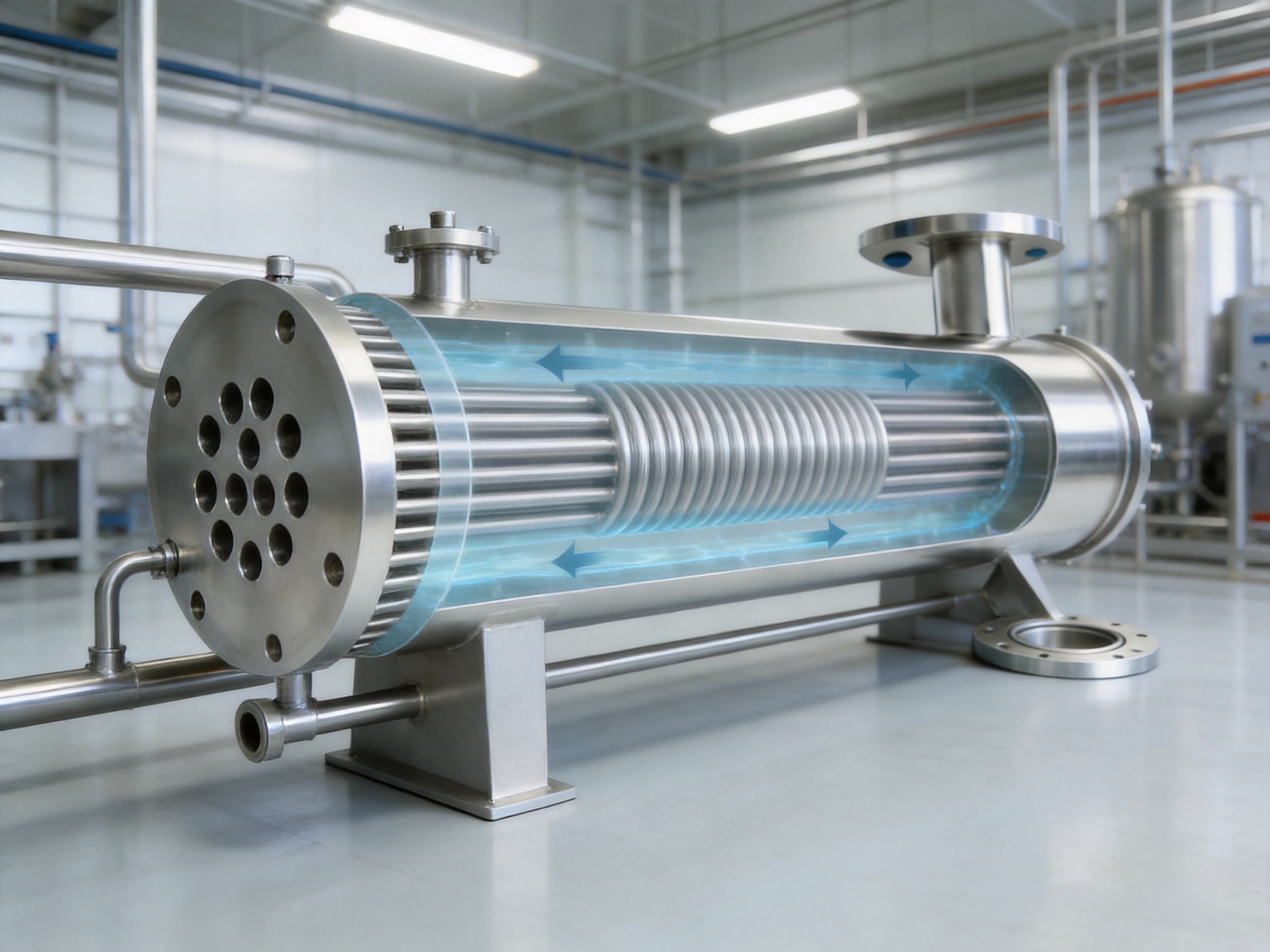
A shell and tube heat exchanger consists of a cylindrical shell, a bundle of heat exchange tubes, tube sheets, end covers, gaskets, supports, and process connections. One medium flows through the tubes, while the second medium flows through the shell side around the outside of the tubes. Heat is transferred across the tube walls without direct contact between the two media.
The flanged version uses bolted flange connections between the shell or tube-side end covers and the main body of the equipment. These connections are sealed with gaskets selected according to the process temperature, pressure, fluid properties, and sanitary requirements. The flange arrangement allows the end covers to be removed when inspection, mechanical cleaning, gasket replacement, or tube-side maintenance is required.
In a heating application, hot water, steam, thermal oil, or another heating medium transfers energy to a colder process fluid. In a cooling application, chilled water, glycol solution, cooling water, or another low-temperature medium removes heat from the process fluid. The same basic equipment can also be used for condensation, where vapor releases latent heat and changes into a liquid.
The shell-and-tube design supports single-pass and multi-pass configurations. A single-pass configuration provides a relatively simple flow path and may be suitable for lower pressure drop requirements. A multi-pass configuration sends the medium through the tube bundle more than once, increasing velocity and improving heat transfer under suitable operating conditions. The final configuration should be determined through thermal calculation and process analysis.
Countercurrent flow is often preferred because the hot and cold media maintain a more favorable temperature difference along the heat transfer path. Parallel flow can also be selected where process conditions, product sensitivity, temperature limitations, or system layout make it appropriate. The equipment can be designed to support the flow arrangement required by the production process.
2. Main Construction and Material Configuration
The main product-contacting components are typically manufactured from stainless steel. Stainless steel provides corrosion resistance, a smooth surface suitable for hygienic processing, and compatibility with many food, beverage, pharmaceutical, and industrial media. The specific grade and surface finish should be selected according to the fluid composition, chloride content, acidity, temperature, cleaning chemicals, and applicable regulatory requirements.
The shell provides the main pressure boundary for the shell-side medium. It also supports the tube bundle, baffles, nozzles, and external mounting components. Depending on the process, the shell may be designed for heating water, cooling water, steam, thermal fluid, product liquid, or other industrial media.
The tube bundle is the core heat transfer component. A large number of tubes provide the required heat transfer area within a relatively compact equipment footprint. The tubes may be arranged according to required thermal performance, pressure drop, cleaning requirements, and manufacturing considerations.
Tube sheets separate the shell-side and tube-side media and maintain the position of the heat exchange tubes. Tube-to-tube-sheet connections must be manufactured carefully to reduce the possibility of leakage or cross-contamination. The design of the tube sheet and tube joints depends on the pressure, temperature, tube material, shell material, and service conditions.
Flanged end covers provide access to the tube-side flow path. When the end cover is removed, personnel can inspect the internal tube openings and identify deposits, blockage, corrosion, or abnormal wear. For units designed with a pull-out tube bundle, the bundle can be removed for more extensive mechanical cleaning, inspection, or repair.
Gaskets are essential to the sealing performance of the equipment. Gasket materials should be compatible with the product, cleaning chemicals, operating temperature, and pressure. During installation, gasket alignment, flange-face cleanliness, bolt condition, and tightening sequence all influence final sealing reliability.
Process nozzles and flanged connections can be configured according to piping standards and project requirements. Standardized connection dimensions simplify integration into new or existing process lines. Additional fittings may include temperature ports, pressure ports, drain connections, vent connections, sampling points, and instrumentation interfaces.
3. Performance Advantages Over Less Accessible Heat Exchanger Designs
The most significant advantage of the flanged shell-and-tube heat exchanger is its maintainability. Many compact or permanently integrated heat transfer devices are efficient during normal operation but provide limited access to internal surfaces. When deposits accumulate, operators may be forced to rely only on chemical cleaning or replace the entire unit. A flanged design provides a more direct maintenance path.
By removing the flanged end covers, the operator can access the tube-side openings for inspection and cleaning. Where the equipment includes a removable tube bundle, the entire bundle can be withdrawn for detailed examination. This is particularly useful when the processed medium contains proteins, sugars, oils, suspended particles, minerals, or other substances that may create deposits.
The design also offers advantages in applications where hygiene and verification are important. Physical access allows the maintenance team to check whether cleaning has been effective and whether deposits remain in the flow path. This supports more reliable sanitation management than a design that cannot be opened or inspected.
Another advantage is structural durability. Flanged shell-and-tube equipment can be engineered for demanding pressure and temperature conditions. The shell-and-tube form is widely used in industrial services because it can accommodate pressure differences between the shell side and tube side while maintaining a controlled separation between media.
Flanged models also provide flexibility for different production environments. The same general platform may be adapted for food processing, pharmaceutical utilities, chemical systems, heating water circuits, cooling systems, and industrial process lines. The number of passes, tube dimensions, material selection, nozzle arrangement, gasket material, and support structure can be adjusted according to the project.
Compared with quick-connect models, flanged heat exchangers may take longer to disconnect during planned maintenance. However, they provide deeper access for inspection and cleaning. This distinction is important: quick-connect designs prioritize rapid installation or replacement, while flanged shell-and-tube designs prioritize serviceability, pressure resistance, and long-term operating reliability.
Key Product Advantages
- Detachable flanged end covers support inspection, cleaning, and gasket replacement.
- Shell-and-tube construction provides a proven solution for heating, cooling, and condensation.
- Stainless steel product-contacting surfaces support hygienic and corrosion-resistant operation.
- Single-pass and multi-pass configurations accommodate different thermal duties.
- Countercurrent or parallel flow can be selected according to process requirements.
- Tube bundle access helps control fouling and recover heat transfer efficiency.
- Standardized flange connections simplify connection to process piping.
- The equipment can be configured for food, beverage, pharmaceutical, chemical, HVAC, and industrial services.
- Gasketed flange connections allow maintenance without replacing the complete heat exchanger.
- The robust structure supports long-term operation when correctly selected and maintained.
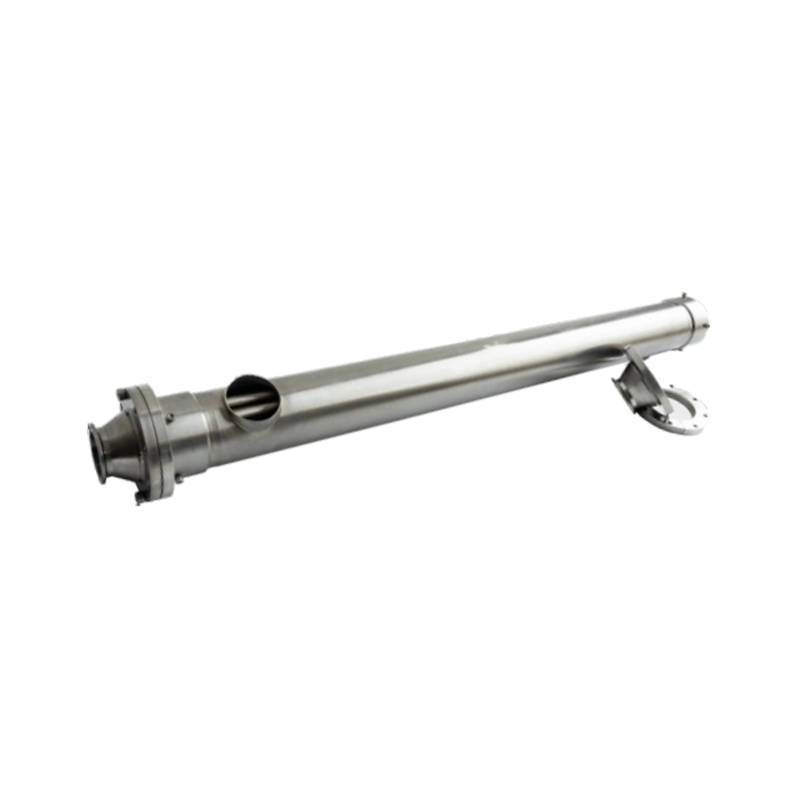
Shell And Tube Heat Exchanger-Flange Type
4. Hygienic Design for Food and Biopharmaceutical Applications
Food and biopharmaceutical processes require more than basic thermal performance. Equipment must also support hygienic production, effective cleaning, controlled material selection, and the prevention of product contamination. The design of the flow channels, internal surfaces, joints, gaskets, drains, and process connections all influence the ability of a heat exchanger to meet these requirements.
A stainless steel shell and tube heat exchanger can provide a smooth, corrosion-resistant flow path when properly fabricated and finished. Smooth surfaces reduce the opportunity for product residues to adhere and make cleaning more effective. Internal geometry should be designed to avoid unnecessary dead zones, pockets, and stagnant areas where product or cleaning solution could accumulate.
The flanged structure supports inspection of areas that may be difficult to verify in permanently sealed equipment. During scheduled maintenance, personnel can inspect the tube ends, gasket areas, flow channels, and accessible support components. This helps identify early signs of fouling, corrosion, gasket deterioration, or abnormal deposits before they affect production.
For sanitary applications, the cleaning strategy may include clean-in-place and sterilize-in-place procedures. CIP uses circulating cleaning solutions to remove product residues and deposits without requiring complete disassembly. SIP uses steam or another validated sterilization medium to reduce microbial risk. The actual CIP and SIP program must be determined by the process owner based on the product, equipment design, cleaning chemicals, temperature, flow velocity, contact time, and validation requirements.
The ability to open the equipment remains valuable even when CIP or SIP is used. Periodic inspection can verify cleaning results and confirm that the equipment continues to meet process expectations. In high-fouling services, mechanical cleaning may be required in addition to chemical cleaning.
For biopharmaceutical production, the heat exchanger may be used in process water systems, buffer preparation, media preparation, purified utility systems, equipment temperature control, and other supporting operations. The specific design may require tighter control of materials, surface finish, weld quality, drainability, instrumentation, and documentation. Project specifications should define the required level of sanitary design and quality records.
Gasket selection is especially important in sanitary processing. The gasket must resist the product, cleaning agents, sterilization temperature, pressure cycling, and repeated assembly. It should also be installed correctly to prevent extrusion, misalignment, or the creation of an unintended retention area.
5. Applications Across Food, Beverage, and Industrial Processing
5.1 Dairy Processing
Dairy products can contain proteins, fats, minerals, and suspended solids that contribute to fouling when exposed to elevated temperatures. Heat exchangers used for milk, cream, whey, yogurt ingredients, and other dairy products must maintain stable temperature control while supporting regular cleaning.
A flanged shell-and-tube heat exchanger can be used for product heating, cooling, hot water circulation, utility heating, or condensation duties. When fouling develops, the accessible tube bundle and flange connection simplify inspection and maintenance. The equipment can also be integrated into a broader hygienic process system with temperature instruments, pumps, valves, and cleaning circuits.
5.2 Juice and Beverage Production
Juice, beverage concentrates, syrups, flavored waters, and other liquid products often require heating, cooling, pasteurization, or temperature adjustment before filling. Some products contain pulp, sugars, acids, or suspended particles that may influence heat transfer performance and cleaning frequency.
The heat exchanger can be configured for the required flow rate and temperature program. Product-contacting stainless steel surfaces help support hygienic operation, while flanged access assists with inspection when residues or deposits become difficult to remove through routine circulation cleaning.
5.3 Food Ingredient Processing
Food ingredients may include oils, emulsions, starch solutions, sauces, extracts, concentrates, and high-viscosity fluids. These products can place additional demands on heat exchanger design because viscosity affects flow velocity, pressure drop, and heat transfer coefficients.
A process evaluation should consider the fluid’s viscosity across the operating temperature range, the likelihood of solidification, the need for product recovery, the allowable pressure drop, and the cleaning method. The shell-and-tube structure can be selected when mechanical strength and service access are more important than the smallest possible footprint.
5.4 Pharmaceutical and Biopharmaceutical Utilities
Pharmaceutical and biopharmaceutical facilities require reliable thermal control for process water, purified water-related utilities, buffer systems, media preparation, equipment jackets, and environmental or utility systems. The heat exchanger may not always contact the final product directly, but its construction and maintenance can still affect facility hygiene and process reliability.
For these applications, the purchaser may require material certificates, weld documentation, surface finish records, pressure test records, dimensional inspection, passivation information, and other quality documents. The final documentation package should be agreed upon before production.
5.5 Chemical and Fine Chemical Processing
Chemical applications may involve aggressive fluids, elevated temperatures, high pressures, or unusual viscosity. Material compatibility is therefore a central design consideration. Stainless steel may be appropriate for many services, but the correct grade and gasket selection must be confirmed against the actual chemical composition and operating conditions.
The equipment may be used for process heating, cooling, vapor condensation, solvent recovery support, or utility heat transfer. Flanged access can be advantageous where regular inspection is required or where deposits may form during long production campaigns.
5.6 HVAC and Industrial Cooling
In HVAC and industrial cooling systems, the heat exchanger may transfer energy between hot water, chilled water, cooling water, glycol, or process fluids. Applications include hot water supply, building heating, equipment cooling, machinery temperature control, and process utility loops.
Industrial cooling systems may operate continuously and require long intervals between planned shutdowns. Preventive inspection of flange seals, supports, tube-side fouling, shell-side flow, and pressure drop helps reduce the risk of unplanned downtime.
6. Technical Configuration Options
Each heat exchanger should be selected according to the actual process duty rather than by nominal size alone. Important parameters include the heat load, inlet and outlet temperatures, flow rates, fluid properties, allowable pressure drop, operating pressure, design pressure, operating temperature, design temperature, materials, cleaning method, and available installation space.
The heat transfer area must be sufficient to meet the required duty under the expected operating conditions. Oversizing may increase equipment cost and footprint, while undersizing may result in unstable outlet temperatures or excessive operating demands. Thermal calculation should account for fouling resistance, fluid velocity, heat transfer coefficients, and the temperature approach required by the process.
Tube-side and shell-side flow assignments should be considered carefully. The more corrosive, higher-pressure, or more viscous medium may be placed on the side that provides the best combination of material compatibility, cleaning access, pressure containment, and thermal performance. The final choice depends on the process and equipment design.
Single-pass arrangements can reduce complexity and may provide lower pressure drop. Multi-pass arrangements can increase fluid velocity and heat transfer performance but may introduce higher pressure drop and more complex flow distribution. The selection should be based on the available pump capacity and the required thermal duty.
Flange specifications can be configured according to applicable piping standards and customer requirements. Important details include flange size, pressure class, facing type, bolt pattern, gasket type, and connection material. Compatibility between the heat exchanger flanges and the existing pipeline is essential for safe and efficient installation.
Support structures should be designed to carry the equipment weight, fluid weight, thermal expansion, and any forces transmitted by connected piping. The installation arrangement must provide sufficient clearance for removing end covers or withdrawing the tube bundle. This point should be confirmed during layout design because inadequate maintenance space can reduce the practical benefit of a flanged unit.
| Selection Item | Key Consideration | Effect on Equipment Design |
| Heat duty | Required heating, cooling, or condensation load | Determines heat transfer area and configuration |
| Flow rate | Product and utility circulation requirements | Influences tube diameter, passes, pressure drop, and pump selection |
| Temperature | Inlet, outlet, operating, and design temperatures | Influences materials, gasket selection, and thermal expansion |
| Pressure | Operating and design pressure on both sides | Determines shell, tube, flange, and end-cover strength |
| Fluid properties | Viscosity, acidity, solids, proteins, oils, and corrosivity | Influences material selection, fouling allowance, and cleaning strategy |
| Hygiene level | Food, pharmaceutical, or general industrial service | Influences surface finish, drainage, weld quality, and documentation |
| Maintenance access | Required inspection and cleaning frequency | Determines flange arrangement and tube bundle accessibility |
| Cleaning method | CIP, SIP, chemical cleaning, or mechanical cleaning | Influences flow velocity, gasket material, materials, and access requirements |
7. Manufacturing Processes and Engineering Strengths
Reliable heat exchanger performance depends not only on the final design but also on the manufacturing process. Material control, forming, welding, machining, polishing, assembly, inspection, testing, and documentation must work together to produce a consistent result.
Shiloc (Shanghai) Industrial Trading Co., Ltd. provides heat exchanger and fluid equipment solutions for food, beverage, pharmaceutical, daily chemical, and fine chemical customers. The company was established in March 2026 in Fengxian District, Shanghai, and combines international trade capability with equipment manufacturing and engineering technical services.
The company operates a 3,000-square-meter Shanghai facility with more than 20 technical specialists. Its capabilities cover processing, welding, polishing, assembly support, and quality control. This combination allows the company to coordinate equipment projects from technical communication and configuration through manufacturing support, inspection, delivery, and after-sales service.
European engineering experience and Danish design concepts contribute to the company’s approach to process equipment. The focus is on practical equipment structures, process optimization, safe operation, efficient heat transfer, reliable supply, material traceability, and customer-specific configuration.
7.1 Material Control and Traceability
Material selection begins with the operating medium and process requirements. Stainless steel grades, tube materials, flange materials, gasket materials, and auxiliary components should be selected according to corrosion resistance, temperature, pressure, hygiene, and cleaning compatibility.
Material traceability helps connect incoming raw materials with production records and final equipment documentation. This may include material certificates, identification marks, inspection records, and component tracking. Traceability is particularly valuable for food, pharmaceutical, and biopharmaceutical projects where customers may require documentation for quality management and validation.
7.2 Precision Processing
Dimensional accuracy influences tube alignment, flange sealing, nozzle connection, support stability, and final installation. Processing operations must maintain the specified dimensions and tolerances for shell components, end covers, tube sheets, supports, and connection points.
Accurate processing also helps reduce assembly stress. When components are correctly aligned, the equipment is less likely to experience uneven gasket compression, forced piping connections, or unnecessary mechanical loads during operation.
7.3 Welding and Weld Quality
Welding is a critical process for stainless steel heat exchangers. Weld preparation, material compatibility, heat input, shielding, penetration, cleaning, and post-weld treatment all influence the integrity of the equipment. Hygienic applications also require attention to weld smoothness and the prevention of crevices or contamination-retaining defects.
Weld inspection methods should be selected according to the project specification and applicable standards. Depending on the component and service, inspection may include visual examination, dimensional inspection, dye penetrant testing, radiographic testing, or other methods. The exact inspection plan should be confirmed with the customer before production.
7.4 Polishing and Surface Treatment
Polishing improves the cleanability and appearance of stainless steel surfaces. Internal product-contacting surfaces may require a specified surface finish, while external surfaces may receive a different finish based on environmental and aesthetic requirements.
Proper surface treatment can reduce the retention of product residues and make routine cleaning more effective. It can also support corrosion resistance by removing contamination and improving the condition of the stainless steel surface. Surface requirements should be defined clearly because the required finish depends on the process application.
7.5 Assembly and Inspection
During assembly, tube bundles, end covers, gaskets, flanges, supports, and connections must be installed according to approved drawings and work instructions. The assembly team must verify component orientation, flange alignment, gasket positioning, bolt installation, and instrument connection locations.
Quality control may include dimensional checks, visual inspection, pressure testing, leak testing, surface inspection, component verification, and review of manufacturing records. A structured inspection process helps identify problems before shipment and supports more efficient commissioning at the customer’s facility.
8. Quality Management and Project Support
Heat exchanger projects often involve more than supplying a standard piece of equipment. The supplier may need to evaluate process conditions, confirm material requirements, prepare drawings, coordinate connection dimensions, support installation, and provide documentation. Early technical communication helps reduce the risk of selecting an unsuitable configuration.
Shiloc’s business scope includes equipment manufacturing, import and export services, import and export agency services, engineering and technical services, and international supply coordination. This enables the company to support customers who need both equipment and cross-border project assistance.
The company emphasizes quality control, material traceability, production consistency, and personalized customer service. For a shell and tube heat exchanger-flange type, the project process may include requirement analysis, preliminary selection, thermal and mechanical confirmation, material planning, manufacturing coordination, inspection, packing, shipment, installation assistance, and maintenance support.
Customers may require customized flange standards, tube materials, surface finishes, support arrangements, connection orientations, inspection levels, cleaning compatibility, or documentation packages. A supplier with manufacturing and engineering coordination capabilities can consolidate these requirements and reduce communication gaps between the end user, equipment designer, fabricator, and installation contractor.
The company’s quality, environmental, and safety management systems support a structured approach to project execution. Certification systems do not replace equipment-specific inspection, but they can provide a framework for controlled processes, responsibility assignment, records management, and continuous improvement.
9. Installation Recommendations
Before installation, the customer should confirm that the foundation, support structure, lifting equipment, pipeline layout, maintenance clearance, and utilities are suitable for the heat exchanger. The equipment should be checked for transport damage, missing components, flange-face condition, gasket condition, and identification marks.
Flange faces must be clean and free from scratches, rust, foreign particles, and excessive oil. Gaskets should be correctly aligned and should not be reused unless the manufacturer and applicable procedures specifically permit reuse. Incorrect gasket positioning can create leakage or affect the internal flow path.
Bolts should be installed and tightened in a diagonal or crosswise sequence. Even tightening helps distribute gasket compression uniformly across the flange. The final torque should follow the approved installation procedure and account for the bolt, flange, gasket, and service conditions.
Connected piping should be independently supported. The piping system should not impose excessive weight, bending force, vibration, or thermal movement on the heat exchanger nozzles. Expansion loops, flexible connections, or other measures may be required in systems with significant temperature changes.
Drain and vent connections should be arranged according to the process design. Proper venting helps remove trapped air or non-condensable gas, while drainage supports shutdown, cleaning, and maintenance. The installed equipment should allow complete and safe isolation from the process before opening any flange.
Before startup, the system should be flushed or cleaned according to the process requirements. Pressure and temperature should be increased gradually to reduce thermal shock, gasket stress, and sudden expansion. Operators should check for leakage, abnormal vibration, unstable pressure, unusual noise, and unexpected temperature behavior.
10. Maintenance and Cleaning Strategy
Maintenance frequency depends on the processed media, operating temperature, pressure, flow rate, cleaning program, production schedule, and fouling risk. There is no single maintenance interval that applies to every heat exchanger. A clean utility-water service may require less frequent internal cleaning than a high-protein food process or a mineral-rich cooling circuit.
Routine monitoring should include inlet and outlet temperatures, pressure drop, flow rate, leakage, vibration, noise, and energy performance. A gradual reduction in heat transfer efficiency may indicate fouling, reduced flow, air accumulation, incorrect valve position, pump problems, or changes in process conditions.
Flange gaskets should be inspected for aging, deformation, cracking, chemical attack, compression damage, or leakage marks. Flange faces should be checked for scratches, corrosion, distortion, or deposits. Bolts and nuts should be inspected for corrosion, thread damage, and signs of uneven loading.
Tube-side and shell-side fouling should be evaluated according to the process. Fouling may reduce heat transfer, increase pressure drop, restrict flow, and create localized overheating or cooling problems. If fouling is suspected, the operator should confirm the condition through performance data, inspection, or an appropriate cleaning procedure.
CIP cleaning should use a validated sequence that is compatible with the product and equipment materials. Common stages may include pre-rinsing, alkaline cleaning, intermediate rinsing, acid cleaning where required, final rinsing, and sanitization. The exact chemicals, concentrations, temperatures, flow velocities, and contact times must be established by the process owner.
Mechanical cleaning may be required when deposits are too hard, thick, or chemically resistant for routine CIP. The tube bundle or end covers can be removed according to the equipment design. Cleaning tools must be selected carefully to avoid scratching tubes, damaging tube ends, or affecting surface finish.
After maintenance, the equipment should be reassembled with correct gaskets, flange alignment, bolt tightening, and component orientation. Operators should conduct the required leak test and verify that the flow path is correctly restored before returning the unit to service.
Common Problems and Corrective Measures
Reduced heat transfer efficiency: Inspect the tube bundle and shell side for fouling, blockage, air accumulation, or abnormal flow distribution. Confirm that inlet temperatures, flow rates, pressure, and product properties remain within the design range.
Outlet temperature does not meet the process target: Check the heating or cooling medium temperature, flow rate, control valve position, pump performance, sensor accuracy, and heat exchanger fouling condition. Confirm that the actual process duty has not exceeded the original design capacity.
Leakage at a flanged connection: Isolate and depressurize the equipment before inspection. Check gasket condition, flange-face cleanliness, bolt tightness, flange alignment, and possible distortion. Replace damaged gaskets and tighten bolts evenly according to the approved procedure.
Cross-contamination between the two media: Investigate possible tube damage, tube-to-tube-sheet leakage, gasket failure, or pressure imbalance. The equipment should be removed from service until the source is identified and the integrity of the separation barrier is verified.
Vibration or unusual noise: Check flow rate, pump operation, cavitation, loose supports, water hammer, air pockets, and piping loads. Operation outside the design flow range can create vibration and reduce equipment life.
High pressure drop: Inspect for blocked tubes, excessive fouling, closed valves, incorrect flow routing, or a flow rate above the design value. Compare current pressure-drop data with commissioning records.
11. Flanged Models Compared With Quick-Connect Models
Flanged and quick-connect heat exchangers serve different priorities. A quick-connect design may be useful when rapid installation, compact replacement, or frequent system reconfiguration is the main objective. A flanged shell-and-tube model is generally more appropriate when the process requires pressure resistance, deep cleaning, regular inspection, or access to internal components.
Flanged equipment may require more time and labor during disassembly because bolts must be loosened, the end cover must be supported, and the gasket may need replacement. However, the same connection provides a clear maintenance route. This can be a major advantage in applications where fouling or hygiene control has a direct effect on production reliability.
Quick-connect equipment may be convenient for clean media and relatively stable operating conditions. In systems with heavy fouling, protein-rich products, viscous fluids, or strict inspection requirements, limited internal access may become a disadvantage. The most suitable choice depends on the total cost of ownership rather than installation speed alone.
| Comparison Category | Flanged Shell-and-Tube Model | Quick-Connect Model |
| Primary design focus | Pressure resistance, serviceability, deep cleaning, and long-term operation | Rapid connection, compact installation, and quick replacement |
| Internal access | End covers and, where applicable, tube bundle can be removed | Internal access may be more limited |
| Fouling management | Suitable for mechanical inspection and intensive cleaning | Best suited to relatively clean media or lower fouling conditions |
| Installation time | Requires flange alignment and bolting | Typically faster to connect |
| Pressure and temperature flexibility | Can be engineered for demanding conditions | Depends strongly on the quick-connect design |
| Sanitary verification | Accessible construction supports inspection and cleaning verification | May require more reliance on circulation cleaning and external checks |
| Typical application | Food, beverage, pharmaceutical, chemical, and industrial processes | Compact, modular, or frequently reconfigured systems |
12. Total Cost of Ownership and Operational Value
The initial purchase price is only one part of heat exchanger value. A lower-cost unit may become expensive if it is difficult to clean, causes long production interruptions, requires frequent replacement, or cannot be inspected effectively. The total cost of ownership includes energy consumption, cleaning chemicals, labor, spare parts, downtime, product loss, maintenance, and equipment service life.
The flanged shell-and-tube heat exchanger can provide long-term value by allowing maintenance to target the affected components. If a gasket requires replacement, the entire heat exchanger does not necessarily need to be discarded. If fouling reduces performance, the tube bundle can be cleaned and inspected. If a component requires repair, the accessible structure may reduce the time needed to identify the problem.
Stable heat transfer also supports energy efficiency. When fouling increases, the system may require higher utility flow, higher heating temperature, lower product flow, or longer processing time to reach the required outlet condition. Regular cleaning and performance monitoring help maintain the intended operating point.
For food and biopharmaceutical manufacturers, preventing contamination and unplanned downtime can be more valuable than minimizing equipment purchase cost. A maintainable design helps support production continuity, sanitation planning, and predictable maintenance scheduling.
13. Recommended Project Selection Process
- Define the process duty, including heating, cooling, condensation, sterilization, or temperature holding.
- Record the inlet and outlet temperatures, flow rates, pressure conditions, fluid properties, and allowable pressure drop.
- Identify whether the medium contains proteins, sugars, oils, solids, fibers, minerals, corrosive chemicals, or other fouling agents.
- Determine the required hygiene level, surface finish, cleaning method, sterilization procedure, and documentation package.
- Select the appropriate shell-and-tube configuration, flow arrangement, number of passes, tube material, and shell material.
- Confirm flange standards, gasket type, nozzle orientation, installation space, maintenance clearance, and support requirements.
- Review thermal calculations, mechanical design parameters, inspection requirements, and manufacturing drawings.
- Establish a commissioning plan covering flushing, pressure testing, gradual startup, instrumentation checks, and performance verification.
- Prepare a preventive maintenance plan based on fouling risk, production schedules, cleaning frequency, and operating data.
Early involvement by the equipment supplier can improve the final result. The supplier can help identify missing process information, recommend a practical configuration, coordinate custom dimensions, and provide technical support during manufacturing and installation.
14. Why Manufacturing Capability Matters to Customers
Customers purchasing process heat transfer equipment need confidence that the product can be manufactured consistently, not only designed correctly. Manufacturing capability affects weld quality, surface finish, dimensional accuracy, material traceability, delivery reliability, and the supplier’s ability to respond to customization requests.
A company that combines engineering communication with manufacturing coordination can provide more direct support when the customer requires a non-standard flange, special tube arrangement, unusual connection position, customized support, or specific sanitary finish. This reduces the need to coordinate separately with multiple parties.
Shiloc’s Shanghai manufacturing facility supports processing, welding, polishing, and quality control. More than 20 technical specialists contribute to equipment manufacturing and engineering services. The company’s international trade capability also supports customers who require import, export, agency, or global supply coordination.
The company serves the food and beverage, biopharmaceutical, daily chemical, and fine chemical industries. Its equipment approach combines European know-how and Danish design concepts with local manufacturing resources and technical support. This model is intended to provide practical equipment, reliable communication, controlled production, and customized service.
For customers evaluating a heat exchanger supplier, important questions include whether the supplier can understand the process, provide suitable calculations, control materials, document manufacturing, support inspection, coordinate shipment, and assist with installation and maintenance. These capabilities are particularly important for hygienic industries where equipment quality affects both production and compliance.
15. Frequently Asked Questions
Q1: What is a flanged shell-and-tube heat exchanger?
It is a heat transfer device in which one medium flows through tubes and another flows around the tubes inside a shell. The end covers are connected with flanges and gaskets, allowing the equipment to be opened for inspection, cleaning, and maintenance.
Q2: What is the main advantage of the flanged design?
The primary advantage is access. Operators can remove the end covers and, where applicable, withdraw the tube bundle for inspection and cleaning. This is valuable when the medium creates fouling or when hygienic verification is important.
Q3: Is this equipment suitable for food and beverage production?
Yes. Stainless steel construction, hygienic flow paths, cleanable surfaces, and support for CIP or SIP procedures make the equipment suitable for many food and beverage applications. The final design must be matched to the product and applicable sanitary requirements.
Q4: Can the heat exchanger be used in biopharmaceutical facilities?
Yes. It may be used for process water, media preparation, buffer systems, equipment temperature control, and other process or utility duties. The required materials, surface finish, weld quality, documentation, and cleaning validation should be defined for the specific project.
Q5: Does a removable tube bundle mean that maintenance is unnecessary?
No. Removability makes maintenance more practical, but regular monitoring and cleaning are still required. Maintenance frequency depends on the fluid, temperature, pressure, flow rate, fouling tendency, cleaning program, and production schedule.
Q6: Should the heat exchanger use parallel flow or countercurrent flow?
The choice depends on the thermal duty and process conditions. Countercurrent flow often provides a more favorable temperature profile and can improve thermal performance, while parallel flow may be suitable for particular product or temperature limitations. The configuration should be confirmed through engineering calculation.
Q7: How can operators detect fouling?
Common indicators include reduced heat transfer efficiency, increasing pressure drop, unstable outlet temperature, reduced flow, longer heating or cooling time, and increased utility consumption. Inspection and cleaning should be performed when operating data indicates a decline in performance.
Q8: What should be checked before opening a flanged heat exchanger?
The equipment must be isolated, depressurized, drained, and cooled or heated to a safe condition. Operators should follow site safety procedures, verify that both media sides are disconnected from pressure sources, and confirm that hazardous or sterile fluids have been safely managed.
Q9: How are flange leaks usually corrected?
First, the equipment should be safely isolated. The gasket, flange faces, bolt condition, alignment, and tightening sequence should then be checked. Damaged gaskets should be replaced, flange faces cleaned, and bolts tightened evenly according to the approved procedure.
Q10: What information is needed to select the equipment?
Important information includes fluid names and properties, flow rates, inlet and outlet temperatures, operating and design pressures, operating and design temperatures, allowable pressure drop, cleaning method, material requirements, connection standards, installation restrictions, and required documentation.
Q11: Can the company provide customized heat exchanger solutions?
Yes. Shiloc provides equipment selection, manufacturing coordination, engineering assistance, international trade support, and customized solutions for food, beverage, pharmaceutical, chemical, and industrial applications. Customization may include materials, flange specifications, connection positions, tube arrangements, surface finish, and cleaning requirements.
Q12: Why should customers consider manufacturing and engineering capability together?
Heat exchanger performance depends on both design and execution. Engineering determines the appropriate configuration, while manufacturing controls materials, welding, polishing, dimensions, assembly, and inspection. Combining these capabilities can improve communication, consistency, traceability, and project delivery.
Conclusion
The shell and tube heat exchanger-flange type is a reliable and maintainable solution for heating, cooling, sterilization, condensation, and process temperature control. Its stainless steel construction supports hygienic and corrosion-resistant service, while the shell-and-tube structure provides flexibility across food, beverage, biopharmaceutical, chemical, HVAC, and industrial applications.
The detachable flange connection is the defining advantage of the product. It provides access for inspection, gasket replacement, tube cleaning, and tube bundle maintenance. This makes the equipment particularly valuable in processes where fouling, sanitation, pressure resistance, or long-term reliability is more important than the fastest possible installation.
Proper selection remains essential. Heat transfer area, flow arrangement, materials, pressure rating, temperature range, flange standards, cleaning method, surface finish, and maintenance clearance must all be considered. A clear preventive maintenance program can preserve heat transfer efficiency, reduce leakage risk, and extend service life.
Shiloc (Shanghai) Industrial Trading Co., Ltd. supports these requirements through equipment manufacturing, engineering and technical services, international trade coordination, material traceability, processing, welding, polishing, and quality control. Its Shanghai facility, technical team, European engineering experience, and Danish design concepts provide a foundation for customized process equipment solutions.
For manufacturers seeking a heat exchanger that combines robust construction, hygienic design, maintenance accessibility, and adaptable engineering, the flanged shell-and-tube configuration offers a strong choice for demanding process environments.
References
1. General principles of shell-and-tube heat exchanger design and thermal calculation.
2. Industrial guidance for heat exchanger operation, inspection, pressure testing, and preventive maintenance.
3. Hygienic equipment design principles for food, beverage, pharmaceutical, and biopharmaceutical processing.
4. Good manufacturing practice concepts for process equipment materials, cleaning, inspection, and documentation.
5. Stainless steel fabrication, welding, polishing, and corrosion-control practices for fluid processing equipment.
6. Clean-in-place and sterilize-in-place system design and validation principles.
7. Industrial piping, flange, gasket, pressure rating, and mechanical installation practices.
8. Process heat transfer engineering principles for heating, cooling, condensation, and temperature control.
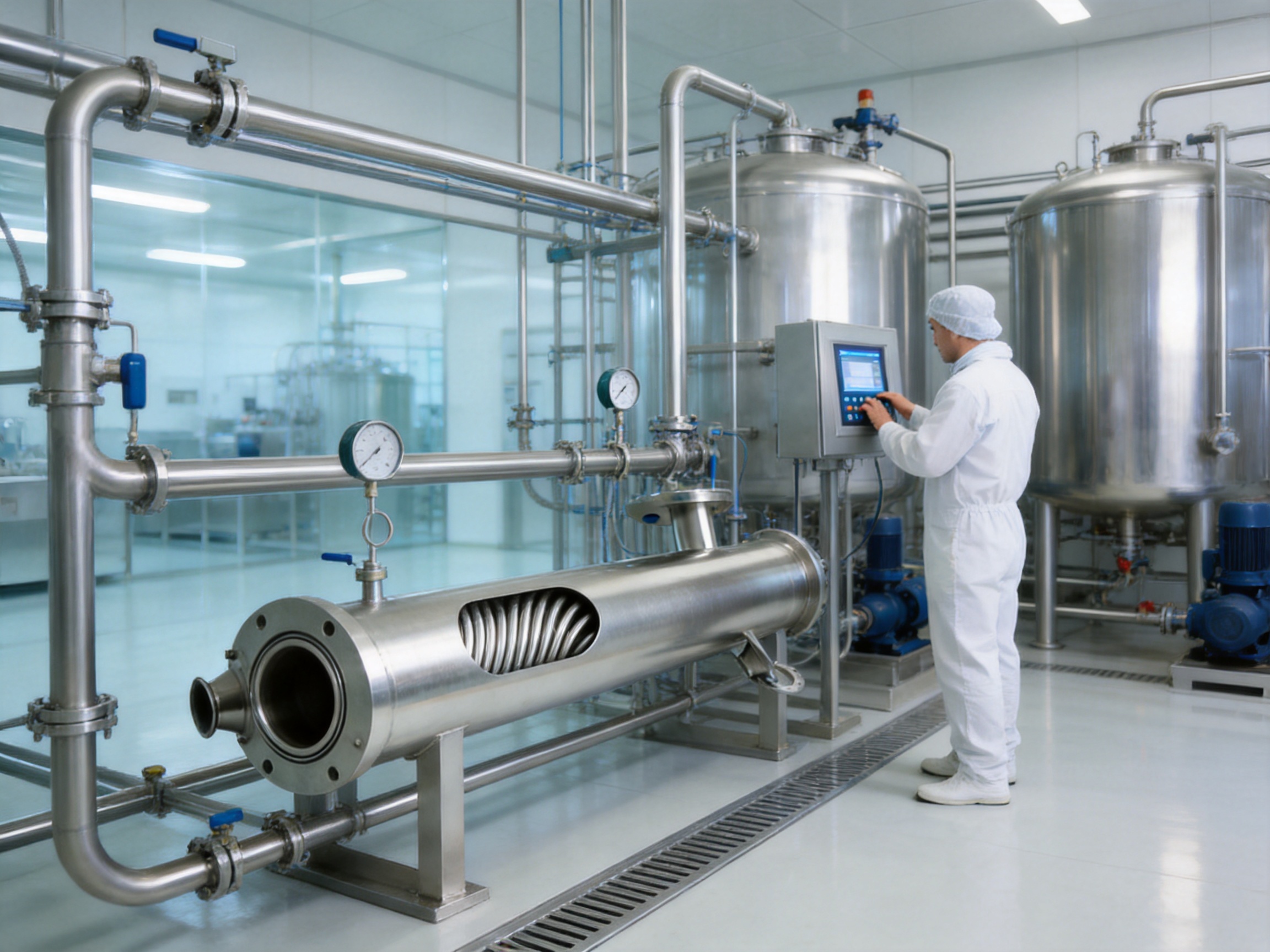
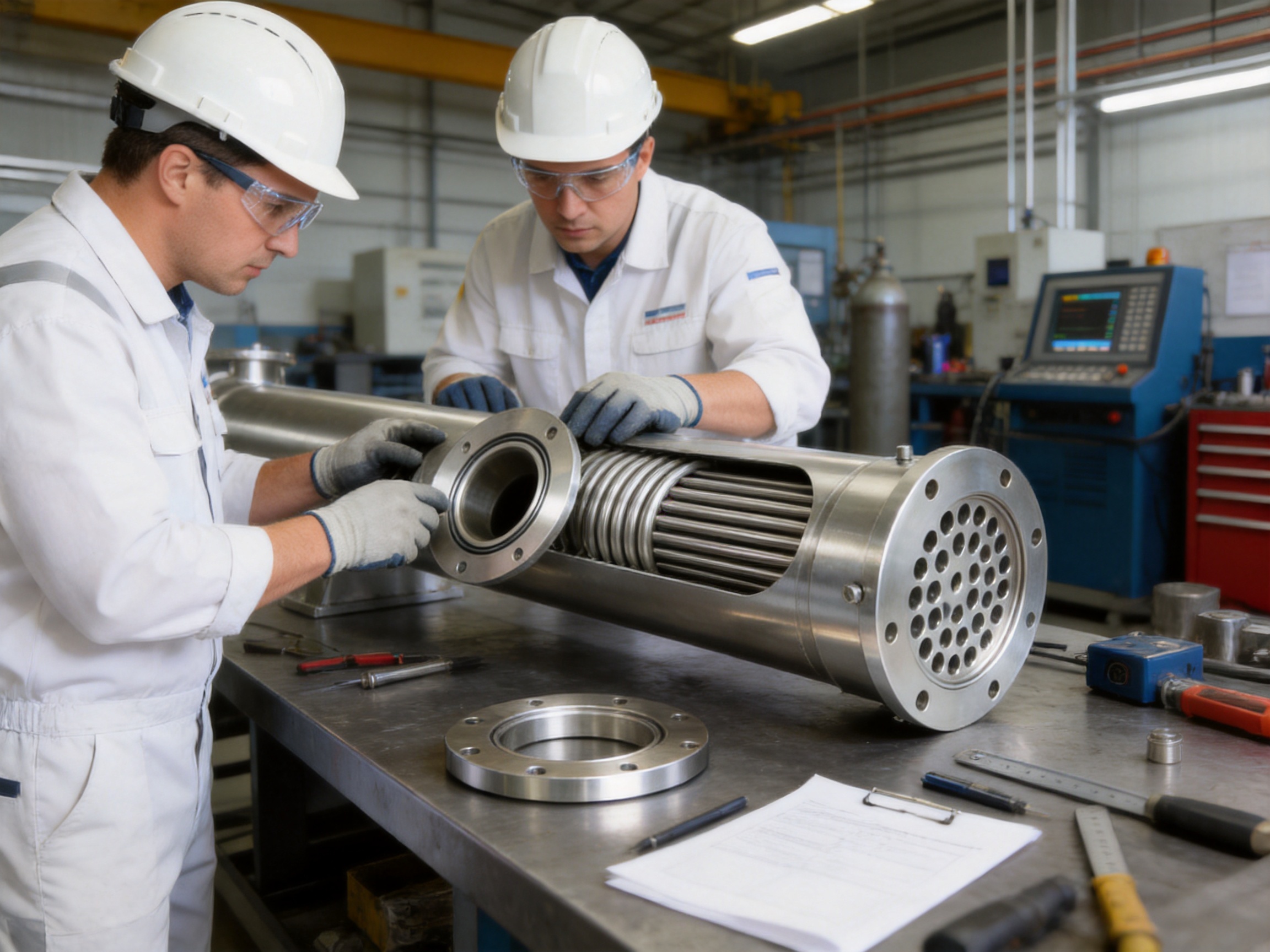
Product: Shell And Tube Heat Exchanger-Flange Type
PREV:No previous article
NEXT:Automatic Food Pasteurization System: Advanced Process Technology for Safe, Efficient, and High-Quality Production
NEXT:Automatic Food Pasteurization System: Advanced Process Technology for Safe, Efficient, and High-Quality Production
Interested in cooperation or have questions?
Recommended LINS
✦
Food and Beverage Process System
Food Processing Skid System
Process Skid System
CIP Skid System for Food Industry
food and beverage process skid system
automated process skid system for food processing
CIP process skid system for food industry
hygienic process skid for food industry
Sanitary Process Skid
Skid Mounted Process System
Let'S Work Together Welcome Aboard!
-

haikexin@haikexin.com
+8613391278930
-
 +86-21-57560276
 -
 No. 2819, Sihu Road,Fengxian District, Shanghai, China
Join Our Mailing List
Copyright © Shiloc (Shanghai) Industrial Trading Co., Ltd. All Rights Reserved.
Process Systems & Equipment For Food & Biopharma Manufacturers
