
 English
 русский
 Português
 Français


 Read More

Product Category
NEW Category
Contact us
Contact Us
We specialise in the research, development and manufacture of electrical wires and cables.
 +86-21-57560276
Bottom-Entry High-Shear Magnetic Emulsifiers for Hygienic Food and Biopharmaceutical Processing
Content
- 1 1. The Processing Challenge: Efficient Mixing Without Compromising Hygiene
- 2 2. Operating Principle of a Bottom-Entry High-Shear Magnetic Emulsifier
- 3 3. Main Advantages Compared with Conventional Mixing Equipment
- 4 4. Construction and Functional Components
- 5 5. Product Series and Configuration Options
- 6 6. LHS-G Technical Specifications
- 7 7. Why High-Shear Magnetic Emulsification Improves Particle-Size Reduction
- 8 8. Food and Beverage Applications
- 9 9. Pharmaceutical and Biopharmaceutical Applications
- 10 10. Hygienic Design and CIP/SIP Considerations
- 11 11. Advanced Manufacturing and Engineering Strengths
- 12 12. Product Quality and Reliability Advantages
- 13 13. Selecting the Correct Mixer for a Process
- 14 14. Comparison with Competing Equipment Concepts
- 15 15. Installation, Operation, and Maintenance Guidance
- 16 16. Sustainability and Production Efficiency
- 17 17. Engineering and Technical Support
- 18 18. Frequently Asked Questions
- 18.1 Q1: What is a bottom-entry high-shear magnetic emulsifier?
- 18.2 Q2: What is the main advantage of magnetic drive technology?
- 18.3 Q3: Why is bottom mounting useful?
- 18.4 Q4: What is the difference between LMP and LHS models?
- 18.5 Q5: Can the mixer process viscous materials?
- 18.6 Q6: Is the equipment suitable for pharmaceutical and biotechnology production?
- 18.7 Q7: Can it be used for cell-reactor applications?
- 18.8 Q8: Are the stated capacities guaranteed for every product?
- 18.9 Q9: Does magnetic drive eliminate maintenance?
- 18.10 Q10: How does the manufacturer support customized projects?
- 19 19. Conclusion
- 20 References
- 21 Product: Bottom-entry High-shear Magnetic Emulsifier
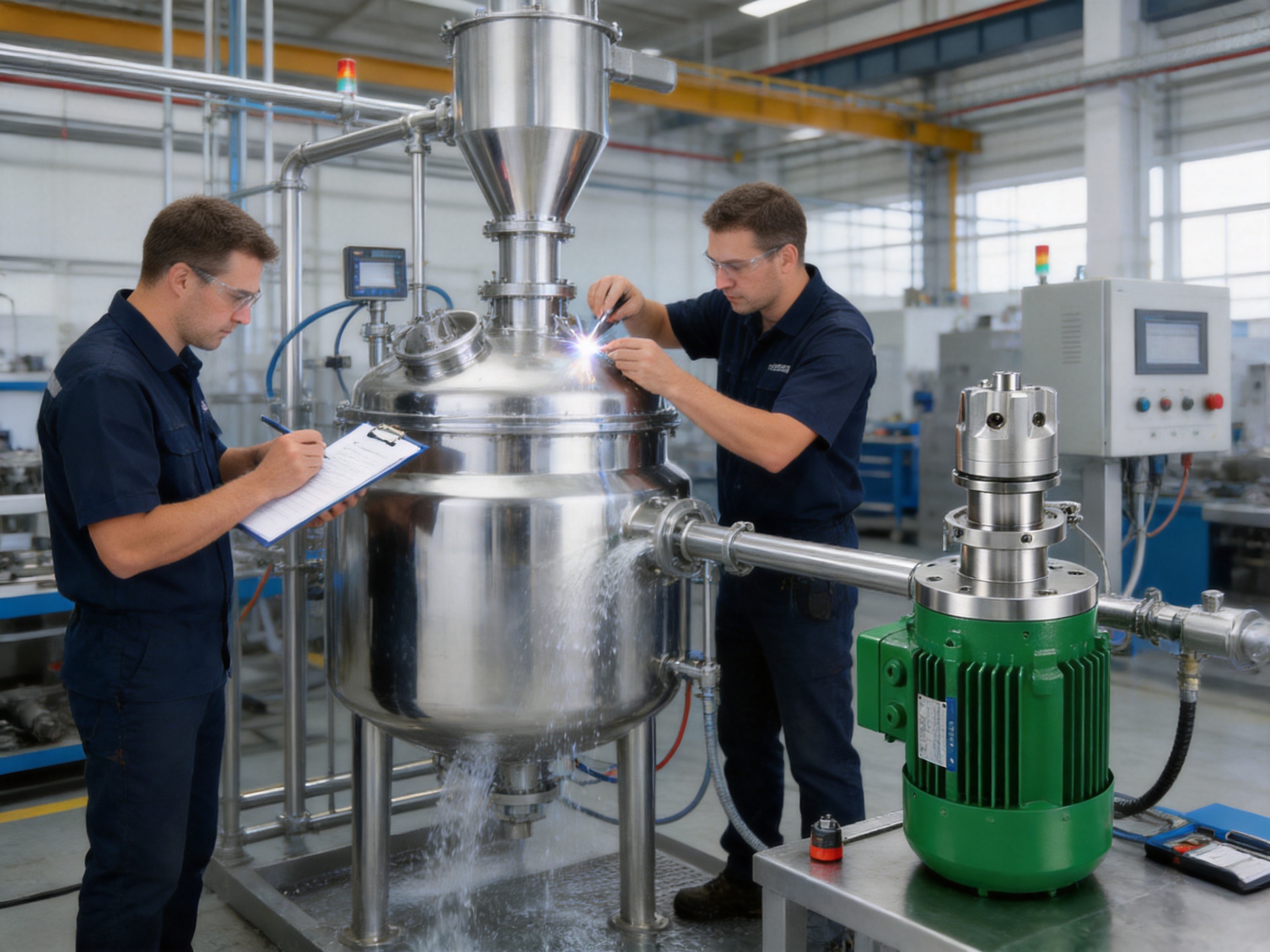
Modern food, beverage, pharmaceutical, and biotechnology manufacturers increasingly require mixing equipment that can deliver high dispersion performance while protecting product quality and maintaining hygienic production conditions. Powders must be incorporated quickly, emulsions must remain stable, and sensitive ingredients must be processed without unnecessary exposure to the surrounding environment. At the same time, manufacturers must reduce contamination risks, simplify cleaning, control maintenance costs, and make efficient use of production space.
A bottom-entry high-shear magnetic emulsifier addresses these requirements by combining a bottom-mounted installation, a sealed magnetic drive, and an impeller designed to generate an effective mixing flow field with controlled shear. This configuration is particularly useful when powders are difficult to mix into liquids, when particle agglomerates must be reduced, or when a process requires rapid emulsification, suspension maintenance, dissolution, or dilution.
Unlike conventional agitators that depend on mechanical shaft seals extending through the vessel wall, a magnetic-drive mixer transfers torque through magnetic coupling. The absence of a conventional dynamic mechanical seal reduces the possibility of product leakage and limits the pathways through which external contaminants can enter the vessel. This is a significant advantage in sterile or high-value applications, including biopharmaceutical media preparation, cell-processing systems, pharmaceutical solutions, and premium food products.
The equipment described in this article is designed for food and beverage, pharmaceutical, biotechnology, daily chemical, and fine chemical applications. It incorporates hygienic materials, tungsten carbide sliding bearings, CIP/SIP compatibility, low start-up volume, and bottom-mounted installation. It is also supported by the engineering, fabrication, welding, polishing, quality-control, and technical-service capabilities of Shiloc (Shanghai) Industrial Trading Co., Ltd.
1. The Processing Challenge: Efficient Mixing Without Compromising Hygiene
Mixing is often treated as a simple mechanical operation, but industrial mixing performance depends on many connected variables. These include viscosity, density difference, powder wettability, vessel geometry, batch volume, temperature, shear sensitivity, gas entrainment, cleaning requirements, and the desired final particle-size distribution. A mixer that performs well with water may not deliver the same result with a concentrated protein solution, viscous syrup, culture medium, or oil-in-water emulsion.
Food and beverage processors may need to dissolve sugars, stabilizers, proteins, starches, flavors, or nutritional powders. Pharmaceutical manufacturers may process active ingredients, excipients, buffers, suspensions, and sterile solutions. Biopharmaceutical plants may require reliable circulation in solution tanks, media vessels, or cell-reactor systems. These processes often involve materials that are expensive, sensitive to contamination, or difficult to disperse uniformly.
Traditional mixing systems can create several difficulties. Mechanical seals may require regular inspection and replacement. Seal wear can result in leakage, while seal faces can become a potential contamination point. Top-mounted equipment can also occupy valuable space above the vessel and may require a large support structure. In addition, a conventional low-shear impeller may circulate liquid without providing sufficient local energy to break down agglomerates or create a stable emulsion.
A high-shear magnetic emulsifier is developed to respond to these problems through a more integrated design. The magnetic drive supports a sealed vessel boundary, the bottom-entry configuration promotes circulation from the lower region of the vessel, and the impeller profile creates stronger local mixing forces than a general-purpose low-shear propeller. The result is an equipment platform capable of supporting both hygienic operation and demanding particle-reduction processes.
2. Operating Principle of a Bottom-Entry High-Shear Magnetic Emulsifier
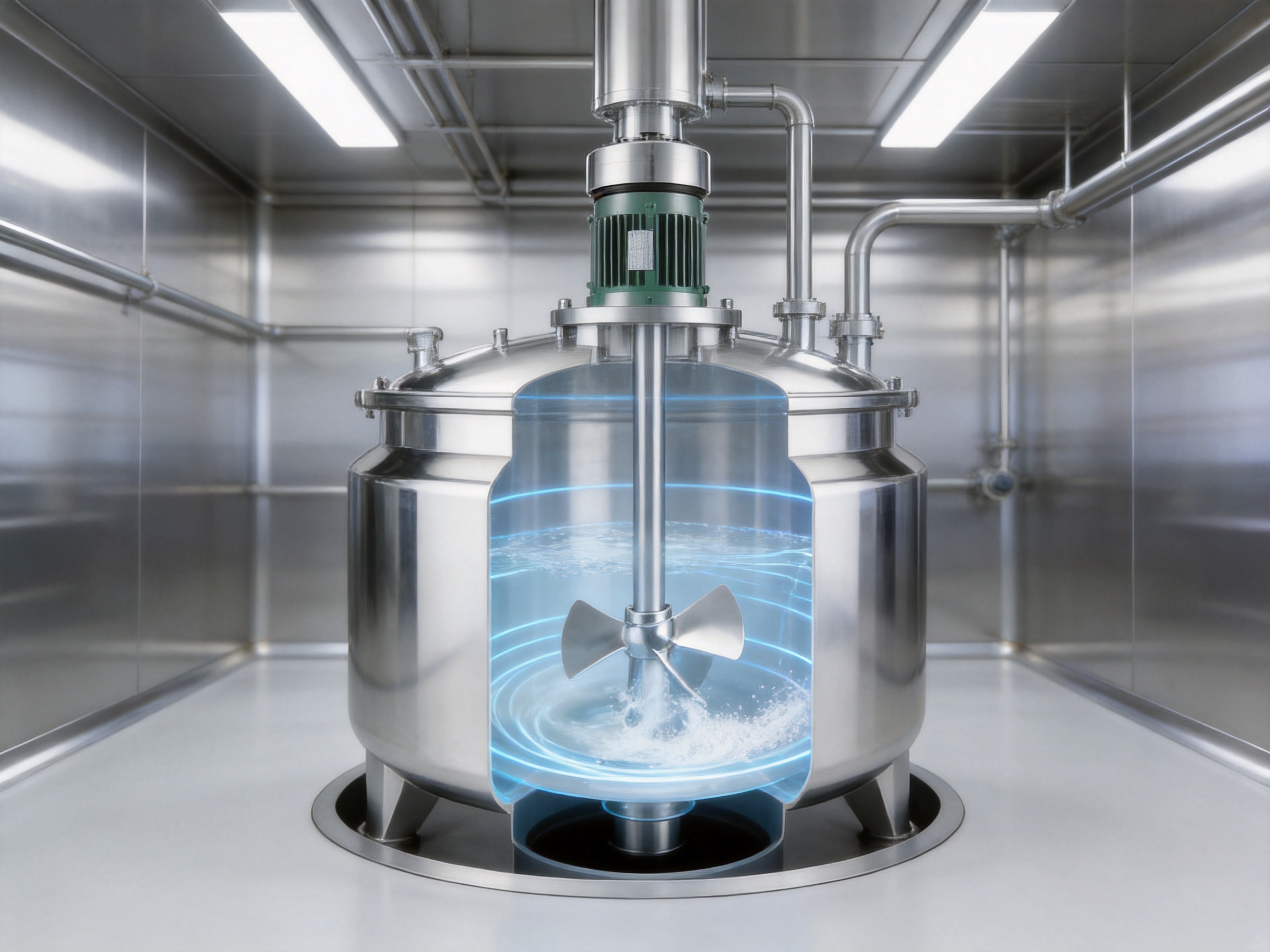
A bottom-entry high-shear magnetic emulsifier is installed through the lower section of a processing vessel. The drive system is divided into an external rotor and an internal rotor. The motor turns the external rotor, and magnetic forces transfer the rotational motion across the sealed containment boundary to the internal rotor and impeller. Because the shaft does not need to pass through a conventional rotating mechanical seal, the product zone can remain isolated from the external environment.
The impeller is positioned inside the vessel close to the bottom. As it rotates, it generates a combination of radial and axial flow. The exact flow pattern depends on the impeller geometry, speed, liquid properties, and vessel design. The lower installation position helps draw material toward the impeller and supports circulation throughout the tank. This can reduce stagnant areas and improve the contact between powders, liquids, and suspended particles.
High-shear operation is based on the controlled application of energy to the process fluid. Localized velocity gradients produce shear forces that help break apart agglomerates, reduce droplet size, improve powder wetting, and accelerate dissolution. The objective is not simply to operate at the highest possible speed. Instead, the impeller profile and operating speed should be selected to achieve the required particle reduction and dispersion while avoiding excessive heat generation, foaming, or damage to shear-sensitive materials.
The equipment is designed for a speed range that varies by model and application. General product information indicates operating ranges from approximately 400 to 1450 rpm for certain configurations, while the LHS series covers approximately 500 to 2850 rpm. The LHS-G high-shear models are specified at up to 2850 rpm. Actual operating speed should be determined according to the viscosity, volume, formulation, vessel dimensions, and process objective.
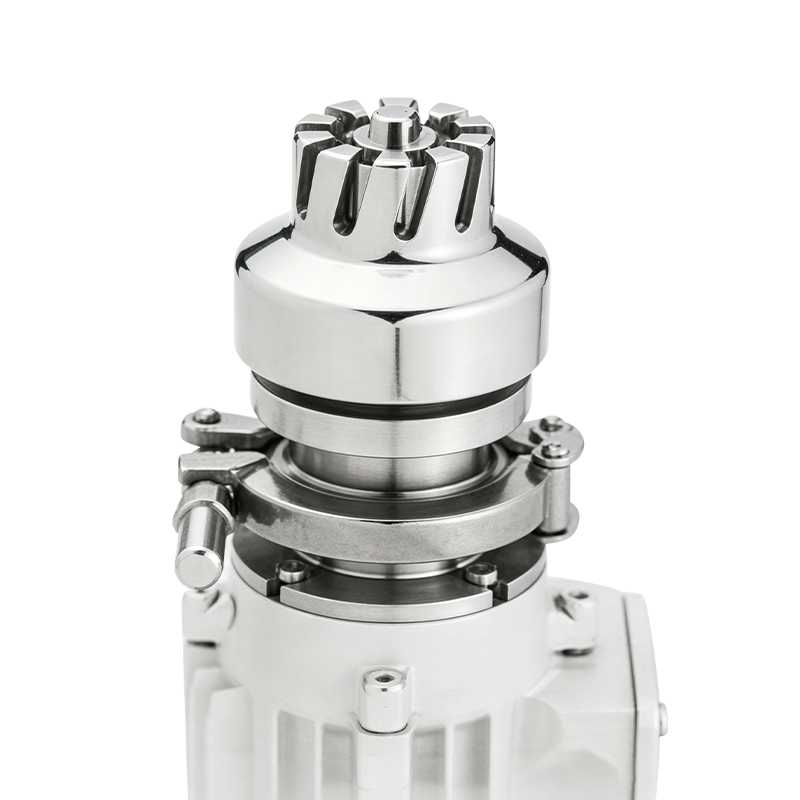
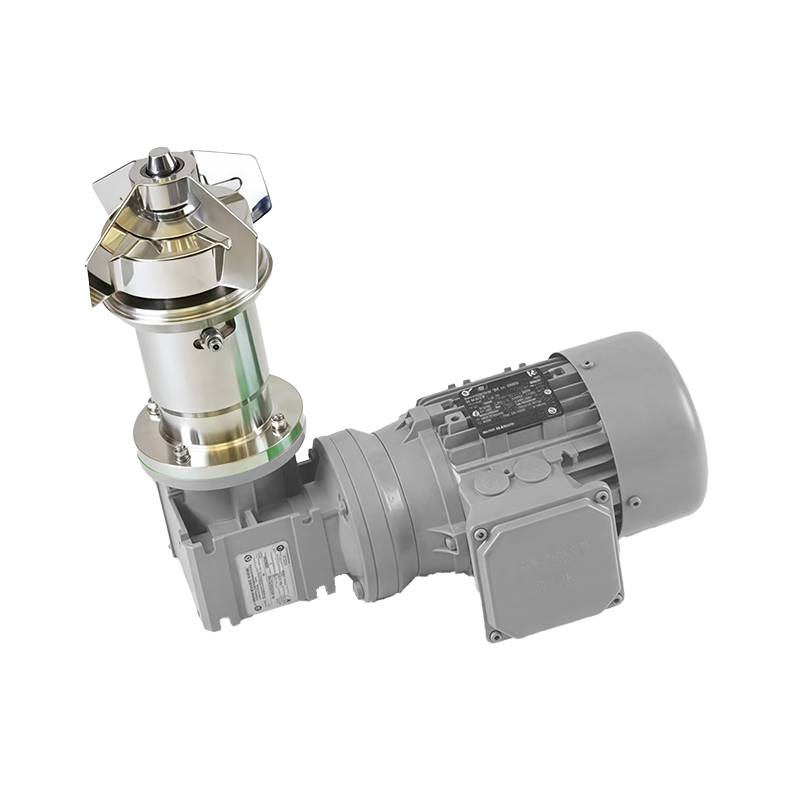
Bottom-entry High-shear Magnetic Emulsifier
3. Main Advantages Compared with Conventional Mixing Equipment
3.1 Sealed Magnetic Drive
The most important design advantage is the magnetic drive system. Conventional mixers commonly use mechanical seals to prevent fluid from escaping around a rotating shaft. Even when properly designed and maintained, a mechanical seal contains moving contact surfaces that may wear over time. Seal failure can lead to leakage, unplanned downtime, product loss, or contamination.
A magnetic drive transfers torque without requiring the rotating shaft to penetrate the vessel boundary in the same manner as a mechanically sealed mixer. This reduces the risk of process media leaking into the surrounding area and reduces the possibility of external contaminants entering the vessel. The benefit is particularly important when the product is toxic, expensive, sterile, oxygen-sensitive, or otherwise vulnerable to environmental exposure.
The magnetic coupling also supports cleaner equipment architecture. With fewer external product-contact sealing components, the mixer can be integrated into a hygienic vessel design with fewer potential contamination points. This does not eliminate the need for correct vessel fabrication, validated cleaning, appropriate operating procedures, or preventive maintenance. However, it can reduce the seal-related risks associated with traditional agitator systems.
3.2 Bottom-Mounted Installation
Top-mounted agitators require space above the tank for the motor, gearbox, shaft, coupling, support frame, and maintenance access. In facilities with restricted ceiling height or compact process layouts, this arrangement can make vessel installation and service more difficult. A bottom-mounted mixer relocates the drive assembly to the lower portion of the vessel and leaves the top area more available for filling systems, inspection devices, spray balls, filters, transfer lines, or other process equipment.
Bottom mounting also places the impeller close to the lowest part of the vessel. This can be useful for low-level operation, powder incorporation, and suspension maintenance. The design supports a low start-up volume, which means the equipment can begin circulating material at a relatively low liquid level compared with some conventional mixing arrangements. This feature may help reduce residual product and improve batch flexibility, although the exact minimum operating volume must be established for each vessel and formulation.
3.3 Controlled High-Shear Performance
High-shear equipment must provide sufficient energy for particle reduction without creating uncontrolled process effects. The impeller geometry of this product family is designed to create an effective flow field and moderate to high shear according to the selected model. This allows one equipment platform to address multiple process requirements, including powder dispersion, emulsification, suspension, dilution, and dissolution.
Compared with a basic propeller mixer, a high-shear impeller can improve the contact between liquid and solid particles. It can also break down larger agglomerates more rapidly and distribute dispersed material more evenly. This may shorten processing time and reduce the number of recirculation or rework steps. In emulsification processes, stronger local shear can assist in reducing droplet size and improving the uniformity of the finished product.
3.4 Hygienic and Sterile Design
All product-contact components are manufactured from 1.4435 or 1.4404 stainless steel, materials commonly selected for hygienic process equipment because of their corrosion resistance, cleanability, and suitability for pharmaceutical and food-processing environments. The design is intended to meet FDA-related requirements for pharmaceutical and biotechnology applications and to support CIP/SIP procedures.
CIP, or clean-in-place, enables internal surfaces to be cleaned without removing the mixer from the vessel. SIP, or sterilization-in-place, allows the system to be sterilized using an approved thermal or chemical process. The actual validation of a CIP/SIP cycle depends on the complete vessel and process system, including spray-device coverage, cleaning-agent concentration, temperature, flow velocity, sterilization time, drainage, surface finish, and monitoring instruments.
The sterile design approach also includes the use of tungsten carbide sliding bearings. These bearings are selected for their wear resistance and ability to operate in demanding process conditions. Correct material compatibility, lubrication by the process medium where applicable, alignment, operating speed, and maintenance procedures remain essential to achieving long service life.
3.5 Suitability for Difficult-to-Mix Materials
Some powders resist wetting because they contain hydrophobic components, fine particles, or materials that form a surface layer when they contact liquid. Other powders rapidly form lumps that are difficult to disperse after hydration. A bottom-entry high-shear emulsifier helps address these problems by directing liquid movement toward the powder and applying localized shear during incorporation.
The equipment is suitable for applications with viscosities up to approximately 800 cP, subject to model selection and confirmation through process testing. Viscosity alone does not determine mixer performance. Density, solids concentration, yield stress, temperature, particle size, and the required degree of dispersion must also be evaluated. For this reason, capacity figures based on water should be treated as reference values rather than universal guarantees.
4. Construction and Functional Components
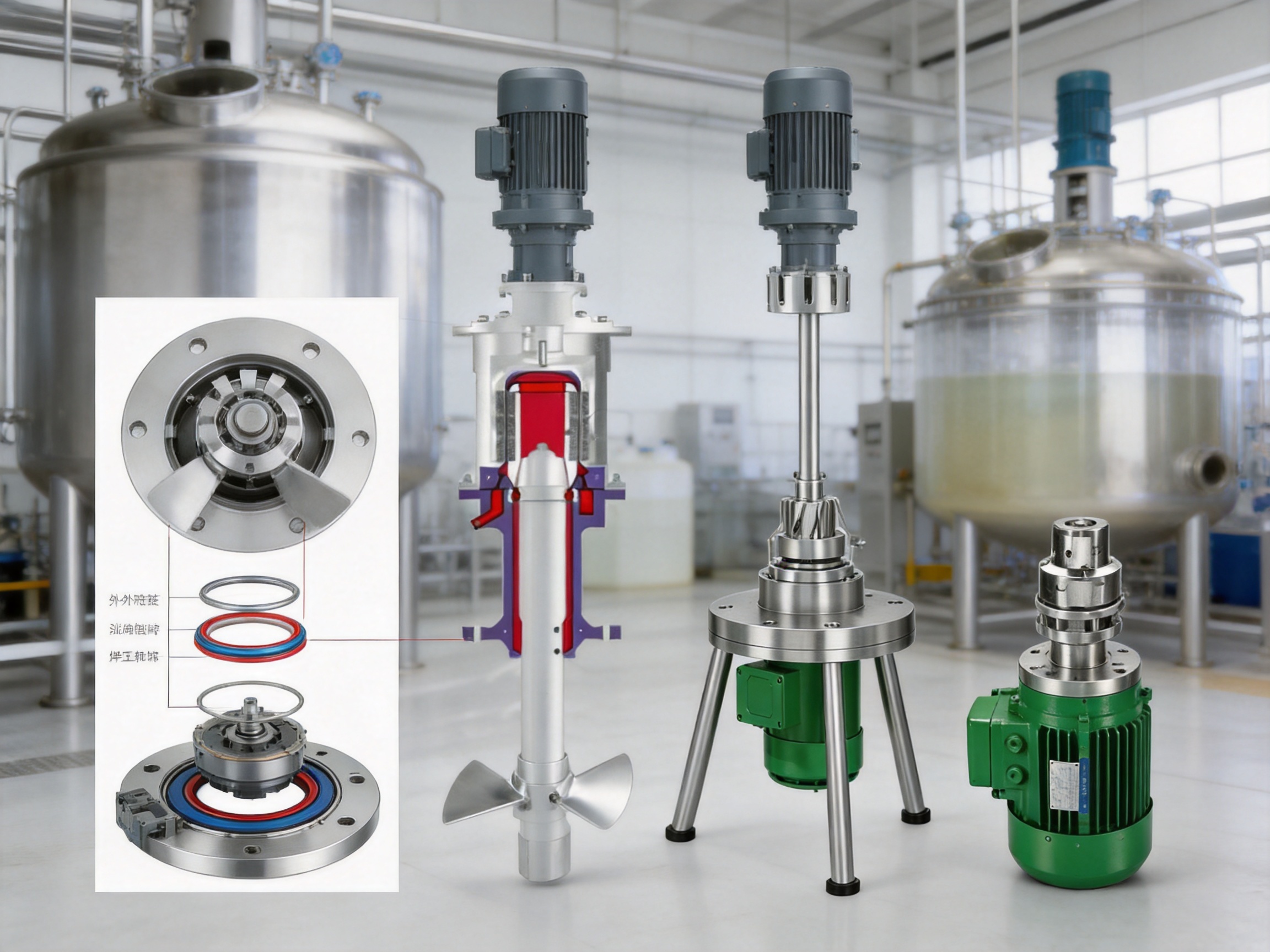
The main components of the magnetic mixer are designed to work as an integrated process system. The external rotor, also described as the impeller-side external rotating component, transmits motion through the magnetic coupling. The internal rotor receives the magnetic torque inside the sealed product zone. The bearing locator maintains the position of the bearing assembly, while the tungsten carbide sliding bearing supports stable rotation.
The welded shaft sleeve forms part of the hygienic internal assembly. The flange connects the mixer to the vessel and provides the required mechanical interface. O-rings are used at designated sealing positions, with material selection determined by the process temperature, chemical compatibility, cleaning agents, and sterilization conditions. The motor supplies rotational power, while the motor and gearbox arrangement can be selected when torque multiplication or speed adaptation is required.
A lifting device may be included to assist installation, removal, or service of the assembly. Proper lifting procedures are important because magnetic-drive equipment contains precision components that must be protected from impact, misalignment, and contamination during handling. Installation should be performed according to approved drawings, torque specifications, alignment requirements, and vessel-fabrication standards.
| Component | Primary Function | Process Relevance |
|---|---|---|
| External rotor | Receives motor rotation and transfers magnetic torque | Supports sealed drive operation |
| Internal rotor | Drives the internal impeller | Generates mixing energy in the product zone |
| Tungsten carbide bearing | Supports rotating components | Provides wear resistance during continuous operation |
| Welded shaft sleeve | Forms part of the internal hygienic assembly | Supports cleanable, corrosion-resistant construction |
| Flange | Connects the mixer to the vessel | Enables secure bottom installation |
| O-ring | Provides static sealing at designated interfaces | Helps maintain process containment |
| Motor and gearbox | Provides and adapts rotational power | Allows speed and torque selection for the process |
5. Product Series and Configuration Options
The equipment range includes bottom-mounted high-shear mixers as well as lower-shear and top-mounted magnetic mixer configurations. Selecting the correct series is important because the best mixer for general suspension maintenance may not be the best mixer for fine emulsification or cell-reactor circulation.
5.1 LMP-S Single-Layer Bottom-Mounted Magnetic Mixer
The LMP-S uses a single-layer impeller arrangement and has a maximum speed of approximately 500 rpm. It is intended for dispersion, mixing, suspension, and dissolution in solution tanks. The single-layer structure provides a compact solution for applications that require reliable circulation without the higher shear intensity of the LHS-G series.
This configuration may be suitable for buffer preparation, liquid blending, suspension maintenance, and general solid-liquid mixing. The final selection should consider tank diameter, liquid height, powder loading, viscosity, and the required level of homogeneity.
5.2 LMP-D Multi-Layer Bottom-Mounted Magnetic Mixer
The LMP-D is a multi-layer bottom-mounted magnetic mixer with a maximum speed of approximately 480 rpm. Multiple impeller levels can improve circulation across different vertical zones of the vessel. This is useful in taller tanks or in processes where a single impeller may not adequately distribute material from the bottom to the upper liquid region.
The LMP-D is also listed for cell-reactor applications. In such systems, shear management is especially important because biological cells may be sensitive to excessive mechanical stress. The multi-layer configuration can support circulation at a selected speed while avoiding the need to operate a single impeller at an unnecessarily high intensity.
5.3 LHS Low-Shear Bottom-Mounted Mixer
The LHS low-shear model reaches a maximum speed of approximately 1480 rpm and is intended for mixing tanks used for dispersion, suspension, dissolution, and general blending. It occupies a middle position between conventional low-speed magnetic mixers and high-shear emulsifiers.
This configuration may be appropriate when a process requires more circulation than an LMP model can provide but does not require the intense local shear of the LHS-G. It can help manufacturers select a more balanced solution based on product sensitivity, processing time, and energy requirements.
5.4 LHS-G High-Shear Bottom-Mounted Magnetic Mixer
The LHS-G is the high-shear configuration and reaches a maximum speed of approximately 2850 rpm. It is intended for shear emulsification, fine dispersion, and particle-size reduction, particularly in biopharmaceutical and other demanding process applications.
Available models include LHS-G150, LHS-G600, and LHS-G2500. Based on water testing, the stated capacities range from approximately 10 to 150 liters, 150 to 600 liters, and 600 to 2500 liters, respectively. These values are reference capacities and must be adjusted when the actual medium has a higher viscosity, greater solids content, or different flow behavior.
5.5 LDC Top-Mounted Magnetic Mixers
The LDC-N and LDC-W models provide top-mounted alternatives. The LDC-N uses an internal magnetic drive and reaches approximately 600 rpm. It is widely used for solid-liquid mixing, dispersion, and dissolution while meeting CIP/SIP requirements.
The LDC-W uses an external magnetic drive and reaches approximately 1200 rpm. It is intended for dispersion, mixing, suspension, and dissolution in solution tanks. These models are useful when the vessel design, existing plant arrangement, or process requirements favor top-mounted installation.
| Model Series | Installation | Maximum Speed | Typical Application Focus |
|---|---|---|---|
| LDC-N | Top-mounted, internal magnetic drive | 600 rpm | Solid-liquid mixing, dispersion, dissolution |
| LDC-W | Top-mounted, external magnetic drive | 1200 rpm | Dispersion, suspension, solution preparation |
| LMP-S | Bottom-mounted, single-layer | 500 rpm | Mixing, suspension, dissolution |
| LMP-D | Bottom-mounted, multi-layer | 480 rpm | Cell reactors and multi-zone circulation |
| LHS | Bottom-mounted, low-shear | 1480 rpm | Dispersion, suspension, dissolution |
| LHS-G | Bottom-mounted, high-shear | 2850 rpm | Emulsification and particle-size reduction |
6. LHS-G Technical Specifications
The LHS-G series combines high rotational speed with a bottom-mounted magnetic drive. The available models are designed for different water-based capacity ranges and use impeller diameters selected for the corresponding vessel volume.
| Model | Blade Diameter | Power | Speed | Reference Capacity |
|---|---|---|---|---|
| LHS-G150 | 80 mm | 0.55/0.75 kW | 2850 rpm | 10–150 L |
| LHS-G600 | 100 mm | 2.2/3 kW | 2850 rpm | 150–600 L |
| LHS-G2500 | 170 mm | 5.5/7.5 kW | 2850 rpm | 600–2500 L |
The model numbers and capacity ranges are based on testing conducted with water as the medium. The correct model must be selected according to the actual process liquid. A formulation with a viscosity near the upper operating limit may require a larger motor, a different impeller configuration, reduced operating speed, or a smaller working volume than a water-based calculation would suggest.
Engineering evaluation should include the operating temperature, density, viscosity curve, solids concentration, powder addition rate, desired particle-size distribution, batch time, and cleaning cycle. Where possible, laboratory or pilot testing should be used to verify the selected model before full-scale installation.
7. Why High-Shear Magnetic Emulsification Improves Particle-Size Reduction
Particle-size reduction is important because particle distribution affects product stability, texture, dissolution rate, bioavailability, appearance, and downstream filtration. Large agglomerates can settle quickly, clog filters, create inconsistent dosing, or produce an unacceptable mouthfeel in food products. In pharmaceutical and biotechnology applications, uneven dispersion can compromise batch uniformity and process reproducibility.
A high-shear emulsifier improves particle reduction through several mechanisms. First, the impeller creates high velocity gradients in a defined region of the vessel. Second, the circulation pattern brings fresh liquid into contact with solid or dispersed material. Third, repeated movement through the high-energy zone gradually breaks down agglomerates and distributes smaller particles throughout the batch.
For liquid-liquid emulsification, the mixer can help divide one liquid phase into smaller droplets within another phase. Droplet size depends on the interfacial tension, viscosity ratio, phase ratio, temperature, formulation chemistry, residence time in the high-shear zone, and energy input. The mixer provides mechanical energy, but the final emulsion also depends on suitable emulsifiers, stabilizers, and formulation conditions.
Compared with a conventional low-shear mixer, the LHS-G can produce stronger local mixing forces and may achieve the desired dispersion in less time. Compared with an open or mechanically sealed system, the magnetic-drive configuration offers improved containment and reduced exposure risk. The combination of high shear and sealed hygienic operation is valuable when both product quality and contamination control are priorities.
8. Food and Beverage Applications
Food and beverage production requires equipment that can handle frequent cleaning, changing formulations, and strict control of product contamination. The bottom-entry high-shear magnetic emulsifier can be applied to beverage concentrates, nutritional products, dairy-related formulations, sauces, dressings, flavor systems, and other liquid or semi-liquid products where dispersion and emulsion quality are important.
In beverage preparation, the mixer can help dissolve powders, distribute stabilizers, and maintain uniformity before filling or further treatment. In sauces and dressings, controlled shear can support the formation of a consistent texture and improve the distribution of oil, water, thickeners, and flavor ingredients. In nutritional formulations, the equipment can assist with powder wetting and solid-liquid incorporation.
Hygienic design is especially important in food processing because product residues can support microbial growth if equipment is difficult to clean. Smooth stainless-steel contact surfaces, suitable weld quality, appropriate drainage, and validated CIP procedures help reduce this risk. The equipment should be integrated into a complete hygienic system rather than evaluated as an isolated component.
9. Pharmaceutical and Biopharmaceutical Applications
Pharmaceutical manufacturing often involves high-value ingredients, active pharmaceutical components, sterile buffers, suspensions, and solutions that must meet strict quality requirements. A sealed magnetic drive can reduce the chance of product leakage and external contamination, which is valuable when the product must remain contained throughout the process.
In biotechnology, the mixer may be used for media preparation, buffer preparation, solution tanks, cell-reactor support, and shear emulsification. The appropriate configuration depends on whether the process prioritizes gentle circulation, suspension maintenance, rapid dissolution, or high-shear particle reduction.
Cell-based processes require particular attention to shear exposure. The LMP-D multi-layer configuration may be considered when efficient circulation is needed across a tall vessel while maintaining a relatively low rotational speed. In contrast, the LHS-G is intended for processes where stronger shear is required, such as fine dispersion or emulsification. Process developers should establish acceptable shear conditions through testing and should not assume that the highest-speed model is suitable for every biopharmaceutical application.
FDA-related design intentions, stainless-steel contact materials, sterile construction, and CIP/SIP compatibility help support regulated manufacturing. However, compliance is achieved through the complete equipment design, documentation, materials, surface finish, validation program, operating procedures, and quality system. Equipment selection should therefore include review of certificates, material records, weld documentation, surface-finish information, and cleaning validation requirements.
10. Hygienic Design and CIP/SIP Considerations
CIP and SIP performance depends on the ability of cleaning and sterilizing media to reach all relevant surfaces at suitable velocity, temperature, concentration, and exposure time. A mixer intended for hygienic production should avoid unnecessary crevices, dead legs, poorly drained cavities, and inaccessible product-contact areas.
The bottom-entry design must be evaluated together with the vessel bottom geometry. The impeller, flange, shaft sleeve, bearing area, and surrounding vessel surfaces should be arranged to support effective drainage and cleaning. The cleaning system should be capable of reaching the internal surfaces around the mixer, and the vessel should be designed so that cleaning solution does not remain trapped after the cycle.
For SIP applications, thermal expansion, temperature distribution, gasket compatibility, and condensate removal must be considered. O-ring materials must be selected according to the sterilization temperature and chemical exposure. The magnetic coupling and bearing materials must also be suitable for the expected process cycle.
The use of 1.4435 or 1.4404 stainless steel in contact parts provides a corrosion-resistant foundation for hygienic construction. Welding and polishing quality are equally important. A technically appropriate material can still perform poorly if welds contain defects, surface roughness is excessive, or finishing is inconsistent. This is why manufacturing traceability and process control are essential parts of hygienic equipment production.
11. Advanced Manufacturing and Engineering Strengths
Shiloc (Shanghai) Industrial Trading Co., Ltd. was established in March 2026 in Fengxian District, Shanghai. The company provides equipment manufacturing, engineering and technical services, import and export support, and process solutions for food and beverage, biopharmaceutical, daily chemical, and fine chemical customers.
The company operates a Shanghai facility of approximately 3,000 square meters and has more than 20 technical specialists. Its internal capabilities include processing, welding, polishing, and quality control. These capabilities are important for hygienic mixing equipment because dimensional accuracy, weld consistency, surface condition, and component traceability directly affect equipment reliability and cleanability.
Internal processing capabilities allow the manufacturer to control key production steps rather than relying entirely on external suppliers. This can improve coordination between design, machining, fabrication, and assembly. It also makes it easier to manage engineering changes, verify component dimensions, and maintain production records.
Welding is a critical manufacturing process for stainless-steel pharmaceutical and food equipment. Controlled welding procedures help maintain structural integrity and reduce the risk of crevices or discontinuities in product-contact areas. Proper preparation, material control, welding parameters, inspection, and finishing contribute to a hygienic result.
Polishing is equally important. A smooth and consistent surface can reduce product retention and support more effective cleaning. Polishing must be controlled so that it does not create excessive local heating, deformation, embedded particles, or inconsistent surface texture. The manufacturer’s focus on complete internal processing, welding, and polishing supports greater control over these quality-sensitive operations.
Traceability provides another manufacturing advantage. Traceable records can connect raw materials, components, welding activities, inspection results, assembly steps, and final testing. For regulated industries, this information supports customer audits, quality investigations, maintenance planning, and validation documentation.
The company combines European technical experience and Danish design concepts with local manufacturing resources in Shanghai. This approach is intended to integrate hygienic design principles, practical fabrication, process optimization, and international supply support. Customers can therefore receive not only a mixer but also engineering assistance for system integration, model selection, and application development.
12. Product Quality and Reliability Advantages
Reliability in a high-shear magnetic mixer depends on the interaction of the motor, magnetic coupling, rotor assembly, bearings, impeller, flange, vessel, controls, and process liquid. The use of tungsten carbide sliding bearings provides a wear-resistant bearing solution for demanding operating conditions. The magnetic drive reduces dependence on traditional dynamic mechanical seals, which can simplify one important area of maintenance.
Reliability also depends on selecting the correct model. An undersized mixer may require excessive operating time or may fail to achieve the target dispersion. An oversized or excessively aggressive mixer may consume unnecessary energy or subject the product to excessive shear. Proper sizing should consider the real process medium rather than relying only on water-based capacity data.
The design’s low start-up volume can support flexible batch operation and may reduce the amount of product left below the effective mixing level. Bottom installation can also help maintain solids in suspension and improve circulation from the lowest part of the vessel. These advantages may contribute to improved yield and reduced manual intervention.
Operational reliability should be supported by routine inspection of bearings, O-rings, motor components, gearbox components where applicable, mounting hardware, and control systems. Operators should monitor unusual vibration, temperature rise, noise, torque changes, leakage indications, and changes in mixing performance. Preventive maintenance is still necessary even when the system uses a magnetic drive.
13. Selecting the Correct Mixer for a Process
The first step in mixer selection is to define the process objective. A product that only requires suspension maintenance may need a different configuration from a product that requires rapid powder incorporation or fine emulsification. The key questions include whether the process is solid-liquid, liquid-liquid, or multi-phase; whether the product is shear-sensitive; whether the process is sterile; and whether the final particle-size distribution must be tightly controlled.
The second step is to characterize the medium. Important data include viscosity at operating temperature, density, solids concentration, particle-size distribution, rheology, surface tension, and tendency to foam. If the product is non-Newtonian, viscosity should be measured across a relevant shear-rate range rather than represented by a single number.
The third step is to examine the vessel. Tank volume, working volume, diameter, height-to-diameter ratio, bottom shape, internal coils, baffles, spray devices, ports, and available installation space all affect performance. The bottom flange must be compatible with the vessel design, and sufficient access must be provided for installation and service.
The fourth step is to determine cleaning and sterilization requirements. The mixer, vessel, gaskets, instruments, and connected piping must be compatible with the planned CIP/SIP cycles. If the product is regulated, documentation requirements should be defined before purchase.
The fifth step is to verify performance through testing or engineering calculation. Water-based capacity ranges can provide an initial guide, but pilot testing may be required for viscous, shear-sensitive, abrasive, or highly concentrated formulations. The supplier can help evaluate the correct impeller structure, power level, speed range, and model.
14. Comparison with Competing Equipment Concepts
When compared with conventional top-mounted mechanically sealed mixers, the bottom-entry high-shear magnetic emulsifier offers a different combination of benefits. The magnetic drive improves containment, while the bottom location saves overhead space and positions the impeller near the bottom of the vessel. The high-shear impeller can provide stronger localized processing than a standard low-shear agitator.
Compared with open-shaft mixing systems, the sealed magnetic design provides better isolation between the process and external environment. This can be particularly valuable for sterile, toxic, oxygen-sensitive, or high-value products. It also reduces the possibility that an exposed shaft or seal assembly will become a contamination source.
Compared with a separate external homogenizer loop, an in-tank bottom-entry high-shear mixer can reduce the need for additional recirculation piping, pumps, valves, and external heat-loss surfaces. A recirculation system may still be preferable for certain high-throughput or continuous processes, but an integrated mixer can offer a more compact arrangement and simpler batch flow path.
Compared with a low-speed magnetic mixer, the LHS-G configuration provides higher speed and more intense shear for emulsification and particle reduction. However, low-shear models may be preferable for fragile biological materials or products where excessive shear is undesirable. The advantage of this product family is the availability of several configurations rather than a one-size-fits-all design.
Competitor comparison should be based on measurable process criteria rather than speed alone. Important comparison points include product containment, cleanability, sterilizability, contact-material documentation, surface finish, bearing life, power consumption, working-volume range, maintenance requirements, noise, vibration, and verified mixing results.
15. Installation, Operation, and Maintenance Guidance
Before installation, the vessel flange, mounting orientation, gasket condition, lifting equipment, electrical supply, motor rating, and control system should be checked. The mixer must be installed without forcing the flange into alignment. Incorrect installation can create mechanical stress, vibration, or premature bearing wear.
During commissioning, the operator should verify rotation direction, speed control, motor current, vibration, temperature, and leakage indicators. The mixer should not be started outside the approved minimum liquid level. Operation without sufficient process liquid can damage sliding bearings or cause undesirable heat generation.
Powder addition should be managed to prevent uncontrolled buildup at the vessel bottom. In many applications, starting the liquid circulation before adding powder can improve wetting and reduce agglomeration. The addition rate should be matched to the mixer’s ability to disperse the material. A staged addition may be preferable for highly concentrated or difficult-to-wet powders.
During operation, the process should be monitored for foam, excessive temperature increase, abnormal noise, vibration, and changes in motor load. If the formulation is sensitive to shear, the mixer should be operated at the lowest speed that achieves the required result. If particle reduction is insufficient, the operator should evaluate residence time, powder addition, formulation chemistry, and impeller selection instead of increasing speed without control.
After processing, the equipment should be cleaned according to the validated procedure. Inspection should focus on the bearing area, O-rings, flange connection, internal rotor, shaft sleeve, and external drive assembly. Any sign of wear, corrosion, scoring, deformation, or magnetic-coupling abnormality should be investigated before the next production cycle.
16. Sustainability and Production Efficiency
Production efficiency is influenced by more than motor power. A mixer that achieves uniform dispersion quickly may reduce batch time, rework, and the need for repeated processing. Better product recovery and lower residual volume can also improve material utilization, especially when processing expensive pharmaceutical or nutritional ingredients.
The bottom-mounted arrangement can contribute to more compact plant layouts by reducing the overhead space required for top-mounted drive assemblies. This may help manufacturers optimize room height, equipment spacing, and access to the upper vessel area. A more compact arrangement can also simplify integration with filling, transfer, sampling, and inspection systems.
Magnetic-drive technology may reduce maintenance associated with conventional mechanical seals. Fewer seal-related interventions can support higher equipment availability and reduce the consumption of replacement parts. Nevertheless, energy efficiency must be assessed for the complete process. The correct impeller, motor size, speed, batch time, and operating volume should be selected to prevent unnecessary power consumption.
Durable stainless-steel construction and wear-resistant bearings can support extended service life when the mixer is correctly operated and maintained. Longer equipment life reduces the environmental and financial impact associated with frequent replacement. Sustainable performance therefore depends on both equipment design and disciplined process management.
17. Engineering and Technical Support
Mixing equipment is most effective when it is selected as part of a complete process solution. Shiloc provides engineering and technical services in addition to equipment manufacturing and international trade support. This enables customers to discuss vessel integration, mixer configuration, material compatibility, process requirements, and delivery documentation with a supplier familiar with the equipment.
Technical support can include application review, model selection, capacity evaluation, installation coordination, customized equipment design, and assistance with process optimization. For international customers, import and export agency services and supply-chain coordination can simplify procurement of equipment and related components.
The company’s focus on food, beverage, biopharmaceutical, daily chemical, and fine chemical industries allows it to address applications with different requirements for hygiene, corrosion resistance, process containment, and documentation. The combination of European know-how, Danish design concepts, Shanghai manufacturing, and internal quality control supports a flexible approach to customized process equipment.
Customers should provide complete process information during the inquiry stage. Useful information includes vessel dimensions, working volume, medium properties, operating temperature, solids concentration, required batch time, CIP/SIP conditions, electrical standards, installation limitations, and target product quality. Better input data allows the supplier to recommend a more reliable and cost-effective configuration.
18. Frequently Asked Questions
Q1: What is a bottom-entry high-shear magnetic emulsifier?
A bottom-entry high-shear magnetic emulsifier is a vessel-mounted mixer installed through the bottom of a tank. It uses magnetic coupling to transfer motor torque to an internal impeller without relying on a conventional rotating mechanical seal. Its impeller is designed to produce strong localized mixing forces for emulsification, particle-size reduction, dispersion, powder incorporation, suspension, and dissolution.
Q2: What is the main advantage of magnetic drive technology?
The primary advantage is improved process containment. Magnetic coupling reduces the need for a traditional dynamic mechanical seal, which can lower the risk of product leakage and external contamination. This is particularly useful for sterile, toxic, high-value, or contamination-sensitive materials.
Q3: Why is bottom mounting useful?
Bottom mounting saves space above the vessel and places the impeller near the lowest section of the tank. This can improve bottom circulation, assist powder incorporation, reduce dead zones, and support low start-up volume. The final benefit depends on vessel geometry and process conditions.
Q4: What is the difference between LMP and LHS models?
LMP models are primarily designed for suspension, dissolution, dispersion, and general solid-liquid mixing at relatively low speeds. The LHS series provides higher-speed operation. The LHS-G is the high-shear configuration intended for emulsification, fine dispersion, and particle-size reduction.
Q5: Can the mixer process viscous materials?
The equipment is suitable for applications with viscosities up to approximately 800 cP, subject to model selection and actual process conditions. Viscosity, density, solids content, temperature, rheology, and required mixing performance should all be reviewed before final selection.
Q6: Is the equipment suitable for pharmaceutical and biotechnology production?
Yes. The design is intended to comply with FDA-related requirements for pharmaceutical and biotechnology applications. Contact parts are manufactured from 1.4435 or 1.4404 stainless steel, sliding bearings use tungsten carbide, and the equipment is designed to support CIP/SIP and sterile processing requirements.
Q7: Can it be used for cell-reactor applications?
The LMP-D multi-layer bottom-mounted magnetic mixer is listed for use in cell reactors. Cell-related processes require careful control of shear, circulation, oxygen transfer, and temperature. The appropriate speed and configuration should be confirmed through process development and validation.
Q8: Are the stated capacities guaranteed for every product?
No. The listed capacities are based on testing with water. A process medium with greater viscosity, density, solids content, or non-Newtonian behavior may require a different model or operating condition. Final sizing should be based on the actual medium and process objective.
Q9: Does magnetic drive eliminate maintenance?
No. Magnetic drive reduces maintenance associated with conventional dynamic mechanical seals, but the mixer still requires inspection and maintenance. Bearings, O-rings, motor components, gearbox components where applicable, mounting hardware, and electrical controls should be checked according to a preventive-maintenance schedule.
Q10: How does the manufacturer support customized projects?
Shiloc (Shanghai) Industrial Trading Co., Ltd. provides equipment manufacturing, engineering and technical services, international trade support, and customized process solutions. Its Shanghai facility includes processing, welding, polishing, assembly, and quality-control capabilities, helping support traceability and project-specific requirements.
19. Conclusion
The bottom-entry high-shear magnetic emulsifier provides a practical solution for manufacturers that need efficient particle reduction, reliable emulsification, hygienic operation, and improved process containment. Its magnetic drive reduces the risks associated with traditional mechanical seals, while bottom mounting saves overhead space and promotes circulation near the vessel bottom.
The LMP, LHS, LHS-G, and LDC configurations allow users to select equipment according to shear intensity, installation position, vessel design, and application requirements. Low-shear and multi-layer models can support suspension and gentle circulation, while the LHS-G series provides high-speed operation for emulsification, fine dispersion, and particle-size reduction.
Material selection, tungsten carbide sliding bearings, CIP/SIP compatibility, sterile design, and stainless-steel contact construction support use in food, beverage, pharmaceutical, and biopharmaceutical environments. Equally important are the manufacturer’s internal processing, welding, polishing, quality-control, and traceability capabilities.
Successful implementation depends on correct model selection and complete process evaluation. Manufacturers should consider the actual medium, viscosity, working volume, vessel geometry, required shear, cleaning cycle, sterilization conditions, and target product quality. When these factors are properly evaluated, a bottom-entry high-shear magnetic emulsifier can become a valuable part of an efficient, hygienic, and reliable process system.
References
1. Product technical information for LMP, LHS, LHS-G, and LDC magnetic mixer series.
2. Product specification data for LHS-G150, LHS-G600, and LHS-G2500 bottom-mounted high-shear mixers.
3. General hygienic design principles for food, pharmaceutical, and biopharmaceutical process equipment.
4. General principles of clean-in-place and sterilization-in-place system design.
5. Stainless-steel material information for grades 1.4435 and 1.4404 in hygienic processing applications.
6. General engineering guidance for powder dispersion, liquid-liquid emulsification, suspension maintenance, and particle-size reduction.
7. Manufacturer information concerning Shanghai production, processing, welding, polishing, quality control, traceability, and engineering services.
Product: Bottom-entry High-shear Magnetic Emulsifier
PREV:Intelligent Industrial Heat Exchanger Units for Food and Biopharmaceutical Processing
NEXT:Sanitary Double Tube Sheet Heat Exchanger: A Safer and More Reliable Solution for Food and Biopharmaceutical Processing
NEXT:Sanitary Double Tube Sheet Heat Exchanger: A Safer and More Reliable Solution for Food and Biopharmaceutical Processing
Interested in cooperation or have questions?
Recommended LINS
✦
Food Processing Skid System
Food and Beverage Process System
CIP Skid System for Food Industry
food and beverage process skid system
hygienic process skid for food industry
CIP process skid system for food industry
automated process skid system for food processing
modular food processing skid system
beverage processing skid system
food processing equipment skid system
Let'S Work Together Welcome Aboard!
-

haikexin@haikexin.com
+8613391278930
-
 +86-21-57560276
 -
 No. 2819, Sihu Road,Fengxian District, Shanghai, China
Join Our Mailing List
Copyright © Shiloc (Shanghai) Industrial Trading Co., Ltd. All Rights Reserved.
Process Systems & Equipment For Food & Biopharma Manufacturers
