
 English
 русский
 Português
 Français


 Read More

Product Category
NEW Category
Contact us
Contact Us
We specialise in the research, development and manufacture of electrical wires and cables.
 +86-21-57560276
Intelligent Bioprocess Heat Transfer Skids for Precise, Reliable, and Scalable Process Control
Content
- 1 1. The Role of Heat Transfer in Food and Bioprocess Manufacturing
- 2 2. What Is an Intelligent Bioprocess Heat Transfer Skid?
- 3 3. Key Advantages Compared with Conventional Distributed Systems
- 3.1 3.1 Reduced On-Site Installation Work
- 3.2 3.2 Compact Use of Floor Space
- 3.3 3.3 More Consistent Engineering and Commissioning
- 3.4 3.4 Automatic Regulation of Operating Conditions
- 3.5 3.5 Improved Operational Visibility
- 3.6 3.6 Modular Capacity and Future Expansion
- 3.7 3.7 Easier Maintenance and Cleaning
- 4 4. Heat Exchange Performance and Process Stability
- 5 5. Intelligent Control and Automation Functions
- 6 6. Hygienic and Bioprocess Considerations
- 7 7. Manufacturing and Engineering Strengths
- 8 8. Customization Options
- 9 9. Applications Across Food, Beverage, and Biopharmaceutical Industries
- 10 10. Installation, Commissioning, and Start-Up
- 11 11. Maintenance and Troubleshooting
- 12 12. Safety and Reliability Features
- 13 13. Why an Integrated Supplier Matters
- 14 14. Project Selection Guide
- 15 15. Future Development of Intelligent Heat Transfer Systems
- 16 16. Questions and Answers
- 16.1 Q1: What is an Intelligent Bioprocess Heat Transfer Skid?
- 16.2 Q2: What are the main advantages of a skid-mounted system?
- 16.3 Q3: Can the system be used for both heating and cooling?
- 16.4 Q4: Which industries use these systems?
- 16.5 Q5: How does the PLC control system improve operation?
- 16.6 Q6: Can the unit be customized?
- 16.7 Q7: How is heat exchanger fouling identified?
- 16.8 Q8: Does a factory-assembled skid eliminate site commissioning?
- 16.9 Q9: What information is needed for a quotation?
- 16.10 Q10: What support can Shiloc provide?
- 16.11 Q11: How often should the unit be maintained?
- 16.12 Q12: Can the unit connect to a remote monitoring system?
- 17 17. Conclusion
- 18 References
- 19 Product: Intelligent Bioprocess Heat Transfer Skid/Units
Modern food, beverage, biopharmaceutical, and life science manufacturers require process equipment that can deliver accurate temperature control, stable operation, high hygienic performance, and reliable data management. Heating and cooling are central to many production stages, including fermentation, cell culture, media preparation, buffer preparation, sterilization support, product conditioning, cleaning operations, and process utility management. Even small temperature deviations can affect microbial activity, cell growth, enzyme performance, product consistency, energy consumption, and production efficiency.
Intelligent Bioprocess Heat Transfer Skid/Units provide an integrated response to these challenges. Instead of assembling heat exchangers, pumps, valves, instruments, control panels, and interconnecting pipework separately at the project site, the main components are combined into a compact, skid-mounted system. The unit can be engineered, assembled, tested, and commissioned before delivery, allowing the customer to connect it to the relevant hot and cold medium networks with reduced site work.
The system combines efficient plate heat exchange with automated control, circulation pump management, real-time measurement, alarm functions, and modular configuration. It can be used for heating, cooling, temperature maintenance, process heat exchange, and pressure isolation between different utility networks. Depending on the application, the system may support process water, cooling water, hot water, glycol solutions, or other compatible media.
For customers in food and beverage manufacturing, biopharmaceutical production, biotechnology, and industrial processing, the value of an intelligent heat transfer skid extends beyond heat exchange capacity. The equipment can improve installation efficiency, simplify operation, provide better process visibility, support expansion, and reduce the risks associated with fragmented equipment procurement. Its integrated design also creates a more consistent foundation for commissioning, maintenance, troubleshooting, and future digitalization.
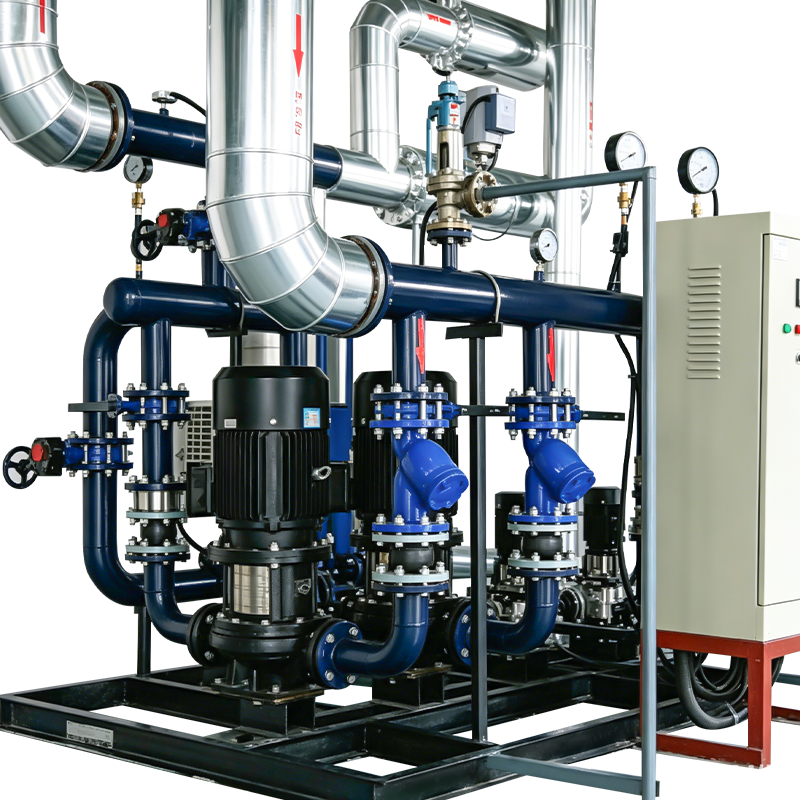
Intelligent Bioprocess Heat Transfer Skid/Units
1. The Role of Heat Transfer in Food and Bioprocess Manufacturing
Temperature is one of the most influential variables in a biological or food processing environment. Fermentation organisms, mammalian cells, enzymes, proteins, emulsions, and other sensitive materials respond directly to changes in temperature. A process that operates outside its intended range may experience reduced yield, inconsistent quality, altered viscosity, unwanted microbial activity, or damage to heat-sensitive components.
In biopharmaceutical manufacturing, temperature control may be required during media preparation, seed culture, fermentation, cell culture, intermediate storage, buffer preparation, purification support, and process equipment cleaning. In food and beverage production, heating and cooling may be needed for fermentation, pasteurization support, beverage preparation, dairy processing, syrup handling, sauce production, brewing, and temperature stabilization before filling or packaging.
The heat transfer system must therefore respond to several different operating requirements. Some processes require rapid heating during startup. Others require gradual cooling to protect the product. Certain operations require stable temperature maintenance over an extended period, while others involve frequent changes in flow, load, or setpoint. The system must be able to respond to these conditions without excessive manual intervention.
Traditional arrangements often distribute the heat exchanger, pumps, valves, sensors, and control devices across different locations. Although such systems can be functional, they may require extensive design coordination and on-site installation. Each additional connection introduces a possible source of leakage, misalignment, commissioning delay, or instrumentation inconsistency. A skid-mounted system addresses these issues by bringing the main thermal management functions together in a coordinated package.
2. What Is an Intelligent Bioprocess Heat Transfer Skid?
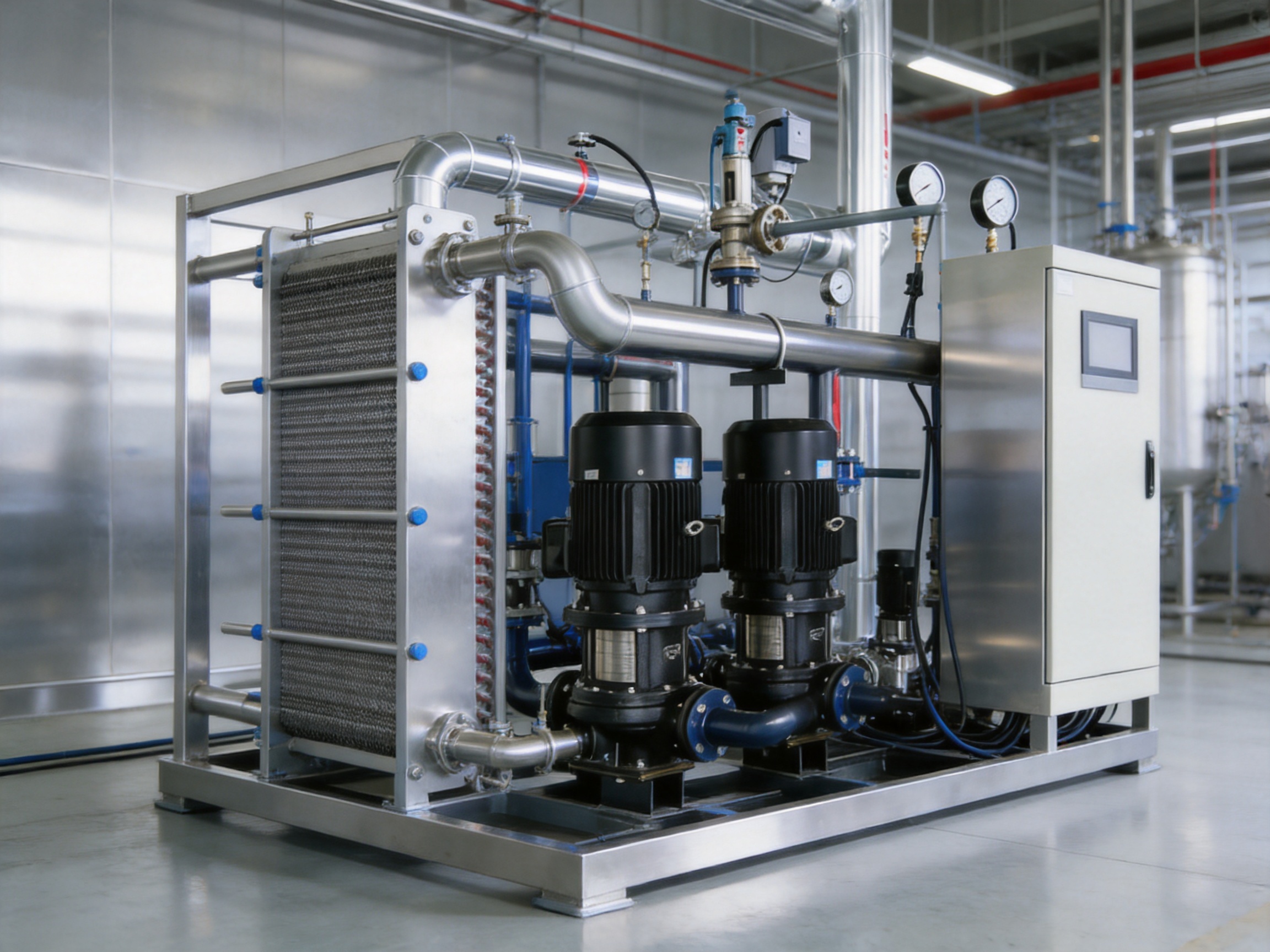
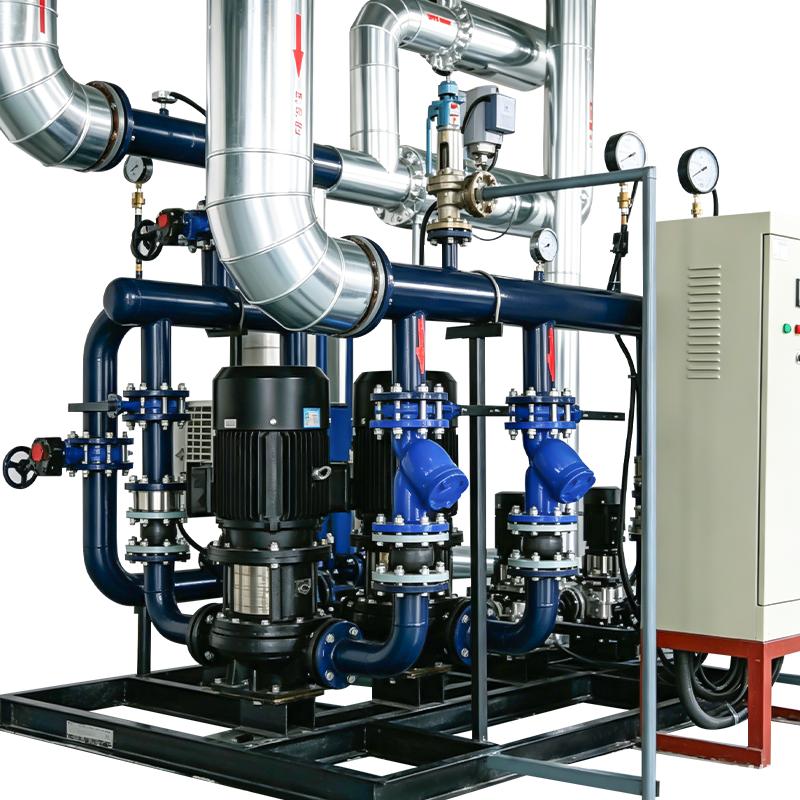
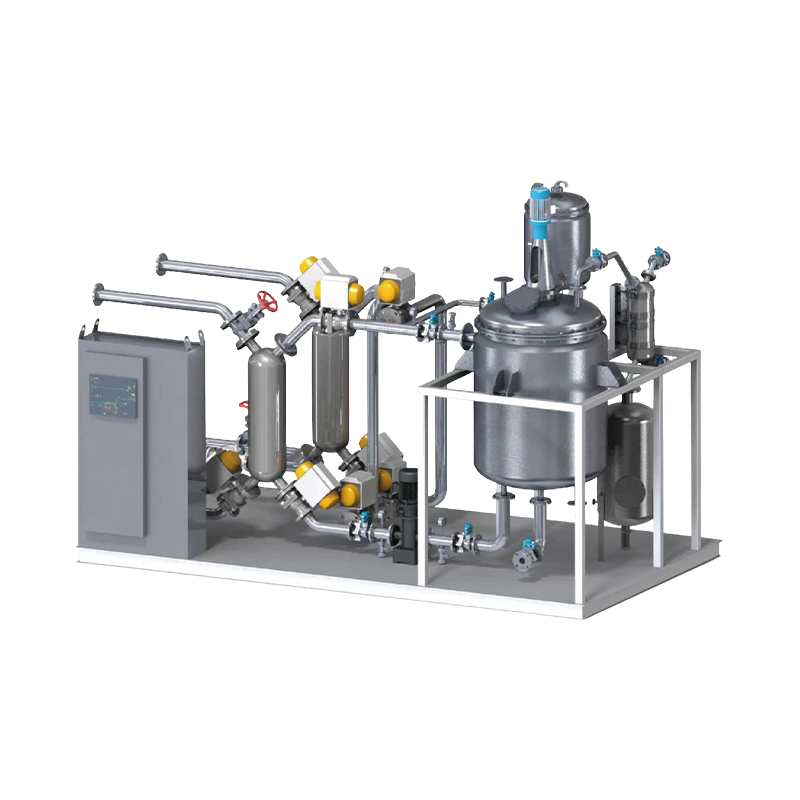
An Intelligent Bioprocess Heat Transfer Skid is a pre-engineered or custom-configured thermal management unit that integrates a plate heat exchanger, circulation pumps, valves, sensors, instruments, pipework, structural support, and a programmable control system. The complete assembly is installed on a rigid skid frame that allows lifting, transportation, positioning, and connection at the customer’s facility.
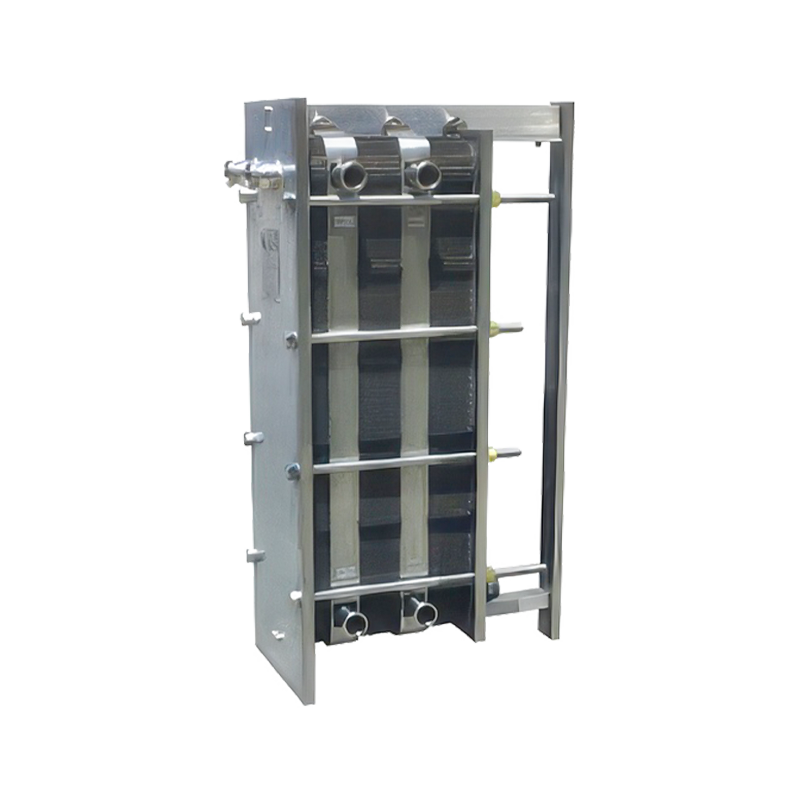
The plate heat exchanger transfers energy between two separate fluid circuits without allowing the fluids to mix. One side may contain a heating medium, while the other side contains the process or secondary medium. Depending on the application, the system can provide heating or cooling by regulating the flow and temperature of the relevant circuits.
Circulation pump sets maintain the required flow through the heat exchanger and connected pipe networks. Multiple pumps can be configured with main and standby arrangements to support operational continuity. If a duty pump requires inspection or experiences a fault, the control system can support pump changeover according to the configured operating logic.
Valves regulate isolation, flow distribution, pressure management, and maintenance access. Instruments collect information such as temperature, pressure, and flow rate. A PLC control system processes this information and adjusts the operating conditions according to programmed parameters. Operators can monitor the equipment locally and, when configured appropriately, review status and parameters through a remote interface.
The result is a single thermal management platform that connects with the customer’s hot and cold utility networks while providing centralized operation and monitoring. The unit can be designed for a specific process duty, a defined installation space, a required temperature range, or a particular level of automation.
2.1 Main Integrated Components
The core components of a typical unit include the following:
Plate heat exchanger: The plate heat exchanger provides efficient thermal transfer in a relatively compact footprint. Its plate pack can normally be disassembled for inspection and cleaning, subject to the selected design and operating conditions.
Circulation pump sets: Pumps circulate the heating, cooling, or process medium through the system. Duty and standby pump arrangements can be used to improve operational availability.
Control valves: Valves manage flow, isolation, bypass functions, pressure balance, and system response. The exact configuration depends on the process design and utility arrangement.
Temperature instruments: Temperature sensors and thermometers provide information for automatic control, display, alarm management, and process records.
Pressure instruments: Pressure gauges and pressure transmitters help operators evaluate system conditions, identify abnormal pressure changes, and support protective functions.
Flow sensors: Flow measurement allows the control system to confirm whether the required circulation rate is being achieved and whether the heat exchanger is operating within its intended range.
PLC control cabinet: The programmable control system coordinates pumps, valves, alarms, setpoints, interlocks, and operating sequences.
Skid frame and pipework: The frame supports the equipment and creates a transportable, organized assembly. Pipework is arranged to facilitate connection, inspection, and maintenance.
3. Key Advantages Compared with Conventional Distributed Systems
Customers commonly compare heat transfer skids with conventional systems assembled from separate components. The most important distinction is not simply the presence of a heat exchanger. It is the integration of the entire operating system around that heat exchanger.
3.1 Reduced On-Site Installation Work
A conventional system may require separate delivery and installation of the heat exchanger, pumps, valves, sensors, pipe sections, electrical controls, and structural supports. The customer or contractor must coordinate mechanical assembly, electrical wiring, instrumentation, alignment, pressure testing, and commissioning.
A skid-mounted unit moves much of this work into a controlled manufacturing environment. The primary equipment is assembled and checked before shipment. The customer generally needs to prepare the foundation or installation area, connect the utility and process pipelines, complete required electrical connections, and perform site acceptance activities.
This approach can reduce installation time and lower the risk of inconsistent workmanship between different contractors. It also makes the installation sequence easier to plan because the main equipment arrives as a coordinated package rather than as a collection of unrelated items.
3.2 Compact Use of Floor Space
Integrating several functions into one skid can reduce the space required for equipment installation. The compact layout is valuable in pharmaceutical plants, pilot facilities, food factories, and utility rooms where floor area is limited or expensive.
A compact skid can also improve access planning. When pumps, valves, instruments, and the heat exchanger are arranged according to a coordinated layout, operators can more easily identify the main flow path and maintenance points. The precise arrangement must still provide sufficient clearance for plate removal, pump service, valve replacement, instrument calibration, and safe operation.
3.3 More Consistent Engineering and Commissioning
When a system is assembled in one facility, the manufacturer can check component compatibility, pipe routing, valve orientation, instrument positions, control logic, and equipment labeling before delivery. Factory assembly allows technical teams to identify problems earlier than would normally be possible during field installation.
Pre-delivery testing can also support more predictable commissioning. Although final site testing remains necessary, factory preparation may reduce the number of unresolved interface issues at the customer’s facility. This is particularly useful for projects with strict schedules or limited access to specialist commissioning personnel.
3.4 Automatic Regulation of Operating Conditions
The PLC system can regulate the unit according to defined temperature, pressure, and flow requirements. Depending on the control philosophy, it may adjust valve position, pump operation, or pump speed to maintain stable conditions.
Automatic regulation reduces the need for continuous manual adjustment. It also allows the equipment to respond more quickly to changing process loads. For example, when the secondary outlet temperature begins to move away from the target value, the control system can modify the operating condition within the configured control range.
Automatic control does not eliminate the need for operator supervision. Instead, it gives operators a clearer overview of the process and provides a more repeatable method of managing routine changes. Proper commissioning, sensor calibration, alarm setting, and control loop tuning remain essential for reliable results.
3.5 Improved Operational Visibility
Real-time monitoring of pressure, temperature, and flow gives operators information that may not be available in a basic manually operated system. Trends can help identify fouling, pump degradation, insufficient flow, abnormal pressure behavior, or changes in utility performance.
Fault early warning can support preventive action before a minor issue becomes a production interruption. Depending on the selected control configuration, alarm records and operating data can also support troubleshooting, maintenance planning, and process traceability.
3.6 Modular Capacity and Future Expansion
The number of pump sets, heat exchange area, instrumentation level, and control functions can be configured according to the process duty. This modular approach enables the system to be adapted to different capacities and operating conditions.
A smaller unit may be appropriate for a pilot plant, laboratory production line, or low-flow application. A larger configuration may support a fermentation facility, food production line, utility center, or multi-vessel process. Customers can also discuss future capacity requirements during the design stage so that the skid layout and connection points are prepared for later expansion where practical.
3.7 Easier Maintenance and Cleaning
Plate heat exchangers provide access to the heat transfer surfaces by allowing the plate pack to be opened, inspected, and cleaned according to the equipment design. This is important because scaling, fouling, and deposits can reduce heat transfer performance and increase pressure drop.
The integrated skid can include isolation valves, pressure and temperature instruments, drainage arrangements, and service access points that support maintenance. Pump bearings, mechanical seals, valves, sensors, and electrical components can be inspected through an organized maintenance plan.
4. Heat Exchange Performance and Process Stability
The practical performance of a heat transfer skid depends on the relationship between heat exchanger area, fluid properties, flow rate, inlet temperatures, outlet temperature requirements, pressure drop, and operating time. A suitable system design must account for the actual process rather than relying only on nominal equipment capacity.
The plate heat exchanger is especially suitable for applications requiring efficient heat transfer in a compact structure. Its large effective transfer area and arranged flow channels can provide a high level of thermal performance when the plates, gasket materials, flow configuration, and operating parameters are selected correctly.
However, heat exchange performance is not determined by the plate heat exchanger alone. The pump must provide the required circulation rate. The utility network must supply adequate temperature and flow. The control valve must respond correctly. Sensors must measure the process accurately. Filters, pipelines, and isolation valves must remain in acceptable condition.
The intelligent skid coordinates these elements. It measures operating data and uses programmed logic to keep the system within the defined control range. This integrated approach can help reduce temperature fluctuation and provide greater stability during changes in load.
In a fermentation process, for example, heat may be generated as biological activity increases. The heat transfer skid can circulate cooling medium through a heat exchanger to remove excess heat. In another application, the system may heat process water before it is sent to a vessel or production line. The same basic platform can therefore support different thermal functions by changing the process design, control sequence, and utility connection arrangement.
4.1 Factors Affecting Heat Transfer Efficiency
Important factors include the cleanliness of the plate surfaces, the temperature difference between the two circuits, the flow velocity through the channels, the physical properties of the fluids, the heat exchanger plate material, gasket condition, and the accuracy of the control system.
Scaling or blockage can reduce effective heat transfer and cause the secondary outlet temperature to fall outside the expected range. A dirty filter can restrict flow and increase pump load. Low primary-side temperature or insufficient utility flow can limit the available heating or cooling capacity even when the skid itself is functioning correctly.
For this reason, performance monitoring should be treated as a combination of temperature, pressure, and flow analysis. Looking at only one value may not reveal the actual cause of a problem. A gradual increase in pressure drop across the heat exchanger, for example, may indicate fouling, while a sudden loss of flow may suggest a valve, pump, filter, or control issue.
5. Intelligent Control and Automation Functions
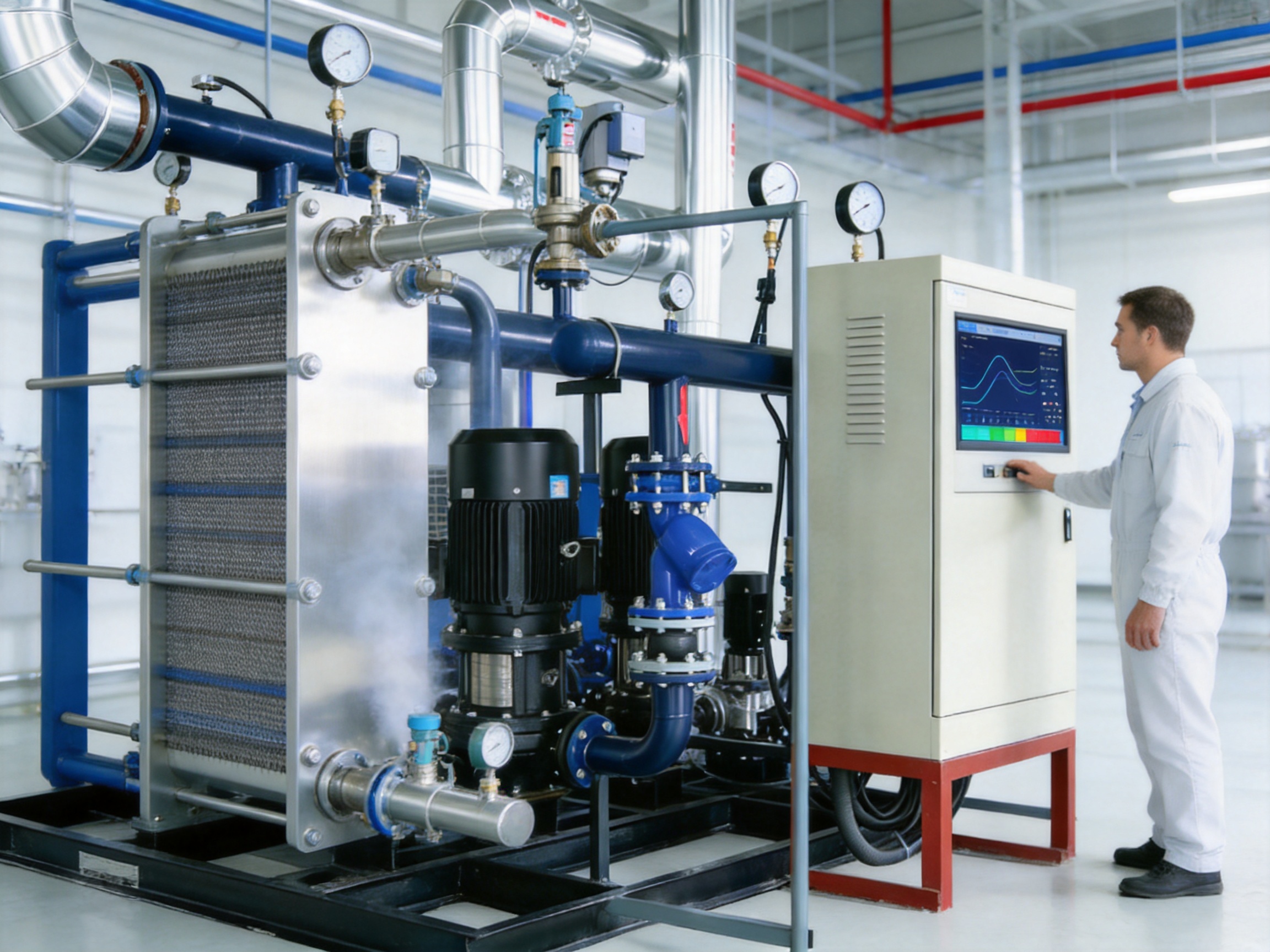
The control system is the operational center of the heat transfer skid. It receives signals from temperature, pressure, and flow instruments, compares actual values with programmed setpoints, and sends commands to pumps and valves. The exact configuration can be adapted to the process and the customer’s automation requirements.
Typical control functions include start and stop sequences, automatic temperature regulation, duty and standby pump selection, alarm generation, emergency shutdown, over-temperature protection, overpressure protection, flow confirmation, and operating status display.
The system can provide local operation through a control panel. It may also support remote monitoring or connection with a broader plant control or production management system when the project specification includes the necessary communication architecture.
5.1 Temperature Control
Temperature control is usually the primary function. The operator enters a target value or selects a predefined operating recipe. The PLC compares the measured outlet temperature with the target and adjusts the system response.
For heating applications, the control system may regulate the hot-side valve or heating medium flow. For cooling applications, it may regulate cooling medium flow, pump operation, or a control valve. The control strategy must be tuned according to the thermal response of the system. Rapid response is useful, but excessive adjustment can create oscillation or unstable operation.
5.2 Pump Management
Multiple circulation pumps can be configured for main and standby operation. The control system may alternate pump priority to balance running hours or switch to a standby pump when a duty pump reports a fault, depending on the selected design.
Pump protection can include low-flow monitoring, overload protection, abnormal pressure detection, and interlocks that prevent operation under unsuitable conditions. Operators should still inspect pump seals, bearings, couplings, foundations, and pipe connections as part of routine maintenance.
5.3 Alarm and Safety Functions
Safety functions may include overpressure protection, over-temperature alarms, emergency stop devices, pump fault alarms, low-flow alarms, and instrument failure indications. Alarm limits should be configured according to the process and equipment design rather than using generic values.
An emergency stop function provides a rapid method of bringing the equipment to a safe state. It should be clearly identified, accessible, and tested according to the customer’s safety procedures. Protective functions do not replace a complete risk assessment, pressure system review, electrical safety program, or site operating procedure.
5.4 Data Collection and Traceability
Recorded data can support process review and maintenance planning. Temperature trends may show whether the system is maintaining the required conditions. Pressure trends can reveal developing restrictions or changes in network behavior. Flow data can confirm whether the expected circulation rate is being achieved.
In regulated industries, traceability is an important consideration. The specific data requirements depend on the customer’s quality system, validation strategy, and applicable regulations. A skid can be configured to provide the required measurement points and records, but the final data architecture should be defined during the project engineering phase.
6. Hygienic and Bioprocess Considerations
Food and biopharmaceutical applications require careful attention to product protection, cleanability, material compatibility, and contamination control. The appropriate design depends on whether the heat transfer circuit is in direct product contact, indirectly supports a process vessel, or serves as a plant utility.
When the heat transfer medium is separated from the product by a heat exchanger wall, the system still needs suitable material selection, gasket compatibility, pressure control, and leak detection considerations. The design should prevent unintended cross-contamination and should allow inspection or maintenance according to the process risk assessment.
For hygienic applications, smooth and accessible surfaces, suitable pipe routing, appropriate drainability, and minimized dead legs may be important. The exact hygienic requirements should be agreed during technical discussions because a utility skid and a direct product-contact processing skid may have different specifications.
Cleaning requirements also vary. Some systems may be cleaned through an online cleaning sequence, while others may require the plate heat exchanger to be opened for manual inspection and cleaning. The selection depends on the fluid, operating temperature, fouling tendency, chemical compatibility, and customer procedures.
Gaskets and plate materials must be selected according to the media temperature, pressure, chemical composition, cleaning agents, and expected service life. A technically suitable material for one application may not be appropriate for another. Correct material selection is therefore part of the engineering process rather than an afterthought.
7. Manufacturing and Engineering Strengths
The performance of an integrated heat transfer skid depends greatly on the quality of engineering and manufacturing behind it. A reliable supplier must coordinate mechanical design, heat transfer calculations, pump selection, piping, welding, instrumentation, electrical control, testing, packing, and international delivery.
Shiloc (Shanghai) Industrial Trading Co., Ltd. combines equipment supply with engineering and international trade services. Its Shanghai facility covers approximately 3,000 square meters and includes capabilities related to processing, welding, polishing, assembly, and quality control. The company has more than 20 technical specialists supporting equipment design and project coordination.
These capabilities are relevant to customers who require more than a standard catalog product. A custom heat transfer skid may need to fit a specific room, connect to existing utility headers, accommodate a defined pressure range, support a particular temperature profile, or integrate with an established automation system. Coordinating these details through one technical partner can simplify communication and reduce procurement complexity.
7.1 Design Based on Application Requirements
Rather than selecting a unit only by nominal heating or cooling capacity, the design process should consider process flow rate, inlet and outlet temperatures, utility conditions, fluid properties, pressure drop, installation elevation, ambient conditions, duty cycle, cleaning requirements, and available space.
Shiloc can work with customers to clarify these parameters and develop a configuration that reflects the actual project conditions. This approach supports more accurate heat exchanger selection, pump sizing, valve arrangement, instrumentation, and PLC programming.
7.2 Fabrication, Welding, and Polishing
Manufacturing quality is especially important for process equipment used in food and biopharmaceutical environments. Welding quality affects mechanical integrity, cleanability, surface condition, and long-term reliability. Polishing and finishing influence the suitability of surfaces for hygienic operation and maintenance.
A controlled manufacturing process allows fabrication teams to maintain consistent procedures for cutting, forming, welding, polishing, assembly, and inspection. The required finish, welding method, inspection level, and documentation should be specified according to the project’s technical requirements.
7.3 Factory Assembly and Testing
Factory assembly enables the manufacturer to verify that components fit together as intended. Pipe connections, instrument locations, valve orientation, pump alignment, control cabinet wiring, and skid dimensions can be checked before delivery.
Testing may include visual inspection, dimensional verification, pressure testing where applicable, electrical checks, instrument verification, control sequence testing, and simulated alarm testing. The final inspection and test plan should be agreed with the customer because requirements vary between projects.
7.4 International Project Coordination
For overseas customers, technical communication and logistics can be as important as manufacturing. International projects may involve different standards, language requirements, documentation formats, electrical practices, shipping conditions, and installation procedures.
Shiloc provides import and export agency support, technical coordination, delivery assistance, and communication services for international customers. This can help simplify discussions between the end user, engineering contractor, logistics provider, and equipment manufacturer.
8. Customization Options
Intelligent Bioprocess Heat Transfer Skid/Units can be customized in several areas. Customization should be based on process requirements and not added merely for complexity. The objective is to create a system that is technically appropriate, maintainable, and economically practical.
| Customization Area | Typical Considerations | Customer Benefit |
|---|---|---|
| Heat exchange capacity | Required heating or cooling duty, inlet and outlet temperatures, flow rate, and temperature approach | Better alignment with actual process conditions |
| Pump configuration | Single pump, duty and standby pumps, variable speed operation, or multiple circuits | Improved flexibility and operational continuity |
| Materials | Plate material, gasket material, pipe material, surface finish, and media compatibility | Improved durability, cleanability, and application suitability |
| Instrumentation | Temperature, pressure, flow, level, alarm, and data recording requirements | Greater process visibility and troubleshooting capability |
| Control system | Local panel, remote monitoring, communication interface, recipes, alarms, and interlocks | More consistent operation and easier integration |
| Skid dimensions | Available floor area, lifting restrictions, access routes, and maintenance clearance | Better fit with the existing facility |
| Connection arrangement | Pipe size, connection type, orientation, utility headers, and drain points | Reduced field modification and installation effort |
| Cleaning provisions | Online cleaning, manual plate cleaning, drainage, isolation, and inspection access | Simplified maintenance and performance recovery |
8.1 Temperature and Flow Range
The supplier should receive the required operating range rather than only one target temperature. Startup, normal operation, minimum load, maximum load, and shutdown conditions may all affect the correct design.
Flow requirements should also be identified for both sides of the heat exchanger. A unit may operate satisfactorily at one flow rate but become unstable or inefficient if the flow changes significantly. Where process demand varies, variable speed pumps or modulating valves may provide useful control flexibility.
8.2 Electrical and Automation Requirements
Electrical power supply, motor ratings, control voltage, cabinet requirements, communication protocols, and local regulations should be confirmed before manufacturing. The PLC and human-machine interface can be configured according to the required level of local and remote control.
The control system should clearly identify normal operation, warning conditions, alarm conditions, and emergency shutdown states. Clear labeling and understandable operating screens are important for safe and efficient use.
9. Applications Across Food, Beverage, and Biopharmaceutical Industries
9.1 Fermentation
Fermentation generates heat and requires temperature control to maintain the desired biological activity. A heat transfer skid can circulate cooling medium through a heat exchanger or support temperature management around a fermentation vessel. Automatic regulation helps compensate for changes in biological heat generation and process load.
9.2 Cell Culture and Bioreactors
Cell culture processes can be sensitive to temperature changes. Stable thermal conditions support consistent cell behavior and process repeatability. The skid can provide controlled heating or cooling for a vessel jacket, an external circulation loop, or an associated utility circuit.
9.3 Media and Buffer Preparation
Media and buffer preparation may require heating, cooling, dissolution support, or temperature maintenance. An integrated heat transfer unit can supply a controlled thermal medium to preparation tanks and help operators manage different batch conditions.
9.4 Food and Beverage Processing
Food and beverage applications may include dairy products, sauces, beverages, brewing, fermentation, liquid foods, syrup systems, and process water management. The equipment can support heating and cooling functions while allowing the customer to configure materials, surfaces, instruments, and cleaning provisions according to the process.
9.5 HVAC and Central Heating
Although designed with bioprocess applications in mind, the same integrated concept can be used in building heating and air-conditioning water systems. It may also support heat transfer and pressure separation between primary and secondary networks in central heating installations.
9.6 Industrial Cooling
Manufacturing processes often require cooling water or temperature-controlled process media. A skid can provide centralized heat exchange between cooling water and a production circuit, with pump management and automatic monitoring included in one package.
10. Installation, Commissioning, and Start-Up
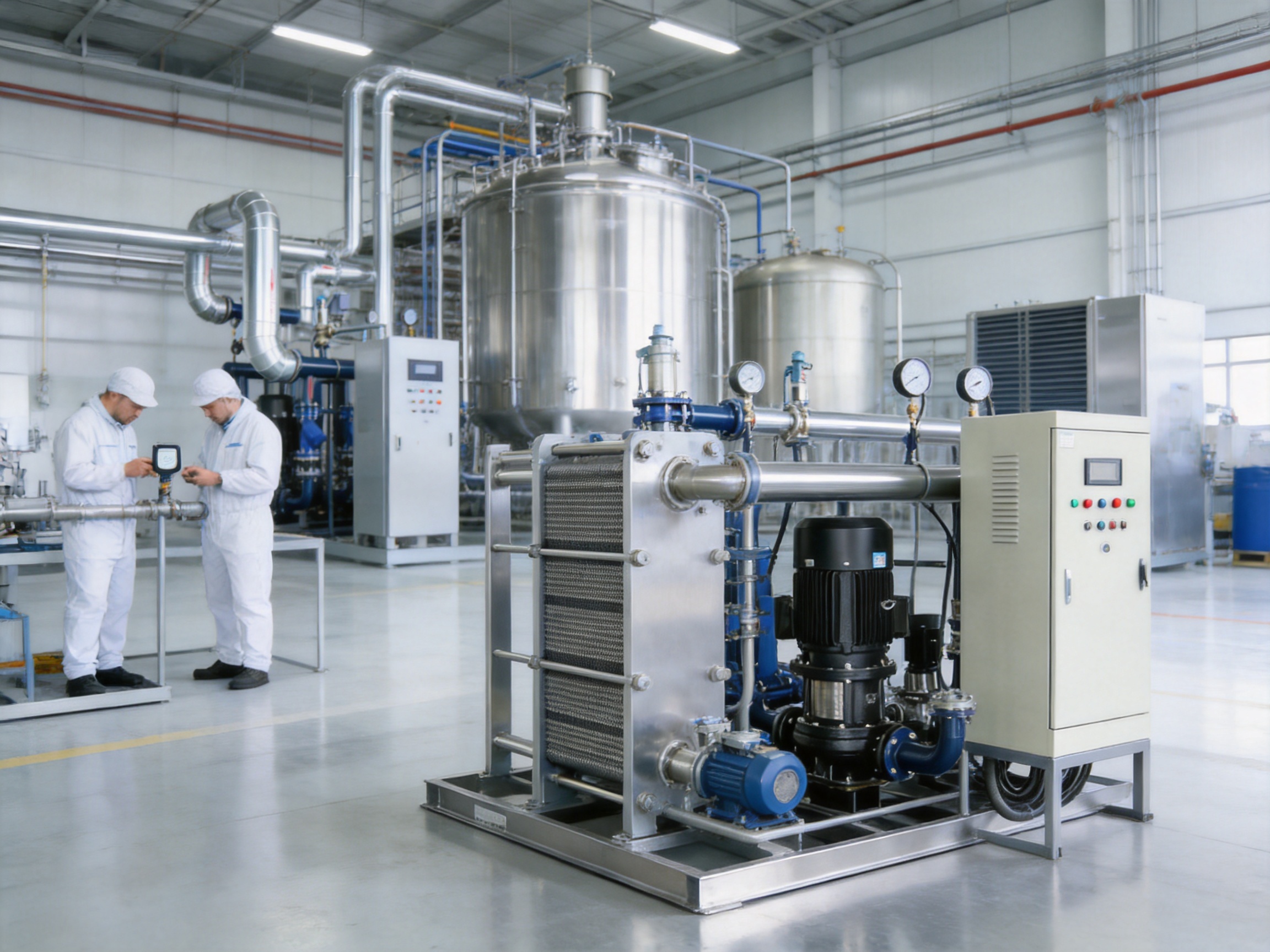
Proper installation is essential even when the unit is factory assembled. Before delivery, the customer should confirm the installation route, foundation or support conditions, lifting equipment, utility connection points, electrical requirements, drainage provisions, ventilation, and maintenance access.
At the site, the skid should be positioned according to the approved layout. Piping should be connected without imposing excessive mechanical stress on the skid nozzles. The hot and cold medium lines should be correctly identified. Flow direction, valve orientation, instrument position, and drain or vent connections should be checked.
Before startup, the system should be inspected for loose fittings, open drains, closed isolation valves, incorrect electrical connections, and damaged instruments. The pipeline should be vented completely where required. Air trapped in the circuit can cause unstable flow, pump noise, reduced heat transfer, or inaccurate temperature control.
Instrument calibration should be verified before automatic operation. The control system should be tested in manual and automatic modes. Pump rotation should be checked. Alarm and emergency stop functions should be tested. The first startup should proceed gradually, with operators observing pressure, temperature, flow, vibration, and leakage.
10.1 Commissioning Checklist
Confirm that the skid has been placed on a stable and suitable foundation.
Verify that all process, utility, drain, vent, and electrical connections match the approved drawings.
Check that valves are in the correct startup position and that temporary transport protections have been removed.
Confirm instrument calibration and sensor identification.
Inspect pump lubrication, seal condition, coupling alignment, and motor connections.
Vent the pipelines and heat exchanger circuits as required.
Fill the system with the correct medium and check for leaks.
Test local control, automatic regulation, alarms, interlocks, and emergency stop functions.
Record initial operating data for future comparison.
11. Maintenance and Troubleshooting
Regular maintenance helps preserve heat transfer efficiency, pump reliability, measurement accuracy, and control stability. A maintenance program should be adapted to operating hours, fluid cleanliness, temperature, pressure, cleaning chemicals, and process criticality.
11.1 Reduced Secondary Outlet Temperature
If the secondary outlet temperature does not reach the expected value, operators should first check the heat exchanger for scaling or blockage. Filters should be inspected and cleaned. The primary medium temperature and flow rate should be confirmed against the design conditions.
Other possible causes include incorrect valve position, inaccurate temperature measurement, insufficient pump flow, air trapped in the circuit, changes in fluid properties, or a process load greater than the original design basis.
11.2 Abnormal Pump Noise or Vibration
Abnormal noise or vibration may be caused by loose pump or pipe supports, incorrect valve positions, insufficient inlet pressure, cavitation, air in the system, misalignment, worn bearings, or foreign material inside the pump.
Operators should check the pump inlet and outlet valves, verify operating pressure, inspect the fixing condition, and confirm that the pump is receiving adequate flow. Continued operation under severe cavitation or vibration may cause damage and should be avoided.
11.3 Frequent Pressure Fluctuations
Frequent pressure changes may indicate instability in the connected pipe network, a problem with the pressure stabilization device, pipeline leakage, incorrect pump switching logic, or rapidly changing process demand.
The pressure trend should be compared with pump status, valve position, and flow data. If the pressure changes coincide with pump switching, the control sequence may require adjustment. If pressure declines continuously, leakage or insufficient supply should be investigated.
11.4 Heat Exchanger Cleaning
Plate heat exchangers should be cleaned at a frequency determined by the process media and operating condition. Cleaning may be performed online or by opening the plate pack, depending on the design and the nature of the deposits.
Cleaning agents must be compatible with the plates, gaskets, pipework, and applicable site procedures. Excessive mechanical force or unsuitable chemicals can damage the equipment. After cleaning, the plates should be inspected, correctly aligned, tightened to the specified dimensions, and pressure tested where required.
11.5 Pump and Instrument Maintenance
Pump bearings and seals should be inspected regularly. Signs of leakage, overheating, unusual noise, or increased vibration should be addressed promptly. Temperature sensors, pressure instruments, and flow sensors should be checked and calibrated according to the customer’s quality and maintenance program.
During a long-term shutdown, the medium should be drained when appropriate. In cold environments, remaining liquid can freeze, expand, and damage pipelines, pumps, valves, or heat exchanger channels.
12. Safety and Reliability Features
Safety is a central requirement for heating and cooling systems because they may involve elevated temperature, pressure, moving equipment, electrical power, and chemical cleaning media. The skid can be equipped with overpressure protection, over-temperature alarms, emergency stop devices, pump protection, and operating interlocks.
Safety design should be considered together with the site’s broader process safety system. The customer should evaluate pressure relief, thermal expansion, chemical compatibility, access protection, electrical grounding, lockout and tagout, and operator training.
Reliability is supported by several design features working together. Duty and standby pumps can reduce the effect of a single pump fault. Integrated monitoring can provide early warning. Modular components can simplify replacement. Factory assembly can reduce installation errors. Plate heat exchanger access can support cleaning and inspection.
No equipment can eliminate all operational risks. Reliability depends on correct sizing, appropriate installation, suitable media, regular maintenance, accurate instrumentation, and disciplined operating procedures. A well-designed skid provides the structure needed to manage these factors more effectively.
13. Why an Integrated Supplier Matters
Purchasing a heat exchanger, pump, valve package, and control system from unrelated suppliers may appear attractive at the beginning of a project, but it can create additional coordination work. The customer may need to resolve interface responsibilities, inconsistent documentation, different warranty conditions, and incompatible control philosophies.
An integrated supplier can coordinate the main mechanical and electrical functions through one project team. This can make it easier to discuss technical changes, confirm responsibilities, manage documentation, and plan delivery.
Shiloc combines equipment manufacturing, engineering and technical services, and international trade capabilities. Its experience with food and beverage, biopharmaceutical, daily chemical, and fine chemical equipment supports a project-oriented approach. The company emphasizes European know-how, Danish design principles, process optimization, safe operation, traceability, and customer-specific solutions.
For an overseas customer, this combination may be particularly valuable. Communication related to equipment selection, customization, production status, shipping, documentation, and installation can be coordinated through a single business relationship.
14. Project Selection Guide
Before requesting a quotation, customers should prepare a basic process data sheet. The quality of the initial information has a direct effect on the accuracy of the proposed design.
Important data includes the process medium, heating or cooling duty, required inlet and outlet temperatures, normal and maximum flow rates, operating pressure, design pressure, utility temperature, ambient conditions, installation location, available space, electrical supply, cleaning method, required automation level, and preferred connection standards.
Customers should also identify whether the unit is part of a direct product-contact process, an indirect vessel temperature control loop, a clean utility system, an HVAC system, or an industrial cooling application. This distinction affects material selection, hygienic design, documentation, and validation expectations.
Where the process is not fully defined, the supplier can help identify the missing information. However, the final equipment selection should be based on confirmed operating conditions rather than assumptions.
| Project Question | Why It Matters |
|---|---|
| What medium will be heated or cooled? | Determines material compatibility, fouling risk, viscosity, and cleaning requirements. |
| What are the target inlet and outlet temperatures? | Establishes the required heat transfer duty and temperature approach. |
| What are the normal and maximum flow rates? | Supports heat exchanger sizing, pump selection, and control range definition. |
| What pressure conditions are expected? | Determines equipment design pressure, protection, and connection requirements. |
| Is the system product contact or utility service? | Influences hygienic design, materials, validation, and documentation. |
| How will the system be cleaned? | Determines access, drainage, chemical compatibility, and service arrangements. |
| How will the unit communicate with the plant? | Defines PLC, HMI, remote monitoring, and communication requirements. |
| What are the site restrictions? | Influences skid dimensions, lifting, access, connection positions, and maintenance clearance. |
15. Future Development of Intelligent Heat Transfer Systems
Heat transfer skids are increasingly becoming part of connected manufacturing environments. Future systems may use more advanced data analysis to identify performance changes, optimize energy consumption, and predict maintenance requirements.
Industrial Internet of Things technologies can connect sensors, control systems, and production management platforms. This can allow operators to compare current performance with historical data, identify gradual fouling, analyze pump efficiency, and evaluate temperature stability across batches.
Artificial intelligence and advanced control algorithms may eventually support automatic optimization of setpoints, pump speed, and utility usage. These technologies should be introduced carefully, with attention to cybersecurity, validation, operator control, and data integrity.
Modular skid construction is also likely to become more important as manufacturers seek faster project deployment. Standardized platforms can shorten design time, while configurable heat exchangers, pumps, sensors, and controls allow the system to adapt to different production requirements.
For food and biopharmaceutical manufacturers, the long-term value of an intelligent heat transfer skid lies in its ability to combine physical thermal performance with useful operational information. The equipment becomes not only a heating or cooling device, but also a controlled and monitored process utility asset.
16. Questions and Answers
Q1: What is an Intelligent Bioprocess Heat Transfer Skid?
An Intelligent Bioprocess Heat Transfer Skid is an integrated unit that combines a plate heat exchanger, circulation pumps, valves, sensors, instruments, pipework, and a PLC control system on a skid-mounted frame. It provides automated heating, cooling, or process heat exchange for bioprocess, food, beverage, and industrial applications.
Q2: What are the main advantages of a skid-mounted system?
The main advantages include reduced on-site installation work, compact structure, coordinated component selection, factory assembly, easier commissioning, automatic regulation, real-time monitoring, modular expansion, and centralized maintenance access.
Q3: Can the system be used for both heating and cooling?
Yes. The system can be configured for heating, cooling, temperature maintenance, or process heat exchange. The final function depends on the heat exchanger design, connected utility media, pump arrangement, valve configuration, and PLC control strategy.
Q4: Which industries use these systems?
Typical industries include biopharmaceutical manufacturing, fermentation, cell culture, vaccine production, food and beverage processing, biotechnology, daily chemical production, fine chemicals, industrial cooling, HVAC, and central heating.
Q5: How does the PLC control system improve operation?
The PLC receives data from temperature, pressure, and flow instruments and adjusts pumps or valves according to programmed setpoints. It can also manage alarms, pump switching, interlocks, emergency stop functions, status display, and selected data recording tasks.
Q6: Can the unit be customized?
Yes. Customization may include heat exchange area, pump quantity, pump capacity, plate and gasket materials, skid dimensions, connection positions, instrumentation, PLC functions, communication interfaces, cleaning provisions, and alarm configuration.
Q7: How is heat exchanger fouling identified?
Fouling may be indicated by reduced outlet temperature performance, increased pressure drop, reduced flow, or a growing difference between actual and expected operating conditions. Operators should compare temperature, pressure, and flow trends and inspect filters and heat exchanger surfaces.
Q8: Does a factory-assembled skid eliminate site commissioning?
No. Factory assembly can reduce site work, but final commissioning is still necessary. The customer must connect utilities, verify electrical systems, confirm instrument calibration, test controls, vent the pipelines, inspect for leakage, and confirm operation under actual site conditions.
Q9: What information is needed for a quotation?
Important information includes the medium, flow rate, inlet and outlet temperatures, heating or cooling duty, operating and design pressure, utility conditions, installation space, electrical supply, cleaning method, automation requirements, connection standards, and any hygienic or documentation requirements.
Q10: What support can Shiloc provide?
Shiloc can support equipment selection, customized design, engineering coordination, manufacturing, assembly, quality control, international trade procedures, logistics coordination, technical communication, and delivery support for global customers.
Q11: How often should the unit be maintained?
Maintenance frequency depends on operating hours, media cleanliness, temperature, pressure, fouling tendency, pump duty, and process criticality. A maintenance plan should include heat exchanger inspection, filter cleaning, pump checks, instrument calibration, valve inspection, alarm testing, and review of recorded operating data.
Q12: Can the unit connect to a remote monitoring system?
Remote monitoring can be supported when the control architecture, communication protocol, cybersecurity requirements, and customer plant system are defined during engineering. The available functions depend on the selected PLC, HMI, communication interface, and project specification.
17. Conclusion
Intelligent Bioprocess Heat Transfer Skid/Units provide a practical and adaptable solution for manufacturers that require precise thermal management, reliable circulation, automated control, and efficient project execution. By integrating plate heat exchangers, pumps, valves, instruments, pipework, and PLC controls into one skid-mounted package, the system can reduce installation complexity and provide a more consistent operating platform.
Compared with conventional distributed arrangements, the integrated design offers advantages in factory assembly, commissioning, floor-space utilization, automatic regulation, status monitoring, maintenance access, and modular expansion. These benefits are particularly relevant to biopharmaceutical, food, beverage, fermentation, cell culture, industrial cooling, HVAC, and central heating applications.
The performance of the system ultimately depends on correct engineering, suitable materials, reliable manufacturing, proper control configuration, and disciplined maintenance. Shiloc supports this process through Shanghai-based equipment manufacturing, technical engineering, fabrication, welding, polishing, assembly, quality control, and international project coordination.
For manufacturers seeking a dependable partner for custom process equipment, an intelligent heat transfer skid can provide more than a heat exchanger. It can become a standardized, monitored, and scalable thermal management platform that supports current production needs while creating a foundation for future automation and digital manufacturing.
References
1. General principles of plate heat exchanger design, operation, inspection, and maintenance.
2. Good engineering practices for hygienic equipment used in food and biopharmaceutical processing.
3. Industrial automation principles for programmable logic controllers, process instrumentation, alarms, and interlocks.
4. Preventive maintenance practices for centrifugal circulation pumps, mechanical seals, bearings, and connected pipework.
5. Process validation, data integrity, and traceability considerations for regulated manufacturing environments.
6. Engineering guidance for heat transfer systems used in fermentation, cell culture, food processing, HVAC, and industrial cooling.
7. General safety practices for pressurized systems, hot and cold utilities, electrical equipment, and emergency shutdown functions.
8. Project engineering principles for modular skid-mounted process equipment and factory acceptance testing.
Product: Intelligent Bioprocess Heat Transfer Skid/Units
PREV:Precision Temperature Control Units for Reliable Biopharmaceutical Processing
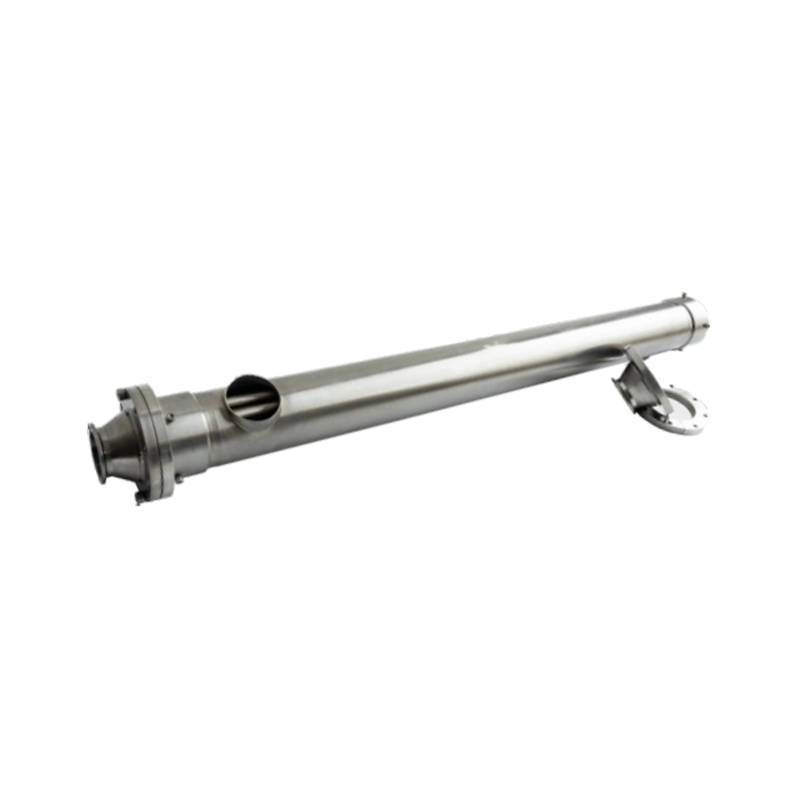
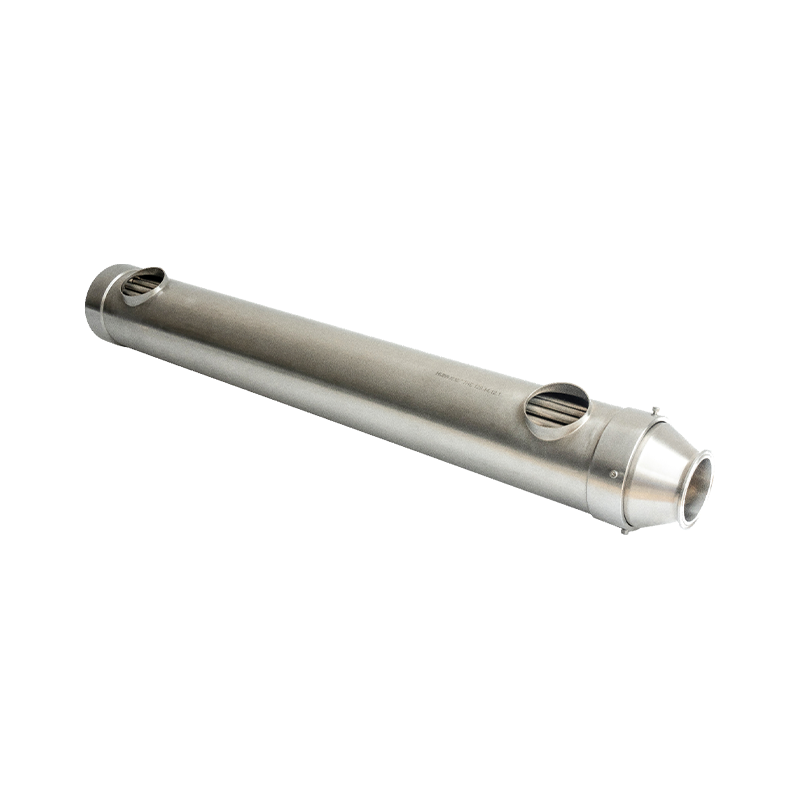
NEXT:Sanitary Tube-in-Tube Heat Exchangers for Hygienic Food and Biopharmaceutical Processing
NEXT:Sanitary Tube-in-Tube Heat Exchangers for Hygienic Food and Biopharmaceutical Processing
Interested in cooperation or have questions?
Recommended LINS
✦
Process Skid System
Food and Beverage Process System
automated process skid system for food processing
CIP process skid system for food industry
Food Processing Skid System
hygienic process skid for food industry
food and beverage process skid system
CIP Skid System for Food Industry
Skid Mounted Process System
Sanitary Process Skid
Let'S Work Together Welcome Aboard!
-

haikexin@haikexin.com
+8613391278930
-
 +86-21-57560276
 -
 No. 2819, Sihu Road,Fengxian District, Shanghai, China
Join Our Mailing List
Copyright © Shiloc (Shanghai) Industrial Trading Co., Ltd. All Rights Reserved.
Process Systems & Equipment For Food & Biopharma Manufacturers
