
 English
 русский
 Português
 Français


 Read More

Product Category
NEW Category
Contact us
Contact Us
We specialise in the research, development and manufacture of electrical wires and cables.
 +86-21-57560276
Precision Temperature Control Units for Reliable Biopharmaceutical Processing
Content
- 1 Why Temperature Control Is Critical in Biopharmaceutical Production
- 2 Integrated Design of the Precision Temperature Control Unit
- 3 Key Product Advantages Compared with Conventional Temperature Control Solutions
- 4 Technical Configuration and Operating Functions
- 5 Applications in Biopharmaceutical Manufacturing
- 6 Sanitary Manufacturing and Fabrication Strengths
- 7 Customization for Different Biopharmaceutical Facilities
- 8 Installation, Commissioning, and Validation Considerations
- 9 Maintenance and Operating Recommendations
- 10 Troubleshooting Common TCU Problems
- 11 Why Choose a Specialized Supplier
- 12 Comparison with Alternative Solutions
- 13 Future Development of Biopharmaceutical Temperature Control
- 14 Questions and Answers
- 14.1 Q1: What is a Precision Temperature Control Unit?
- 14.2 Q2: Where is a biopharmaceutical TCU used?
- 14.3 Q3: Can the same unit provide heating and cooling?
- 14.4 Q4: Why is closed-loop circulation important?
- 14.5 Q5: Is the TCU suitable for CIP procedures?
- 14.6 Q6: What material is used for product-contact or sanitary components?
- 14.7 Q7: How does the PLC control the temperature?
- 14.8 Q8: Can the TCU be connected to an existing production line?
- 14.9 Q9: What information is needed to select a TCU?
- 14.10 Q10: How can operators reduce temperature-control problems?
- 14.11 Q11: Can the TCU be customized for pilot plants and laboratories?
- 14.12 Q12: What support can a professional supplier provide?
- 15 Conclusion
- 16 References
- 17 Product: Precision Temperature Control Unit (TCU) For Biopharma
Biopharmaceutical manufacturing depends on the ability to maintain carefully controlled process conditions from research and pilot production through commercial-scale manufacturing. Among these conditions, temperature is one of the most influential. It affects cell growth, microbial activity, protein expression, reaction kinetics, crystallization behavior, product stability, cleaning performance, and the repeatability of each production batch. Even a relatively small temperature deviation can change the behavior of a biological system or chemical reaction, creating quality, yield, and compliance challenges.
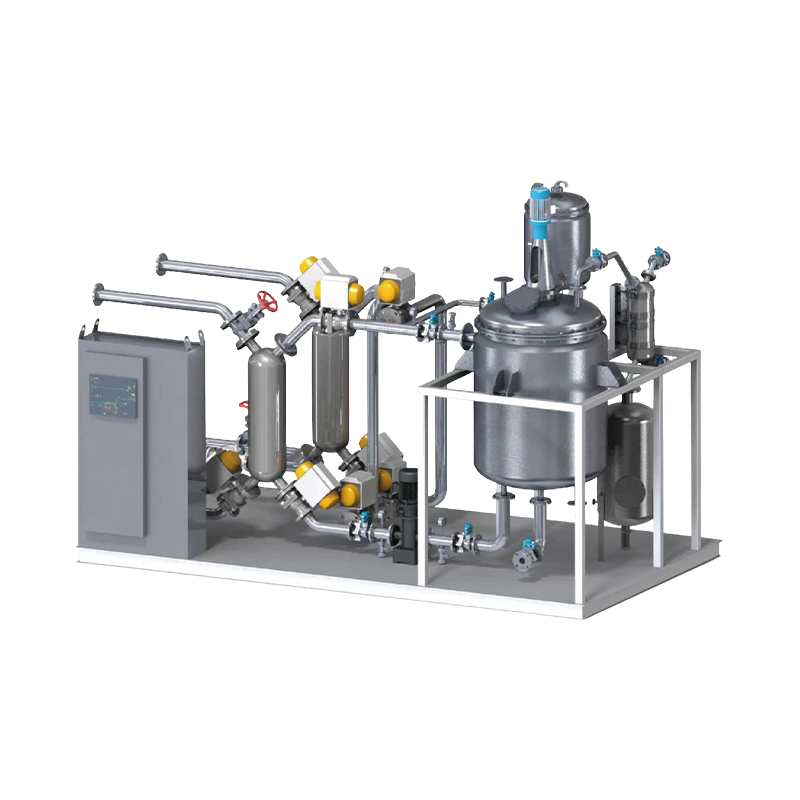
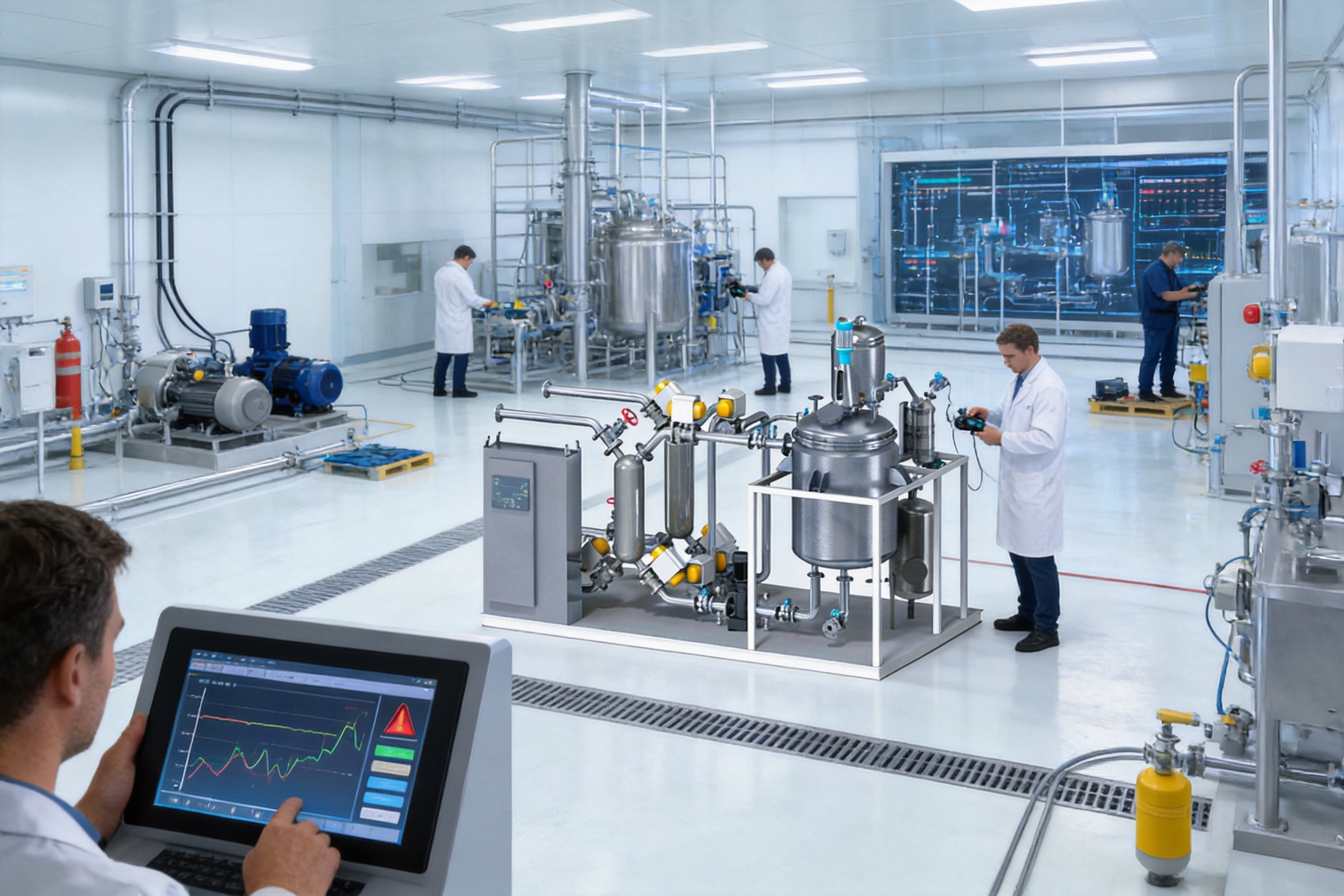
The Precision Temperature Control Unit (TCU) for Biopharma is designed to provide stable, responsive, and traceable thermal management for reactors, bioreactors, fermentation systems, crystallization tanks, preparation vessels, storage tanks, and other process equipment. By combining heat exchange modules, a closed circulation circuit, sanitary pipelines, control valve groups, sensors, and a PLC-based control system, the TCU creates an integrated solution rather than a simple standalone heater or chiller.
The equipment supports heating, cooling, and automatic switching between thermal modes. Operators can configure temperature setpoints, heating and cooling rates, holding periods, and process curves through a touch-screen interface. Feedback from temperature and pressure sensors enables the control system to identify deviations and adjust the circulation system, control valves, and thermal energy supply to keep the connected process equipment within the required operating range.
For biopharmaceutical manufacturers, the value of a TCU extends beyond temperature accuracy. A properly designed unit can improve process repeatability, simplify equipment integration, reduce contamination risk, support clean-in-place procedures, improve data traceability, and contribute to more efficient production planning. The unit can also be adapted to different process capacities, installation layouts, control architectures, and temperature requirements.
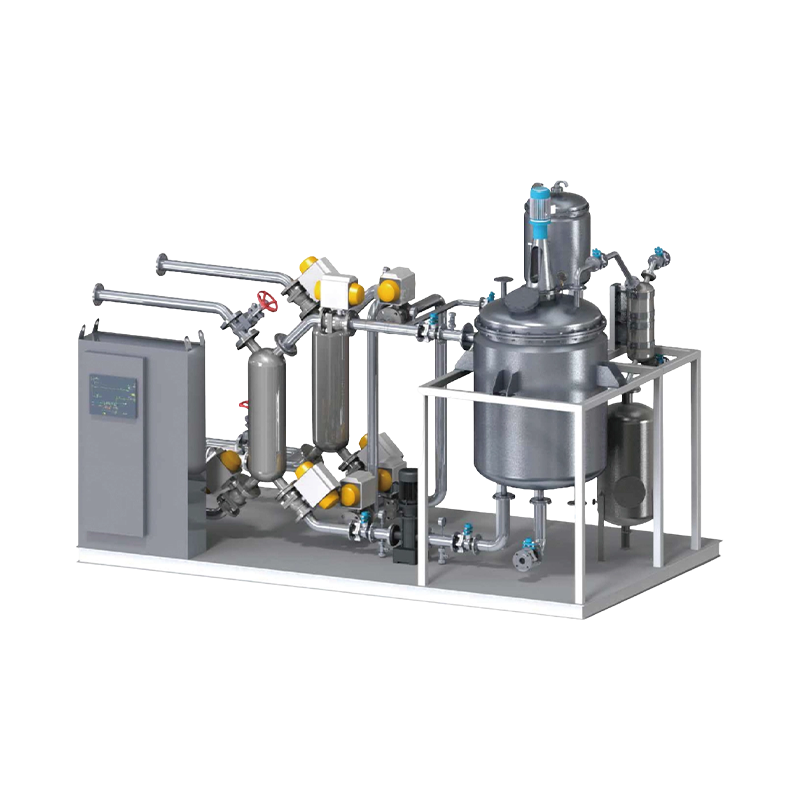
Precision Temperature Control Unit (TCU) For Biopharma
Why Temperature Control Is Critical in Biopharmaceutical Production
Biopharmaceutical processes are highly sensitive to environmental and operating conditions. Living cells, microorganisms, enzymes, proteins, and biological intermediates can respond significantly to changes in temperature. In a cell culture process, temperature influences cellular metabolism, growth rate, viability, oxygen demand, and product expression. In microbial fermentation, it affects reproduction, metabolic pathways, productivity, and by-product formation.
Temperature also plays a central role after cultivation. During protein separation, purification, concentration, formulation, and storage, excessive heat can reduce biological activity or accelerate degradation. During crystallization, temperature gradients influence nucleation, crystal size, purity, and filtration behavior. In solution preparation, thermal conditions affect dissolution speed, viscosity, mixing performance, and the stability of sensitive ingredients.
Conventional heating or cooling arrangements may not provide sufficient control for these applications. A basic electric heater can raise temperature, but it may create localized hot spots or respond too slowly to process changes. A general-purpose chiller may remove heat, but it may not provide the control resolution, sanitary construction, or switching flexibility required by a biopharmaceutical process. Separate heating and cooling devices can also increase installation complexity and make automated coordination more difficult.
A dedicated TCU addresses these limitations through integrated thermal management. The unit circulates a controlled heat-transfer medium through a closed pipeline connected to the jacket, coil, or heat-transfer surface of process equipment. Sensors continuously measure process conditions, while the PLC compares actual values with the configured setpoints. Based on the difference, the system adjusts the heat source, cooling source, valve position, or circulation conditions.
This closed-loop approach helps reduce temperature fluctuation and provides a more consistent thermal environment. It also allows operators to define a repeatable process recipe rather than manually switching between heating and cooling equipment. The result is improved control over production conditions and stronger consistency from batch to batch.
Integrated Design of the Precision Temperature Control Unit
The TCU is configured as an integrated process system. Its main components work together to deliver thermal energy, control circulation, protect the process, and record operating information.
Heat Exchange Module
The heat exchange module transfers energy between the thermal medium and the process equipment. Depending on the application, the unit may provide heating, cooling, or both. The heat exchange design is selected according to the required temperature range, heating and cooling capacity, process volume, circulation medium, heat-transfer area, and expected ramp rate.
An appropriately sized heat exchanger helps the TCU respond efficiently to changes in process demand. It also reduces unnecessary energy consumption caused by an oversized or poorly matched thermal system. For applications involving frequent changes between heating and cooling, the thermal system must be designed to support rapid transitions while preventing abrupt process disturbances.
Closed Circulation Pipeline
The circulation pipeline carries the heat-transfer medium between the TCU and the connected process vessel. A closed-loop design reduces medium loss, limits exposure to the external environment, and supports more stable thermal performance. It can also reduce the risk of contamination associated with open handling or repeated manual replenishment.
Pipeline routing is designed to support drainage, venting, inspection, and cleaning. Where appropriate, the design avoids unnecessary dead legs and stagnant zones. Connections, valves, gaskets, and fittings are selected to match the process environment and the required cleaning procedures.
Control Valve Group
The valve group regulates the flow and direction of the thermal medium. It may control the supply of heating or cooling energy, adjust circulation flow, isolate components, and support automatic switching between operating modes. Proper valve selection contributes to faster response, improved temperature stability, and safer equipment operation.
Valve control can be coordinated with temperature feedback, pressure monitoring, pump status, and process sequencing. This integrated approach is more reliable than manual adjustment because the control system can respond continuously to changing conditions.
PLC and Touch-Screen Control
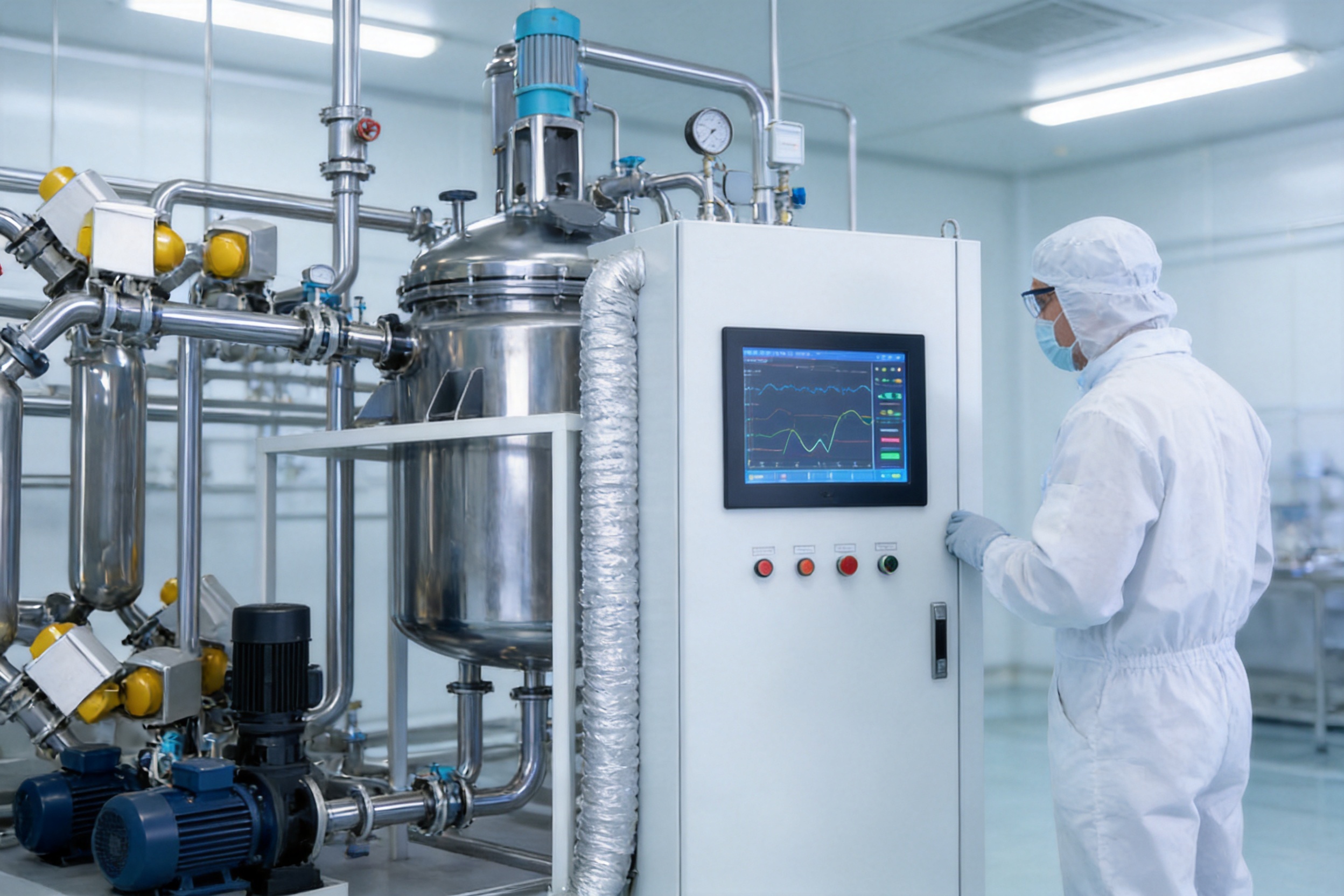
The PLC serves as the central control platform. It receives signals from temperature sensors, pressure sensors, flow-related devices, and safety components. It then executes the configured control logic and issues commands to pumps, valves, heating elements, cooling circuits, and alarms.
The touch-screen interface allows operators to set process parameters, select operating modes, monitor actual values, review alarms, and manage process curves. The interface can be configured according to the customer's operating habits and production requirements. This makes the system easier to operate than a collection of disconnected instruments.
Safety and Protection Devices
Biopharmaceutical temperature control systems must protect both the process and the equipment. The TCU can include over-temperature protection, pressure monitoring, emergency stop functions, abnormal sensor alarms, pump protection, and other safety interlocks. These functions help prevent uncontrolled heating, excessive pressure, dry running, and continued operation under abnormal conditions.
Safety settings should be established according to the process risk assessment, equipment design, thermal medium, and applicable plant procedures. The final configuration should be verified during commissioning and qualification.
Key Product Advantages Compared with Conventional Temperature Control Solutions
The Precision Temperature Control Unit provides several advantages over basic heaters, independent chillers, manually operated thermal systems, and general-purpose industrial temperature controllers.
Closed-Loop Accuracy and Stability
The most important advantage is feedback-based regulation. Instead of supplying heat or cooling for a fixed period, the TCU continuously compares the actual process temperature with the target value. The controller can then correct deviations by adjusting the thermal energy input or circulation conditions.
This approach helps maintain stable process temperatures during long holding periods and changing production conditions. It is particularly useful when the process load changes because of variations in batch volume, viscosity, reaction rate, ambient conditions, or heat generation inside the vessel.
One System for Heating, Cooling, and Thermal Cycling
Many biopharmaceutical processes include several thermal stages. A vessel may need to be heated for dissolution, held at a target temperature for a reaction, cooled for product protection, and then maintained at a lower storage temperature. Using separate devices for each stage can require manual transfers, additional connections, and more complex coordination.
The TCU supports heating, cooling, and heating-cooling switching within one integrated system. This reduces the need for operators to change equipment during the process and helps create a continuous, repeatable thermal cycle.
Improved Process Repeatability
Manual temperature control often depends on operator experience and reaction time. Even skilled operators may produce variations when process conditions change quickly. A PLC-controlled TCU applies the same programmed logic every time, helping reduce operator-to-operator variation.
Configured process curves can define ramp rates, holding periods, switching points, alarm limits, and other parameters. This makes the thermal process easier to reproduce during development, scale-up, validation, and routine production.
Sanitary Construction
Contact parts are constructed from sanitary-grade stainless steel 316L, which is widely used in biopharmaceutical and hygienic processing environments. The material provides corrosion resistance and is suitable for systems that require clean surfaces, controlled fabrication, and compatibility with cleaning procedures.
The hygienic design includes attention to weld quality, internal surface condition, drainage, component selection, and the reduction of dead legs. These details are important because stagnant areas can retain residues, support microbial growth, and complicate cleaning validation.
CIP Compatibility
The TCU piping and components are designed to support clean-in-place procedures. CIP compatibility can reduce the need for repeated dismantling and manual cleaning, improving production efficiency and reducing the risk of inconsistent cleaning results.
The actual CIP method depends on the process medium, cleaning chemistry, temperature, flow rate, contact time, and equipment configuration. The complete system should be reviewed to confirm that all relevant internal surfaces receive adequate cleaning solution coverage and drainage.
Data Traceability
Temperature and pressure information can be recorded through the control system for process review and production documentation. Traceable data helps operators identify abnormal trends, confirm that the process remained within limits, and support internal quality management procedures.
Data recording also supports troubleshooting. If a batch experiences an unexpected result, historical temperature trends can help determine whether the problem was associated with a slow ramp, insufficient cooling capacity, a sensor issue, a circulation interruption, or another operating condition.
Flexible Integration
The TCU can be connected to reactors, bioreactors, fermentation tanks, crystallization vessels, preparation systems, pilot equipment, and other process units. Integration may include mechanical connections, electrical signals, communication interfaces, alarm exchanges, and production-line coordination.
This flexibility allows one product platform to serve different applications while still permitting customization of capacity, temperature range, control logic, footprint, and connection arrangement.
Technical Configuration and Operating Functions
The TCU is configured according to the process requirements rather than treated as a one-size-fits-all device. Important design parameters include the process volume, desired temperature range, required temperature stability, heating and cooling capacity, ramp rate, circulation distance, thermal medium, vessel jacket design, ambient conditions, and available utilities.
| Configuration Area | Typical Considerations | Value to the Process |
|---|---|---|
| Temperature control | Setpoint range, stability, sensor location, ramp rate, control response | Supports consistent reactions, cultivation, cooling, and holding stages |
| Thermal capacity | Heating load, cooling load, process volume, insulation, ambient heat loss | Helps the unit meet production time requirements |
| Circulation system | Pump capacity, pipe size, flow resistance, vessel jacket characteristics | Improves heat transfer and reduces temperature gradients |
| Materials | 316L stainless steel, gasket compatibility, surface finish, sanitary fittings | Supports hygienic operation and cleaning procedures |
| Automation | PLC logic, touch-screen interface, recipes, alarms, data recording | Improves repeatability, monitoring, and traceability |
| Safety | Over-temperature protection, pressure monitoring, emergency stop, interlocks | Protects operators, equipment, and process materials |
| Installation | Skid dimensions, utility connections, access, drainage, maintenance clearance | Facilitates integration into existing production areas |
Temperature Measurement
Sensor position has a direct effect on control performance. A sensor installed too far from the process heat-transfer surface may respond slowly. A sensor installed in an unsuitable location may measure a local condition rather than the representative process temperature. During project design, the sensor location should be reviewed together with vessel geometry, mixing conditions, circulation flow, and process objectives.
Sensor calibration is also important. The control system can only respond accurately when the measurement signal is reliable. Calibration status should be confirmed before startup and at defined intervals during operation.
Heating and Cooling Rate
Some processes require gentle temperature changes to protect biological materials, while others require fast heating or cooling to meet production schedules. The TCU can be designed around the required ramp rate, but the actual performance also depends on the vessel, jacket, insulation, product viscosity, batch volume, and available utilities.
For this reason, capacity selection should be based on a complete thermal calculation rather than only the nominal vessel volume. The heating source and cooling source must provide sufficient pressure, temperature, and flow under the expected operating conditions.
Process Curves
Process curves allow the operator to define multiple stages within one automated cycle. A typical curve may include preheating, controlled ramping, temperature holding, cooling, and final stabilization. Each stage can include target values, time settings, permissible deviations, and alarm responses.
Process curves should be tested during commissioning. Once approved, access to critical parameters can be managed through operator permissions or plant procedures to reduce unintended changes.
Applications in Biopharmaceutical Manufacturing
Bioreactors and Fermentation Tanks
Bioreactors require stable temperature conditions to support cell culture or microbial fermentation. The TCU circulates a controlled thermal medium through the vessel jacket or another heat-transfer interface. It can compensate for heat generated by agitation, metabolism, or environmental changes.
Stable temperature management supports cell viability, metabolic consistency, product expression, and batch repeatability. The TCU can also participate in temperature shifts used during specific stages of cell culture or fermentation, provided that the process recipe defines the required changes.
Drug Synthesis Reactors
Chemical and biochemical synthesis reactions often require controlled heating, cooling, or staged temperature changes. The reaction rate may depend strongly on temperature, while excessive temperature can increase unwanted side reactions or degrade sensitive compounds.
A TCU can regulate the jacket temperature of the reactor and maintain the desired thermal profile. The PLC can coordinate the heating and cooling sequence with mixing, material addition, reaction time, and other production steps.
Crystallization Systems
Crystallization requires careful control of supersaturation, nucleation, growth, and cooling rate. An uncontrolled temperature decrease may create an undesirable crystal size distribution or trap impurities in the crystal structure.
By following a programmed cooling curve, the TCU can support more controlled crystallization conditions. The final result depends on the formulation, agitation, seeding strategy, vessel design, and other process variables, but accurate temperature control provides an essential foundation.
Solution Preparation
Preparation tanks may require heating to dissolve solids, reduce viscosity, accelerate mixing, or maintain a suitable handling temperature. After preparation, the solution may need to be cooled before filtration, transfer, or filling.
The TCU provides a flexible thermal system for these transitions. Automated control can reduce the risk of overheating and can help ensure that the solution reaches the target temperature before the next process stage begins.
Vaccine Production
Vaccine manufacturing may involve strain cultivation, antigen production, enzymatic reactions, inactivation, formulation, and storage. Different stages can require different temperature conditions, and the allowable process range may be narrow.
A dedicated TCU can help maintain the specified thermal environment and provide records for process review. The system can be configured for laboratory, pilot-scale, or production-scale equipment according to project needs.
Laboratory and Pilot-Scale Development
Temperature control is important during process development because experimental results must be repeatable before a process is transferred to larger equipment. A stable TCU helps researchers compare experiments under consistent conditions and evaluate the effect of temperature as an independent process parameter.
Pilot-scale systems also benefit from automated thermal cycling. They can provide useful information about ramp rates, heat-transfer behavior, control response, and scale-up challenges before commercial production equipment is specified.
Sanitary Manufacturing and Fabrication Strengths
The performance of a TCU depends not only on its control software but also on the quality of its mechanical fabrication. Shiloc (Shanghai) Industrial Trading Co., Ltd. provides process systems and equipment for food and beverage, biopharmaceutical, daily chemical, and fine chemical applications. Its Shanghai facility covers approximately 3,000 square meters and includes capabilities related to processing, welding, polishing, assembly, and quality control.
The company works with European know-how and Danish design principles to develop equipment intended for hygienic processing. This combination supports a practical approach to equipment design: the system must perform its thermal function while also being cleanable, maintainable, traceable, and suitable for integration into a production environment.
Stainless-Steel Fabrication
Sanitary stainless-steel fabrication requires more than selecting an appropriate material grade. The fabrication process must also control weld quality, surface condition, dimensional accuracy, internal cleanliness, and component alignment. These factors influence both hygiene and long-term reliability.
For TCU piping and skid assemblies, careful fabrication helps reduce areas where residues can accumulate. Consistent alignment also supports easier installation and reduces mechanical stress on connected equipment.
Welding and Surface Treatment
Welding quality is especially important for hygienic systems. Welds should be produced and inspected according to the requirements of the project and the applicable quality procedures. Internal weld surfaces should be finished appropriately for the intended cleaning and process environment.
Polishing and surface treatment can improve cleanability by reducing roughness and eliminating irregularities that might retain product residues. The exact surface finish should be selected according to the process requirements and customer specifications.
Modular Skid Assembly
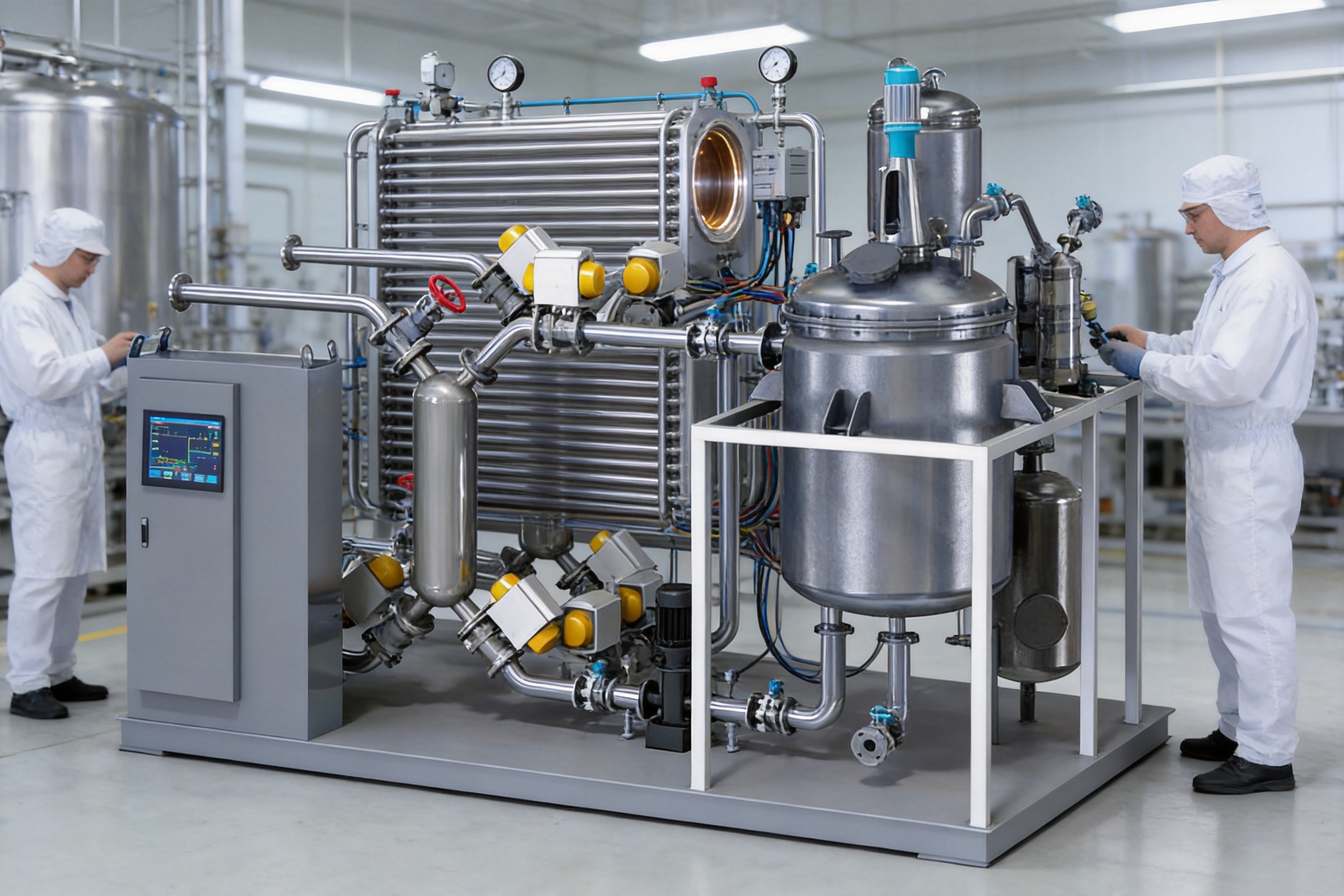
Skid-mounted construction allows the TCU to be assembled, inspected, and tested before delivery. Pumps, valves, heat exchangers, sensors, control cabinets, pipelines, and structural supports can be arranged as a coordinated unit.
Modular assembly can shorten installation time at the customer's facility and simplify utility connection. It also makes it easier to inspect the system before shipment because many functional checks can be completed in the workshop.
Quality Control and Traceability
Quality control should cover incoming materials, component identification, fabrication, welding, assembly, electrical wiring, instrumentation, pressure-related checks, control logic, and final inspection. Documentation can include material records, inspection records, calibration information, test results, equipment drawings, operating instructions, and recommended maintenance procedures.
Traceability is particularly valuable in biopharmaceutical projects because equipment may be included in qualification and validation activities. The precise documentation package depends on the customer's quality system and project requirements.
Technical Coordination
International projects require coordination between the equipment supplier, end user, engineering contractor, process designer, automation team, and logistics provider. The supplier must understand not only the product specification but also the connection standards, utility conditions, installation space, control philosophy, and documentation expectations.
Shiloc supports customers through import and export agency services, equipment coordination, technical communication, logistics coordination, and international procurement assistance. This service capability can be useful for customers purchasing process systems across borders and working with several project stakeholders.
Customization for Different Biopharmaceutical Facilities
Biopharmaceutical facilities vary in production scale, process architecture, utility availability, automation standards, and cleanroom configuration. A customized TCU can be designed around the actual production environment rather than forcing the facility to adapt to a standard package.
Capacity Customization
Heating and cooling capacity can be selected according to vessel volume, product properties, process time, target temperature, and heat-transfer efficiency. A laboratory vessel may require a compact low-capacity unit, while a production bioreactor may require a larger circulation pump and a higher-capacity thermal system.
Temperature Range Customization
The required operating range depends on the application. Some processes operate near ambient temperature, while others require elevated temperatures, controlled cooling, or repeated thermal cycling. The TCU configuration must match the thermal medium, equipment materials, insulation, and safety requirements associated with that range.
Connection and Layout Customization
The skid can be adapted to available floor space, service access, pipeline direction, vessel location, and maintenance requirements. Compact layouts may be suitable for pilot plants, while production systems may require greater separation between operating zones, utility connections, and control cabinets.
Automation Customization
The PLC and touch-screen interface can be configured to reflect the customer's control philosophy. Options may include recipe management, password protection, alarm history, trend displays, external start and stop signals, interlocks, batch data recording, and communication with a plant-level control system.
Special Process Requirements
Some customers may require special gasket materials, specific sanitary connection standards, enhanced insulation, additional sensors, redundant monitoring, or a particular documentation format. These requirements should be discussed during the design stage to avoid later modifications.
Installation, Commissioning, and Validation Considerations
Correct installation is essential for achieving the intended performance of the TCU. The installation area should provide sufficient space for operation, inspection, maintenance, drainage, and emergency access. Utility conditions should be confirmed before delivery, including electrical power, heating source, cooling source, compressed air if required, and drainage provisions.
All circulation pipelines should be installed according to the approved flow direction and connection drawings. Incorrect pipeline routing can reduce flow, increase pressure loss, or cause poor heat transfer. The system should also be checked for correct venting and draining because trapped air can reduce circulation efficiency and cause unstable temperature control.
Before startup, the thermal medium should be filled according to the operating instructions. The system should be vented, sensors should be checked, valves should be verified, and pump rotation should be confirmed. Calibration status should be reviewed before process operation begins.
Commissioning may include dry checks, wet circulation checks, heating tests, cooling tests, alarm tests, emergency stop tests, sensor verification, process curve testing, and data-recording checks. The final tests should reflect the intended operating conditions as closely as practical.
Where the TCU is used in a regulated manufacturing environment, the customer may conduct installation qualification, operational qualification, and performance qualification activities. The supplier can support these activities by providing technical documents, test records, calibration information, drawings, manuals, and equipment specifications as agreed in the project scope.
Maintenance and Operating Recommendations
Routine maintenance helps preserve temperature stability, hygienic performance, and equipment reliability. Operators should follow a documented inspection schedule based on operating frequency, process conditions, thermal medium, and manufacturer recommendations.
Before Startup
Confirm that the thermal medium is filled to the appropriate level and that air has been removed from the circulation circuit. Check the control panel, sensor readings, valve positions, pump status, alarms, and emergency stop function. Confirm that the connected process equipment is ready to receive the thermal medium.
During Operation
Monitor temperature, pressure, flow behavior, pump sound, valve response, and alarm status. Unexpected temperature fluctuations may indicate sensor problems, insufficient flow, a blocked filter, heat exchanger fouling, inadequate utility supply, or an issue with the connected vessel.
Cleaning
Perform CIP procedures according to the approved cleaning cycle. Cleaning should remove product residues from pipelines, valves, heat exchange surfaces, and other relevant components. The cleaning procedure should provide adequate flow, chemical concentration, temperature, contact time, and drainage.
Inspection of Components
Seals, gaskets, valves, pump bodies, electrical connections, sensors, and safety devices should be inspected at defined intervals. Worn or damaged components should be replaced promptly to reduce the risk of leakage, contamination, measurement error, or unplanned downtime.
Long-Term Shutdown
During an extended shutdown, the circulation circuit should be drained as appropriate and protected from microbial growth, freezing, corrosion, or degradation of the thermal medium. Sterilization or sanitization procedures should be applied when required by the process and facility procedures.
Troubleshooting Common TCU Problems
Temperature Fluctuations Exceed the Process Range
Check the installation position, calibration status, and response of the temperature sensors. Confirm that the circulation pump is operating correctly and that the heat-transfer medium is moving at the expected rate. Inspect the heat exchanger for fouling, scaling, blockage, or reduced efficiency. Also review the control parameters and verify that the heating or cooling utility is stable.
Heating or Cooling Rate Is Too Slow
Confirm the temperature and pressure of the heat or cooling source. Check whether the circulation pump is delivering sufficient flow and whether any valve is partially closed or incorrectly positioned. Review the process load, vessel insulation, ambient conditions, and heat-transfer surface. If the product viscosity or batch volume has changed, the original thermal capacity calculation may need to be reassessed.
Pressure Alarm or Unstable Circulation
Inspect the pipeline for blockage, closed valves, excessive resistance, or trapped air. Check filters, pump inlet conditions, expansion space, and the condition of the connected vessel jacket. A pressure alarm should not be bypassed without identifying the cause because it may indicate a restriction or unsafe operating condition.
Risk of Cross-Contamination
Review the pipeline layout, dead-leg areas, valve seals, gasket condition, and cleaning sequence. Confirm that the CIP procedure has been completed successfully and that all required flow paths were reached. Inspect for backflow, cross-flow, leaking valve seats, or incorrect valve sequencing.
Inaccurate Data Recording
Check sensor signals, PLC input channels, time settings, data storage capacity, and communication connections. Compare recorded values with an independent calibrated instrument. If the recorded trend is intermittent, inspect wiring, connectors, signal interference, and software configuration.
Why Choose a Specialized Supplier
Purchasing a TCU is not only a matter of comparing heating capacity or product price. The suitability of the equipment depends on process understanding, hygienic design, fabrication quality, control integration, documentation, installation support, and after-sales coordination.
A specialized supplier can help evaluate the complete process requirement. This may include identifying the appropriate temperature range, calculating thermal loads, selecting a circulation pump, determining the correct heat-transfer medium, reviewing vessel connections, and defining the control interface.
Technical selection support reduces the risk of buying an underpowered system that cannot achieve the required ramp rate. It also helps prevent excessive investment in an oversized system that consumes unnecessary energy or creates control instability at low loads.
For international customers, procurement coordination is another important consideration. Cross-border projects often involve commercial documents, customs requirements, packaging, shipping, technical translation, installation coordination, and communication between multiple organizations. An experienced import and export service team can help reduce administrative complexity and maintain continuity between technical and commercial activities.
Shiloc (Shanghai) Industrial Trading Co., Ltd. combines international trade services with process equipment coordination. Its business covers food and beverage, biopharmaceutical, daily chemical, and fine chemical applications. The company's Shanghai facility and technical personnel support equipment processing, welding, polishing, assembly, and quality control activities.
The company emphasizes integrity, practical engineering, innovation, development, quality, traceability, and global cooperation. These principles are relevant to TCU procurement because the customer needs more than a machine: the customer needs a thermal management solution that can be integrated into a real process and supported throughout its service life.
Comparison with Alternative Solutions
A dedicated TCU should be compared with alternative solutions according to the full lifecycle requirement rather than initial purchase cost alone.
| Solution Type | Typical Strength | Common Limitation in Biopharmaceutical Use | TCU Advantage |
|---|---|---|---|
| Basic electric heater | Simple heating function and low initial complexity | Usually cannot provide integrated cooling, thermal cycling, or advanced data recording | Combines heating, cooling, feedback control, and process monitoring |
| Standalone chiller | Effective for continuous cooling | May require separate heating equipment and manual changeover | Supports coordinated heating, cooling, and automatic switching |
| Manual utility control | Low automation investment | Depends heavily on operator response and may create batch variation | Uses programmed control logic and repeatable process curves |
| General-purpose industrial controller | Broad industrial application range | May lack sanitary construction, CIP-oriented design, or biopharma integration | Designed around hygienic materials, closed circulation, and process equipment integration |
| Separate custom components | Flexibility in individual component selection | More engineering work, more connections, and greater integration responsibility | Supplies a coordinated skid with matched components and control logic |
The comparison does not mean that every process requires the same TCU configuration. Instead, it shows why an integrated, sanitary, and programmable system can provide greater value when the process requires accurate thermal cycling, traceability, and hygienic operation.
Future Development of Biopharmaceutical Temperature Control
The future development of TCU technology is closely connected with intelligent manufacturing, energy efficiency, advanced biological therapies, and digital quality management. Manufacturers increasingly require systems that can communicate with production networks, provide more detailed operating data, and support electronic records.
Advanced control algorithms may improve response during rapid process changes and reduce overshoot during heating or cooling. Better insulation and thermal component design can lower energy consumption. More comprehensive diagnostics may help identify sensor drift, valve problems, reduced pump performance, or heat exchanger fouling before these conditions affect a batch.
Integration with plant-level automation can allow the TCU to exchange status, alarms, setpoints, and process data with supervisory control systems. This can improve centralized monitoring and support more consistent production management.
As personalized medicine, cell therapy, gene therapy, vaccines, and advanced biologics continue to develop, process equipment will need to support smaller batch sizes, more frequent product changes, and highly controlled operating procedures. Flexible TCUs with configurable recipes and adaptable connections can help manufacturers respond to these requirements.
Questions and Answers
Q1: What is a Precision Temperature Control Unit?
A: A Precision Temperature Control Unit is an integrated system that regulates the temperature of connected process equipment through a controlled circulation loop. It generally includes a heat exchange module, circulation pump, sanitary piping, control valves, sensors, safety devices, and PLC-based automation.
Q2: Where is a biopharmaceutical TCU used?
A: It can be used with bioreactors, fermentation tanks, synthesis reactors, crystallization vessels, solution preparation tanks, storage vessels, pilot-scale equipment, laboratory systems, and other process equipment requiring controlled heating, cooling, or thermal cycling.
Q3: Can the same unit provide heating and cooling?
A: Yes. The TCU can be configured to provide heating, cooling, and automatic switching between the two modes. The exact temperature range and capacity depend on the selected heat-transfer medium, heat exchanger, utilities, connected equipment, and process requirements.
Q4: Why is closed-loop circulation important?
A: Closed-loop circulation provides a controlled path for the heat-transfer medium, reduces exposure to the external environment, limits medium loss, and supports stable heat transfer. It also helps reduce contamination risk compared with open or frequently handled systems.
Q5: Is the TCU suitable for CIP procedures?
A: The sanitary piping and components can be designed to support CIP procedures. The actual cleaning performance depends on the complete pipeline layout, flow rate, cleaning chemistry, temperature, contact time, drainage, and process-specific validation requirements.
Q6: What material is used for product-contact or sanitary components?
A: The supplied configuration uses sanitary-grade stainless steel 316L for relevant contact or sanitary components. Additional material and gasket requirements should be confirmed according to the process medium and customer specification.
Q7: How does the PLC control the temperature?
A: The PLC receives signals from temperature sensors and other instruments, compares the measured conditions with the configured setpoints, and adjusts valves, pumps, heating elements, or cooling functions. The control logic can also manage process curves, alarms, interlocks, and data recording.
Q8: Can the TCU be connected to an existing production line?
A: Yes. The unit can be designed to connect with existing reactors, bioreactors, tanks, and plant control systems. Mechanical connections, electrical signals, communication protocols, installation dimensions, and control requirements should be reviewed during the project design stage.
Q9: What information is needed to select a TCU?
A: Important information includes process volume, target temperature range, heating and cooling requirements, ramp rate, process medium, vessel type, jacket or coil details, circulation distance, utility conditions, control interface, installation space, and required documentation.
Q10: How can operators reduce temperature-control problems?
A: Operators should confirm sensor calibration, vent the circulation circuit, maintain adequate thermal-medium flow, inspect pumps and valves, clean heat-transfer surfaces, follow CIP procedures, monitor pressure, and investigate alarms promptly. Regular preventive maintenance is preferable to waiting for a process failure.
Q11: Can the TCU be customized for pilot plants and laboratories?
A: Yes. The unit can be customized for smaller capacities, compact layouts, laboratory interfaces, pilot-scale vessels, special temperature ranges, and different automation requirements. The same design principles can also be applied to larger production systems.
Q12: What support can a professional supplier provide?
A: A professional supplier can provide application review, equipment selection, thermal capacity coordination, sanitary design support, fabrication, control integration, documentation, logistics coordination, installation assistance, commissioning support, and after-sales communication.
Conclusion
The Precision Temperature Control Unit for Biopharma is an important part of modern process equipment for manufacturers that require stable, repeatable, and traceable thermal conditions. Its closed-loop circulation system, sanitary stainless-steel construction, heating and cooling functions, PLC automation, safety devices, and data-recording capabilities make it suitable for a wide range of biopharmaceutical applications.
Compared with basic heaters, standalone chillers, manual utility control, and disconnected component arrangements, an integrated TCU can simplify thermal management and improve process consistency. Its value is particularly clear in applications involving bioreactors, fermentation tanks, synthesis reactors, crystallization systems, vaccine production, solution preparation, and pilot-scale development.
The effectiveness of the equipment depends on proper selection, accurate thermal calculations, hygienic fabrication, correct sensor placement, reliable circulation, and appropriate commissioning. Shiloc (Shanghai) Industrial Trading Co., Ltd. supports these requirements through process equipment coordination, stainless-steel fabrication capabilities, technical communication, international trade services, and customer-focused project support.
For biopharmaceutical manufacturers seeking safer, cleaner, and more consistent temperature management, a customized TCU can provide a practical foundation for process reliability, production efficiency, and future automation integration.
References
1. Good Manufacturing Practices for Pharmaceutical and Biopharmaceutical Manufacturing, general principles of controlled production and documentation.
2. Principles of Hygienic Design for Food, Pharmaceutical, and Bioprocess Equipment.
3. Guidance on Clean-in-Place Systems, sanitary pipeline design, cleaning parameters, and process verification.
4. Industrial Temperature Control Engineering, fundamentals of heat transfer, circulation systems, control loops, and thermal load calculation.
5. Bioreactor Design and Operation, process temperature effects on cell culture, fermentation, mixing, and product quality.
6. Process Automation and PLC Control, principles of feedback control, alarm management, sensor integration, and data recording.
7. Stainless Steel Equipment Fabrication for Hygienic Processing, material selection, welding, polishing, inspection, and maintenance.
Product: Precision Temperature Control Unit (TCU) For Biopharma
PREV:No previous article
NEXT:Intelligent Bioprocess Heat Transfer Skids for Precise, Reliable, and Scalable Process Control
NEXT:Intelligent Bioprocess Heat Transfer Skids for Precise, Reliable, and Scalable Process Control
Interested in cooperation or have questions?
Recommended LINS
✦
Food Processing Skid System
CIP Skid System for Food Industry
hygienic process skid for food industry
CIP process skid system for food industry
automated process skid system for food processing
modular food processing skid system
beverage processing skid system
food processing equipment skid system
milk processing skid system
Let'S Work Together Welcome Aboard!
-

haikexin@haikexin.com
+8613391278930
-
 +86-21-57560276
 -
 No. 2819, Sihu Road,Fengxian District, Shanghai, China
Join Our Mailing List
Copyright © Shiloc (Shanghai) Industrial Trading Co., Ltd. All Rights Reserved.
Process Systems & Equipment For Food & Biopharma Manufacturers
