
 English
 русский
 Português
 Français


 Read More

Product Category
NEW Category
Contact us
Contact Us
We specialise in the research, development and manufacture of electrical wires and cables.
 +86-21-57560276
Bottom-Entry High-Shear Magnetic Emulsifiers for Hygienic Food and Biopharmaceutical Processing
Content
- 1 What Is a Bottom-Entry High-Shear Magnetic Emulsifier?
- 2 Why High-Shear Mixing Is Important for Particle Size Reduction
- 3 Magnetic Drive Technology for Product Protection
- 4 Advantages of Bottom-Mounted Installation
- 5 Hygienic and Sterile Design
- 6 Impeller Geometry and Flow Performance
- 7 Applications in Food and Beverage Manufacturing
- 8 Applications in Pharmaceutical and Biotechnology Processing
- 9 Product Range and Configuration Options
- 10 LHS-G Series Technical Specifications
- 11 How the Equipment Compares with Conventional Mixing Solutions
- 12 Manufacturing Strengths and Engineering Capabilities
- 13 Materials, Welding, and Surface Finishing
- 14 Process Integration and Equipment Selection
- 15 Low Start-Up Volume and Difficult-to-Mix Powders
- 16 Operational Reliability and Maintenance
- 17 Cleaning, Sterilization, and Contamination Control
- 18 Company Support for International Customers
- 19 Recommended Evaluation Procedure Before Purchase
- 20 Frequently Asked Questions
- 20.1 What is the main function of a bottom-entry high-shear magnetic emulsifier?
- 20.2 How does the magnetic drive reduce contamination risk?
- 20.3 Is the equipment suitable for sterile processing?
- 20.4 What materials are used for product contact parts?
- 20.5 What is the maximum speed of the high-shear model?
- 20.6 What is the difference between the LMP and LHS series?
- 20.7 Can the emulsifier process high-viscosity materials?
- 20.8 Can the equipment mix powders that are difficult to incorporate into liquids?
- 20.9 Why is bottom installation useful?
- 20.10 Are the published capacities guaranteed for every product?
- 20.11 What manufacturing capabilities support the equipment?
- 20.12 Can customized equipment be supplied?
- 21 Conclusion
- 22 References
- 23 Product: Bottom-entry High-shear Magnetic Emulsifier
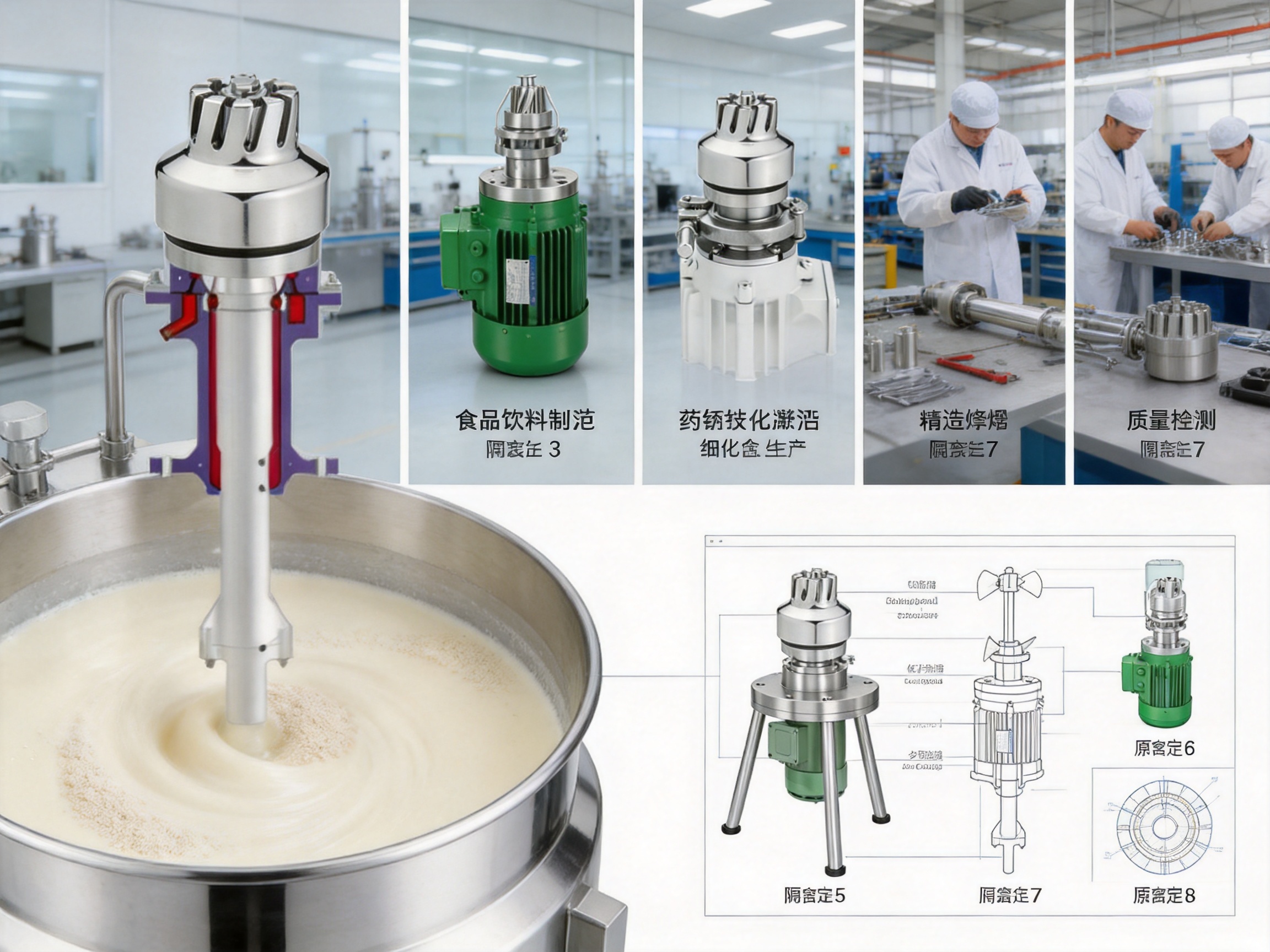
Modern food, beverage, pharmaceutical, and biotechnology manufacturers increasingly require mixing equipment that can deliver high process performance without compromising hygiene, sterility, product protection, or operational reliability. Powders must be dispersed quickly, difficult-to-dissolve ingredients must be incorporated uniformly, emulsions must remain stable, and suspended particles must be prevented from settling. At the same time, production systems must be easy to clean, suitable for clean-in-place and sterilize-in-place procedures, and capable of protecting valuable or sensitive materials from contamination.
The bottom-entry high-shear magnetic emulsifier is designed to address these requirements in one integrated process solution. It combines a bottom-mounted installation, a magnetic drive system, specialized impeller geometry, hygienic contact materials, and controlled high-speed operation. This combination makes the equipment suitable for particle size reduction, high-shear emulsification, solid-liquid mixing, dispersion, dissolution, dilution, and suspension maintenance.
Compared with conventional agitators equipped with mechanical seals, the magnetic drive design removes a major pathway for leakage and external contamination. Compared with many top-mounted systems, bottom installation can improve access to the lower part of the vessel, reduce dead zones, and save valuable space above the tank. Compared with ordinary low-speed mixers, the high-shear configuration generates stronger localized mixing forces for applications involving agglomerated powders, fine dispersions, and emulsions.
Shiloc (Shanghai) Industrial Trading Co., Ltd. supplies process equipment and engineering solutions for food and beverage, biopharmaceutical, daily chemical, and fine chemical manufacturers. Its equipment development approach combines European technical experience, Danish design concepts, hygienic engineering, and manufacturing capabilities located in Shanghai. The result is a process-oriented solution intended not only to mix materials, but also to support reliable production, traceability, safety, and long-term equipment value.
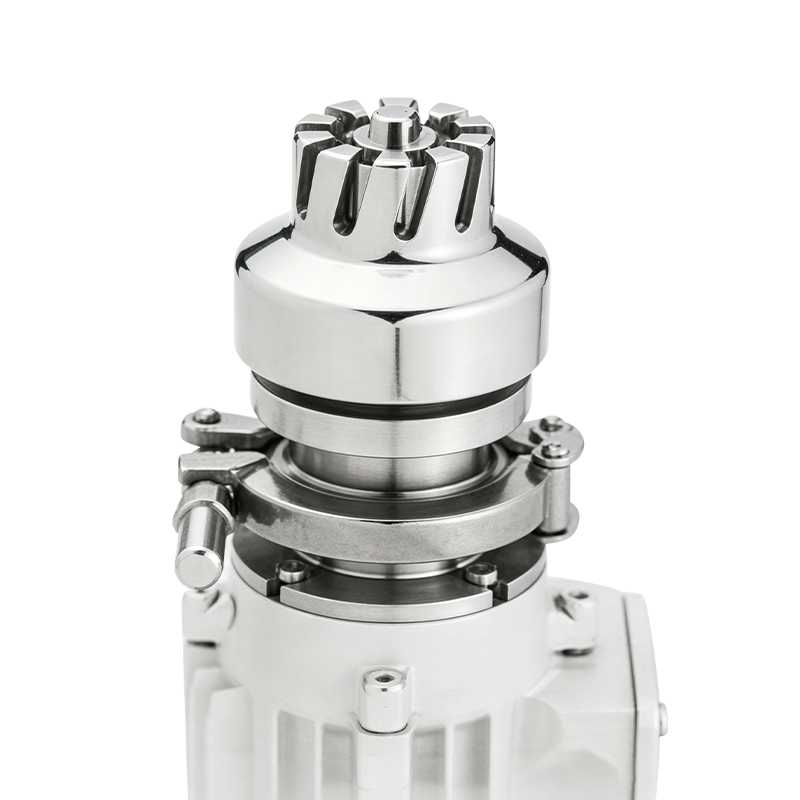
Bottom-entry High-shear Magnetic Emulsifier
What Is a Bottom-Entry High-Shear Magnetic Emulsifier?
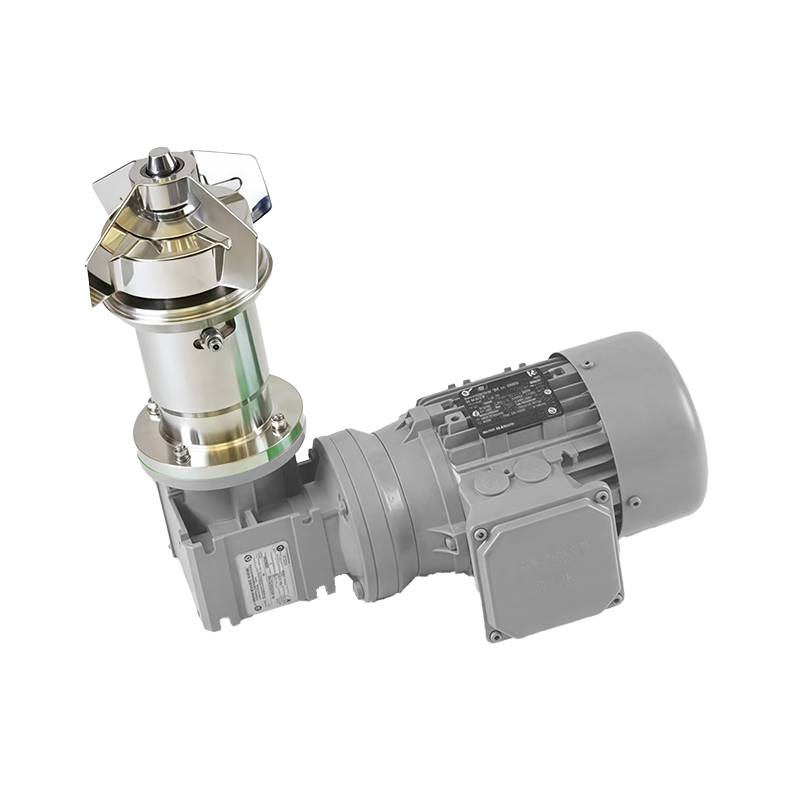
A bottom-entry high-shear magnetic emulsifier is a specialized mixing machine installed through the lower section of a process vessel. Its working assembly is positioned inside the vessel, while the drive motor and external rotor transmit motion through a magnetic coupling. The impeller rotates at high speed and creates a controlled flow field with localized shear forces.
The equipment is primarily intended for processes in which ordinary agitation is not sufficient. These processes may include the incorporation of powders into liquids, the breakdown of agglomerates, the preparation of stable emulsions, the dispersion of fine solids, the acceleration of dissolution, and the maintenance of uniform suspension. Its bottom-entry arrangement enables the impeller to act directly in the lower region of the vessel, where heavier particles and undissolved ingredients may otherwise accumulate.
The product is suitable for food and beverage production as well as pharmaceutical and biotechnology applications. The design is developed to support FDA-related hygienic expectations for pharmaceutical and biotechnology industries. Contact components are manufactured from 1.4435 or 1.4404 stainless steel, and sliding bearings are made of tungsten carbide. The product is also designed to meet CIP and SIP requirements and to support sterile production environments.
Depending on the selected model and process configuration, the equipment can operate within a speed range from approximately 400 to 1,450 rpm for the described application, while the broader magnetic mixer range includes models operating from approximately 500 to 2,850 rpm. The high-shear LHS-G series reaches a maximum speed of 2,850 rpm and is intended for demanding emulsification and particle reduction applications.
Why High-Shear Mixing Is Important for Particle Size Reduction
Particle size reduction is often essential to product quality. Large agglomerates can dissolve slowly, remain visible in the finished product, reduce batch uniformity, or interfere with downstream filtration and filling. In emulsified products, insufficient particle or droplet reduction can cause separation, instability, inconsistent texture, or poor appearance.
High-shear mixing improves this process by concentrating mechanical energy in the working zone around the impeller. When a powder enters a liquid, the particles may initially form clusters that resist wetting. A properly designed high-shear impeller draws the liquid and solids into an active circulation zone, breaks apart agglomerates, and increases contact between the liquid and the individual particles.
In an emulsion, high shear can help reduce the size of dispersed droplets and distribute one phase more evenly through another. The final result depends on formulation, temperature, viscosity, processing time, ingredient properties, and operating speed. However, a suitable emulsifier provides the mechanical environment required for these variables to be controlled more effectively.
The bottom-entry high-shear magnetic emulsifier is particularly useful because the impeller geometry is designed to create an effective mixing flow field while maintaining moderate and controlled shear behavior for different applications. The equipment is not simply a motor rotating a blade. Its performance depends on the relationship between impeller profile, vessel geometry, liquid level, viscosity, solids loading, operating speed, and process sequence.
For manufacturers, improved particle size reduction can create several practical benefits. Faster dispersion may shorten batch time. More uniform material distribution may reduce reprocessing. Better dissolution can improve product consistency. Stable suspension can reduce sedimentation during holding and transfer. More predictable emulsification can support repeatable quality from batch to batch.
Magnetic Drive Technology for Product Protection
A conventional agitator usually transfers rotational force into a vessel through a shaft and mechanical seal. Although mechanical seals can be engineered for demanding applications, they remain wear components and require careful maintenance. Seal wear, incorrect installation, pressure changes, thermal cycling, or damage caused by abrasive materials may create a pathway for leakage or contamination.
The magnetic drive system uses magnetic coupling to transmit torque without requiring a conventional rotating shaft seal at the vessel boundary. The internal rotor and external rotor are magnetically coupled. The motor turns the external rotor, and the magnetic field transfers this rotation to the internal rotor and impeller inside the vessel.
This arrangement minimizes the risk of cross-contamination between the process material and the surrounding environment. It also helps prevent valuable, toxic, sterile, or sensitive media from leaking out of the vessel. For biopharmaceutical production, this protection is especially important because a batch may contain high-value biological materials or substances that must not be exposed to the surrounding atmosphere.
In food and beverage applications, the sealed magnetic design can help support hygienic operation by reducing external contamination risks. In pharmaceutical and biotechnology applications, it supports the broader objective of maintaining a controlled production environment. The magnetic coupling also reduces the maintenance requirements associated with traditional mechanical sealing systems.
The magnetic drive does not eliminate the need for correct process design. Vessel pressure, temperature, liquid properties, solids concentration, motor selection, and torque requirements must still be evaluated. However, it provides a strong hygienic and operational advantage when a sealed process boundary is required.
Advantages of Bottom-Mounted Installation
Installation position has a direct influence on process performance. In many conventional systems, a top-mounted agitator extends downward from the tank cover. This arrangement is practical for general-purpose mixing, but it may require additional overhead space and may not provide the most effective circulation in the lower section of the vessel.
A bottom-mounted high-shear emulsifier places the active mixing zone near the vessel floor. This position can help mobilize heavier ingredients and reduce the risk of sediment accumulation. It is particularly useful when powders are difficult to incorporate, when solid particles tend to settle, or when a low starting liquid volume is required.
Bottom installation can also reduce the formation of dead zones. A dead zone is an area of limited circulation where material may remain unmixed or may be exposed to a different processing history from the rest of the batch. By creating a strong flow field near the bottom, the equipment can improve circulation between the lower region and the main vessel volume.
Another advantage is the conservation of operating space above the vessel. Production areas often contain pipework, transfer lines, lifting systems, platforms, and other equipment. Removing or reducing the height requirement of a top-mounted agitator can simplify plant layout and make better use of available space.
Bottom-entry equipment is also suitable for process vessels where the top cover must accommodate several other functions, such as spray devices, dosing ports, sampling systems, instrumentation, inspection openings, or sterile connections. The exact arrangement must be confirmed during engineering design, but the bottom-mounted configuration provides an additional option for optimizing the complete system.
Hygienic and Sterile Design
Hygienic design is essential in both food and pharmaceutical processing. Equipment surfaces must be compatible with the product, cleanable by validated procedures, and designed to minimize areas where residues can collect. Crevices, stagnant pockets, rough welds, and difficult-to-access components can increase cleaning time and contamination risk.
The bottom-entry high-shear magnetic emulsifier is developed with CIP and SIP requirements in mind. Clean-in-place systems circulate cleaning solutions through the vessel and connected equipment without requiring complete disassembly. Sterilize-in-place systems use steam or another validated sterilization method to treat internal process surfaces. The mixer design must allow cleaning and sterilization media to contact relevant surfaces effectively.
All product contact parts are manufactured from 1.4435 or 1.4404 stainless steel. These materials are widely used in hygienic process equipment because of their corrosion resistance, cleanability, and suitability for food, pharmaceutical, and biotechnology environments when properly specified, fabricated, finished, and maintained.
The product uses tungsten carbide sliding bearings. These bearings are designed to withstand demanding operating conditions and provide reliable support for the rotating assembly. Bearing materials are especially important in magnetic mixers because the internal rotating components operate inside the process environment. The bearing design must be compatible with the process liquid, cleaning agents, sterilization conditions, rotational speed, and operating temperature.
The sterile design also includes attention to welded structures, surface finishing, gasket selection, dimensional accuracy, and component traceability. A hygienic material alone does not guarantee hygienic performance. The entire production chain must be managed so that materials, welding, polishing, inspection, assembly, and testing support the intended process standard.
Impeller Geometry and Flow Performance
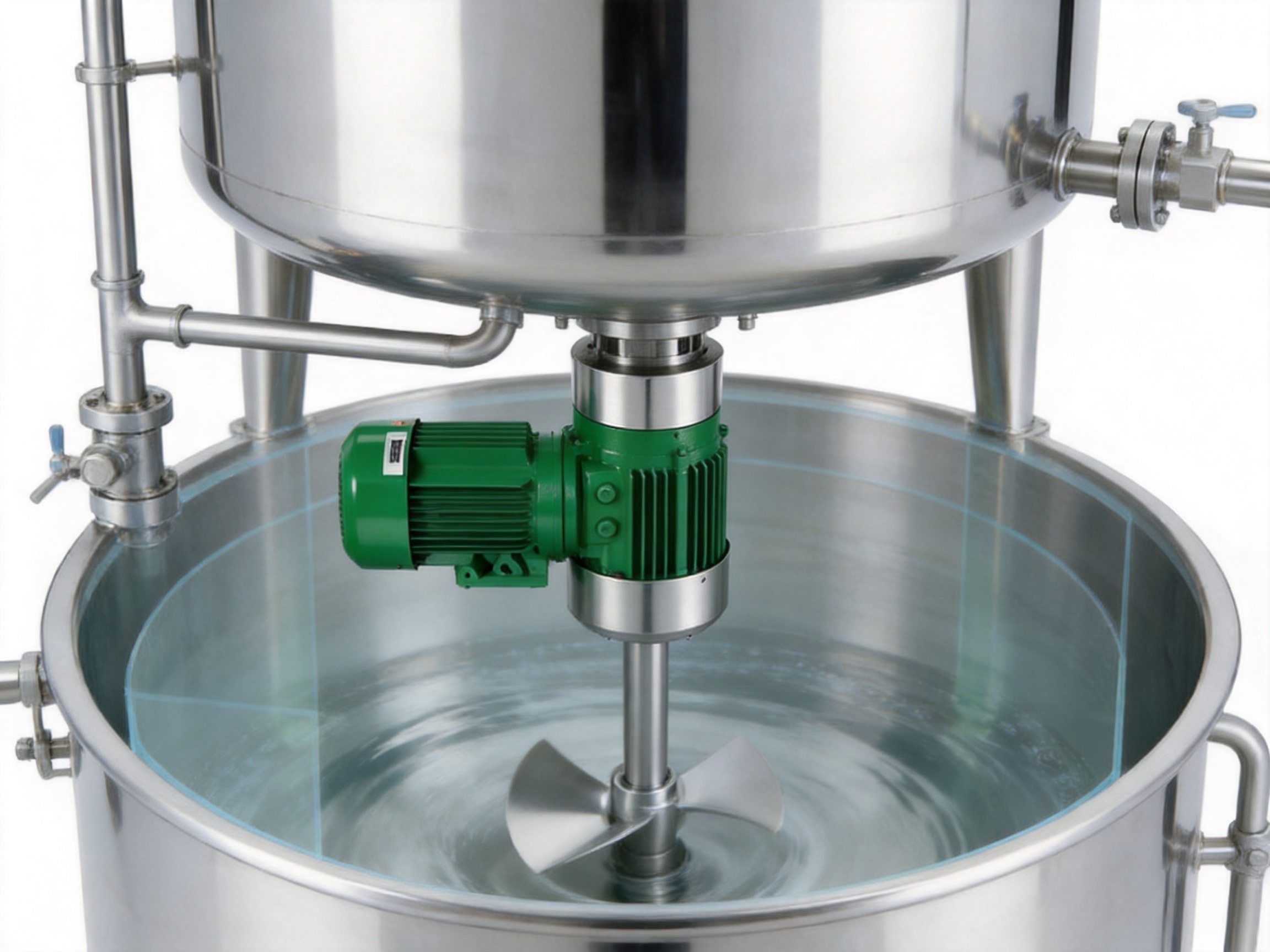
The impeller is the primary working component responsible for transferring energy into the process material. Its diameter, blade profile, number of blades, angle, clearance, and relationship to the vessel all influence mixing performance. A high-shear impeller must generate sufficient local energy to break down agglomerates and promote dispersion while also producing useful bulk circulation.
The impeller geometry of the equipment is designed to create an excellent mixing flow field with moderate shear rates for a wide range of applications. The design objective is to support rapid wetting, efficient liquid-solid contact, and uniform distribution without creating unnecessary process instability.
For powder addition, the impeller can help draw liquid toward the lower mixing zone and distribute incoming solids throughout the vessel. This reduces the possibility that powders will remain floating on the surface or form compact lumps at the bottom. The actual feeding method remains important. Controlled powder addition, correct liquid level, and suitable sequence can significantly improve the result.
For suspension maintenance, circulation must be strong enough to keep particles distributed during processing and holding. The optimum condition depends on particle density, particle size, solids concentration, viscosity, and vessel design. In some applications, the high-shear unit may operate together with a lower-speed circulation mixer to combine local shear with large-volume movement.
For emulsification, the impeller creates a high-energy zone that supports the reduction and distribution of dispersed droplets. Product formulation and process parameters determine whether a single-pass mixing operation, recirculation loop, or staged process is most appropriate. The equipment can be integrated into a wider process system according to the required product specification.
Applications in Food and Beverage Manufacturing
Food and beverage manufacturers process a wide variety of materials, including powders, syrups, oils, proteins, stabilizers, starches, flavors, colorants, and concentrated ingredients. Many of these materials are sensitive to hydration conditions and may form lumps if added too quickly or mixed with insufficient energy.
The bottom-entry high-shear magnetic emulsifier can be used for the preparation of beverages, nutritional products, sauces, dressings, dairy-related formulations, flavor systems, and other liquid or semi-liquid products. It can assist with the dispersion of powdered ingredients, the preparation of stable emulsions, and the maintenance of uniformity during processing.
In beverage production, the equipment may support the dissolution of powders and the dispersion of functional ingredients. In sauces and dressings, high-shear operation can improve the incorporation of oil, water, thickeners, and stabilizers. In nutritional formulations, controlled processing can help distribute proteins, vitamins, minerals, and other components more consistently.
Food processing also requires careful attention to cleaning time and product changeover. A mixer that is compatible with CIP procedures can help reduce manual intervention and support more efficient production scheduling. The magnetic drive minimizes the possibility of leakage at the vessel boundary, while the stainless steel contact construction supports hygienic operation.
Manufacturers must select operating speed and equipment size based on the actual product rather than relying only on water-based test data. Viscosity, density, temperature, solids loading, and formulation behavior may differ substantially from water. Proper selection and process trials remain essential for achieving the required quality.
Applications in Pharmaceutical and Biotechnology Processing
Pharmaceutical and biotechnology processes require a high level of control over contamination, cleaning, sterilization, materials, and documentation. The equipment may be used in solution preparation, buffer preparation, media preparation, suspension processing, formulation, dilution, and other operations requiring controlled mixing.
In biopharmaceutical manufacturing, product value can be high and process sensitivity can be significant. A leakage path or contamination event may result in batch loss, extended investigation, or facility downtime. The magnetic drive system provides an important barrier by reducing the need for a conventional rotating mechanical seal.
The equipment may also be used in systems associated with cell reactors and other biological process vessels. The product information identifies the LMP-D multi-layer bottom-mounted magnetic mixer as a model widely used in cell reactor applications. Multi-layer impeller configurations can improve circulation across different vessel heights and support more uniform distribution in larger or more complex process volumes.
For pharmaceutical powder handling, the high-shear configuration is useful where powders are difficult to mix into liquids. It can improve wetting and reduce agglomeration, helping manufacturers achieve a more homogeneous solution or suspension. For sterile solutions, CIP and SIP compatibility supports integration into automated hygienic production lines.
Process validation remains the responsibility of the manufacturer and must be based on the specific formulation and production system. The mixer provides the mechanical and hygienic foundation, while validation protocols establish whether cleaning, sterilization, mixing uniformity, hold time, and other critical parameters meet the required standard.
Product Range and Configuration Options
The magnetic mixer range includes top-mounted and bottom-mounted designs, low-shear and high-shear versions, and single-layer or multi-layer impeller configurations. This range allows the mixer to be selected according to vessel structure, process intensity, viscosity, capacity, and application objective.
| Product Type | Installation and Configuration | Maximum Speed | Typical Applications |
| LDC-N | Top-mounted magnetic mixer with internal magnetic drive | 600 rpm | Solid-liquid mixing, dispersion, dissolution, and general hygienic processing |
| LDC-W | Top-mounted magnetic mixer with external magnetic drive | 1,200 rpm | Dispersion, mixing, suspension, and dissolution in solution tanks |
| LMP-S | Bottom-mounted magnetic mixer with single-layer impeller | 500 rpm | Dispersion, mixing, suspension maintenance, and dissolution |
| LMP-D | Bottom-mounted magnetic mixer with multi-layer impeller | 480 rpm | Cell reactors and multi-zone circulation processes |
| LHS | Bottom-mounted magnetic low-shear mixer | 1,480 rpm | Dispersion, mixing, suspension, and dissolution |
| LHS-G | Bottom-mounted magnetic high-shear mixer | 2,850 rpm | High-shear emulsification and particle size reduction |
The LMP-S model uses a single-layer impeller and is suited to applications requiring reliable bottom circulation at moderate speed. The LMP-D model uses multiple impeller layers to improve circulation across a larger working zone. The LHS model provides higher-speed operation for applications requiring stronger dispersion and mixing action, while the LHS-G model is the principal high-shear emulsification option.
LHS-G Series Technical Specifications
The LHS-G series is designed for applications requiring high-speed shear and efficient particle reduction. The available models cover working capacities from approximately 10 to 2,500 liters when tested with water as the process medium. Actual capacity may vary according to viscosity, density, solids concentration, vessel geometry, and process requirements.
| Model | Blade Diameter | Motor Power | Speed | Indicative Capacity |
| LHS-G150 | 80 mm | 0.55/0.75 kW | 2,850 rpm | 10–150 liters |
| LHS-G600 | 100 mm | 2.2/3 kW | 2,850 rpm | 150–600 liters |
| LHS-G2500 | 170 mm | 5.5/7.5 kW | 2,850 rpm | 600–2,500 liters |
The stated model capacities are based on tests conducted using water. The appropriate model must be selected based on the viscosity and properties of the actual process medium. A product with a viscosity of up to approximately 800 cP may be suitable for the equipment, but the final selection should also consider density, solids content, temperature, required shear, batch size, and desired processing time.
Motor and gearbox selection can be adapted to the required duty. A higher-power configuration may be appropriate for heavier formulations, longer operating cycles, or more demanding starting conditions. Engineering review is recommended before final equipment selection.
How the Equipment Compares with Conventional Mixing Solutions
The advantages of the bottom-entry high-shear magnetic emulsifier become clearer when it is compared with conventional equipment according to process requirements rather than only purchase price. Different mixers are suitable for different duties, but the magnetic high-shear design offers several combined benefits.
Compared with an ordinary propeller mixer, the high-shear emulsifier creates stronger localized mechanical forces and is better suited to agglomerate breakup, fine dispersion, and emulsification. A propeller may provide useful bulk circulation, but it may not create enough shear to reduce particle or droplet size efficiently.
Compared with a conventional mechanically sealed agitator, the magnetic drive offers a reduced leakage and contamination risk. Mechanical seal systems can be effective when correctly specified, but they contain wear interfaces that require inspection and maintenance. The magnetic coupling creates a sealed process boundary without a conventional rotating shaft seal.
Compared with a top-mounted mixer, a bottom-entry design can save space above the vessel and improve access to the lower mixing zone. This can be valuable in plants with limited ceiling height or crowded tank-top arrangements. It may also improve the handling of settling solids and low-start-up-volume conditions.
Compared with some externally recirculated high-shear systems, an in-vessel bottom-mounted emulsifier can reduce the number of external process connections and simplify the flow path. However, external recirculation may still be appropriate for certain formulations or scale requirements. The correct choice depends on the desired residence time, heat transfer arrangement, shear exposure, and system architecture.
The most important competitive advantage is the combination of features: high-speed shear, bottom-entry circulation, magnetic sealing, hygienic materials, CIP/SIP compatibility, and an adaptable product range. Many alternatives may provide one or two of these characteristics, but the integrated design is intended for manufacturers that require several at the same time.
Manufacturing Strengths and Engineering Capabilities
Equipment performance depends on manufacturing quality as much as on the initial design. A high-shear mixer contains precision components that must be correctly dimensioned, machined, welded, polished, assembled, and tested. Small variations in alignment, surface finish, bearing fit, or rotor balance can influence service life and process reliability.
Shiloc operates a Shanghai production facility covering approximately 3,000 square meters. The company has more than 20 technical specialists and provides internal capabilities for processing, welding, polishing, and quality control. These capabilities allow important manufacturing stages to be managed under one organizational structure rather than being completely dispersed among unrelated suppliers.
Internal processing supports closer control of dimensions and component consistency. Welding capability is important because hygienic process equipment often includes stainless steel vessels, flanges, housings, shaft sleeves, and other fabricated parts. Weld quality, penetration, smoothness, and finishing must be managed carefully to reduce crevices and support cleaning performance.
Polishing is another key manufacturing step. Product contact surfaces require appropriate surface quality for hygienic service. Smooth and correctly finished surfaces are easier to clean and less likely to retain product residues. Polishing also contributes to the appearance, corrosion resistance, and long-term maintainability of stainless steel equipment.
Quality control and traceability help connect the finished equipment to its materials and manufacturing history. For pharmaceutical and biotechnology customers, documentation and traceability may be important parts of supplier qualification and equipment acceptance. The company’s manufacturing approach focuses on maintaining traceability from processing through final delivery.
The company combines European know-how and Danish design concepts with local manufacturing resources. This approach is intended to balance international engineering experience with responsive production, communication, customization, and supply support. Customers can work with a supplier that understands both hygienic process requirements and the practical needs of equipment manufacturing in China.
Materials, Welding, and Surface Finishing
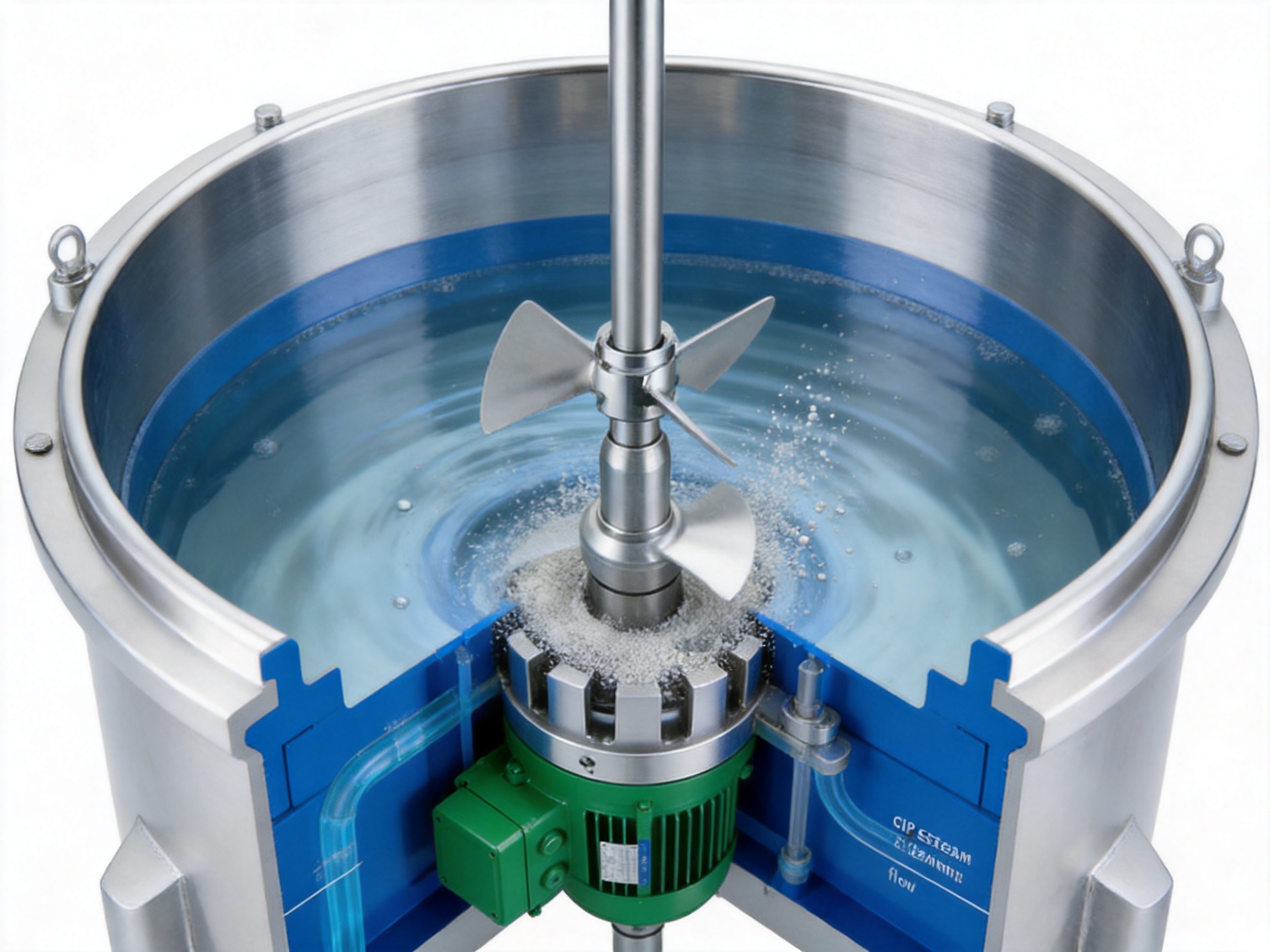
The selection of contact materials affects corrosion resistance, cleanability, mechanical durability, and compatibility with process chemicals. The equipment uses 1.4435 or 1.4404 stainless steel for product contact components. These grades are appropriate for many hygienic process environments when their application, welding procedure, surface condition, and maintenance requirements are correctly evaluated.
Welding quality is especially important in pharmaceutical and food equipment. Poorly executed welds may include undercutting, porosity, excessive heat tint, rough transitions, or incomplete penetration. Such defects can create contamination risks or make cleaning more difficult. Controlled welding procedures and appropriate post-weld finishing help maintain the sanitary character of the equipment.
Surface finishing must be matched to the process and customer specification. A properly finished surface reduces the likelihood of residue retention and supports repeatable cleaning. The final result depends on base material, welding, grinding, polishing, passivation, inspection, and the cleaning chemicals used by the customer.
The shaft sleeve and other wetted structural parts must also be manufactured with dimensional accuracy. The rotating assembly requires correct alignment and clearance to prevent excess vibration, bearing damage, or unwanted contact. Manufacturing control is therefore closely connected to the reliability of the magnetic drive and impeller system.
Process Integration and Equipment Selection
Selecting a high-shear magnetic emulsifier requires more than matching the vessel volume to a catalog capacity. The process engineer should consider the product’s viscosity, density, solids concentration, particle size, tendency to agglomerate, temperature, sensitivity to shear, required batch time, and target degree of dispersion or emulsification.
Vessel geometry is also important. Diameter-to-height ratio, bottom shape, internal coils, baffles, spray devices, and outlet location can all affect flow. The mixer should be positioned and configured so that its operating zone complements the vessel rather than creating isolated circulation patterns.
The process sequence should be considered at the same time as the equipment. For example, a powder may be added gradually into an active liquid vortex or introduced below the liquid surface through a controlled feeding system. A liquid phase may need to be heated before emulsification. A sensitive biological material may require lower shear after initial dispersion. These steps can determine how the mixer is operated.
For processes with multiple stages, the equipment may be used in combination with other mixing or transfer devices. A high-shear unit can perform initial dispersion, while a lower-speed mixer maintains bulk circulation during holding. Heat exchangers, dosing systems, sterile filters, load cells, and control systems may be integrated into the overall process line.
The manufacturer can provide engineering and technical services to help customers evaluate these factors. Customized solutions may include equipment sizing, motor selection, impeller configuration, flange adaptation, vessel integration, control requirements, and process support.
Low Start-Up Volume and Difficult-to-Mix Powders
Low start-up volume is valuable when a process begins with a limited quantity of liquid or when concentrated ingredients must be prepared before dilution. Conventional mixers may struggle if the liquid level is too low to cover the working assembly effectively. A bottom-entry design can provide useful mixing action near the vessel floor during the early stage of a batch.
Difficult-to-mix powders commonly include materials that float, clump, hydrate rapidly at the surface, or form a gel-like coating that prevents liquid from penetrating the rest of the particle. High-shear action can break apart these structures and improve the contact between particles and liquid.
The equipment is recommended for applications where powders are difficult to mix into liquids. It can support the production of concentrated premixes, solutions, suspensions, emulsions, and other formulations in which rapid and uniform incorporation is important.
Successful powder processing still depends on the order of addition and feeding rate. Adding a large quantity of powder too quickly can overload even a high-performance mixer. A controlled process, supported by the correct impeller configuration and operating speed, generally provides better results than relying on maximum speed alone.
Operational Reliability and Maintenance
Operational reliability is influenced by the design of the rotor, bearings, motor, gearbox, impeller, flange, seals, and control system. The magnetic drive minimizes dependence on a conventional mechanical shaft seal, while tungsten carbide sliding bearings are selected to provide durable support in demanding operating conditions.
Routine maintenance should include inspection of bearing condition, rotor alignment, fastening components, O-rings, flange interfaces, motor performance, and vibration. Cleaning and sterilization procedures should be operated within the limits established for the equipment materials and design. Any unusual noise, temperature rise, vibration, or loss of mixing performance should be investigated promptly.
Operators should avoid running the mixer outside the specified process conditions. Excessive solids concentration, unsuitable viscosity, insufficient liquid coverage, foreign objects, or incorrect start-up procedures can increase mechanical stress. The actual operating manual and project-specific documentation should govern installation, commissioning, and maintenance.
Because the internal rotating components are magnetically driven, the equipment should also be protected from ferromagnetic objects that could interfere with the magnetic coupling or enter the process. Correct assembly and inspection are important before every production campaign, particularly after maintenance or vessel modification.
Cleaning, Sterilization, and Contamination Control
CIP and SIP compatibility is a major benefit for regulated and hygienic manufacturing. Automated cleaning reduces the need to open the vessel and manually handle internal components. This can reduce operator exposure, improve repeatability, and shorten changeover time when the cleaning recipe has been properly developed.
Cleaning effectiveness depends on the balance of time, temperature, chemical concentration, and mechanical action. The mixer can contribute mechanical action during cleaning, helping circulate cleaning solutions around the working area. The vessel and piping design must still ensure that all relevant surfaces are adequately reached and drained.
SIP procedures require careful control of steam exposure, temperature distribution, condensate removal, and equipment compatibility. Stainless steel contact components and the sterile design support these requirements, but the complete system must be validated under actual installation conditions.
Contamination control also includes raw material handling, air management, operator practices, transfer systems, sampling, and facility design. The magnetic emulsifier is one part of the broader hygienic process architecture. Its value is greatest when it is integrated into a complete contamination-control strategy.
Company Support for International Customers
Shiloc (Shanghai) Industrial Trading Co., Ltd. was established in March 2026 in Fengxian District, Shanghai. The company specializes in the import and export of goods and technology, import and export agency services, equipment manufacturing, and engineering and technical services.
The company serves food and beverage, biopharmaceutical, daily chemical, and fine chemical industries. Its product and service scope includes fluid equipment, heat exchangers, aseptic mixing equipment, process engineering, and international supply support.
Its Shanghai facility provides a base for technical coordination, fabrication, welding, polishing, assembly, and quality control. This structure enables the company to support customized equipment requirements while maintaining communication between engineering and manufacturing teams.
International customers often require more than a standard machine. They may need assistance with technical specifications, documentation, shipping, import and export procedures, installation coordination, spare parts, and after-sales communication. The company’s trading and engineering capabilities allow these requirements to be handled as part of a broader project service.
The company emphasizes integrity, pragmatism, innovation, development, excellent quality, and global sharing. These values are reflected in its focus on process optimization, safe and efficient equipment, reliable supply, traceability, and personalized customer service.
Recommended Evaluation Procedure Before Purchase
A structured evaluation can help customers select the correct model and avoid under-sizing or over-sizing. The first step is to define the product and process. Important information includes batch volume, minimum and maximum working volume, viscosity range, density, solids content, temperature, pressure, ingredient characteristics, and the required final product quality.
The second step is to define the process objective. A mixer intended mainly for suspension maintenance may not require the same shear intensity as a mixer intended for fine emulsification. Similarly, a powder dissolution process may require a different impeller configuration from a cell reactor application.
The third step is to review vessel and installation conditions. The vessel bottom design, available flange, internal clearances, top-space limitations, cleaning system, sterilization system, and connection standards should be evaluated before the equipment is finalized.
The fourth step is to determine the required documentation and quality standards. Pharmaceutical and biotechnology projects may require material certificates, weld records, surface-finish information, inspection reports, pressure or leak tests, factory acceptance testing, and other quality documents. Food and beverage projects may require hygienic design information and cleaning compatibility documentation.
The fifth step is to conduct a process trial or engineering review where necessary. Water-based catalog testing provides an initial reference, but actual formulations may behave differently. A trial using representative material can help verify dispersion time, particle reduction, temperature increase, suspension stability, and power requirements.
Frequently Asked Questions
What is the main function of a bottom-entry high-shear magnetic emulsifier?
The main function is to provide controlled, high-intensity mixing for particle size reduction, emulsification, powder dispersion, dissolution, dilution, and suspension maintenance. Its bottom-mounted impeller works near the vessel floor, while the magnetic drive transfers power without a conventional rotating shaft seal.
How does the magnetic drive reduce contamination risk?
The magnetic coupling transmits torque through a sealed vessel boundary. Because the design does not rely on a traditional rotating mechanical seal at the shaft entry, it minimizes a potential pathway for external contamination and product leakage.
Is the equipment suitable for sterile processing?
The equipment is designed for sterile applications and is compatible with CIP and SIP requirements. Final suitability depends on the complete process installation, cleaning and sterilization procedures, materials, operating conditions, and customer validation program.
What materials are used for product contact parts?
Product contact parts are manufactured from 1.4435 or 1.4404 stainless steel. Sliding bearings are made of tungsten carbide to provide durable support for the internal rotating assembly.
What is the maximum speed of the high-shear model?
The LHS-G high-shear magnetic mixer has a maximum speed of approximately 2,850 rpm. Other models in the product range operate at different speeds, including approximately 480, 500, 600, 1,200, and 1,480 rpm.
What is the difference between the LMP and LHS series?
The LMP series is primarily intended for bottom-mounted dispersion, mixing, suspension, and dissolution. The LMP-D version uses a multi-layer structure and is suitable for more complex circulation requirements, including cell reactor applications. The LHS series provides higher-speed operation, while the LHS-G model is designed specifically for high-shear emulsification and particle reduction.
Can the emulsifier process high-viscosity materials?
The equipment is suitable for viscosities up to approximately 800 cP under appropriate operating conditions. The correct model must be selected according to the actual viscosity, density, solids loading, temperature, vessel geometry, and required process result.
Can the equipment mix powders that are difficult to incorporate into liquids?
Yes. The high-shear impeller is designed to improve powder wetting, break up agglomerates, and increase solid-liquid contact. Powder feeding rate, addition location, liquid level, and process sequence must also be optimized.
Why is bottom installation useful?
Bottom installation can improve circulation in the lower vessel region, help mobilize settling materials, reduce dead zones, support low start-up volume, and save operational space above the vessel. It also leaves the vessel top available for other process connections and instruments.
Are the published capacities guaranteed for every product?
No. The listed capacities are based on testing with water. Actual performance depends on the properties of the process medium and the vessel configuration. A technical evaluation is recommended before selecting the final model.
What manufacturing capabilities support the equipment?
The company operates a Shanghai facility of approximately 3,000 square meters with more than 20 technical specialists. Its capabilities include component processing, stainless steel welding, polishing, assembly, quality control, and traceability management.
Can customized equipment be supplied?
Customized solutions can be developed according to vessel dimensions, process requirements, motor power, impeller configuration, flange arrangement, operating conditions, documentation needs, and integration requirements. Engineering review should be completed before production.
Conclusion
The bottom-entry high-shear magnetic emulsifier provides a practical solution for manufacturers that need efficient particle size reduction, reliable emulsification, hygienic operation, and protection against leakage or cross-contamination. Its main advantages arise from the combination of bottom-mounted installation, magnetic drive technology, optimized impeller geometry, stainless steel product contact surfaces, tungsten carbide sliding bearings, and CIP/SIP-compatible sterile design.
For food and beverage manufacturers, the equipment can support powder dispersion, ingredient dissolution, emulsion preparation, suspension maintenance, and consistent product quality. For pharmaceutical and biotechnology manufacturers, it offers a sealed mixing arrangement suitable for sensitive materials, controlled production environments, and demanding cleaning and sterilization procedures.
The LMP and LHS product families provide configuration flexibility for general mixing, multi-zone circulation, suspension, dissolution, dispersion, and high-shear emulsification. The LHS-G series extends this range with operating speeds up to approximately 2,850 rpm and capacities from small laboratory or pilot-scale batches to production volumes of approximately 2,500 liters when tested with water.
Equipment performance is strengthened by the manufacturer’s Shanghai-based production and engineering capabilities. Internal processing, welding, polishing, assembly, quality control, and traceability help support consistent manufacturing and customized project delivery. Combined with European technical experience and Danish design concepts, these capabilities position the equipment as a process solution rather than a simple standalone mixer.
For the best result, customers should select the equipment according to the actual formulation, vessel, operating conditions, cleaning requirements, and production objective. When correctly specified and integrated, a bottom-entry high-shear magnetic emulsifier can improve process efficiency, reduce contamination risks, support reliable product quality, and provide long-term value in hygienic manufacturing environments.
References
1. Product technical information for bottom-mounted and top-mounted magnetic mixers, including LMP, LHS, LHS-G, LDC-N, and LDC-W series specifications.
2. Stainless steel material information for hygienic process equipment using grades 1.4435 and 1.4404.
3. General principles of clean-in-place and sterilize-in-place system design for food, pharmaceutical, and biotechnology processing equipment.
4. General engineering principles for high-shear mixing, powder dispersion, emulsification, suspension maintenance, and particle size reduction.
5. Manufacturer information concerning Shanghai production, welding, polishing, processing, quality control, traceability, and engineering services.
6. General hygienic design principles for sealed magnetic-drive mixing equipment used in regulated process industries.
7. General process engineering guidance for selecting mixers according to viscosity, vessel geometry, solids loading, batch volume, and operating speed.
Product: Bottom-entry High-shear Magnetic Emulsifier
PREV:Bottom-Entry High-Shear Magnetic Emulsifier for Hygienic Food and Biopharmaceutical Processing
NEXT:Automatic UHT Sterilizer: Advanced Process Efficiency for Food and Biopharmaceutical Manufacturers
NEXT:Automatic UHT Sterilizer: Advanced Process Efficiency for Food and Biopharmaceutical Manufacturers
Interested in cooperation or have questions?
Recommended LINS
✦
Food Processing Skid System
Food and Beverage Process System
CIP Skid System for Food Industry
food and beverage process skid system
hygienic process skid for food industry
CIP process skid system for food industry
automated process skid system for food processing
modular food processing skid system
beverage processing skid system
food processing equipment skid system
Let'S Work Together Welcome Aboard!
-

haikexin@haikexin.com
+8613391278930
-
 +86-21-57560276
 -
 No. 2819, Sihu Road,Fengxian District, Shanghai, China
Join Our Mailing List
Copyright © Shiloc (Shanghai) Industrial Trading Co., Ltd. All Rights Reserved.
Process Systems & Equipment For Food & Biopharma Manufacturers
