
 English
 русский
 Português
 Français


 Read More

Product Category
NEW Category
Contact us
Contact Us
We specialise in the research, development and manufacture of electrical wires and cables.
 +86-21-57560276
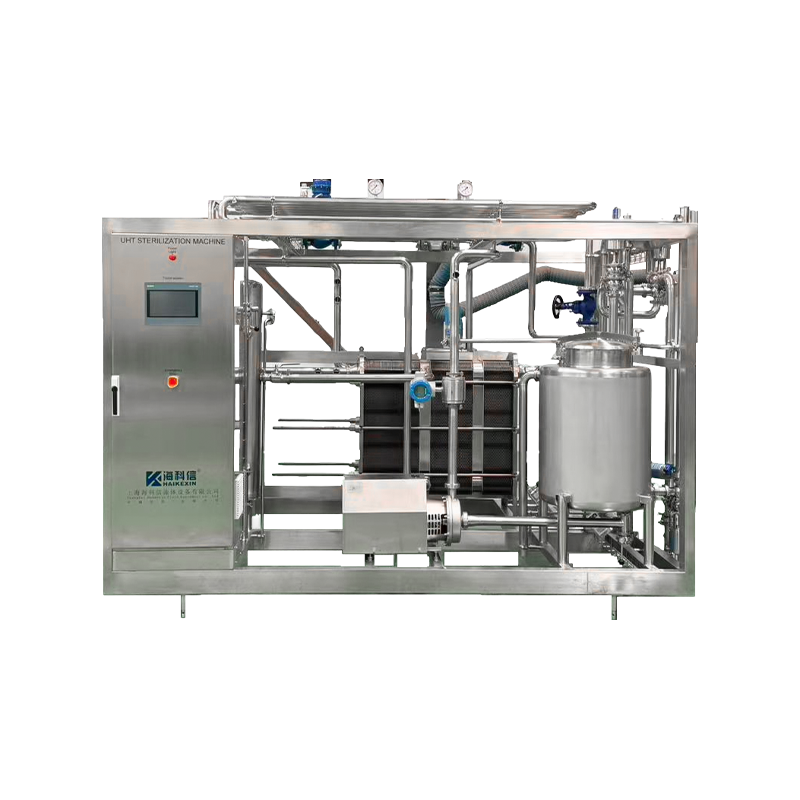
Ultra-High Temperature Tube Pasteurizer for Food and Biopharmaceutical Processing
Content
- 1 Understanding Ultra-High Temperature Tube Pasteurization
- 2 Product Design and Process Configuration
- 3 Key Advantages of a Tubular UHT System
- 4 Advantages Compared with Conventional or Less Specialized Alternatives
- 5 Engineering Approach for Different Product Types
- 6 Manufacturing Strengths and Quality-Focused Production
- 7 Control, Instrumentation, and Process Safety
- 8 Cleaning, Sanitation, and Maintenance
- 9 Project Customization and Customer Support
- 10 Applications Across Multiple Industries
- 11 Comparison of Important Selection Criteria
- 12 Why Manufacturing Quality Matters to the Final Process
- 13 Installation and Commissioning Considerations
- 14 Economic and Operational Value
- 15 Frequently Asked Questions
- 15.1 What is an Ultra-High Temperature Tube Pasteurizer?
- 15.2 Is the equipment suitable for both food and biopharmaceutical applications?
- 15.3 What products can be processed?
- 15.4 Can the system process multiple products?
- 15.5 How does the tubular configuration protect product quality?
- 15.6 Can heat recovery be included?
- 15.7 How is hygienic performance supported?
- 15.8 What manufacturing capabilities support the equipment?
- 15.9 What design philosophy is used?
- 15.10 What information is needed for a quotation?
- 15.11 Can the supplier support installation and commissioning?
- 15.12 How should the equipment be maintained?
- 16 Conclusion
- 17 References
- 18 Product: Ultra-High Temperature Tube Pasteurizer (UHT)
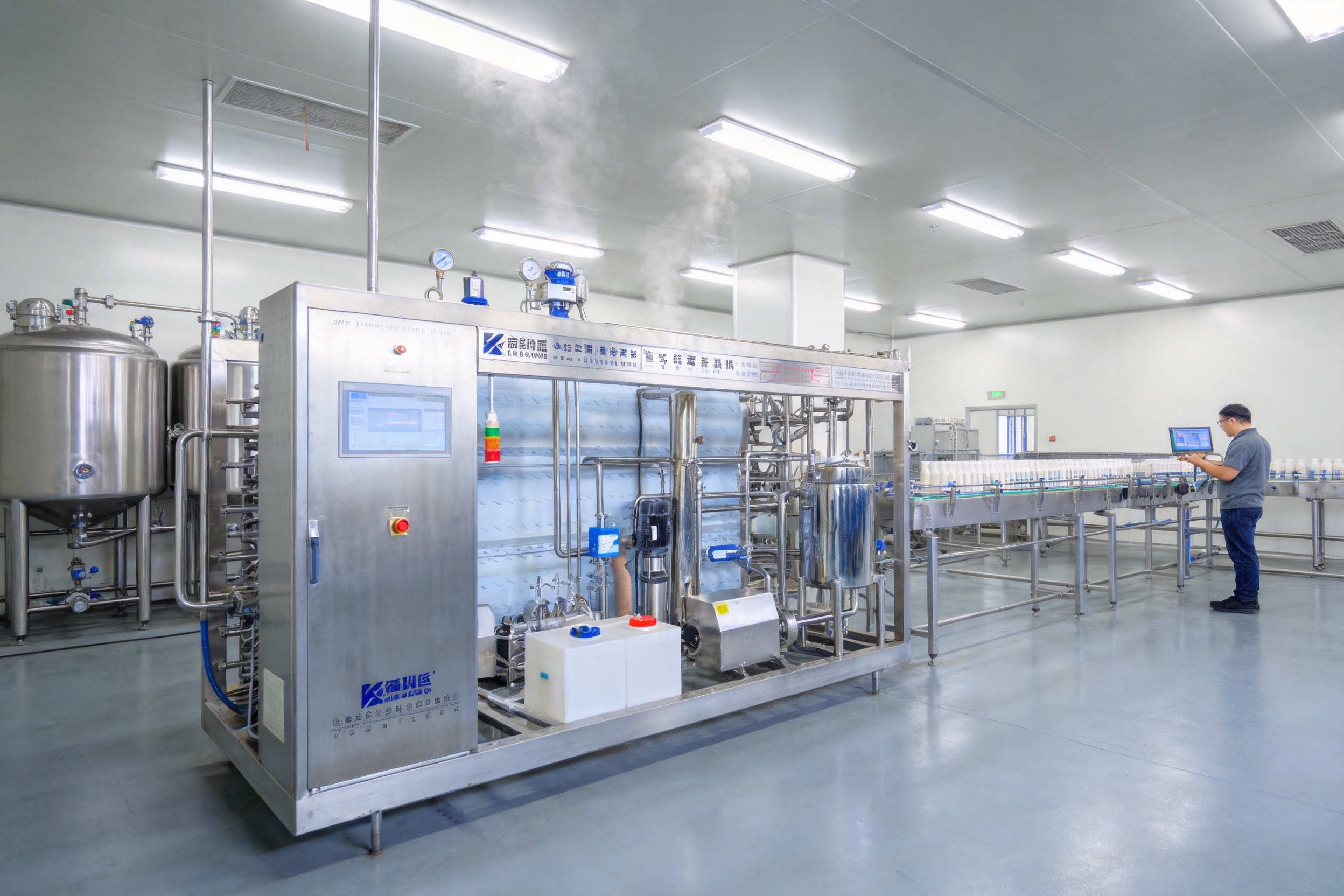
Ultra-high temperature processing has become an important technology for manufacturers that need to combine product safety, extended shelf life, consistent quality, and efficient production. In food and beverage manufacturing, UHT treatment supports the production of commercially sterile or shelf-stable products such as milk, plant-based beverages, nutritional drinks, liquid foods, sauces, and other formulated products. In biopharmaceutical and biotechnology applications, carefully controlled thermal treatment can also support the processing of selected compatible fluids, process media, and non-active liquid streams where temperature management, hygienic design, and traceability are essential.
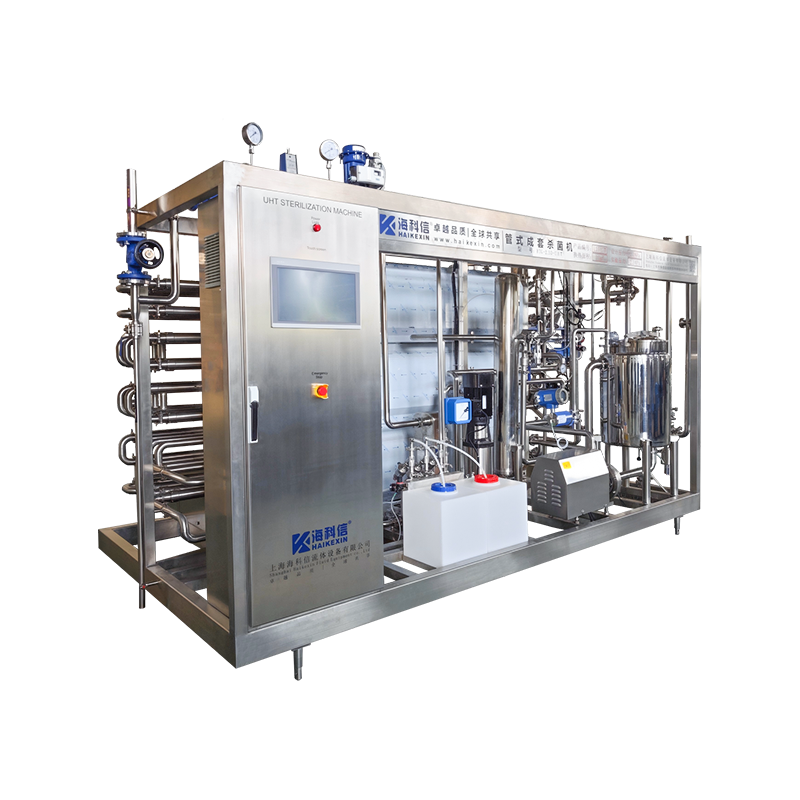
The Ultra-High Temperature Tube Pasteurizer is a process system designed to heat liquid products rapidly, hold them under controlled conditions, and cool them efficiently before downstream filling or further processing. Its tubular heat-transfer configuration offers a practical solution for products that require reliable thermal treatment, controlled residence time, and hygienic operation. Depending on the product recipe and process objective, the system can be engineered as part of a pasteurization, sterilization, or UHT processing line.
Modern process equipment must do more than achieve a target temperature. It must protect product quality, reduce unnecessary energy consumption, simplify cleaning, support production flexibility, and provide dependable operation over many years. The system described in this article is developed around those requirements. It combines process engineering, hygienic fabrication, controlled heat transfer, and a structured manufacturing approach to provide a dependable solution for food, beverage, biopharmaceutical, daily chemical, and fine chemical manufacturers.
For customers seeking a customized process system, the value of a tube pasteurizer lies not only in the heat exchanger itself. The complete value includes process analysis, equipment configuration, material selection, welding quality, surface finishing, inspection, integration, documentation, and after-sales support. A properly engineered system can help manufacturers achieve greater production stability while reducing the risks associated with thermal over-processing, contamination, fouling, unplanned downtime, and inconsistent product treatment.
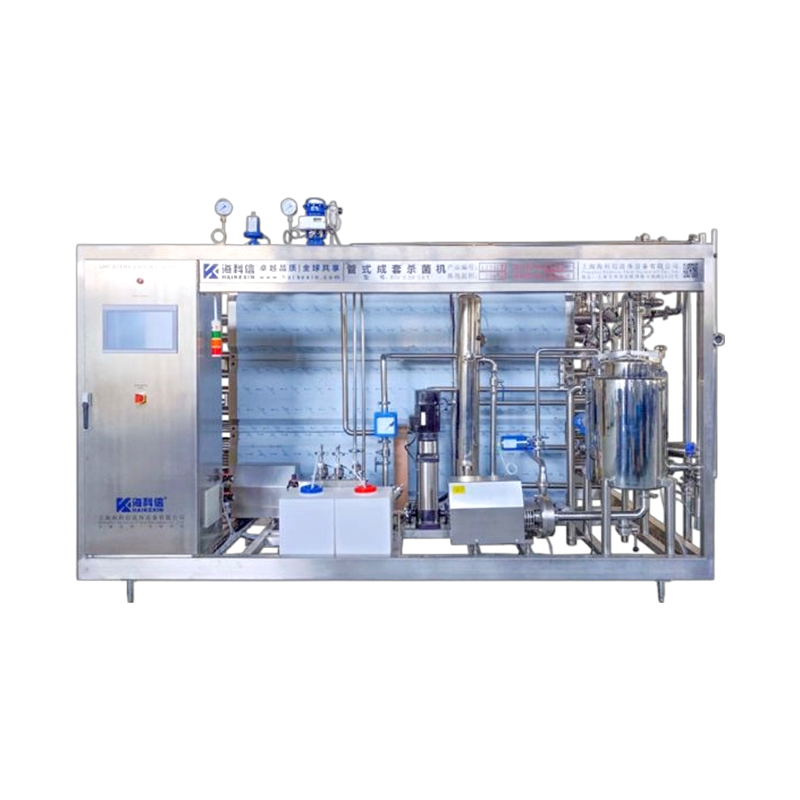
Ultra-High Temperature Tube Pasteurizer (UHT)
Understanding Ultra-High Temperature Tube Pasteurization
Pasteurization and UHT processing are thermal treatment methods used to control microorganisms and improve product safety and storage stability. Although the exact process conditions depend on the product, packaging format, regulatory requirements, and validated process design, the basic principle is straightforward: the liquid is heated to a controlled temperature for a defined period and then cooled as quickly as practical.
Traditional batch heating can be suitable for small-scale or specialty production, but it often requires longer heating times and may expose the product to greater thermal load. Continuous tubular processing provides a more controlled alternative. Product flows through a series of heat-transfer sections, allowing heating, holding, cooling, and, where applicable, regeneration to take place in a continuous and repeatable manner.
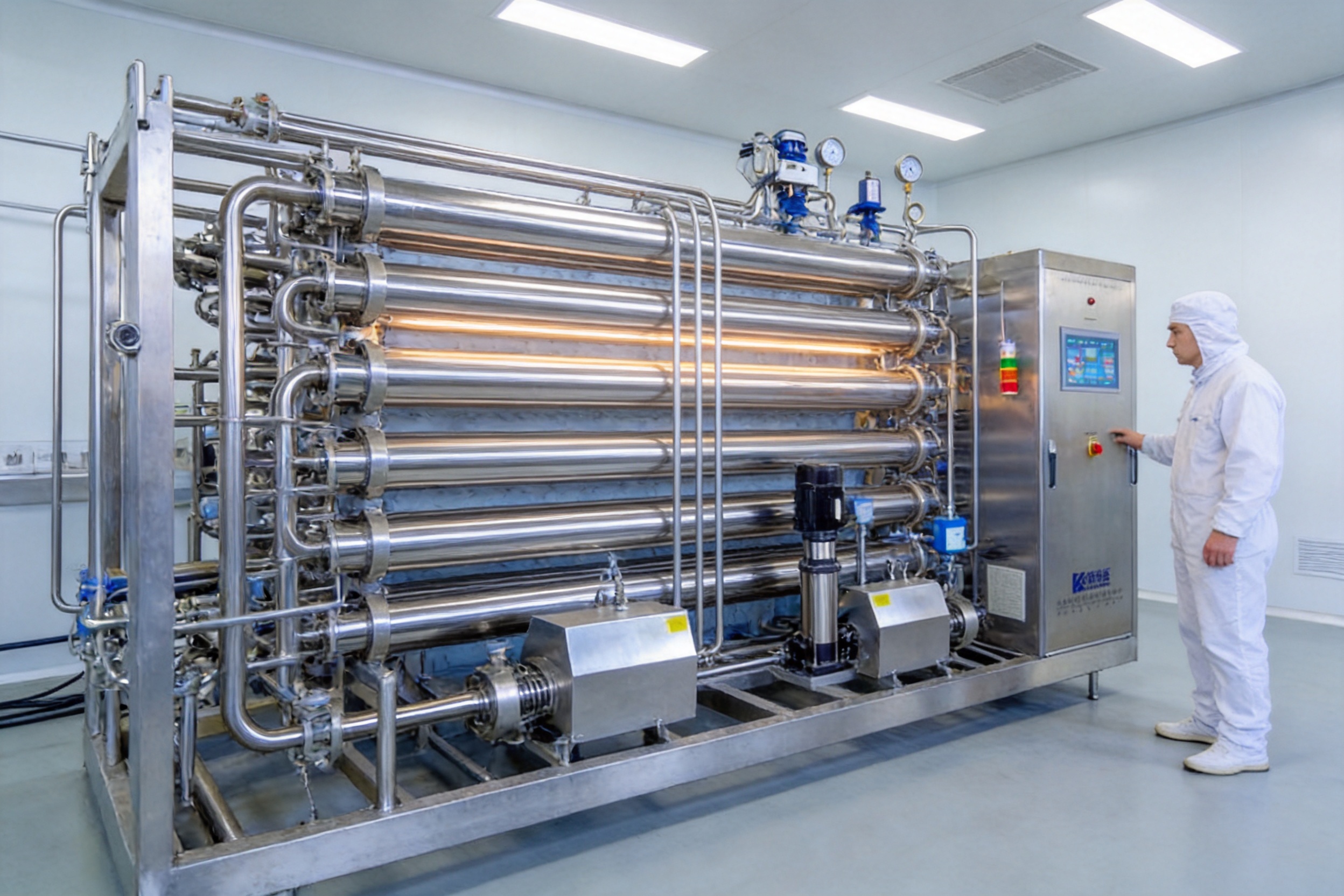
The term “tube pasteurizer” refers to the tubular product path through which the liquid moves. The tube arrangement may be configured using straight tubes, curved tubes, concentric tube assemblies, or other hygienic heat-transfer arrangements. The final design is selected according to product viscosity, particle size, flow rate, temperature sensitivity, cleaning requirements, pressure conditions, and available plant space.
In UHT applications, the thermal process may involve very high temperatures and short holding times. This approach can achieve a high level of microbial control while limiting the duration of product exposure to heat. Rapid cooling after the holding section is equally important because it helps protect flavor, color, nutritional value, texture, and other quality characteristics.
A successful UHT tube pasteurizer must therefore provide accurate temperature control, stable flow, reliable holding-time management, hygienic product contact surfaces, and effective cleaning capability. It must also be integrated with pumps, valves, sensors, control systems, filling equipment, steam or hot-water utilities, chilled-water or cooling systems, and cleaning-in-place equipment as required by the production line.
Product Design and Process Configuration
The Ultra-High Temperature Tube Pasteurizer is a customizable process system rather than a single fixed machine configuration. Each project begins with a review of the product and the production objective. Important design inputs may include product composition, viscosity, acidity, solids content, particle characteristics, flow rate, inlet temperature, target treatment temperature, required holding time, outlet temperature, and cleaning chemicals.
For liquid dairy products, the system may be configured for milk, cream, flavored milk, liquid nutritional products, or other formulations. For food and beverage applications, it may also be adapted for juice-based products, plant-based drinks, sauces, soups, emulsions, liquid desserts, and functional beverages. When a product contains fibers, particulates, proteins, starches, or temperature-sensitive ingredients, the tube diameter, flow velocity, pump selection, heat-transfer arrangement, and control strategy must be carefully considered.
In biopharmaceutical and biotechnology environments, equipment design must place particular emphasis on material compatibility, cleanability, surface quality, documentation, and process control. The tube pasteurizer may be used for compatible liquid process streams, buffers, media-related applications, or other thermal treatment duties where the process has been specifically evaluated and validated. The correct configuration depends on the product and the applicable quality system, and it should be confirmed during project engineering and validation planning.
The system can include several functional sections:
• Product feeding and balance equipment for stable supply to the process line.
• Preheating and regeneration sections to improve thermal efficiency where suitable.
• Heating sections using hot water, steam, or another approved heat-transfer medium.
• A controlled holding tube designed for the required residence time.
• Cooling sections using chilled water, cooling water, glycol, or another utility.
• Flow diversion or safety arrangements when process conditions do not meet requirements.
• Hygienic pumps and valves selected for the product and operating conditions.
• Sensors for temperature, pressure, flow, conductivity, level, and other relevant parameters.
• A control cabinet and human-machine interface for monitoring and operation.
• Cleaning-in-place connections or integration with a central CIP system.
The configuration can be adapted to production capacity, product family, available utilities, installation layout, and future expansion plans. This flexibility is a major advantage over standardized equipment that may be optimized for only one product or one operating range.
Key Advantages of a Tubular UHT System
Consistent Thermal Treatment
Continuous tubular processing provides a controlled path from inlet to outlet. When flow rate, temperature, and holding time are properly monitored, the process can deliver repeatable treatment from batch to batch and from production run to production run. Consistency is especially important for products with strict microbiological requirements or narrow quality specifications.
The holding tube is engineered to provide the necessary residence time under defined process conditions. Proper sensor placement and control logic help the system respond when a process parameter moves outside the approved range. This improves product protection and reduces the risk of releasing material that has not received the required treatment.
Reduced Thermal Damage
UHT technology uses rapid heating and cooling to reduce the total time a product spends at elevated temperature. This can help minimize undesirable changes in taste, aroma, color, nutritional profile, viscosity, and texture. The result is particularly valuable for products that are commercially sterile or shelf-stable but still expected to retain a fresh or carefully formulated character.
Thermal treatment must always be matched to the product. Excessive temperature, excessive residence time, or poor cooling control can reduce product quality. A well-designed tube system allows the process engineer to optimize the relationship between treatment intensity and product performance rather than relying on unnecessarily long heating cycles.
Improved Hygienic Performance
Hygienic design is central to food and biopharmaceutical processing. Product contact surfaces should be manufactured from suitable materials, constructed with appropriate weld quality, and finished to support effective cleaning. Avoiding unnecessary dead legs, sharp internal transitions, non-drainable areas, and difficult-to-clean connections can reduce the opportunity for product accumulation and microbial contamination.
The tubular product path can be designed for effective circulation of cleaning solutions. Correct flow velocity, chemical concentration, temperature, and cleaning time are essential to CIP performance. Equipment geometry, valve arrangement, instrument installation, and drainability all influence the final hygienic result.
Efficient Use of Energy
Thermal regeneration can reduce the demand for external heating and cooling utilities. In a regenerative arrangement, the outgoing hot product transfers part of its heat to the incoming cold product. This approach can lower steam or hot-water consumption and reduce the cooling load. The feasibility of regeneration depends on product properties, process requirements, cross-contamination risk, pressure relationships, and the overall line design.
Energy efficiency also depends on insulation, utility control, heat exchanger selection, operating stability, and maintenance. A system that maintains steady process conditions is generally more efficient than one that experiences frequent temperature fluctuations, unnecessary recirculation, or repeated start-and-stop cycles.
Production Flexibility
Manufacturers increasingly need to process several products on the same line. A customizable tube pasteurizer can be engineered for a defined product range and can include recipe management, adjustable flow rates, multiple operating modes, and appropriate product changeover procedures. This enables a facility to respond to changing market demand without purchasing a completely separate thermal processing line for every product.
Product flexibility must be balanced with hygienic and operational considerations. Products with different allergen profiles, viscosities, colors, or solids content may require carefully planned sequencing and cleaning procedures. The equipment design can support these requirements through suitable valve layouts, drainability, instrumentation, and control programming.
Compact and Maintainable Construction
Tubular systems can offer an efficient use of floor space compared with some batch processing arrangements. Their compact layout can be adapted to existing facilities, provided that sufficient access is maintained for inspection, cleaning, service, and replacement of components.
Maintainability is improved when instruments, valves, pumps, and utility connections are positioned logically and when the frame provides safe access. Clear labeling, organized piping, complete documentation, and standardized components can shorten troubleshooting time and help plant personnel perform routine maintenance more effectively.
Advantages Compared with Conventional or Less Specialized Alternatives
Compared with Batch Thermal Processing
Batch processing may require large tanks, long heating periods, and extended cooling cycles. It can also produce variation between the beginning and end of a batch if mixing and temperature distribution are not carefully controlled. A continuous tube pasteurizer reduces the dependence on large holding vessels and provides a more uniform process path.
Continuous operation can improve productivity, reduce intermediate storage, and simplify integration with filling equipment. It can also support more precise control of residence time. For facilities with high throughput or frequent production schedules, these advantages may provide a meaningful improvement over batch processing.
Compared with Basic Single-Pass Heating Systems
A basic heating skid may raise the product temperature, but it may not provide the complete functions required for a validated thermal process. A specialized UHT tube pasteurizer is designed around the entire sequence of heating, holding, cooling, control, diversion, cleaning, and documentation.
The difference is not simply the presence of a heat exchanger. It is the integration of process safety features, sensors, control logic, hygienic construction, and operating procedures. This integrated approach can reduce engineering gaps between individual components and make commissioning more efficient.
Compared with Poorly Matched Plate Heat Exchangers
Plate heat exchangers can be highly effective for many low-viscosity liquids. However, certain products may present challenges because of viscosity, particulates, fibers, fouling tendency, pressure sensitivity, or product texture. Tubular equipment can offer a better option for products that require larger flow passages or a more forgiving product path.
The correct choice depends on the process. A tube system is not automatically superior for every product, and a plate system is not automatically unsuitable. The advantage of a tubular configuration is that it can be engineered around specific product properties and can provide a robust solution where a narrow plate channel or gasketed arrangement may be less appropriate.
Compared with Imported Standard Packages
Imported standard systems may provide advanced technology, but they can involve long lead times, complex communication, higher logistics costs, and difficulty obtaining rapid local technical support. A China-based engineering and manufacturing partner can offer greater responsiveness during design clarification, fabrication, installation preparation, troubleshooting, and spare-parts planning.
The objective is not simply to replace an imported product with a lower-cost alternative. The stronger approach is to combine internationally informed design principles with local manufacturing, inspection, communication, and service capabilities. This can give customers a practical balance between technical quality, project flexibility, delivery coordination, and total cost of ownership.
Engineering Approach for Different Product Types
Every thermal processing project should begin with a product and process assessment. The equipment supplier must understand what the liquid contains, how it behaves under heat, how it responds to shear, how easily it fouls heat-transfer surfaces, and how it must be cleaned. These factors influence the tube dimensions, flow conditions, heat-transfer area, pump selection, and control strategy.
Low-Viscosity Dairy and Beverage Products
Milk, liquid dairy beverages, and many plant-based drinks often require reliable heating and cooling with close temperature control. The system may include regenerative heat recovery, hot-water heating, a holding section, and rapid cooling before filling. The design must address protein deposition, mineral scaling, air entrainment, foaming, and product separation where relevant.
Stable pressure and flow are important because variations can influence residence time and heat-transfer performance. Instruments should be selected and positioned to provide meaningful measurements without creating unnecessary hygienic risk. Automated sequence control can support start-up, production, product recovery, water displacement, product changeover, and CIP operations.
Viscous Foods and Formulated Liquids
Soups, sauces, nutritional products, dessert bases, and other formulated liquids may require larger tube passages, higher pumping capability, or special attention to shear and fouling. The system may need to accommodate non-Newtonian flow behavior, temperature-dependent viscosity, and suspended ingredients.
For these products, the design must avoid excessive pressure drop and should promote reliable flow through all product-contact sections. Heat-transfer performance must be balanced against the risk of localized overheating or product deposition. The selected pump, valve, tube arrangement, and control settings should be evaluated together rather than selected independently.
Products Containing Particulates
Products containing fruit pieces, vegetable particles, grains, fibers, or other particulates require careful evaluation of particle size, concentration, shape, fragility, and distribution. The product path should be designed to reduce blockage risk and protect the physical quality of the particles. Flow transitions, bends, valves, and instrumentation should be selected according to the product characteristics.
In some cases, the most appropriate solution may be a tubular heating section combined with a separate treatment or mixing arrangement. The final configuration should be established through process testing and engineering review.
Biopharmaceutical and Biotechnology Process Fluids
Biopharmaceutical applications require a disciplined approach to materials, hygienic design, cleaning, sterilization, documentation, and change control. Not every biopharmaceutical fluid is suitable for high-temperature treatment, so the process objective and product compatibility must be confirmed before equipment selection.
Where thermal treatment is appropriate, the equipment may be designed with carefully controlled product-contact materials, sanitary connections, appropriate surface finishing, calibrated instruments, and a documentation package that supports the customer’s quality procedures. The system can also be considered for compatible process media, buffers, or other liquid streams in facilities that require reliable thermal control and traceable manufacturing records.
Manufacturing Strengths and Quality-Focused Production
The performance of a process system depends strongly on how it is manufactured. A sound design can lose its value if welds are inconsistent, internal surfaces are poorly finished, dimensions are not controlled, or inspection records are incomplete. For this reason, the manufacturing process is treated as a critical part of equipment performance.
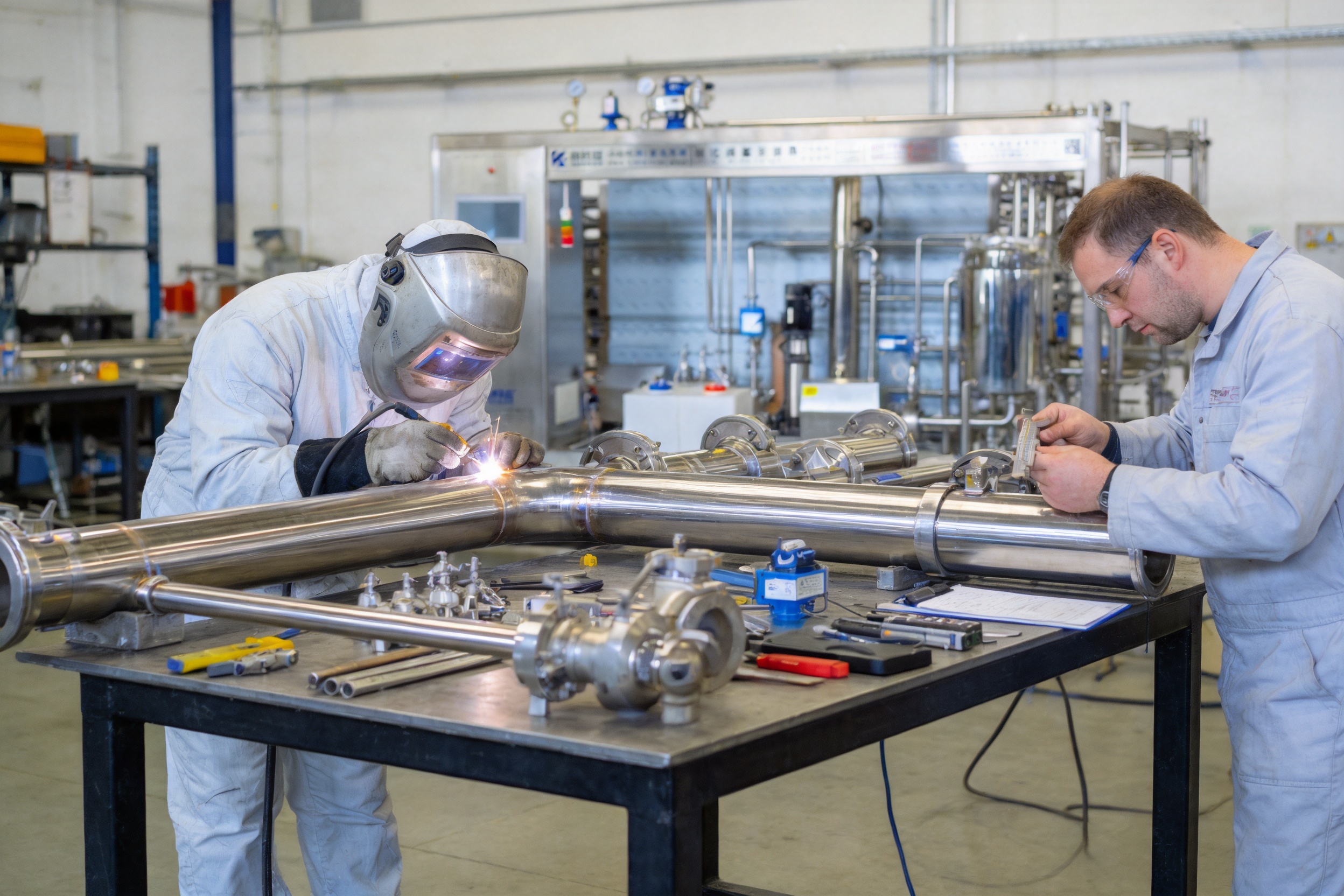
The equipment is manufactured in a 3,000-square-meter facility in Shanghai, supported by more than 20 technical specialists. The facility’s capabilities cover processing, welding, polishing, assembly, and quality control. This combination allows the engineering and manufacturing teams to coordinate more directly and respond more efficiently to project-specific requirements.
European Know-How and Danish Design Principles
The equipment development approach draws on European process equipment experience and Danish design principles. This influence is reflected in the emphasis on practical hygienic construction, functional layout, maintainability, efficient use of materials, and attention to process details.
Design knowledge is most valuable when it is adapted to the customer’s actual operating environment. The system therefore focuses on combining proven design concepts with project-specific engineering. Utility conditions, local standards, production habits, maintenance resources, and facility limitations are all considered during configuration.
Precision Processing and Component Preparation
Tube sections, fittings, frames, supports, and other components must be prepared according to approved drawings and process requirements. Dimensional accuracy helps ensure that the equipment can be assembled correctly and connected to the customer’s plant without unnecessary rework.
Component preparation also includes appropriate material identification, cutting, forming, drilling, fitting, and surface protection. Good preparation reduces assembly stress and supports better alignment. It also helps protect product-contact surfaces from damage before final cleaning and inspection.
Hygienic Welding
Welding is one of the most important manufacturing operations in sanitary process equipment. Weld quality affects structural integrity, cleanability, corrosion resistance, and the risk of product retention. Welding procedures should be controlled by trained personnel using suitable equipment and approved parameters.
Internal welds in product-contact areas require particular attention. Smooth transitions, consistent penetration, limited discoloration, and appropriate finishing help reduce areas where product or cleaning residues could accumulate. Depending on customer requirements and applicable standards, weld inspection may include visual examination, surface inspection, dimensional verification, and additional non-destructive testing.
Polishing and Surface Finishing
Surface finishing supports hygienic performance and equipment durability. Polishing operations are used to improve the condition of suitable product-contact surfaces and to remove roughness or irregularities that could complicate cleaning. The exact finish should be specified according to the application, material, cleaning chemistry, and customer requirements.
Polishing is not merely a cosmetic operation. It must be performed with process discipline so that the surface is uniform and free from avoidable defects. After finishing, surfaces should be protected from contamination and damage during assembly, transportation, and installation.
Assembly and Quality Control
Assembly requires more than connecting components. Piping orientation, valve direction, instrument position, drainability, accessibility, support design, and utility routing all influence the final performance of the system. Assembly technicians and engineers must work from controlled drawings and verify critical dimensions during construction.
Quality control activities may include incoming material checks, weld inspections, surface inspections, pressure tests, dimensional checks, instrument verification, functional testing, and final visual examination. The inspection plan is adapted to the project and may be expanded for applications requiring additional documentation or validation support.
Traceability
Traceability helps connect materials, components, manufacturing steps, inspections, and final equipment records. This is particularly valuable for customers in regulated or quality-sensitive industries. Clear records can simplify audits, maintenance planning, replacement-part selection, and investigation of process deviations.
A traceable production approach also improves internal accountability. When a project includes controlled drawings, material records, welding information, inspection results, and testing documents, the equipment can be evaluated more systematically from design through delivery.
Control, Instrumentation, and Process Safety
Thermal processing depends on accurate measurement and reliable control. The system may monitor product temperature at key locations, heating-medium temperature, cooling-medium temperature, product pressure, utility pressure, flow rate, and other parameters required by the process design.
Temperature sensors should be installed where they provide meaningful information about the actual process condition. Flow measurement and pump control help maintain the required product throughput. Pressure monitoring can help identify blockages, valve problems, fouling, or abnormal operating conditions.
A control system can manage start-up, production, holding, cooling, product diversion, shutdown, water pushing, product recovery, and cleaning sequences. The human-machine interface should present important process information clearly so that operators can understand the system status and respond to alarms.
Safety and product protection functions may include automatic diversion when the required treatment temperature is not achieved, interlocks that prevent improper valve combinations, high-pressure protection, low-flow alarms, emergency stop functions, and utility failure responses. The final safety architecture should be defined through a project-specific risk assessment.
Recipe control can be valuable for facilities processing multiple products. Approved recipes may contain target temperatures, flow rates, holding parameters, cooling settings, and cleaning sequences. Access levels and change permissions can be configured to support operational control and quality-system expectations.
Cleaning, Sanitation, and Maintenance
A thermal process system must be cleanable as well as operational. Product residues can accumulate when equipment is not designed for effective CIP circulation or when cleaning parameters are not correctly established. Fouling reduces heat-transfer efficiency, increases pressure drop, raises energy consumption, and may compromise product quality.
The tube pasteurizer can be designed for integration with a CIP system. Cleaning sequences may include pre-rinsing, alkaline washing, intermediate rinsing, acid cleaning, final rinsing, and sanitization, depending on the product and plant procedures. The exact chemicals, temperatures, concentrations, flow rates, and cycle times must be validated by the customer for the specific application.
Effective cleaning depends on four primary factors: chemical action, mechanical action, temperature, and time. Mechanical action is influenced by flow velocity and turbulence inside the product path. Equipment geometry must therefore support adequate circulation through tubes, valves, bends, instruments, and auxiliary sections.
Drainability is another important consideration. Horizontal sections, low points, valve cavities, and dead-end branches should be reviewed to reduce retained liquid. Proper slope and hygienic piping practices can simplify draining and help prevent unwanted residue after cleaning.
Preventive maintenance should include inspection of pumps, valves, seals, sensors, control devices, heat-transfer surfaces, and utility connections. Calibration schedules should be established for temperature, pressure, flow, and other critical instruments. Routine checks can identify gradual performance changes before they become production failures.
Maintenance access should be considered during the design stage. Operators and technicians need sufficient space to inspect components, remove instruments, service pumps, replace seals, and perform cleaning verification. A compact system should not become difficult to maintain simply because access was overlooked.
Project Customization and Customer Support
No two processing plants are exactly alike. Production capacity, product range, building dimensions, utility availability, automation preferences, and regulatory expectations differ from project to project. Custom engineering allows the tube pasteurizer to be matched to the customer’s actual requirements instead of forcing the plant to adapt to an unsuitable standard package.
The project development process typically begins with technical communication. Customers may provide product specifications, process objectives, production volumes, plant drawings, utility information, existing equipment details, and applicable standards. Engineers then review the process conditions and develop an equipment concept.
During design clarification, important subjects include heat-transfer media, product-contact materials, capacity, pressure ratings, control philosophy, CIP strategy, connection standards, installation orientation, and documentation requirements. Early clarification can prevent later changes that would affect cost, schedule, or validation.
Equipment layout drawings and process flow information help the customer evaluate the proposed system. Where necessary, the design can be adjusted to accommodate limited floor space, existing piping, cleanroom boundaries, filling line interfaces, or future expansion.
Customer service extends beyond the initial sale. Technical support may include equipment selection, process consultation, manufacturing updates, factory inspection coordination, installation guidance, commissioning assistance, operating recommendations, troubleshooting, and spare-parts support. A responsive supplier can reduce the time required to solve issues and help the customer maintain production continuity.
Applications Across Multiple Industries
Food and Beverage
The tube pasteurizer is suitable for many food and beverage processing environments where a controlled thermal process is required. Potential applications include dairy products, plant-based beverages, nutritional drinks, juices, liquid foods, sauces, soups, and specialty formulations.
Food manufacturers benefit from the combination of hygienic construction, process consistency, flexible configuration, and cleanability. The system can be integrated with homogenizers, mixing tanks, aseptic tanks, filling machines, ingredient dosing systems, and packaging lines according to the complete production process.
Biopharmaceutical Processing
Biopharmaceutical manufacturers require equipment that supports strict control over materials, surfaces, cleaning, documentation, and process conditions. For compatible liquid duties, the tube system can be engineered with sanitary connections, controlled instrumentation, appropriate surface finishing, and traceable manufacturing records.
The system should be evaluated within the customer’s quality management, validation, and contamination-control framework. Product compatibility, thermal sensitivity, sterilization strategy, and applicable regulatory expectations must be addressed before final design approval.
Daily Chemical Products
Liquid personal-care, household, and daily chemical products may require controlled heating for microbial management, viscosity adjustment, dissolution, or formulation stability. A tubular thermal system can be adapted to products such as liquid cleansers, formulated emulsions, and other compatible fluids, provided that material compatibility and cleaning requirements are properly assessed.
Fine Chemical Applications
Fine chemical liquids can have specialized temperature, pressure, corrosion, and material requirements. The process system may be designed for selected thermal treatment or conditioning applications after reviewing the chemical composition, operating range, hazard classification, and cleaning method.
In every industry, the equipment configuration should be based on process facts rather than assumptions. A detailed technical review is the best way to determine whether a UHT tube pasteurizer is the correct solution and how it should be integrated into the customer’s facility.
Comparison of Important Selection Criteria
| Selection Criterion | Basic Thermal Equipment | Customized Ultra-High Temperature Tube Pasteurizer | Customer Benefit |
|---|---|---|---|
| Process flexibility | Often designed for a narrow operating range | Configured around product properties, capacity, and process objectives | Supports more products and future process changes |
| Thermal control | May provide heating without complete holding and diversion logic | Designed with heating, holding, cooling, measurement, and control functions | Improves treatment consistency and product protection |
| Hygienic design | May contain difficult-to-clean connections or limited drainability | Emphasizes sanitary construction, cleanable paths, and suitable surface finishing | Reduces contamination and residue risks |
| Energy performance | May operate without regeneration or optimized utility control | Can include heat recovery, insulation, and coordinated utility management | May reduce heating and cooling demand |
| Manufacturing support | Limited customization and documentation | Supported by engineering, welding, polishing, assembly, inspection, and traceability | Improves project confidence and long-term serviceability |
| Integration | May require extensive customer-side modification | Designed for connection with pumps, valves, CIP, filling, and plant utilities | Simplifies installation and commissioning |
| Service responsiveness | May depend on distant technical resources | Supported by a Shanghai-based engineering and manufacturing organization | Facilitates communication, support, and spare-parts planning |
| Lifecycle value | Low initial complexity may create higher operating limitations | Balances design quality, maintainability, efficiency, and customization | Supports reliable operation and lower total ownership risk |
Why Manufacturing Quality Matters to the Final Process
Manufacturing quality directly influences heat-transfer performance, cleaning effectiveness, equipment reliability, and product safety. A tube pasteurizer operates as part of a connected process, so small weaknesses in fabrication can create larger production problems. For example, an irregular internal weld may become a residue-retention point, while poor alignment may increase mechanical stress at a connection.
High-quality manufacturing begins with a controlled design. Drawings should identify product-contact materials, tube sizes, connection types, weld details, support requirements, instrument locations, and inspection points. Production personnel then need clear instructions and suitable tools to execute the design accurately.
Welding, polishing, assembly, and testing should be treated as related operations. A polished surface cannot compensate for poor geometry, and a structurally sound weld may still require additional finishing for hygienic service. The final inspection should evaluate the equipment as a complete process system rather than as a collection of separate parts.
The manufacturing organization’s ability to perform processing, welding, polishing, assembly, and quality control within its own facility can improve coordination. It can also make project changes easier to manage because the engineering and production teams are closer to one another. This is particularly useful for customized equipment with unusual dimensions, special connections, or demanding documentation requirements.
Installation and Commissioning Considerations
Before installation, the customer should confirm that the foundation, access route, utilities, drainage, ventilation, control interfaces, and downstream equipment are ready. The system should be positioned so that operators can safely access instruments, valves, pumps, panels, and inspection points.
Product and utility piping should be connected according to approved drawings. Incorrect flow direction, inadequate pipe support, excessive vibration, or unsuitable reducers can affect system performance. Utility pressure and temperature should be checked before commissioning, and all relevant connections should be inspected for leaks.
Commissioning normally includes mechanical inspection, electrical checks, instrument verification, control-system testing, water circulation, CIP testing, utility testing, and product trials. The process team should confirm that heating, holding, cooling, diversion, alarm, and shutdown functions operate as intended.
Product trials are important because actual behavior may differ from laboratory assumptions. The trial can help confirm flow stability, temperature response, pressure drop, fouling tendency, cleaning performance, and product quality. Any adjustments should be documented and incorporated into the operating procedure.
Training is also essential. Operators should understand the normal start-up and shutdown sequence, alarm responses, product changeover, cleaning procedures, sampling points, and routine inspections. Well-trained personnel can protect both the equipment and the product by responding correctly to abnormal conditions.
Economic and Operational Value
The purchase price is only one part of the investment decision. Customers should also consider energy consumption, cleaning time, product loss, maintenance requirements, spare parts, labor, downtime, installation complexity, and expected service life.
A properly matched tube pasteurizer can create value through stable production, reduced manual intervention, better heat recovery, lower product waste, and simpler integration. Improved process consistency may reduce rejected batches and help maintain uniform product quality. Effective CIP design may reduce cleaning duration and chemical consumption when validated operating conditions are achieved.
Equipment reliability also contributes to economic performance. Unexpected downtime can affect filling schedules, labor utilization, raw-material planning, and customer deliveries. Strong fabrication, accurate assembly, appropriate instrumentation, and preventive maintenance all help reduce operational risk.
The best solution is not necessarily the system with the lowest initial quotation. It is the system that provides an appropriate balance of process performance, hygienic quality, energy efficiency, maintainability, documentation, technical support, and long-term adaptability.
Frequently Asked Questions
What is an Ultra-High Temperature Tube Pasteurizer?
It is a continuous thermal processing system that heats a liquid product to a controlled temperature, maintains it for a defined holding period, and then cools it. Its tubular product path is designed for hygienic flow and can be configured for pasteurization, UHT treatment, or other compatible thermal processing duties.
Is the equipment suitable for both food and biopharmaceutical applications?
It can be engineered for selected applications in both industries, but the suitability depends on the product, temperature sensitivity, materials, cleaning method, documentation requirements, and quality system. Biopharmaceutical applications require a project-specific technical and validation review before final equipment approval.
What products can be processed?
Potential products include milk, dairy beverages, plant-based drinks, nutritional liquids, juices, sauces, soups, liquid foods, emulsions, and other compatible formulations. Products containing particles or high viscosity require additional engineering review to determine the appropriate tube dimensions, pump, valve, and heat-transfer arrangement.
Can the system process multiple products?
Yes, a customized system can be designed for a defined product family and may include adjustable recipes, controlled changeover procedures, and CIP sequences. The product range must be reviewed carefully to address allergen control, fouling, viscosity, color, particulates, and thermal sensitivity.
How does the tubular configuration protect product quality?
It supports rapid heating, controlled residence time, and rapid cooling. This can reduce unnecessary exposure to high temperatures and help preserve flavor, color, texture, and nutritional characteristics, provided that the process parameters are correctly selected and validated.
Can heat recovery be included?
Where product characteristics and process requirements permit, regenerative heat-transfer sections can be included. The outgoing hot product transfers heat to the incoming cold product, which can reduce external heating and cooling requirements.
How is hygienic performance supported?
Hygienic performance is supported through suitable product-contact materials, controlled welding, appropriate internal surface finishing, cleanable geometry, sanitary connections, drainability, and integration with a validated CIP procedure.
What manufacturing capabilities support the equipment?
The manufacturing facility in Shanghai covers processing, welding, polishing, assembly, and quality control. More than 20 technical specialists support equipment development and production within a 3,000-square-meter facility.
What design philosophy is used?
The equipment combines European process equipment know-how and Danish design principles with project-specific engineering and local manufacturing. The emphasis is on hygienic construction, practical operation, process optimization, safety, maintainability, and reliable supply.
What information is needed for a quotation?
Useful information includes the product name and composition, viscosity, solids or particle content, required capacity, inlet and outlet temperatures, treatment objective, holding time, available utilities, plant layout, connection standards, automation preferences, cleaning requirements, and applicable industry standards.
Can the supplier support installation and commissioning?
Technical support can include design clarification, manufacturing coordination, factory inspection, installation guidance, commissioning assistance, operating recommendations, troubleshooting, and spare-parts planning. The exact scope should be defined in the project agreement.
How should the equipment be maintained?
Maintenance should include regular inspection of pumps, valves, seals, sensors, heat-transfer sections, weld areas, control devices, and utility connections. Critical instruments should be calibrated according to an established schedule, and cleaning performance should be monitored as part of the plant’s quality and maintenance programs.
Conclusion
The Ultra-High Temperature Tube Pasteurizer provides a flexible and hygienic approach to continuous thermal processing. Its main benefits include controlled heating and cooling, defined holding time, reduced thermal exposure, potential heat recovery, product flexibility, compact construction, and compatibility with automated production and CIP systems.
Its advantages over less specialized alternatives come from the complete process design rather than from the tube arrangement alone. A reliable system must combine heat-transfer engineering with sanitary fabrication, accurate instrumentation, safe control logic, effective cleaning, maintainable layout, and complete project support.
Shiloc (Shanghai) Industrial Trading Co., Ltd. supports this approach through a Shanghai manufacturing facility with processing, welding, polishing, assembly, and quality-control capabilities. The company’s more than 20 technical specialists, European know-how, Danish design influence, and focus on traceability provide a foundation for customized equipment serving food and beverage, biopharmaceutical, daily chemical, and fine chemical manufacturers.
For manufacturers planning a new process line, upgrading an existing thermal system, or seeking a locally supported alternative to imported equipment, the correct next step is a detailed technical discussion. By reviewing the product, process conditions, plant environment, utilities, cleaning requirements, and quality expectations together, the tube pasteurizer can be configured to deliver dependable performance and long-term operational value.
References
1. Codex Alimentarius Commission, General Principles of Food Hygiene and Hygienic Practice in Food Processing.
2. International Dairy Federation, Guidance on Heat Treatment and Hygienic Processing of Milk and Dairy Products.
3. European Hygienic Engineering and Design Group, Hygienic Design Principles for Food Processing Equipment.
4. ASME Bioprocessing Equipment Committee, Bioprocessing Equipment Design and Fabrication Principles.
5. U.S. Food and Drug Administration, Current Good Manufacturing Practice Requirements for Food and Pharmaceutical Processing.
6. International Organization for Standardization, Quality Management Principles for Manufacturing and Process Control.
7. Process Engineering Practice, Heat Exchanger Selection for Hygienic Liquid Processing.
8. Sanitary Equipment Fabrication Practice, Welding, Surface Finishing, Drainability, and Clean-in-Place Design.
Product: Ultra-High Temperature Tube Pasteurizer (UHT)
PREV:Bottom-Mounted Magnetic Mixers for Hygienic Food, Beverage, and Biopharmaceutical Processing
NEXT:Intelligent Industrial Heat Exchanger Units for Food and Biopharmaceutical Processing
NEXT:Intelligent Industrial Heat Exchanger Units for Food and Biopharmaceutical Processing
Interested in cooperation or have questions?
Recommended LINS
✦
Food Processing Skid System
Food and Beverage Process System
CIP Skid System for Food Industry
food and beverage process skid system
hygienic process skid for food industry
CIP process skid system for food industry
automated process skid system for food processing
modular food processing skid system
beverage processing skid system
food processing equipment skid system
Let'S Work Together Welcome Aboard!
-

haikexin@haikexin.com
+8613391278930
-
 +86-21-57560276
 -
 No. 2819, Sihu Road,Fengxian District, Shanghai, China
Join Our Mailing List
Copyright © Shiloc (Shanghai) Industrial Trading Co., Ltd. All Rights Reserved.
Process Systems & Equipment For Food & Biopharma Manufacturers
