
 English
 русский
 Português
 Français

 Read More

Product Category
NEW Category
Contact us
Contact Us
We specialise in the research, development and manufacture of electrical wires and cables.
 +86-21-57560276
Side-Entry Tank Mechanical Agitators for Hygienic, Efficient, and Reliable Process Mixing
Content
- 1 Why Side-Entry Mixing Is Important in Modern Process Equipment
- 2 Product Design and Operating Principle
- 3 Advantages Compared with Conventional Agitator Configurations
- 4 Applications in Food and Beverage Processing
- 5 Applications in Biopharmaceutical Manufacturing
- 6 Applications in Fine Chemical and Specialty Material Production
- 7 Potential Uses in Petrochemical and Industrial Storage
- 8 Manufacturing Strengths and Engineering Capabilities
- 9 Product Comparison by Process Requirement
- 10 Hygienic Design, CIP, and SIP Considerations
- 11 Motor, Gearbox, and Mechanical Seal Selection
- 12 How to Select the Correct Agitator
- 13 Installation and Maintenance Best Practices
- 14 Why Choose a Specialized Manufacturing Partner
- 15 Quality and Competitive Value
- 16 Frequently Asked Questions
- 16.1 What is a side-entry tank mechanical agitator?
- 16.2 What is the main advantage of side-mounted installation?
- 16.3 Which impeller should be selected?
- 16.4 Can the agitator be used for food and beverage production?
- 16.5 Is the agitator suitable for biopharmaceutical applications?
- 16.6 What materials are available for wetted components?
- 16.7 What type of motor is normally supplied?
- 16.8 How does the removable shaft help maintenance?
- 16.9 Can the agitator operate with CIP and SIP systems?
- 16.10 What information should be provided for equipment selection?
- 16.11 What manufacturing capabilities support product quality?
- 16.12 Can this agitator be used in petrochemical applications?
- 17 Conclusion
- 18 References
- 19 Product: Side-entry Tank Mechanical Agitator
Modern process industries increasingly require mixing equipment that combines high circulation efficiency, hygienic construction, flexible installation, dependable operation, and straightforward maintenance. Storage tanks, blending vessels, intermediate process tanks, and production vessels must often maintain uniform composition for extended periods while handling liquids with different viscosities, densities, temperatures, and chemical properties. In these applications, the selection of an agitator directly affects product quality, energy consumption, production stability, cleaning performance, and equipment service life.
The side-entry tank mechanical agitator is designed to address these requirements through a compact side-mounted structure and an optimized impeller arrangement. Installed through the side wall of a tank, the agitator generates horizontal circulation that helps prevent sedimentation, reduce dead zones, and maintain material uniformity. This configuration is particularly valuable for large-capacity vessels, where a top-mounted agitator may require a taller structure, longer shaft, additional support components, or more complex tank modifications.
The LC Series Side-Mounted Mechanical Agitator is developed for demanding applications in food and beverage, biopharmaceutical, personal care, fine chemical, new material, and selected petrochemical processes. Its design combines a removable agitator shaft, sanitary mechanical sealing, welded vessel flanges, corrosion-resistant wetted materials, and multiple impeller options. These features allow the equipment to be configured according to tank geometry, viscosity, density, mixing objectives, cleaning procedures, and operating conditions.
Manufactured and supported by Shiloc (Shanghai) Industrial Trading Co., Ltd., the equipment benefits from European process equipment know-how, Danish design experience, and manufacturing capabilities based in Shanghai. The company provides equipment manufacturing, engineering and technical services, international trade support, and customized process solutions for customers requiring reliable fluid-processing systems.
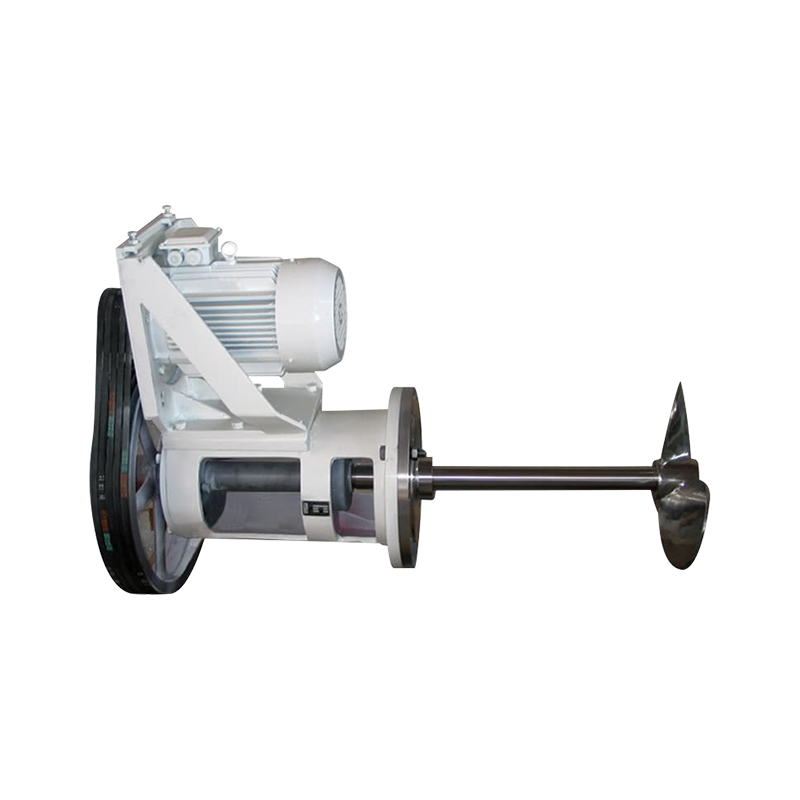
Side-entry Tank Mechanical Agitator
Why Side-Entry Mixing Is Important in Modern Process Equipment
Mixing is not limited to achieving a visibly uniform liquid. In a professional process environment, agitation may be required to suspend solids, distribute heat, prevent crystallization, maintain concentration, support chemical reactions, disperse additives, or keep sensitive biological materials evenly distributed. Each objective places different demands on the agitator, shaft, impeller, motor, seal, and tank structure.
Large storage tanks commonly experience circulation problems when liquid movement is insufficient. Solids may settle at the bottom, heavier components may separate from lighter components, and temperature differences may develop between the upper and lower sections of the vessel. These conditions can cause inconsistent product quality and make cleaning more difficult. A correctly selected side-entry agitator creates a controlled flow pattern that moves material across the tank and reduces the formation of stagnant zones.
Side-mounted equipment is especially effective when the tank has a large diameter or when vertical headroom is limited. Because the motor and gearbox are positioned outside the side wall rather than above the vessel, the equipment can reduce the height required for installation. This can simplify the layout of production buildings, improve access to the upper tank area, and make integration with existing storage vessels more convenient.
Another important advantage is the ability to tailor the impeller diameter and configuration to the vessel dimensions. A propeller impeller can provide strong axial circulation for low- to medium-viscosity liquids, while an anchor impeller may be more suitable for higher-viscosity materials requiring wall sweeping and broad movement. High-speed dispersion and combination impellers can address applications in which circulation alone is not sufficient.
Product Design and Operating Principle
The side-entry tank mechanical agitator is installed through a welded flange located on the side wall of the vessel. During operation, the motor transfers power through the gearbox and agitator shaft to the impeller. The impeller then creates a circulation pattern that moves liquid horizontally and vertically within the tank. The final flow behavior depends on the impeller design, shaft angle, rotational speed, tank dimensions, liquid properties, and installation position.
In a storage tank, the primary objective is usually to maintain uniformity rather than to create extreme shear. A propeller-style impeller can generate effective bulk circulation while using a relatively compact structure. The impeller diameter is selected according to the tank diameter, liquid depth, viscosity, density, and required turnover rate. Correct engineering selection is essential because an agitator that is too small may not prevent sedimentation, while an oversized or excessively fast agitator may consume unnecessary energy or create undesirable shear.
The equipment can also be adapted for blending and process applications. When multiple liquids or additives must be combined, the agitator supports the distribution of each component throughout the vessel. When solids must remain suspended, the impeller must be selected to create sufficient bottom circulation without causing excessive turbulence. When heat transfer is involved, continuous movement helps reduce temperature gradients and improves the effectiveness of the tank’s heating or cooling surfaces.
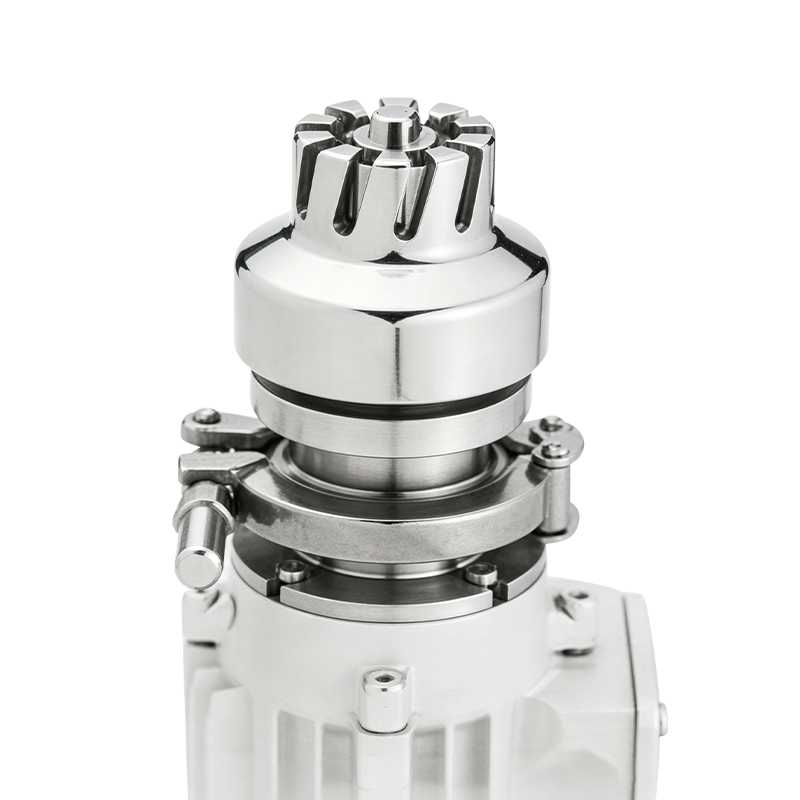
The design includes a removable agitator shaft. This feature supports on-site installation and makes maintenance more practical than systems that require extensive disassembly of the tank or surrounding structure. Shaft removal can be planned as part of routine maintenance, seal inspection, impeller replacement, or equipment refurbishment.
Main Construction Features
The standard configuration uses a Nord or SEW gear motor. These drive systems are widely recognized for stable industrial performance and are suitable for continuous process operation when correctly specified. Depending on the installation environment, the agitator can be equipped with a stainless steel motor housing or an outdoor-rated motor. These options help customers adapt the equipment to indoor processing rooms, utility areas, washdown zones, or outdoor tank farms.
The welded flange is designed for seamless integration with the vessel. Proper flange construction is important for hygienic equipment because unnecessary recesses, poor weld transitions, or difficult-to-clean interfaces can create contamination risks. A professionally fabricated and finished connection improves structural integrity and supports cleaning performance.
The sanitary-grade single-face mechanical seal provides a controlled barrier around the rotating shaft. The seal is designed for long-term, high-speed operation when the process conditions are properly defined. Level protection is recommended because inadequate liquid coverage or unfavorable operating conditions may affect seal performance. Seal selection should consider temperature, pressure, liquid characteristics, cleaning chemicals, rotational speed, and the required cleaning or sterilization procedure.
The agitator shaft is manufactured from high-quality stainless steel options such as 316L or duplex stainless steel grade 2205, depending on the application. The specified surface roughness can reach Ra 0.4 micrometers or better for suitable wetted surfaces. Smooth surfaces reduce the potential for product retention and simplify cleaning, polishing, and inspection.
The standard blade arrangement uses a three-blade propeller-style impeller. However, the impeller diameter and design are not fixed for every project. They are configured according to the vessel dimensions and process objectives. Alternative designs may include anchor impellers, high-speed dispersion impellers, dual-shaft systems, and combination impellers.
Connections between shaft components use threads and bolts equipped with sealing rings. This arrangement helps isolate threaded sections from the process medium and supports compliance with hygienic design expectations associated with 3-A and EHEDG principles. The final configuration should be reviewed according to the specific standard, certification, and validation requirements of the project.
Advantages Compared with Conventional Agitator Configurations
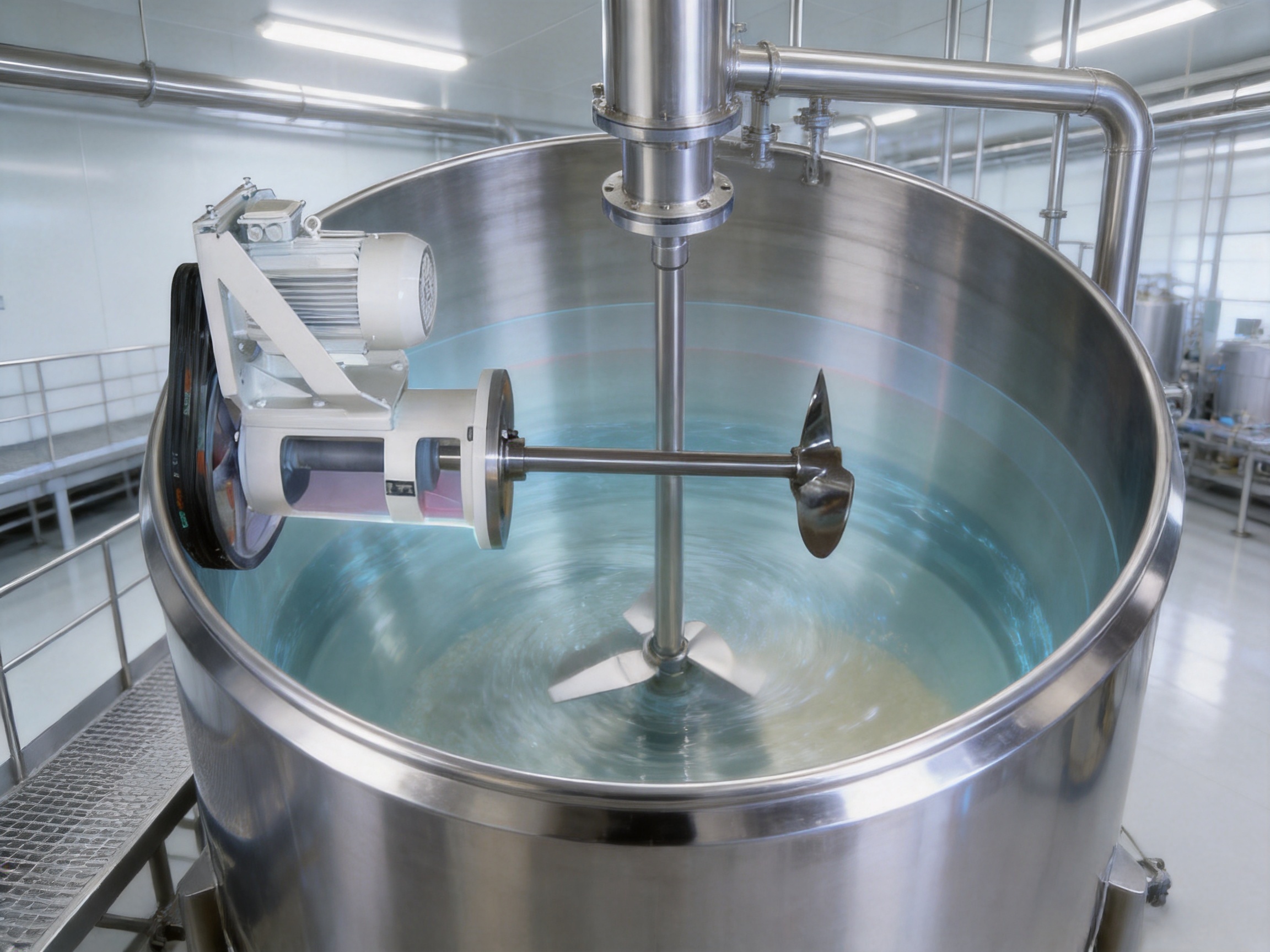
Different agitator configurations are appropriate for different applications. The side-entry design is not intended to replace every top-entry or bottom-entry system. Its value comes from solving particular installation, circulation, maintenance, and vessel-layout challenges more effectively. When applied to suitable tanks and process conditions, it offers several practical advantages over conventional alternatives.
Reduced Vertical Space Requirements
A top-entry agitator normally requires a motor, gearbox, shaft, mechanical seal, and support structure above the tank. For tall vessels, this may increase the overall equipment height and require additional building clearance. A side-entry agitator places the drive assembly beside the tank, allowing the upper area to remain available for manways, spray devices, instruments, piping, or other process components.
This arrangement can be particularly beneficial when a facility is being upgraded without major structural reconstruction. Existing tanks may have limited roof clearance or may be located beneath platforms and pipe racks. Installing a side-mounted agitator can provide a practical alternative to modifying the building or replacing the vessel.
Efficient Circulation in Large Tanks
Large tanks require sufficient circulation to prevent stratification and sedimentation. A well-selected side-entry impeller can direct flow across a broad section of the vessel, producing effective movement without the need for an extremely long vertical shaft. Shorter shaft arrangements may reduce certain mechanical challenges, including shaft deflection and support complexity.
For storage and blending duties, the main benefit is often dependable bulk movement. The agitator can maintain product consistency during extended storage, support uniform sampling, and reduce the risk of concentrated material accumulating in a lower zone. This is important for food ingredients, beverage bases, pharmaceutical intermediates, chemical solutions, and other liquids that must remain homogeneous.
Maintenance Accessibility
Maintenance time has a direct effect on production cost. The removable shaft allows service personnel to inspect or replace components with less disruption to the vessel and surrounding equipment. A well-planned maintenance procedure may include isolating the tank, draining and cleaning the vessel, disconnecting the drive, and removing the shaft for inspection.
The accessible structure also supports routine checks of the mechanical seal, impeller, shaft surface, flange connection, and motor-drive assembly. Compared with more complex systems that require complete top-entry disassembly, a side-entry design may shorten service activities, especially in facilities with limited overhead access.
Flexible Impeller Selection
Many competing agitator systems are supplied with a standard impeller that may not be optimized for every process. The side-entry platform can be configured with several impeller types to address different objectives. Propeller impellers are suitable for circulation and blending of relatively low-viscosity liquids. Anchor impellers are useful for viscous materials and wall-sweeping duties. High-speed dispersion impellers support stronger shear and rapid distribution of additives or powders.
Combination impellers can integrate more than one mixing function. For example, a system may need to maintain bulk circulation while also dispersing a component introduced during production. A dual-shaft or multi-impeller configuration may provide greater flexibility for products whose rheology changes during processing.
Hygienic Construction
In food, beverage, biopharmaceutical, and personal care production, equipment must be designed to minimize contamination risk and facilitate cleaning. Welded flanges, sanitary mechanical seals, smooth wetted surfaces, sealed shaft connections, and CIP or SIP compatibility are important considerations.
The equipment’s sanitary design gives it an advantage over general-purpose industrial agitators when the vessel must meet strict hygiene expectations. Material selection can include 304 stainless steel for suitable applications, 316L stainless steel for more demanding hygienic and corrosion-resistant service, and specialty alloys for challenging media. Surface treatments such as ceramic coating, nitriding hardening, PTFE lining, or PFA lining may be considered when abrasion, corrosion, or chemical compatibility requires additional protection.
Applications in Food and Beverage Processing
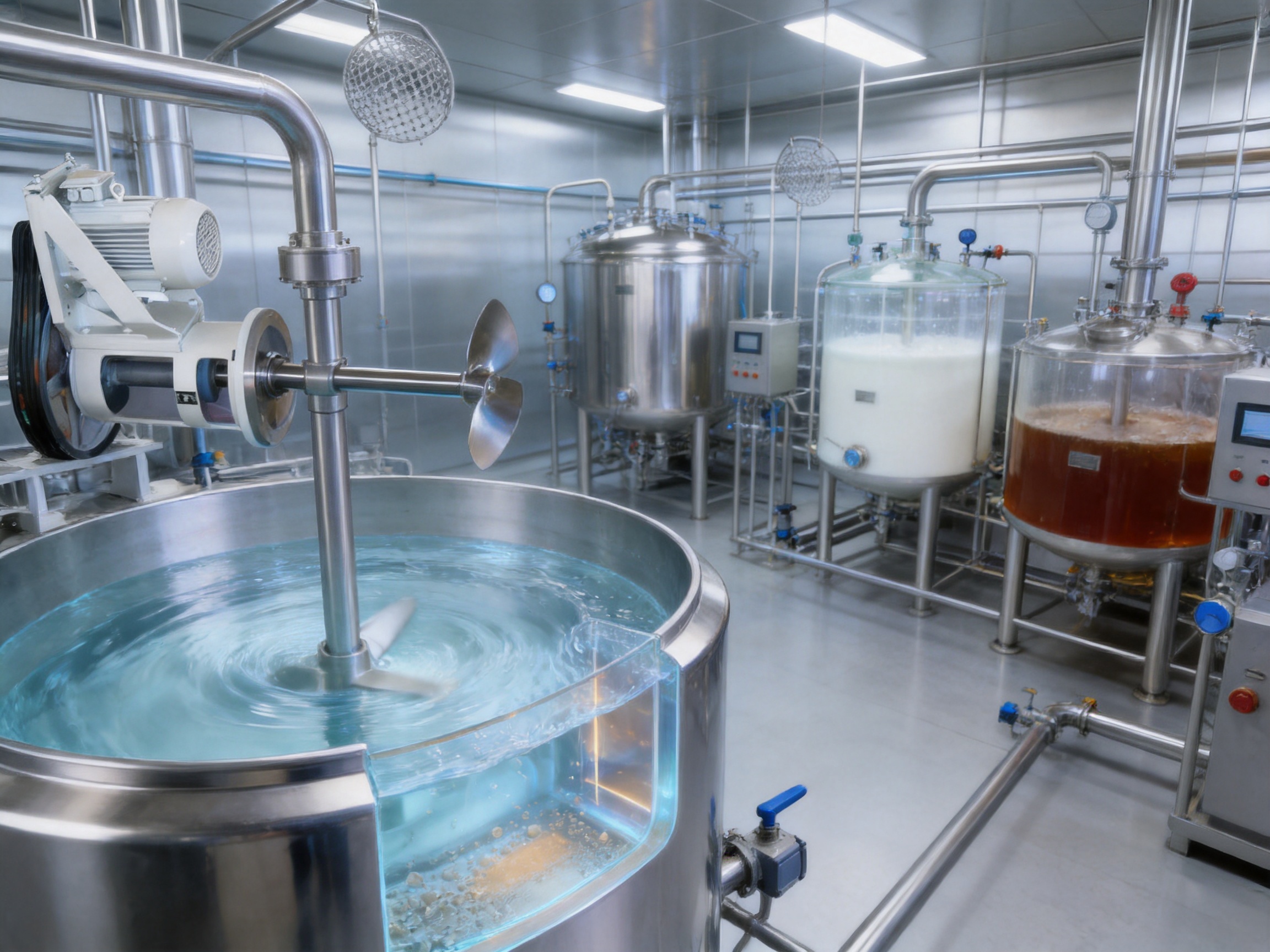
Food and beverage plants rely on consistent mixing to ensure flavor, texture, concentration, and safety. Storage tanks for milk, dairy bases, fruit preparations, beverage concentrates, syrups, sauces, and liquid ingredients may require continuous or intermittent agitation. The side-entry design is suitable for tanks where the primary objective is to maintain uniformity and prevent settling.
In dairy applications, the agitator may support the storage of milk-based products, cultured ingredients, liquid formulations, and intermediate mixtures. Gentle circulation can help maintain consistency while avoiding unnecessary mechanical stress. The appropriate speed and impeller design must be determined according to the product’s viscosity, sensitivity, air entrainment risk, and temperature.
In juice and beverage processing, components may include water, concentrates, sugars, flavors, acids, stabilizers, or suspended particles. A side-entry agitator can help distribute these ingredients throughout the vessel and reduce concentration differences. When beverage products contain pulp or other suspended material, the agitator can be designed to maintain suspension without excessive foaming or air incorporation.
For syrup, sauce, and liquid seasoning production, viscosity may vary considerably with temperature and concentration. Anchor or combination impellers can be evaluated when wall movement and broad circulation are necessary. If a high-viscosity product is exposed to heating or cooling surfaces, agitation helps improve heat transfer and reduce localized overheating or cooling.
Sanitary design is especially important in food and beverage plants because equipment may be cleaned frequently and may operate within validated hygiene programs. CIP-compatible features reduce the need for repeated manual intervention. Where thermal sterilization or high-temperature sanitation is required, the seal, materials, surface finish, and operating procedure should be reviewed as an integrated system.
Applications in Biopharmaceutical Manufacturing
Biopharmaceutical processing places strict demands on equipment cleanliness, material traceability, surface finish, sealing, and process control. Mixing may be required in media preparation, buffer preparation, cell culture support, suspension preparation, formulation, intermediate storage, and solution blending. The equipment must be selected with consideration for shear sensitivity, contamination control, cleaning validation, sterilization, and batch reproducibility.
For microbial fermentation and cell culture-related processes, agitation must be carefully matched to the biological material. Excessive shear may damage sensitive cells, while insufficient movement may produce uneven nutrient distribution, temperature gradients, or localized concentration differences. The impeller, speed, shaft geometry, and tank dimensions should therefore be selected through process engineering rather than by relying only on nominal motor power.
During suspension preparation, the agitator helps keep particles evenly distributed throughout the vessel. The required flow pattern depends on particle size, density, settling velocity, liquid viscosity, and concentration. An anchor, propeller, or combination arrangement may be selected based on the required suspension performance. The system should also be evaluated for vortex formation, air entrainment, and cleaning access.
Biopharmaceutical users often require documentation related to materials, welding, surface finish, dimensional inspection, pressure testing, and equipment traceability. Shiloc’s manufacturing and quality procedures are intended to support these requirements through coordinated processing, welding, polishing, and inspection activities. Project-specific documentation should be defined before production begins so that the equipment can be manufactured and tested according to the customer’s quality plan.
The use of 316L stainless steel and smooth wetted surfaces supports hygienic service. For particularly demanding applications, additional material or surface treatment options can be evaluated. The final design may also include customized seal arrangements, sanitary connections, instrumentation provisions, and CIP or SIP integration according to the validation strategy of the facility.
Applications in Fine Chemical and Specialty Material Production
Fine chemical and specialty material processes often involve multiple phases, variable viscosity, reactive ingredients, and strict product specifications. Agitation may be required for liquid blending, suspension, reaction support, heat transfer, crystallization control, additive incorporation, or dispersion of powders and pigments.
The side-entry tank mechanical agitator can be configured for materials that require steady bulk movement or more intensive shear. Propeller impellers are useful for circulation and blending. High-speed dispersion impellers can provide stronger local shear for dispersing powders, additives, or agglomerated particles. Combination arrangements can support both rapid dispersion and broader tank circulation.
Material compatibility is a central consideration in chemical service. Depending on the process medium, wetted materials may include 304 stainless steel, 316L stainless steel, 904L stainless steel, duplex stainless steel, Hastelloy, or titanium. Linings and surface treatments such as PTFE or PFA may be considered for corrosive materials. Engineering review should also address temperature, pressure, chloride concentration, abrasion, cleaning chemicals, and the possibility of galvanic corrosion.
For new materials and advanced formulations, the physical properties of the product may change during processing. A liquid may become more viscous as a polymerization reaction proceeds, or a suspension may become more difficult to maintain as solids concentration increases. A configurable agitator platform allows the impeller, motor, gearbox, shaft, seal, and materials to be selected for the expected operating range rather than only the initial condition.
Potential Uses in Petrochemical and Industrial Storage
Although the equipment is strongly associated with hygienic processing, the side-entry principle is also useful in selected petrochemical and industrial applications. Large storage tanks may require circulation to prevent sedimentation, maintain uniform composition, support blending, or reduce temperature stratification. The appropriate design depends on the characteristics of the stored product and the applicable safety requirements.
Typical duties may include blending intermediate liquids, maintaining uniformity in additives, supporting the storage of specialty chemicals, and preventing solids from accumulating at the bottom of a vessel. In such applications, corrosion resistance, outdoor motor protection, seal reliability, mechanical strength, and explosion-protection requirements must be reviewed carefully.
The side-mounted structure can simplify installation on large tanks and reduce the need for tall support structures. However, petrochemical service may require additional specifications that are not automatically included in a sanitary configuration. These may include hazardous-area motor certification, fire-safe sealing, grounding, static control, specialized coatings, or compliance with local pressure vessel and electrical standards.
The equipment should therefore be engineered for the actual medium and site conditions. The product’s flexible material options and motor configurations provide a foundation for customization, while the customer’s process safety review determines the final specification.
Manufacturing Strengths and Engineering Capabilities
The performance of a mechanical agitator is determined not only by its catalog design but also by manufacturing precision. Shaft runout, weld quality, surface finish, impeller balance, flange alignment, seal installation, and gearbox assembly can all influence vibration, leakage, energy consumption, and service life. Advanced manufacturing processes are therefore essential for reliable equipment.
European Design Knowledge and Danish Engineering Influence
Shiloc (Shanghai) Industrial Trading Co., Ltd. combines European process equipment know-how with manufacturing and service capabilities in China. Danish design experience contributes to a practical approach to hygienic construction, equipment integration, maintainability, and process efficiency. This combination supports the development of equipment that is suitable for customers requiring international-quality engineering and localized manufacturing support.
European design principles commonly emphasize cleanable geometry, reliable sealing, controlled surface finish, efficient use of materials, and straightforward access for inspection. These principles are reflected in the agitator’s welded flange, sanitary seal, removable shaft, sealed connection points, and selection of polished wetted materials.
Shanghai Manufacturing Facility
The company operates a 3,000-square-meter facility in Shanghai with more than 20 technical specialists. The facility supports internal processing, welding, polishing, assembly, and quality inspection. Having these capabilities within one coordinated organization can improve communication between design, production, and quality teams.
Internal manufacturing also supports better control of project schedules and product traceability. Instead of relying entirely on disconnected external suppliers, key fabrication steps can be coordinated through a unified production process. This is valuable for customized agitators in which dimensions, materials, impeller forms, shaft lengths, and connection details vary from one project to another.
Precision Welding and Surface Finishing
Welding is one of the most important manufacturing processes for hygienic process equipment. Poorly executed welds may create crevices, discoloration, distortion, or areas that are difficult to clean. Proper welding procedures, qualified personnel, suitable filler materials, controlled heat input, and post-weld finishing help improve the quality of the final equipment.
After welding, surfaces may require grinding, polishing, passivation, or other treatment according to the material and application. A surface roughness of Ra 0.4 micrometers or better may be specified for selected wetted surfaces. Smooth finishing supports cleaning and reduces the risk of product retention, although the appropriate finish must always be confirmed for the exact process and validation requirements.
Polishing is not merely a cosmetic step. It can affect cleanability, corrosion resistance, visual inspection, and the ability to verify the absence of defects. For high-purity applications, the finish should be documented and inspected using an agreed method.
Material Selection and Traceability
Material selection affects corrosion resistance, mechanical strength, cleanability, and long-term reliability. Stainless steel 316L is widely used in hygienic applications because of its corrosion resistance and compatibility with many food, beverage, and pharmaceutical media. Duplex 2205 can provide higher strength and improved resistance in selected environments. For more aggressive process conditions, 904L, Hastelloy, titanium, or lined components may be considered.
Traceability is essential when equipment is used in regulated industries. Material certificates, heat numbers, welding records, inspection reports, surface-finish records, and assembly documentation may be required. Shiloc’s quality management approach is intended to support reliable documentation and traceability throughout the manufacturing process.
Assembly, Inspection, and Testing
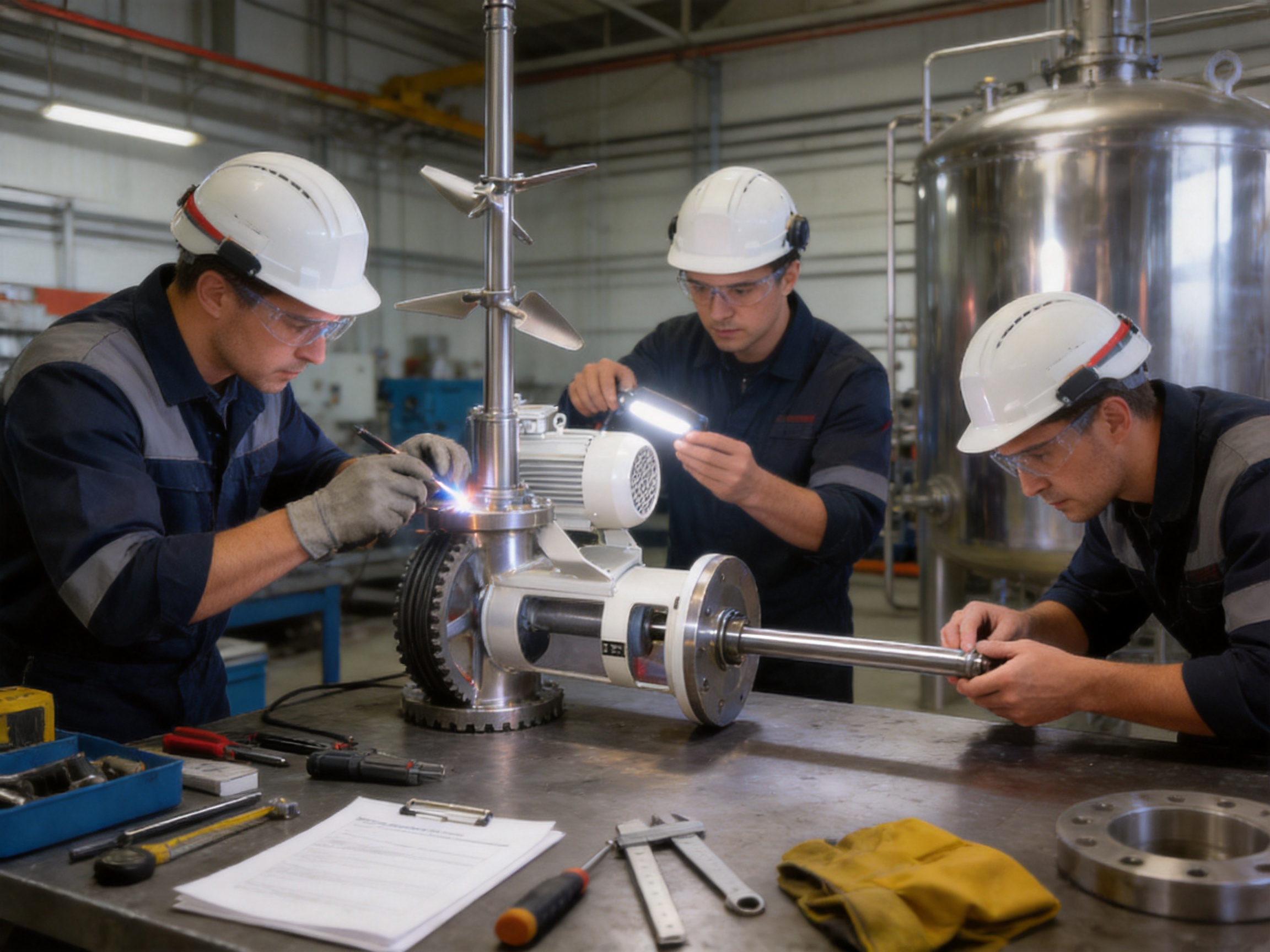
Final assembly requires accurate alignment of the shaft, impeller, flange, seal, and drive system. Improper alignment can create vibration, premature seal wear, bearing stress, and increased energy consumption. Inspection should therefore cover dimensional accuracy, shaft straightness, impeller balance, connection integrity, surface condition, and drive operation.
Depending on the project, testing may include visual and dimensional inspection, weld examination, surface-finish verification, pressure or leak testing, mechanical rotation testing, motor checks, and factory acceptance testing. The customer’s quality plan should identify the tests, acceptance criteria, documentation, and witness requirements before fabrication begins.
Product Comparison by Process Requirement
| Process requirement | Recommended configuration | Primary benefit | Main selection considerations |
| Bulk circulation in a storage tank | Propeller impeller with side-mounted drive | Efficient movement and reduced sedimentation | Tank diameter, liquid depth, viscosity, and required turnover |
| Mixing of viscous products | Anchor or combination impeller | Broad circulation and improved wall movement | Viscosity range, heat-transfer surface, torque, and clearance |
| Suspension preparation | Propeller, anchor, or combination impeller | Helps keep solids uniformly distributed | Particle density, settling velocity, concentration, and bottom geometry |
| Powder or additive dispersion | High-speed dispersion impeller | Higher local shear and faster incorporation | Powder characteristics, shear sensitivity, foaming, and power demand |
| Hygienic processing | Sanitary seal, polished wetted parts, sealed connections | Improved cleaning and contamination control | CIP, SIP, surface finish, seal materials, and validation requirements |
| Outdoor tank installation | Outdoor-rated motor or protected motor housing | Improved resistance to environmental exposure | Weather, temperature, hazardous area, and electrical requirements |
| Corrosive process media | 316L, 904L, duplex, Hastelloy, titanium, or lined construction | Improved material compatibility | Chemical composition, temperature, concentration, and abrasion |
Hygienic Design, CIP, and SIP Considerations
For hygienic processing, the agitator should be evaluated as part of the complete tank system rather than as an isolated component. The tank geometry, spray device, drainability, piping, instrumentation, seal, impeller, and cleaning program must work together. A mechanically sound agitator may still create cleaning challenges if the vessel contains inaccessible areas or poorly designed connections.
The welded flange should be designed to reduce crevices and provide a smooth transition between the vessel wall and agitator housing. Shaft connections should be protected with sealing rings to isolate threads and bolts from the process medium. Wetted surfaces should be polished to the specified roughness and inspected for scratches, pits, discoloration, or weld irregularities.
CIP procedures typically depend on the flow rate, cleaning chemical concentration, temperature, contact time, and mechanical action available at each surface. The agitator may need to rotate during part of the cleaning cycle, depending on the vessel design and cleaning validation plan. Seal compatibility with cleaning agents must be confirmed, particularly when alkaline, acidic, oxidizing, or high-temperature solutions are used.
SIP applications introduce additional requirements related to temperature, pressure, thermal expansion, condensate removal, and sterilization hold time. The seal, elastomers, materials, and shaft arrangement should be evaluated for repeated exposure to the planned SIP conditions. Equipment documentation should clearly state the approved operating and cleaning limits.
Motor, Gearbox, and Mechanical Seal Selection
The motor and gearbox determine the available rotational speed, torque, starting performance, and power consumption. A standard Nord or SEW gear motor can be specified for many industrial applications, while alternative motor housings or outdoor-rated configurations may be selected for special environments.
Motor sizing should be based on process data rather than tank volume alone. Important factors include viscosity, density, solids concentration, impeller diameter, rotational speed, startup torque, operating temperature, and the desired mixing result. If the product changes during processing, the highest expected torque condition should be considered.
Variable-speed operation may be useful when a single vessel performs multiple duties. A lower speed may provide gentle circulation during storage, while a higher speed may be selected for blending or dispersion. Speed control can also help reduce energy use and limit shear when the full motor capacity is not required.
The mechanical seal is a critical reliability component because it separates the rotating shaft from the process environment. A sanitary single-face seal is suitable for many hygienic applications, provided that its materials and operating limits match the process. Seal protection, adequate liquid level, correct installation, and regular inspection are essential for long service life.
How to Select the Correct Agitator
Selection should begin with a clear description of the process objective. Is the primary requirement blending, suspension, heat transfer, reaction support, dispersion, or simple storage circulation? Each objective requires a different balance of flow, shear, torque, and energy input.
The next step is to define the vessel. Relevant information includes tank diameter, straight-side height, liquid working volume, bottom shape, internal coils, baffles, nozzles, manways, and available installation space. The side-entry position and angle should be selected to produce the required circulation without interference from internal components.
Material properties must then be identified. Viscosity, density, solids content, particle size, settling behavior, temperature, corrosiveness, foaming tendency, and sensitivity to shear all affect the impeller and drive selection. If the process includes several products, the full operating range should be considered.
Cleaning and regulatory requirements should be defined at the beginning of the project. Food and pharmaceutical systems may require specific surface finishes, sanitary connections, material certificates, weld records, cleaning validation support, or SIP compatibility. Chemical and petrochemical systems may require different materials, protective coatings, hazardous-area motors, or specialized safety measures.
Finally, the customer and equipment supplier should establish performance criteria. These may include mixing time, suspension quality, maximum allowable temperature difference, blending uniformity, power consumption, noise, vibration, and acceptable maintenance intervals. Clear criteria help ensure that the final equipment is designed for measurable process performance.
Installation and Maintenance Best Practices
Before installation, the vessel flange should be inspected for alignment, dimensional accuracy, cleanliness, and damage. The agitator should be handled according to its weight and center of gravity, with particular care given to the shaft, impeller, seal faces, and motor connections. Lifting and installation procedures should prevent bending or impact damage.
The shaft should be installed according to the manufacturer’s procedure, and all sealing rings should be correctly positioned. Fasteners should be tightened using the specified method and torque. The motor and gearbox should be checked for correct rotation before the tank is filled.
Initial testing should confirm that the shaft rotates smoothly without abnormal vibration, noise, or leakage. The agitator should not be operated outside the specified liquid level or process limits. If level protection is recommended, it should be installed and tested as part of the commissioning procedure.
Routine maintenance may include checking the mechanical seal, gearbox oil, motor condition, shaft alignment, impeller condition, flange bolts, vibration, and surface integrity. The maintenance schedule should reflect operating hours, product characteristics, cleaning frequency, temperature, and the consequences of equipment failure.
When the shaft is removed, the impeller should be inspected for erosion, corrosion, deformation, coating damage, or accumulation of product. Any abnormal wear may indicate incorrect speed, cavitation, excessive solids loading, poor alignment, or unsuitable material selection. Investigating the cause is more effective than simply replacing the damaged component.
Why Choose a Specialized Manufacturing Partner
Agitators are process-critical machines. Their performance depends on the relationship between mechanical design, fluid dynamics, material compatibility, fabrication quality, and plant integration. A supplier that only provides a standard motor and impeller may not be able to address the full range of customer requirements.
Shiloc (Shanghai) Industrial Trading Co., Ltd. provides a broader solution that includes equipment manufacturing, engineering and technical services, international trade support, and customized process equipment. Its focus includes aseptic mixing equipment, heat exchangers, and fluid-processing solutions for food and beverage, biopharmaceutical, daily chemical, fine chemical, and related industries.
The company’s Shanghai facility supports processing, welding, polishing, assembly, and quality control. Its technical team can assist with equipment selection, process evaluation, material specification, installation coordination, and project documentation. This integrated approach helps reduce communication gaps between design and manufacturing.
Another strength is the ability to adapt the equipment to the customer’s actual process. Impeller type, shaft length, wetted material, surface treatment, motor configuration, seal arrangement, connection structure, and cleaning requirements can be reviewed together. This is more effective than selecting a generic agitator based only on nominal tank volume.
The company also emphasizes reliable supply, traceability, process optimization, safety, and personalized service. These capabilities are particularly valuable for projects involving imported equipment, customized fabrication, multiple technical standards, or international delivery requirements.
Quality and Competitive Value
The competitive value of the side-entry tank mechanical agitator is based on the combination of design flexibility, hygienic construction, maintenance accessibility, and manufacturing control. A competitor’s product may offer one or two of these features, but the overall performance depends on how effectively they are integrated.
The removable shaft provides a practical maintenance advantage. The welded flange and sanitary seal support clean processing. The range of impellers allows the equipment to address different process objectives. The material options support a broad spectrum of media. The motor and housing alternatives help adapt the unit to different plant environments.
Manufacturing in a dedicated facility also helps support consistent quality. Controlled welding, polishing, assembly, inspection, and documentation reduce the risks associated with uncontrolled subcontracting. European and Danish design influence adds further value by emphasizing hygienic details, functional simplicity, and long-term serviceability.
For customers, the most important competitive measure is not the purchase price alone. The total value includes installation cost, energy consumption, cleaning time, maintenance access, replacement-part availability, service life, product loss, and process reliability. A properly engineered agitator can reduce the cost of ownership by preventing recurring sedimentation, improving batch consistency, simplifying maintenance, and reducing unplanned downtime.
Frequently Asked Questions
What is a side-entry tank mechanical agitator?
A side-entry tank mechanical agitator is a mixing device installed through the side wall of a vessel. A motor and gearbox rotate an internal shaft and impeller, creating circulation within the tank. It is commonly used for storage, blending, suspension, heat transfer, and process mixing.
What is the main advantage of side-mounted installation?
The side-mounted arrangement can reduce vertical space requirements and simplify installation on large or existing tanks. It creates horizontal circulation and can help prevent sedimentation and dead zones near the bottom of the vessel.
Which impeller should be selected?
The correct impeller depends on the process objective and material properties. Propeller impellers are commonly used for circulation and blending. Anchor impellers are suitable for more viscous materials. High-speed dispersion impellers provide stronger shear, while combination or dual-shaft configurations can support multiple mixing functions.
Can the agitator be used for food and beverage production?
Yes. With sanitary mechanical seals, welded flanges, smooth wetted surfaces, sealed shaft connections, and appropriate stainless steel materials, the agitator can be configured for food and beverage applications. The final design should be reviewed against the customer’s hygiene, cleaning, and validation requirements.
Is the agitator suitable for biopharmaceutical applications?
It can support suitable biopharmaceutical duties such as buffer preparation, suspension preparation, liquid blending, and selected cell culture or fermentation-related applications. Shear sensitivity, CIP, SIP, surface finish, seal materials, documentation, and validation requirements must be evaluated for each process.
What materials are available for wetted components?
Possible materials include 304 stainless steel, 316L stainless steel, 904L stainless steel, duplex stainless steel, Hastelloy, and titanium. PTFE or PFA lining and other surface treatments may be considered for special corrosion or compatibility requirements.
What type of motor is normally supplied?
The standard configuration uses a Nord or SEW gear motor. Stainless steel motor housings and outdoor-rated motor options may also be selected. Hazardous-area, variable-speed, and other electrical requirements should be specified according to the installation environment.
How does the removable shaft help maintenance?
The removable shaft allows inspection, cleaning, seal servicing, and impeller replacement with less disassembly of the vessel and surrounding structure. It can reduce maintenance time and make planned service activities easier to organize.
Can the agitator operate with CIP and SIP systems?
The equipment can be configured for CIP and SIP-related applications when the seal, materials, surface finish, connection design, and operating limits are properly specified. Cleaning and sterilization compatibility must be confirmed for the exact process conditions.
What information should be provided for equipment selection?
Important information includes tank dimensions, working volume, liquid properties, viscosity, density, solids concentration, temperature, pressure, mixing objective, required mixing time, cleaning procedure, material compatibility, motor requirements, and site installation conditions.
What manufacturing capabilities support product quality?
The Shanghai facility supports processing, precision welding, polishing, assembly, and quality inspection. The company’s technical team coordinates design and manufacturing and can provide customized equipment, engineering support, material selection, and project documentation.
Can this agitator be used in petrochemical applications?
It may be used for selected storage, blending, and circulation duties in petrochemical and industrial applications. The final specification must address corrosion, hazardous-area classification, outdoor exposure, fire safety, electrical certification, and the characteristics of the process medium.
Conclusion
The side-entry tank mechanical agitator provides an effective solution for process vessels that require reliable circulation, reduced sedimentation, flexible installation, and accessible maintenance. Its side-mounted structure is particularly valuable for large tanks, facilities with limited vertical space, and applications in which upper tank access must remain available for other equipment.
The LC Series design combines propeller, anchor, high-speed dispersion, dual-shaft, and combination impeller options with sanitary mechanical sealing, welded flanges, removable shafts, smooth wetted surfaces, and a range of corrosion-resistant materials. These features allow the equipment to serve food and beverage, biopharmaceutical, personal care, fine chemical, new material, and selected industrial applications.
Its competitive value is strengthened by Shiloc’s integrated manufacturing and engineering capabilities. European know-how, Danish design influence, a Shanghai production facility, technical specialists, controlled welding and polishing, material traceability, and quality inspection provide a strong foundation for customized process equipment.
For the best result, the agitator should be selected as part of a complete process design. Tank geometry, product properties, cleaning requirements, motor characteristics, impeller performance, sealing, materials, and maintenance access must all be considered together. When correctly engineered and manufactured, a side-entry mechanical agitator can improve product uniformity, reduce operating problems, simplify maintenance, and support dependable long-term production.
References
1. Good Manufacturing Practice principles for equipment used in food, beverage, and pharmaceutical processing.
2. Hygienic equipment design principles for cleanable process vessels and fluid-processing systems.
3. General engineering practices for mechanical agitation, impeller selection, mixing power, and suspension performance.
4. Stainless steel material selection guidance for sanitary, corrosive, and high-purity process applications.
5. Industrial practices for clean-in-place and steam-in-place system design, operation, and validation.
6. Mechanical seal engineering principles for rotating equipment in hygienic and chemical process service.
7. Process equipment manufacturing practices covering welding, polishing, inspection, assembly, and material traceability.
8. Industrial safety and electrical protection requirements for motor-driven equipment installed in indoor and outdoor process environments.
Product: Side-entry Tank Mechanical Agitator
PREV:Hybrid and Direct Contact Heat Exchangers for Efficient Food, Beverage, and Biopharmaceutical Processing
NEXT:Sanitary Steam Ejectors and Injectors for Food and Biopharmaceutical Process Systems
NEXT:Sanitary Steam Ejectors and Injectors for Food and Biopharmaceutical Process Systems
Interested in cooperation or have questions?
Recommended LINS
✦
Process Skid System
Food and Beverage Process System
automated process skid system for food processing
CIP process skid system for food industry
Food Processing Skid System
hygienic process skid for food industry
food and beverage process skid system
CIP Skid System for Food Industry
Skid Mounted Process System
Sanitary Process Skid
Let'S Work Together Welcome Aboard!
-

haikexin@haikexin.com
+8613391278930
-
 +86-21-57560276
 -
 No. 2819, Sihu Road,Fengxian District, Shanghai, China
Join Our Mailing List
Copyright © Shiloc (Shanghai) Industrial Trading Co., Ltd. All Rights Reserved.
Process Systems & Equipment For Food & Biopharma Manufacturers
