
 English
 русский
 Português
 Français


 Read More

Product Category
NEW Category
Contact us
Contact Us
We specialise in the research, development and manufacture of electrical wires and cables.
 +86-21-57560276
Sanitary Pure Steam Sampling Condensers for Reliable Pharmaceutical and Food Process Control
Content
- 1 What Is a Sanitary Pure Steam Sampling Condenser?
- 2 Why Pure Steam Sampling Requires Specialized Equipment
- 3 Core Design of the Coil-in-Coil Heat Exchanger
- 4 Hygienic Materials and Surface Finish
- 5 Fully Drainable Construction for Better Sample Integrity
- 6 CIP and SIP Compatibility
- 7 How the Condenser Supports Accurate Testing
- 8 Advantages Compared with Conventional Condensers
- 9 Available Models and Dimensional Information
- 10 Applications in Pharmaceutical Manufacturing
- 11 Applications in Biopharmaceutical and Biotechnology Facilities
- 12 Applications in Food and Beverage Processing
- 13 Manufacturing Strengths and Quality Control
- 14 Customization for Different Process Requirements
- 15 Installation and Operating Considerations
- 16 Maintenance and Long-Term Reliability
- 17 How to Select the Right Sampling Condenser
- 18 Why Supplier Capability Matters
- 19 Role of Traceability and Documentation
- 20 Quality and Safety Benefits
- 21 Q&A: Sanitary Pure Steam Sampling Condensers
- 21.1 Q1: What industries use sanitary pure steam sampling condensers?
- 21.2 Q2: What tests can be performed on the condensate?
- 21.3 Q3: Why is 316L stainless steel commonly used?
- 21.4 Q4: What does an Ra ≤ 0.25 micrometer surface finish mean?
- 21.5 Q5: How does the coil-in-coil structure improve performance?
- 21.6 Q6: Can the condenser handle repeated heating and cooling?
- 21.7 Q7: Is the unit suitable for low-flow sampling points?
- 21.8 Q8: Can the condenser be customized?
- 21.9 Q9: Are tri-clamp connections available?
- 21.10 Q10: Is the condenser compatible with CIP and SIP?
- 21.11 Q11: What information should be supplied for model selection?
- 21.12 Q12: What should be checked during installation?
- 21.13 Q13: Why is complete drainage important?
- 21.14 Q14: What support can an experienced supplier provide?
- 22 Conclusion
- 23 References
- 24 Product: Sanitary Pure Steam Sampling Condensers
Pure steam is used in many high-cleanliness manufacturing environments, including pharmaceutical production, biopharmaceutical processing, food and beverage manufacturing, medical device production, laboratories, and daily chemical applications. It supports sterilization, equipment cleaning, process assurance, and contamination-control strategies. Because pure steam often comes into direct or indirect contact with critical equipment and production environments, its quality must be monitored carefully.
Reliable sampling is an essential part of this monitoring process. A pure steam sample must be collected safely, condensed completely, and delivered for testing without introducing contamination or distorting the characteristics of the original steam system. Sanitary pure steam sampling condensers are designed specifically for this purpose. They transform high-temperature pure steam into a manageable condensate sample suitable for conductivity, total organic carbon, endotoxin, microbiological, and other quality tests.
Compared with general-purpose industrial condensers, sanitary pure steam sampling condensers place greater emphasis on hygienic construction, drainability, material compatibility, surface finish, thermal-stress resistance, and installation flexibility. These features help protect sample integrity while supporting the demanding requirements of pharmaceutical and food-grade operations.
Shiloc (Shanghai) Industrial Trading Co., Ltd. provides sanitary process equipment and engineering support for food and beverage, biopharmaceutical, daily chemical, and fine chemical manufacturers. Its product and technical service capabilities cover sanitary heat exchangers, pure steam sampling condensers, aseptic mixing equipment, processing equipment, and related engineering solutions.
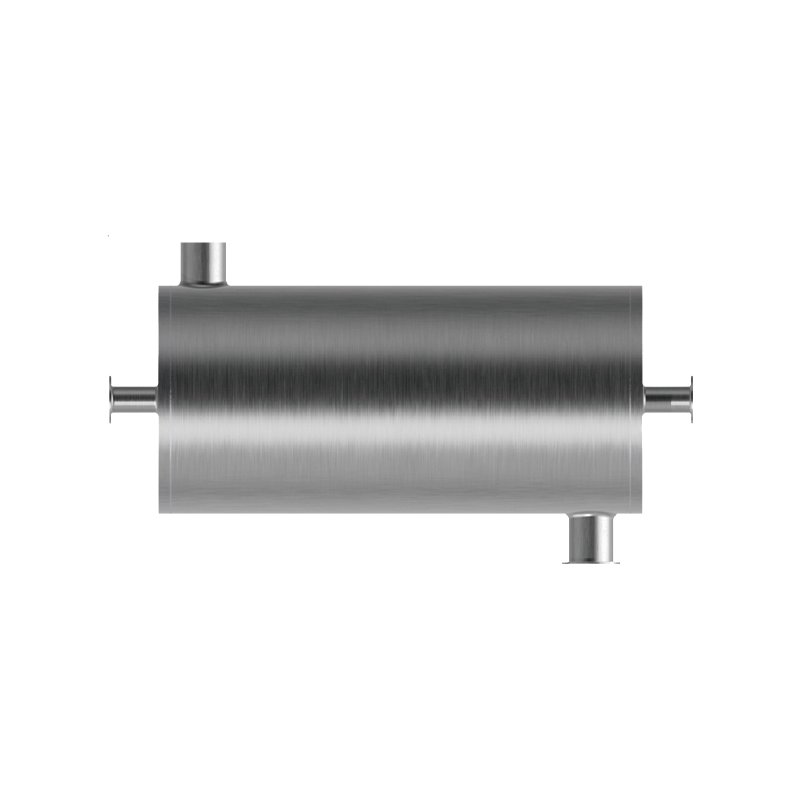
Sanitary Pure Steam Sampling Condensers
What Is a Sanitary Pure Steam Sampling Condenser?
A sanitary pure steam sampling condenser is a compact heat transfer unit used to condense and cool pure steam before quality analysis. The unit normally contains a sanitary stainless steel coil or coil-in-coil structure through which the steam passes. Cooling water flows through the surrounding passage, removing heat from the steam and converting it into liquid condensate.
The resulting condensate can then be collected in a suitable sterile container or transferred to a laboratory sampling point. Depending on the validation protocol and process design, the sample may be tested for conductivity, total organic carbon, endotoxins, microbial contamination, non-condensable gases, or other parameters relevant to pure steam quality.
The condenser is not simply a cooling device. It is part of the sampling system and therefore has a direct influence on the reliability of test results. If condensation is incomplete, the sample volume may be insufficient. If the internal passages are difficult to drain, residual liquid can remain in the system. If the construction contains crevices, dead legs, rough surfaces, or unsuitable materials, the device may become a source of contamination.
A sanitary condenser addresses these risks through a compact flow path, hygienic materials, polished fluid-contact surfaces, minimized internal joints, and a configuration that supports complete drainage. Its role is to protect both operators and samples while making routine pure steam testing easier to perform.
Why Pure Steam Sampling Requires Specialized Equipment
Pure steam is normally produced and distributed at elevated temperatures. Directly collecting hot steam can expose operators to burns and can make sample handling difficult. The steam must therefore be condensed under controlled conditions before laboratory testing. A properly designed condenser provides a repeatable means of reducing the sample temperature and collecting condensate safely.
Pure steam sampling is also sensitive to external contamination. A sample that comes into contact with unsuitable materials, stagnant liquid, poorly cleaned surfaces, or non-sanitary connection points may no longer represent the condition of the steam distribution system. The sampling equipment must therefore be designed to prevent the introduction of particles, residues, microorganisms, or chemical contaminants.
Another challenge is the need to preserve sampling consistency. The sampling flow rate, cooling-water flow rate, coil length, and heat transfer conditions all influence the completeness of condensation. A condenser with an appropriately selected heat transfer area can provide stable condensation even at a small sampling point or low process flow rate.
General industrial condensers may be suitable for utility systems where minor residual liquid or surface contamination is acceptable. However, pharmaceutical, biotechnology, food, and medical applications require a higher level of control. Equipment must be compatible with cleaning and sterilization procedures and must be integrated into a validated hygienic process.
Core Design of the Coil-in-Coil Heat Exchanger
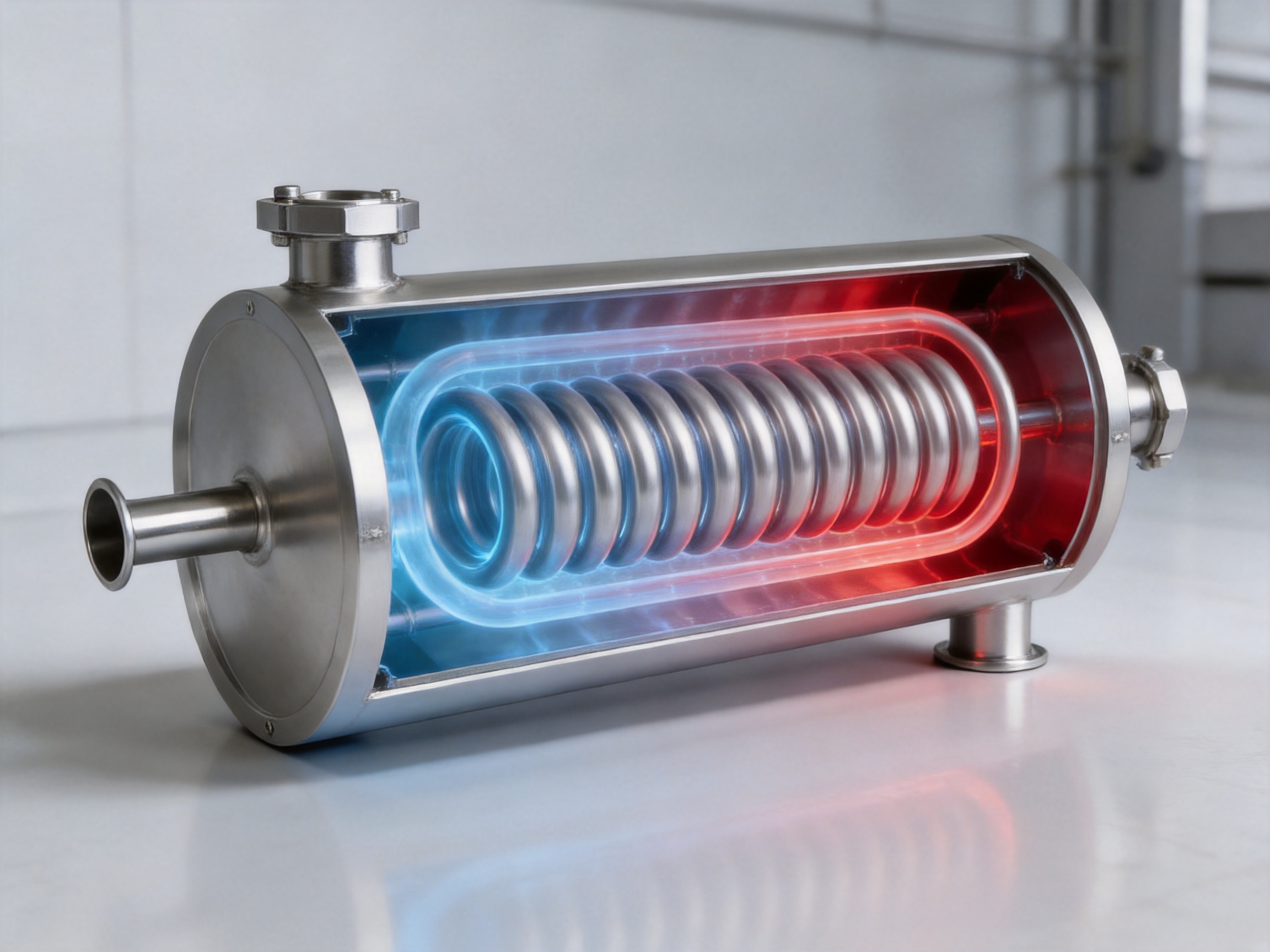
The coil-in-coil configuration is one of the main design features of the sanitary pure steam sampling condenser. In this arrangement, the product or steam passage is formed by a coiled sanitary tube, while the cooling medium flows through a surrounding passage. The compact spiral geometry creates an efficient heat transfer path within a relatively small installation envelope.
The flow can be treated as counter-current or close to counter-current, depending on the specific connection arrangement. Counter-current heat transfer allows the cooling medium to maintain a favorable temperature difference along the length of the condenser. This improves the use of the available heat transfer area and supports complete condensation of the incoming steam.
The curved coil also promotes beneficial thermal behavior. Unlike a rigid straight tube, a spiral tube can accommodate a degree of expansion and contraction as the unit experiences repeated heating and cooling cycles. The coil acts in a spring-like manner, reducing the concentration of thermal stress at fixed points.
This characteristic is particularly valuable in pure steam systems that operate intermittently or experience frequent start-stop conditions. During operation, the steam-side temperature may rise rapidly while the cooling-water side remains at a lower temperature. A flexible coiled structure helps manage the resulting expansion difference and reduces the risk of stress-related leakage.
The compact design is suitable for small sampling points, pilot systems, skids, laboratory utilities, and larger process installations where space is limited. It can be installed close to the sampling valve or integrated into a sanitary panel, provided that the selected connections and mounting arrangement support proper drainage and operation.
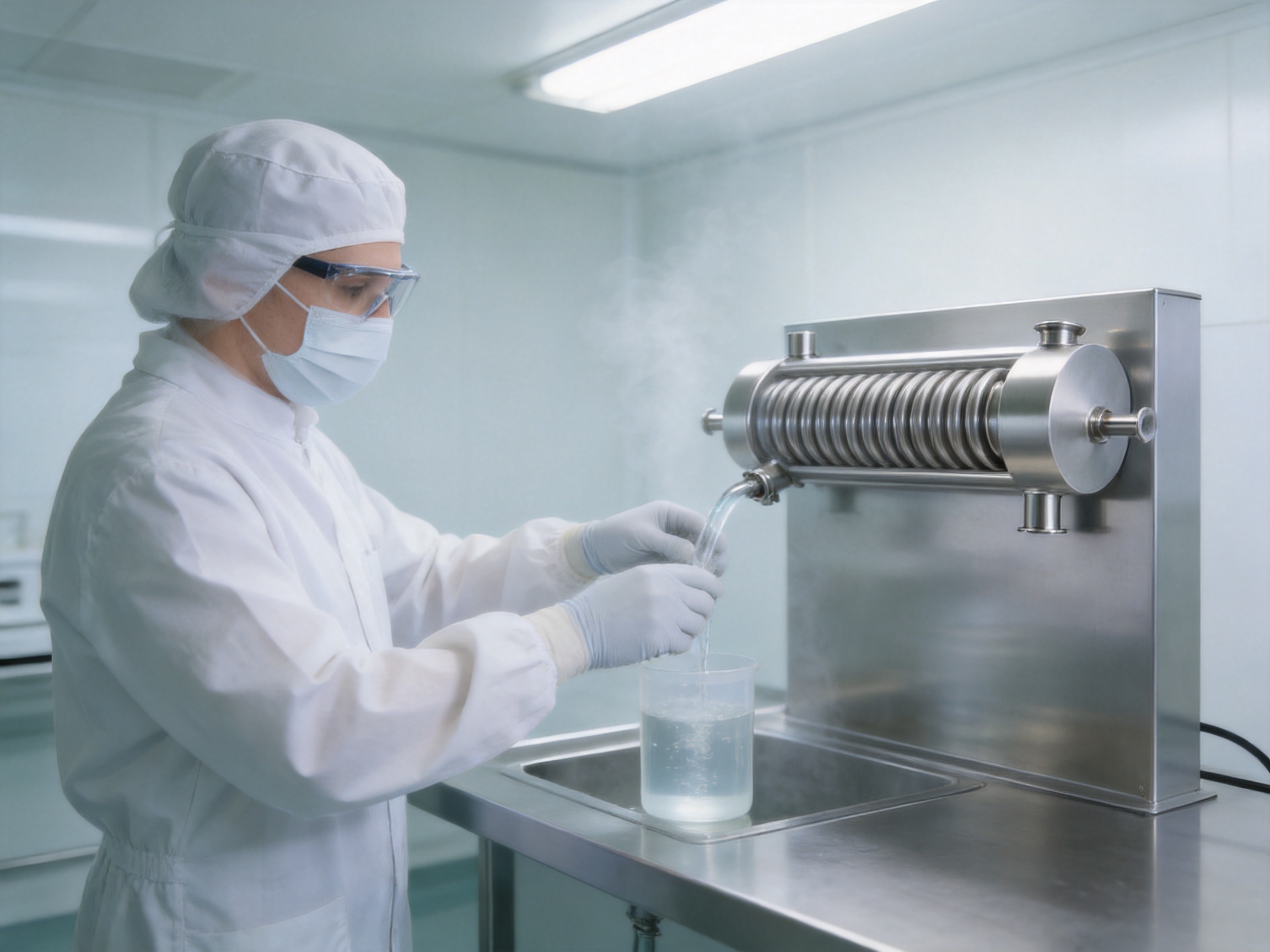
Hygienic Materials and Surface Finish
Material selection is critical for any component that contacts a pure steam sample. The sanitary pure steam sampling condensers described in the supplied product information are constructed from 316L stainless steel. This material is widely used in pharmaceutical and food processing because of its corrosion resistance, mechanical strength, and suitability for hygienic fabrication.
316L stainless steel has a reduced carbon content compared with standard 316 stainless steel. This helps improve resistance to corrosion associated with welding and makes it suitable for fabricated sanitary equipment when the welding, heat treatment, finishing, and inspection processes are properly controlled.
The product information specifies an internal surface roughness of Ra ≤ 0.25 micrometers for the coil. A low-roughness electropolished surface reduces the number of microscopic irregularities where particles, organic residues, or microorganisms could accumulate. It also supports more effective cleaning and improves the hygienic condition of the fluid-contact surface.
Electropolishing removes a controlled amount of material from the stainless steel surface and can improve smoothness, brightness, and corrosion resistance. In a sanitary process environment, electropolishing is valuable because the surface is easier to clean and less likely to retain contamination. The quality of the final result depends on the preparation of the stainless steel, weld quality, electropolishing parameters, rinsing, passivation, and inspection.
Material and finish should always be considered together. A high-quality stainless-steel grade cannot compensate for poor weld penetration, unclean fabrication practices, rough internal surfaces, or inaccessible dead zones. For this reason, sanitary manufacturing requires coordinated control of materials, forming, welding, polishing, cleaning, and final inspection.
Fully Drainable Construction for Better Sample Integrity
Drainability is one of the most important design requirements for a pure steam sampling condenser. After sampling or sterilization, residual condensate should be able to leave the equipment without becoming trapped in low points or enclosed cavities. A fully drainable flow path reduces the chance of liquid retention and helps maintain a cleaner internal condition between sampling cycles.
The supplied product information describes the condenser as having no internal joints in the main coil and as being designed to eliminate dead spots and reduce leak risks. A simplified internal construction can be advantageous because every additional joint, fitting, or crevice may increase the potential for residue accumulation or cleaning difficulty.
Dead spots are areas where the process fluid moves slowly or remains stagnant. In a hygienic system, these areas can make cleaning and sterilization less effective. They may also hold condensate that no longer represents the current steam sample. Reducing dead zones improves the consistency of sampling and supports sanitation procedures.
Drainability also matters during maintenance and system shutdown. A well-designed condenser is easier to empty, inspect, dry, and return to service. This can reduce the time required for changeovers and help operators follow documented procedures more consistently.
The actual drainability of an installed unit depends not only on the condenser itself but also on orientation, connection layout, piping slope, valve arrangement, and support design. Installation should therefore be reviewed as part of the complete sampling system rather than as an isolated equipment purchase.
CIP and SIP Compatibility
Clean-in-place and steam-in-place capability are essential considerations in pharmaceutical and high-hygiene production. CIP uses a controlled circulation of cleaning solutions, rinses, and sometimes sanitizing fluids to remove residues from process equipment. SIP uses clean or pure steam to sterilize internal surfaces and connected components.
A sanitary pure steam sampling condenser should be selected and installed with these procedures in mind. The internal materials must tolerate the expected temperature, pressure, chemical concentration, exposure time, and number of operating cycles. The connection design must allow cleaning and sterilization media to reach the required surfaces.
Tri-clamp connections are commonly used in sanitary systems because they can be assembled and disassembled efficiently while maintaining a hygienic connection when correctly fitted. They also facilitate integration with sanitary valves, tubing, sample ports, and process panels.
CIP and SIP compatibility does not mean that every installation will automatically achieve the same cleaning or sterilization result. The process designer must confirm that the unit is positioned correctly, that air and condensate can be removed, and that the cleaning or sterilization parameters are appropriate. Validation should consider the complete system, including upstream valves, downstream sample outlets, cooling-water passages, gaskets, and associated piping.
For regulated applications, documentation may include material certificates, surface-finish records, welding documentation, pressure-test records, inspection reports, cleaning instructions, and operating procedures. The level of documentation should match the project’s quality system and validation requirements.
How the Condenser Supports Accurate Testing
The accuracy of a pure steam test begins with representative sampling. A condenser supports accuracy by converting steam into a stable liquid sample under controlled thermal conditions. The objective is not merely to produce condensate, but to produce condensate that reflects the condition of the steam system at the sampling location.
Complete condensation is important because partially condensed steam can create inconsistent sample composition and volume. It can also create unsafe discharge conditions. By selecting an appropriate coil length and controlling the cooling-medium flow rate, operators can maintain sufficient heat removal for the expected steam flow.
Cooling-water control is another important variable. Excessively low cooling flow may result in incomplete condensation or a sample temperature that is too high. Excessively high flow may waste utility capacity without providing a meaningful improvement. A properly sized condenser gives operators a practical operating range in which stable condensation can be achieved.
The condenser’s compact design makes it suitable for low-flow applications. In a small sampling line, the available steam quantity may be limited, so a large industrial heat exchanger would be unnecessary and difficult to install. A compact coil unit can provide the required heat transfer area while minimizing hold-up volume.
Reduced hold-up volume is beneficial because the time required to flush the sampling path can be shorter. This helps operators obtain a fresher sample and reduces the amount of condensate that remains inside the equipment after testing.
Sampling accuracy also depends on the sampling procedure. Operators should follow a defined sequence for flushing, stabilization, cooling-water adjustment, collection, labeling, and transport. The condenser provides the thermal function, but reliable test data requires coordinated control of equipment, procedure, personnel, and laboratory analysis.
Advantages Compared with Conventional Condensers
Sanitary pure steam sampling condensers offer several advantages over conventional industrial condensers when used in high-cleanliness applications.
First, sanitary materials and surface treatment protect sample quality. The use of 316L stainless steel and a specified low surface roughness provides a fluid-contact surface more appropriate for pharmaceutical and food applications than ordinary carbon steel, untreated stainless steel, or materials with uncertain compatibility.
Second, the internal geometry is designed for hygiene. A compact coil with minimized internal joints can reduce dead zones, residue retention, and potential leakage points. Conventional units may contain more complicated baffle arrangements, gasketed sections, or inaccessible cavities that are acceptable for utility service but less desirable for validated sampling.
Third, the coil structure improves thermal-stress resistance. Repeated heating and cooling can place stress on rigid heat exchanger components. The spiral configuration provides flexibility and can help reduce stress-related leakage during frequent operating cycles.
Fourth, the design is space efficient. A coil-in-coil unit can deliver useful heat transfer performance within a compact body. This is advantageous for sampling stations, skids, laboratories, and process areas where installation space is restricted.
Fifth, the unit is appropriate for low-flow service. Pure steam sample lines generally do not require the large capacity associated with production heat exchangers. A purpose-built sampling condenser avoids excessive equipment size while still providing complete condensation when correctly selected.
Sixth, sanitary connections simplify integration. Tri-clamp fittings and compatible hygienic components make it easier to connect the condenser to existing process lines and sampling assemblies.
These advantages do not mean that one condenser is suitable for every application. Pressure, steam quality, flow rate, cooling-water temperature, available utility pressure, installation orientation, and validation requirements must all be reviewed before final selection.
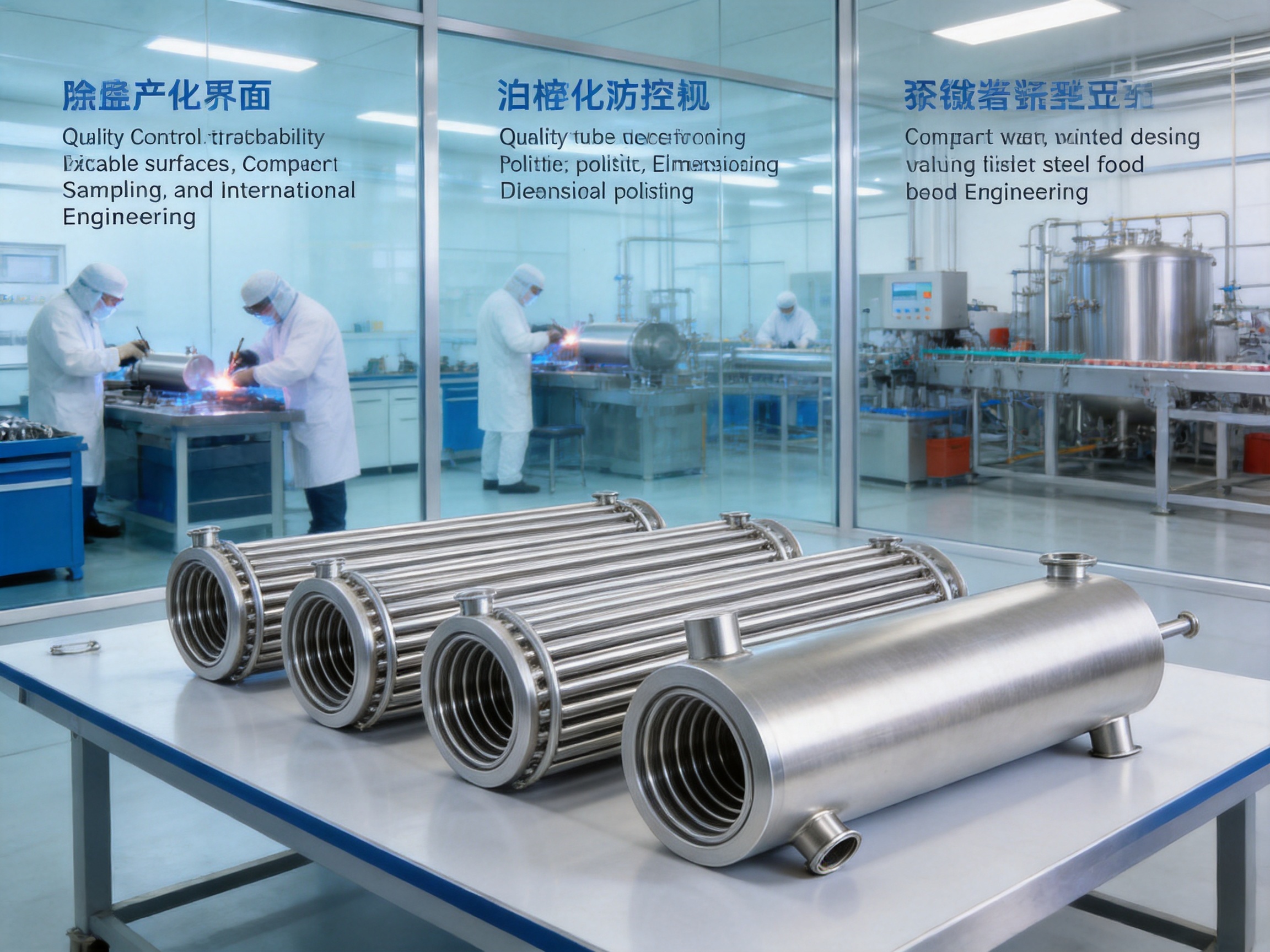
Available Models and Dimensional Information
The following reference models illustrate a range of compact coil configurations. The listed dimensions should be treated as selection references rather than universal operating limits. Final technical confirmation should be based on the actual steam conditions, cooling medium, connection requirements, and project specifications.
| Model | Number of Coiled Tubes | Straight Pipe Diameter (mm) | Shell Diameter (mm) | Total Length (mm) | Weight (kg) |
|---|---|---|---|---|---|
| HY-CH-01030 | 1 | 9.53 | 89 | 400 | 7 |
| HY-CH-03040 | 1 | 12.7 | 108 | 500 | 9 |
| HY-CH-05050 | 1 | 12.7 | 114 | 600 | 11 |
| HY-CH-08055 | 1 | 12.7 | 129 | 650 | 13 |
The model range demonstrates how total length and shell diameter can be adjusted to provide different heat transfer capabilities. Smaller units may be appropriate for compact sampling points and low steam flow rates. Longer units can provide additional heat transfer area where the steam temperature, flow rate, or cooling-water conditions require it.
Model selection should not be based on dimensions alone. The supplier should review the steam pressure and temperature, expected sampling flow, cooling-water inlet temperature, cooling-water flow rate, desired condensate temperature, installation direction, connection standard, and available space.
Applications in Pharmaceutical Manufacturing
Pharmaceutical manufacturers use pure steam in sterilization, equipment cleaning, preparation of sterile process environments, and other critical operations. Sampling condensers can be installed at representative points in pure steam generation and distribution systems to support routine monitoring, commissioning, qualification, and periodic requalification.
During qualification, sampling may be required at multiple locations to verify that the distribution system delivers steam with consistent quality. A compact sanitary condenser can be installed at a sampling point without adding a large equipment footprint or creating unnecessary process hold-up.
During routine operation, the condenser provides a repeatable method for collecting condensate for laboratory testing. The resulting data can support process trending and help identify changes in conductivity, organic contamination, endotoxin levels, or other quality indicators.
The unit may also be used during investigations. If a quality result is outside the expected range, a controlled sampling arrangement can help determine whether the issue is associated with the steam generator, distribution piping, a particular point of use, or the sampling procedure itself.
In all cases, the condenser should be included in the site’s equipment qualification and maintenance program. Its materials, surface finish, welds, connections, and cleaning method should be documented according to the requirements of the pharmaceutical quality system.
Applications in Biopharmaceutical and Biotechnology Facilities
Biopharmaceutical facilities often operate multiple clean utilities and process systems with demanding contamination-control requirements. Pure steam may be used for sterilizing vessels, transfer lines, filters, filling equipment, and other components involved in the manufacture of biological products.
Because biological processes can be highly sensitive to contamination, the sampling equipment must not introduce additional risk. A sanitary condenser with smooth surfaces, minimized internal joints, and complete drainage supports a more controlled sampling environment.
Biotechnology laboratories and pilot plants may have limited space and variable operating schedules. The compact coil-in-coil structure is suitable for systems that require occasional sampling or operate at relatively low flow rates. Its thermal-stress resistance is also useful where the system is frequently started, stopped, sterilized, and cooled.
For research and development applications, customized connections and dimensions can help the condenser fit existing laboratory skids or modular process equipment. This flexibility is valuable when a standard production-scale configuration would be too large or would not match the available piping arrangement.
Applications in Food and Beverage Processing
Food and beverage manufacturers increasingly use hygienic steam systems for sterilization, cleaning, aseptic processing, packaging, and process heating. In these environments, sample quality and sanitary design are important because equipment may be exposed to ingredients, cleaning chemicals, and repeated thermal cycles.
A sanitary pure steam sampling condenser can support verification of steam quality before or during critical operations. The stainless-steel construction is compatible with hygienic process environments, while the compact form makes installation practical near a utility panel or point-of-use station.
Food manufacturers may also benefit from easier maintenance and cleaning. A drainable unit with sanitary connections can be removed or serviced without the complex procedures associated with larger industrial heat exchangers. This can help reduce downtime during scheduled inspections or process changes.
Although food and beverage regulations differ from pharmaceutical requirements, the underlying principles remain similar: suitable materials, cleanable surfaces, controlled flow paths, reliable sampling, and documented operating procedures.
Manufacturing Strengths and Quality Control
The performance of a sanitary sampling condenser depends heavily on how it is manufactured. Compact equipment can be deceptively difficult to fabricate because the internal flow path is small, the coil geometry must remain dimensionally stable, and the finished unit must combine pressure integrity with a high standard of cleanliness.
Shiloc (Shanghai) Industrial Trading Co., Ltd. was established in March 2026 in Fengxian District, Shanghai. The company operates a 3,000-square-meter facility and has more than 20 technical specialists. Its capabilities include processing, sanitary welding, polishing, quality control, equipment manufacturing, import and export agency services, and engineering and technical support.
The company’s manufacturing approach is based on European know-how and Danish design principles. This orientation emphasizes practical process engineering, efficient equipment configuration, traceability, and the integration of manufacturing with customer-specific technical requirements.
Material control is the first stage of a reliable manufacturing process. Stainless-steel materials should be identified, inspected, and traceable throughout fabrication. The correct grade, thickness, tube dimensions, and product-contact material must be verified against the approved design.
Coil forming is another important step. The tube must be shaped accurately without creating unacceptable flattening, cracking, excessive wall thinning, or internal deformation. Consistent coil geometry supports predictable flow and heat transfer while helping the finished condenser fit within the specified envelope.
Sanitary welding requires skilled operators and appropriate procedures. Welds should provide structural integrity while minimizing internal irregularities. Control of alignment, heat input, shielding gas, penetration, and post-weld treatment is essential. Where required, weld inspection and documentation can support the customer’s quality and validation records.
Polishing and electropolishing must be controlled to achieve the required surface condition. The process should remove contamination and reduce roughness without compromising dimensions or leaving residues. The final surface may be evaluated through visual inspection, roughness measurement, cleanliness checks, and other project-specific methods.
Pressure testing and leak testing help confirm the integrity of the steam and cooling-water passages. A condenser that performs well thermally but leaks under operating conditions is unsuitable for a sanitary process. Testing should therefore be carried out according to the design pressure, applicable standards, and customer requirements.
Final inspection should include dimensional verification, connection inspection, surface-finish review, marking, cleanliness confirmation, and documentation review. This combination of process controls helps ensure that the delivered condenser is consistent with the approved technical specification.
Customization for Different Process Requirements
Pure steam systems vary significantly from one facility to another. A standard condenser may be adequate for many applications, but customized design can improve compatibility when the project has unusual pressure, flow, space, or connection requirements.
Customization may include changes to the overall length, shell diameter, coil dimensions, connection type, connection orientation, support brackets, mounting arrangement, and drain configuration. The unit may also be adapted to suit different sanitary standards or existing equipment layouts.
Interface selection should be considered carefully. Tri-clamp connections are widely used in hygienic systems, but some projects may require other sanitary connection standards, threaded utility connections, welded ends, or a combination of connection types for steam, condensate, and cooling water.
Cooling-water requirements can also influence the design. If the available cooling water has a relatively high inlet temperature, a longer coil or larger heat transfer area may be necessary. If the cooling water is supplied at a low temperature and stable flow rate, a more compact unit may be sufficient.
Customization should be based on engineering calculations rather than appearance alone. The supplier should evaluate heat duty, temperature approach, flow regime, pressure drop, thermal expansion, mechanical support, drainage, and cleaning access before confirming the design.
Shiloc integrates manufacturing resources with engineering and technical service capabilities to support these project-specific requirements. This approach enables customers to discuss process conditions, receive configuration guidance, and coordinate technical documentation through a single supplier interface.
Installation and Operating Considerations
Correct installation is necessary to obtain the expected performance from a sanitary pure steam sampling condenser. The steam inlet and condensate outlet should be arranged to support the intended flow direction and complete drainage. The condenser should be mounted securely while allowing sufficient access for inspection, connection tightening, and maintenance.
The sample line should be as short and hygienic as practical. Unnecessary bends, long horizontal runs, and poorly positioned low points can increase hold-up volume and make drainage more difficult. The downstream collection point should be located so that the operator can collect the sample safely without contacting hot surfaces or condensate.
Cooling-water connections should be clearly identified and installed with suitable valves and flow-control devices. Operators need a practical means of adjusting cooling-water flow during commissioning and routine sampling. Any instrumentation used to monitor temperature or flow should be selected for the cleanliness and accuracy requirements of the application.
Before operation, the system should be flushed and inspected according to the site procedure. Operators should verify that the condenser is free from visible contamination, that all connections are secure, and that the cooling-water circuit is available.
During sampling, the sampling line may require an initial flush to remove residual condensate and establish stable conditions. The operator should then adjust the cooling-water flow to achieve complete condensation and an appropriate sample temperature. The exact procedure should be established by the user’s quality and validation teams.
After sampling, the unit should be drained or sterilized as required. If the condenser is connected to a larger SIP system, the sterilization cycle should be reviewed to confirm that steam reaches all relevant surfaces and that condensate can be removed effectively.
Maintenance and Long-Term Reliability
Sanitary equipment requires a preventive maintenance program even when it has no moving parts. Routine checks should include the condition of tri-clamp gaskets, connection ferrules, support components, sample valves, cooling-water fittings, and visible external surfaces.
Changes in condensation performance may indicate insufficient cooling-water flow, blockage, scaling, fouling, incorrect valve settings, or a change in steam conditions. Operators should investigate these changes rather than compensating indefinitely by increasing utility consumption.
In areas with hard cooling water, mineral deposits may reduce heat transfer efficiency over time. The cleaning method should be compatible with 316L stainless steel, the electropolished surface, gaskets, and the facility’s environmental and safety procedures.
Leak testing may be appropriate after maintenance, relocation, or repeated thermal cycling. If the condenser is part of a validated system, maintenance and inspection results should be recorded in the equipment history.
Replacing sanitary gaskets at appropriate intervals is important. A gasket that is damaged, compressed, chemically degraded, or incorrectly installed can compromise both cleanliness and leak integrity. Gaskets should be selected for compatibility with the operating temperature, pressure, cleaning chemicals, and sterilization conditions.
Long-term reliability is supported by a combination of suitable design, controlled fabrication, proper installation, disciplined operation, and preventive maintenance. No single feature can replace this complete lifecycle approach.
How to Select the Right Sampling Condenser
The first selection parameter is the pure steam operating condition. The supplier should receive information about steam pressure, temperature, expected sampling flow rate, sampling frequency, and the required condensate outlet temperature.
The second parameter is the cooling medium. Cooling-water inlet temperature, available flow rate, pressure, quality, and seasonal variation can all affect condenser performance. The design should allow sufficient heat removal under the least favorable expected conditions.
The third parameter is the installation environment. Available space, mounting orientation, access for operators, drainage, nearby equipment, and connection direction should be reviewed before selecting a model.
The fourth parameter is the hygienic and regulatory requirement. Customers should identify the required stainless-steel grade, surface roughness, electropolishing standard, welding documentation, inspection records, connection standard, and cleanability expectations.
The fifth parameter is the validation strategy. If the condenser will be installed in a GMP-regulated facility, the purchaser may need documentation packages, material certificates, equipment drawings, pressure-test results, surface-finish records, and operating or maintenance instructions.
The sixth parameter is the supplier’s ability to provide technical support. A supplier that can assist with sizing, customization, documentation, export coordination, and after-sales communication may reduce project risk compared with a supplier that only provides a basic catalog item.
Why Supplier Capability Matters
Purchasing a sanitary condenser involves more than comparing prices. The equipment must be compatible with a particular steam system, process standard, installation space, cleaning program, and quality system. Misunderstanding any of these factors can lead to additional fabrication, delayed installation, or unsatisfactory sampling performance.
A technically capable supplier should be able to discuss the difference between steam-side and cooling-water-side flow, explain the effect of coil length, review thermal expansion, and identify potential drainage or installation problems before manufacturing begins.
Manufacturing control is equally important. The supplier should understand how stainless steel is handled, how sanitary welds are produced, how surfaces are finished, and how final cleanliness is verified. Consistent manufacturing is especially important when several condensers are installed at different sampling points and are expected to provide comparable results.
International projects require additional capabilities. Product drawings, technical specifications, packing lists, certificates, customs documentation, transport coordination, and communication across time zones can affect the project schedule. An experienced import and export service team can help coordinate these activities.
Shiloc (Shanghai) Industrial Trading Co., Ltd. combines equipment manufacturing resources with import and export agency services and engineering support. Its focus extends beyond product supply to technical communication, customized solutions, supply coordination, and international project execution.
Role of Traceability and Documentation
Traceability supports confidence in the equipment’s origin, materials, manufacturing history, and inspection status. For sanitary process equipment, traceability may include heat numbers for stainless steel, welding records, surface-finish results, pressure-test records, dimensional inspection, and final release documentation.
The specific documentation package depends on the customer’s quality system and project requirements. Some facilities may require a basic certificate of conformity, while others may require a more extensive turnover dossier for qualification and validation.
Clear product identification is also important after installation. Model information, serial numbers, flow-direction markings, and connection labels help operators and maintenance personnel identify the correct equipment and follow the correct procedures.
Documentation should be reviewed before shipment when possible. Early review allows discrepancies in dimensions, connection standards, materials, or certificates to be corrected before the equipment reaches the customer’s site.
Quality and Safety Benefits
The sanitary condenser improves operator safety by reducing the need to handle high-temperature steam directly. It also provides a defined sampling point that can be connected to suitable collection vessels and protective equipment.
From a quality perspective, it helps create a more repeatable sampling environment. The controlled cooling path, sanitary materials, polished surface, and drainable construction reduce variables that could affect test results.
From an operational perspective, its compact form reduces installation complexity and saves space. The absence of unnecessary internal joints can simplify cleaning and reduce potential leak points. The coil’s ability to accommodate thermal expansion supports reliability in systems with repeated temperature changes.
These benefits are particularly valuable when sampling is performed frequently or at multiple locations. A consistent condenser design across the facility can simplify operating procedures, training, maintenance, and spare-parts management.
Q&A: Sanitary Pure Steam Sampling Condensers
Q1: What industries use sanitary pure steam sampling condensers?
They are primarily used in pharmaceutical manufacturing, biopharmaceutical production, biotechnology laboratories, food and beverage processing, medical device manufacturing, daily chemical production, fine chemical processing, and other facilities with high hygiene requirements.
Q2: What tests can be performed on the condensate?
The condensate may be used for conductivity, total organic carbon, endotoxin, microbiological, and other pure steam quality tests. The exact test program depends on the user’s validation protocol, regulatory requirements, and process risk assessment.
Q3: Why is 316L stainless steel commonly used?
316L stainless steel provides good corrosion resistance, mechanical strength, and compatibility with hygienic process equipment. Its reduced carbon content is also suitable for sanitary welded construction when fabrication and post-weld finishing are properly controlled.
Q4: What does an Ra ≤ 0.25 micrometer surface finish mean?
Ra is a commonly used measurement of average surface roughness. An Ra value of no more than 0.25 micrometers indicates a very smooth internal surface, which can reduce particle retention, support cleanability, and limit locations where microbial contamination may accumulate.
Q5: How does the coil-in-coil structure improve performance?
The structure provides a compact heat transfer path and allows the cooling medium to flow in a counter-current or near-counter-current arrangement. This supports efficient heat removal and complete steam condensation within a relatively small unit.
Q6: Can the condenser handle repeated heating and cooling?
The spiral coil structure can accommodate thermal expansion and contraction more effectively than a rigid straight configuration. This helps reduce thermal-stress concentration and supports operation in systems with frequent start-stop and sterilization cycles.
Q7: Is the unit suitable for low-flow sampling points?
Yes. The compact design and adjustable heat transfer capacity make it suitable for low-flow applications or locations requiring only a small heat transfer area. Final selection should be based on the actual steam flow, temperature, pressure, and cooling-water conditions.
Q8: Can the condenser be customized?
Customization may include dimensions, coil length, shell diameter, connection type, connection orientation, support arrangement, and other structural details. Customization should be confirmed through an engineering review of the customer’s process and installation requirements.
Q9: Are tri-clamp connections available?
Tri-clamp connections are suitable for sanitary integration and are included in the described product concept. The final connection size and configuration should be confirmed against the customer’s piping standard and approved equipment drawing.
Q10: Is the condenser compatible with CIP and SIP?
The product is designed for CIP and SIP-compatible sanitary integration. However, the complete installation must be reviewed to ensure that cleaning and sterilization media can reach the required surfaces and that air and condensate can be removed effectively.
Q11: What information should be supplied for model selection?
Customers should provide steam pressure, steam temperature, sampling flow rate, sampling frequency, cooling-water temperature and flow rate, desired condensate temperature, available installation space, connection requirements, mounting direction, and documentation expectations.
Q12: What should be checked during installation?
Operators should check flow direction, secure connections, proper support, drainage, cooling-water availability, sample-line length, valve operation, and access for safe sample collection and maintenance. The installation should follow the approved drawing and site procedures.
Q13: Why is complete drainage important?
Complete drainage helps prevent residual condensate from remaining in the flow path. It reduces the potential for stagnant liquid, contamination, sample dilution, and microbial growth, while making cleaning, sterilization, inspection, and maintenance easier.
Q14: What support can an experienced supplier provide?
An experienced supplier can assist with technical selection, heat-transfer sizing, connection design, customization, manufacturing coordination, documentation, export procedures, logistics, installation communication, and after-sales service.
Conclusion
Sanitary pure steam sampling condensers are important components in the quality-control infrastructure of pharmaceutical, biopharmaceutical, food, beverage, medical device, and other high-cleanliness facilities. Their purpose is to produce safe, representative, and testable condensate from high-temperature pure steam.
The coil-in-coil design provides compact and efficient heat transfer, while the spiral structure helps accommodate thermal expansion. 316L stainless steel construction, electropolished contact surfaces, low surface roughness, minimized internal joints, complete drainability, and sanitary tri-clamp integration provide advantages over conventional industrial condensers in hygienic applications.
Performance depends on more than the heat exchanger itself. Proper sizing, cooling-water control, installation orientation, sampling procedure, CIP and SIP design, maintenance, and documentation all contribute to dependable results. Customers should therefore evaluate both the product and the supplier’s engineering and manufacturing capabilities.
With a Shanghai-based facility, technical specialists, processing and sanitary fabrication resources, quality-control capabilities, and international trade support, Shiloc (Shanghai) Industrial Trading Co., Ltd. is positioned to provide standard and customized solutions for pure steam sampling and other sanitary process requirements. Its combination of manufacturing resources, European and Danish design influence, engineering support, traceability, and customer service can help manufacturers build more reliable and maintainable clean-utility systems.
References
1. ASME Bioprocessing Equipment principles for hygienic design, fabrication, inspection, and documentation.
2. Current good manufacturing practice guidance for pharmaceutical production and quality systems.
3. Hygienic engineering principles for food, beverage, pharmaceutical, and biopharmaceutical process equipment.
4. Stainless steel fabrication and passivation practices for sanitary process systems.
5. Clean-in-place and steam-in-place design principles for hygienic heat transfer equipment.
6. General guidance on pure steam generation, distribution, sampling, condensation, and quality testing.
7. Product technical information for sanitary pure steam sampling condensers, including model dimensions, materials, surface finish, and operating features.
Product: Sanitary Pure Steam Sampling Condensers
PREV:No previous article
NEXT:Sanitary Pure Steam Sampling Condensers for Reliable Pharmaceutical and Food Process Testing
NEXT:Sanitary Pure Steam Sampling Condensers for Reliable Pharmaceutical and Food Process Testing
Interested in cooperation or have questions?
Recommended LINS
✦
Food and Beverage Process System
Food Processing Skid System
Sanitary Process Skid
Process Skid System
CIP Skid System for Food Industry
automated process skid system for food processing
CIP process skid system for food industry
hygienic process skid for food industry
Skid Mounted Process System
food and beverage process skid system
Let'S Work Together Welcome Aboard!
-

haikexin@haikexin.com
+8613391278930
-
 +86-21-57560276
 -
 No. 2819, Sihu Road,Fengxian District, Shanghai, China
Join Our Mailing List
Copyright © Shiloc (Shanghai) Industrial Trading Co., Ltd. All Rights Reserved.
Process Systems & Equipment For Food & Biopharma Manufacturers
